Artwork
Evening Glow in a Mountain Village and Calligraphy
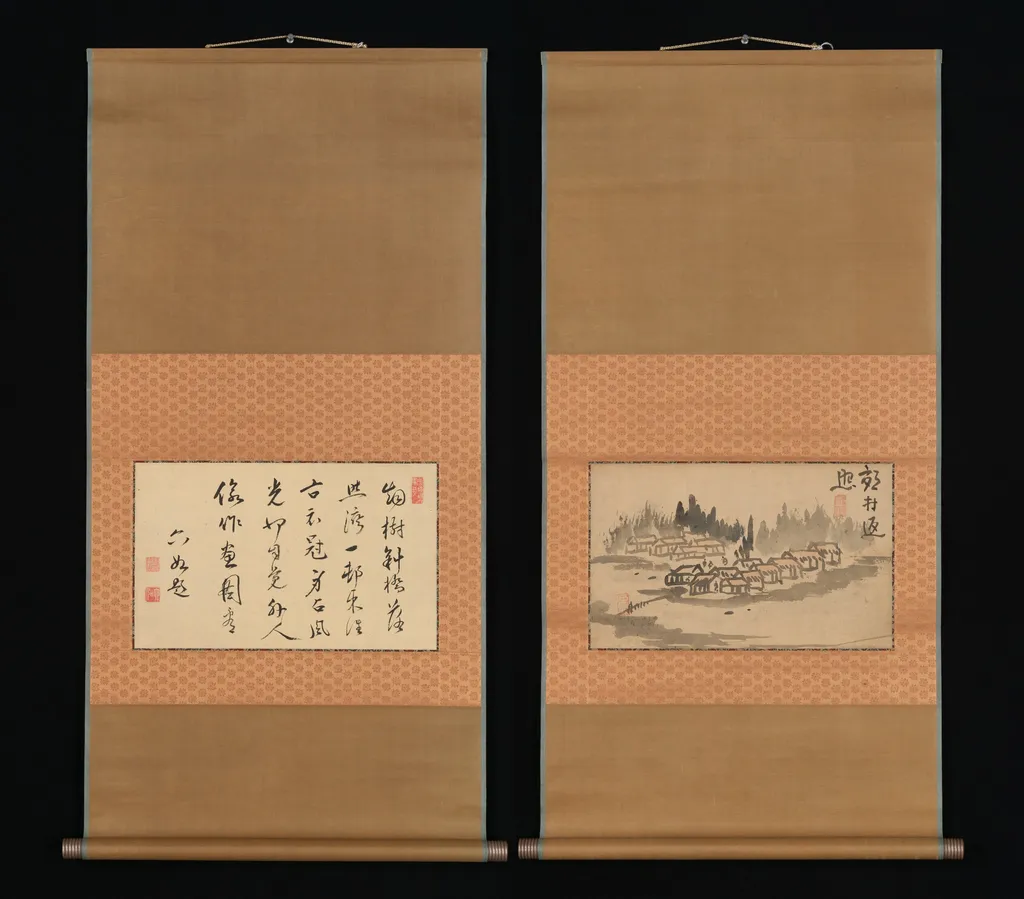
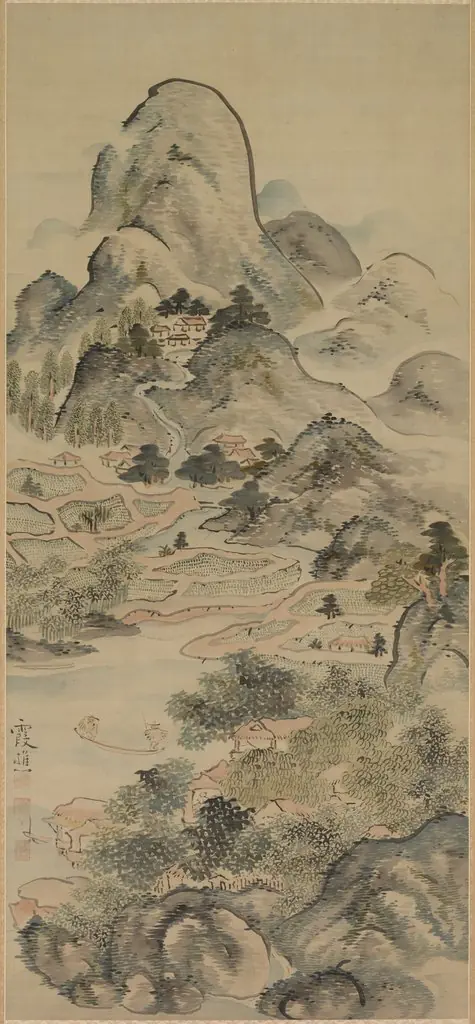
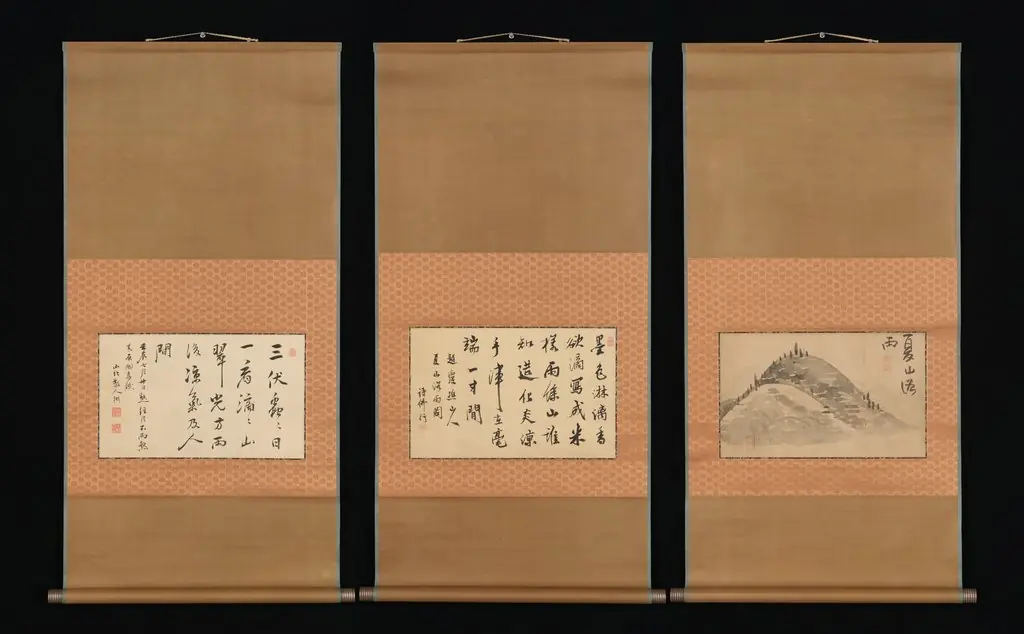
Evening Glow in a Mountain Village and Calligraphy is an unspecified painting by the Nihonga artist Ike no Taiga. It is held in the collection of the Metropolitan Museum of Art.
About this work
Overview
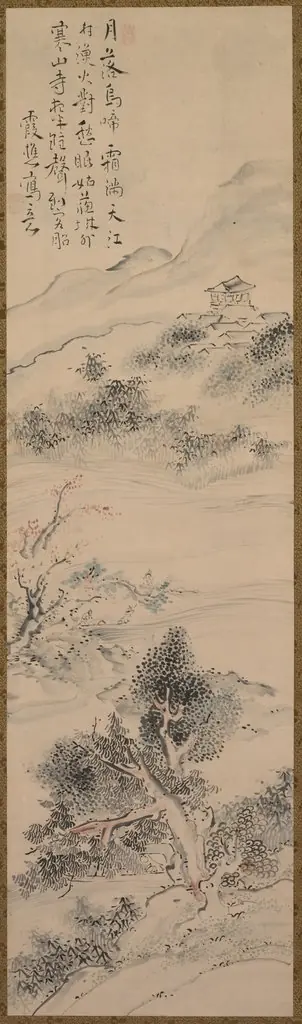
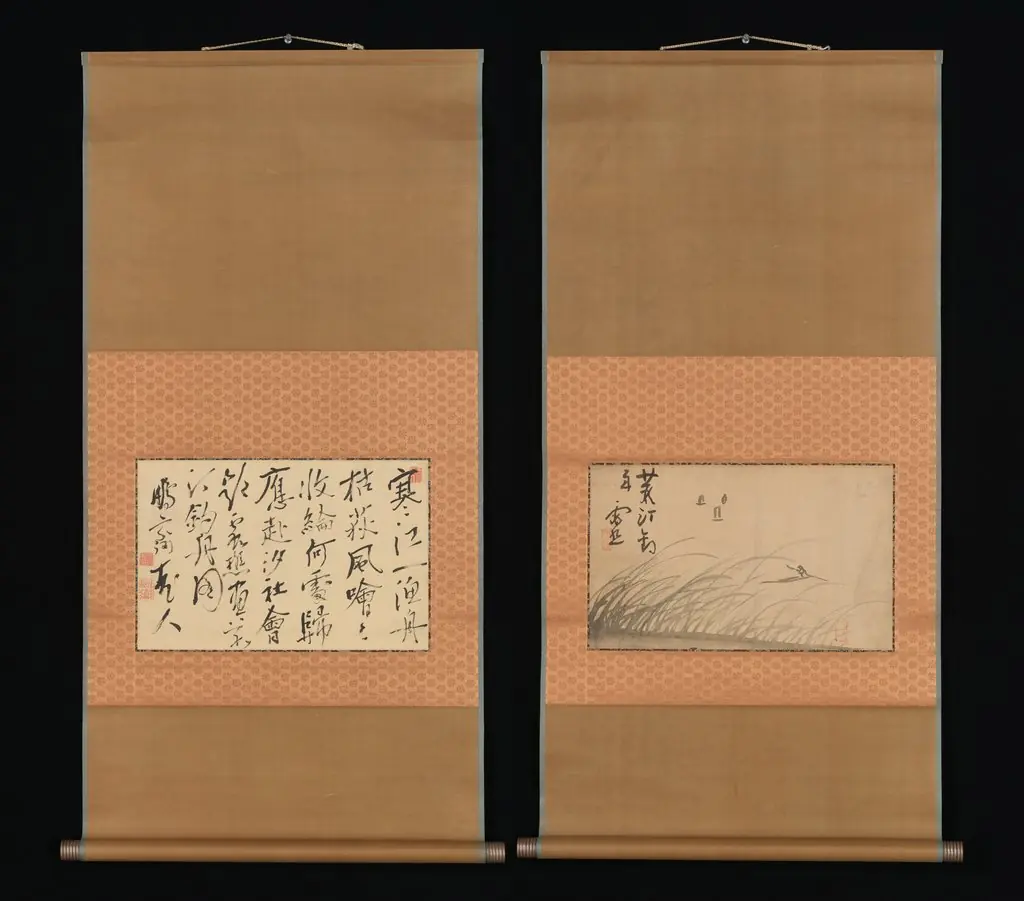
Created in 1800 by Kyoto‑born artist and calligrapher Ike no Taiga, this two‑panel scroll combines ink calligraphy with a modest landscape. The work belongs to the Metropolitan Museum of Art’s collection and exemplifies Taiga’s engagement with the bunjinga, or literati, tradition.
Subject & Meaning
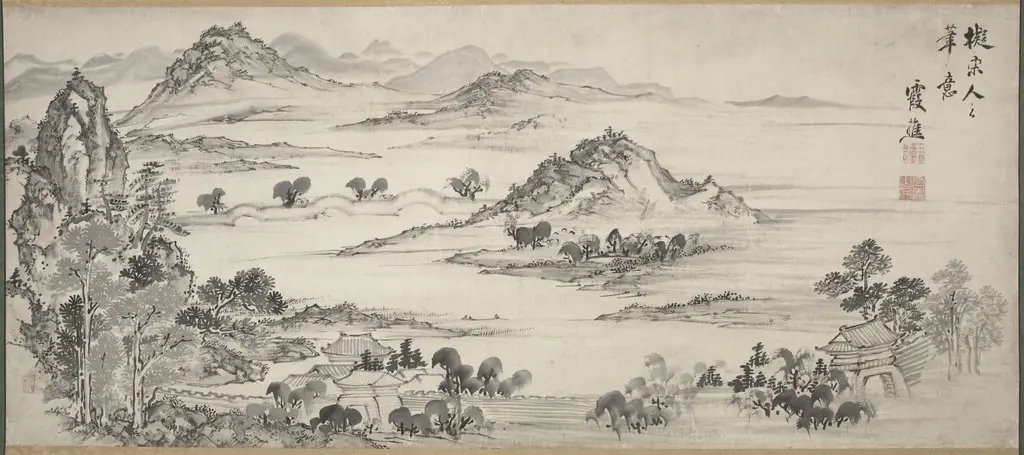
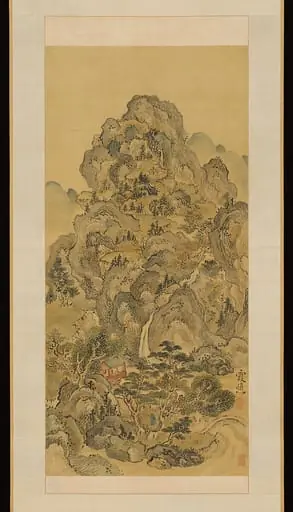
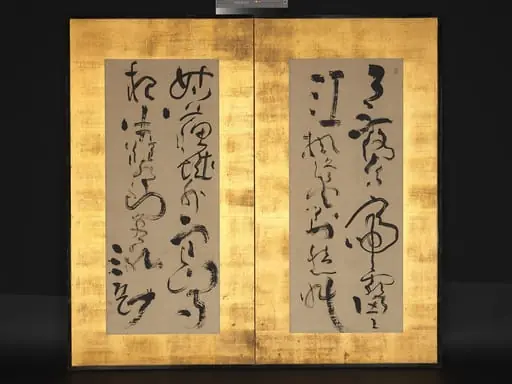
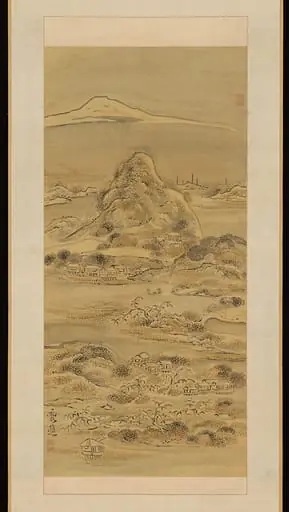
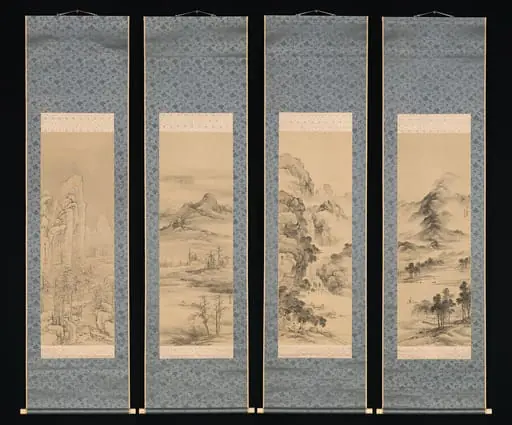
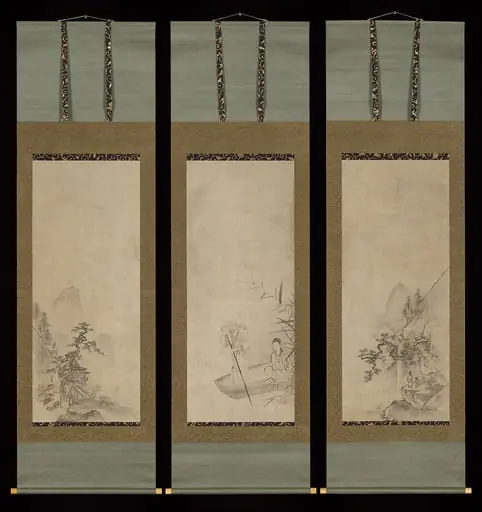
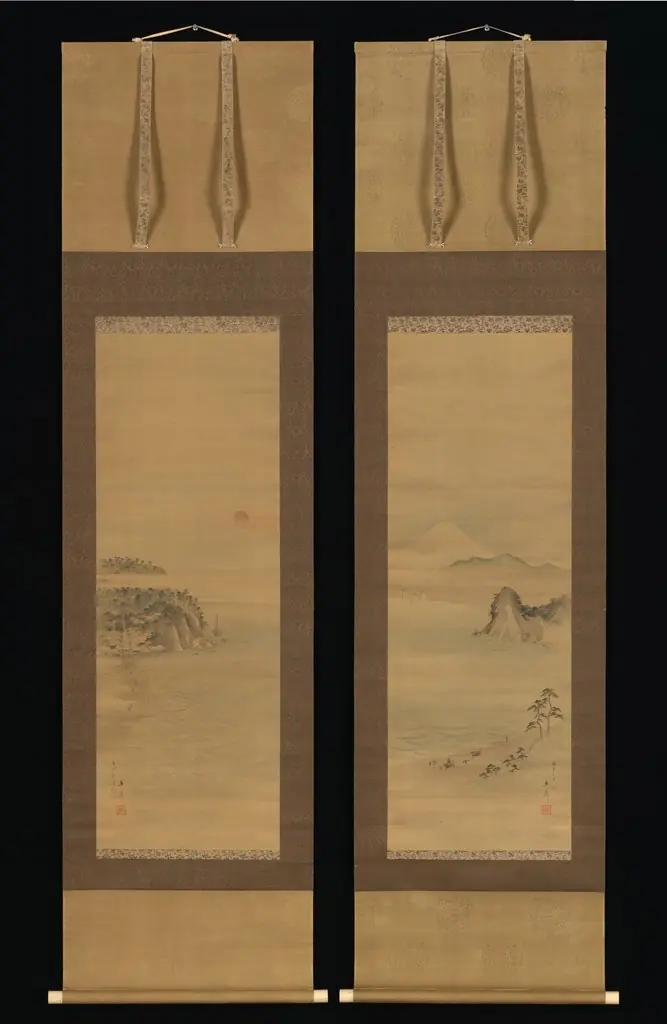
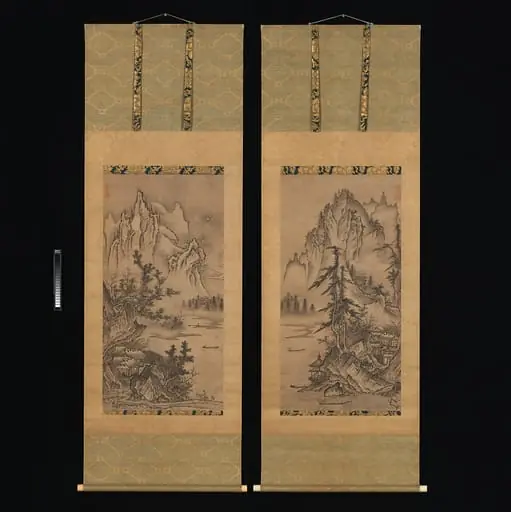
The painted portion depicts a tranquil mountain village at dusk, with a waterway, modest dwellings, and sparse trees rendered in muted gray‑brown hues. The accompanying ink inscription, set against a light background and framed by a red border, provides a literary complement typical of scholar‑artist works, linking visual observation with poetic reflection.
Technique & Style
Taiga employs a restrained palette and delicate brushwork characteristic of nihonga, while the calligraphic text uses black ink on a pale surface. The scroll’s format—painting and writing side by side on a patterned fabric band—mirrors Chinese literati scrolls, yet Taiga’s handling of tone and line reflects his personal adaptation of those models.
History & Provenance
The piece remained in private hands before entering the Metropolitan Museum of Art, where it is displayed as part of the museum’s Japanese art holdings. The artist’s seal, stamped in red at the lower corners, authenticates the work and ties it to Taiga’s late Edo‑period output.
Context
Ike no Taiga, together with poet‑painter Yosa Buson, advanced the bunjinga genre in Japan, drawing heavily on classical Chinese aesthetics while introducing innovative compositional approaches. This scroll illustrates that synthesis, pairing scholarly inscription with a modest, atmospheric landscape.
Artist & collection
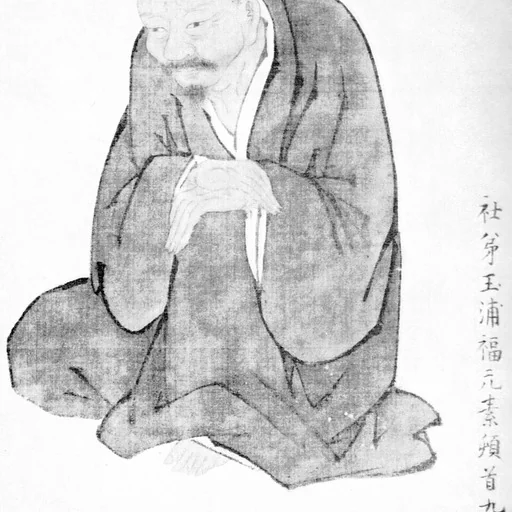
Artist
Ike no Taiga (池大雅; June 6, 1723, in Kyōto, Japan — May 30, 1776, in Kyōto) was a Japanese painter and calligrapher born in Kyoto during the Edo period.