Artwork
Fishing in Springtime
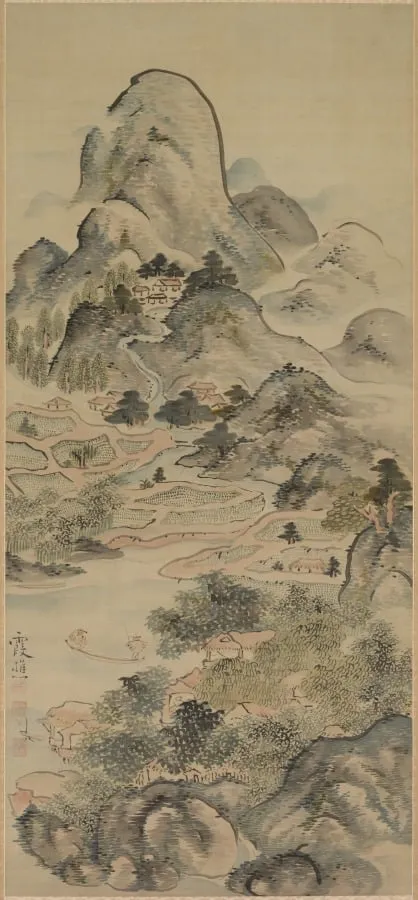
Fishing in Springtime is an unspecified painting by the Baroque artist Ike no Taiga. It dates from 1704 and is held in the collection of the Cleveland Museum of Art.
About this work
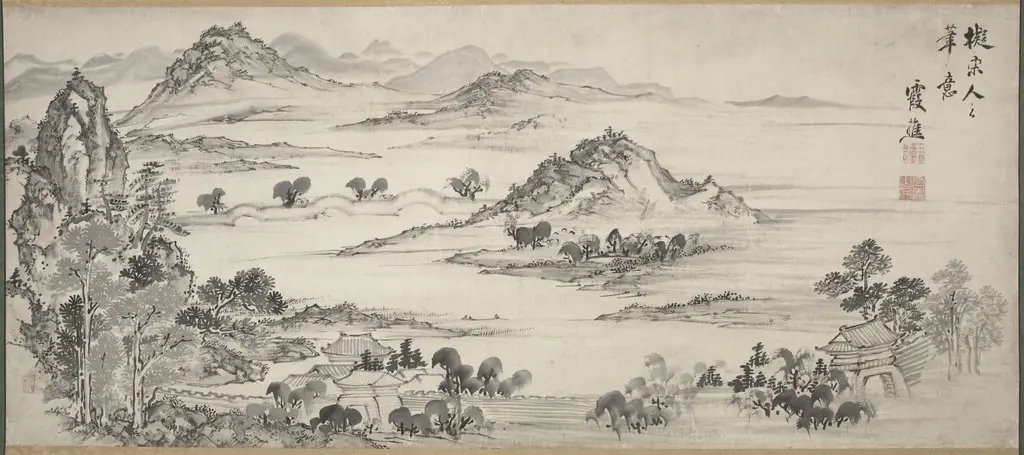
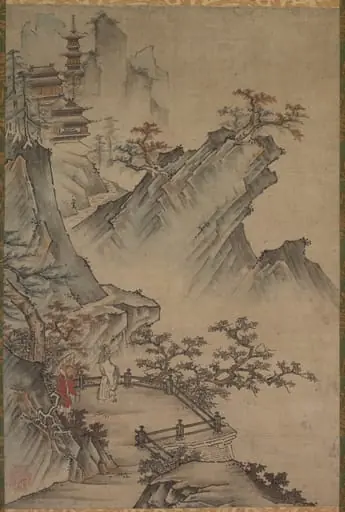
The painting shows people fishing in a serene landscape.
It's a calm scene with simple lines.
Ike Taiga's background in Zen calligraphy likely influenced his style, and he may have been inspired by Western art, which is interesting because it shows how different styles can come together.
You can learn more about the artist who created this piece, artist: Ike Taiga (Japanese, 1723–1776).
Overview
Ike Taiga, active in mid-18th century Japan, developed a distinctive painting style rooted in literati traditions yet shaped by diverse influences.
Ike Taiga, active in mid-18th century Japan, developed a distinctive painting style rooted in literati traditions yet shaped by diverse influences. Beginning his career by selling fan paintings after his father’s death, he later immersed himself in scholarly circles, rejecting commercial art in favor of personal expression. His work reflects a synthesis of Japanese, Chinese, and possibly Western visual ideas, positioning him as a central figure in the nanga movement.
Subject & Meaning
The painting depicts quiet figures engaged in fishing beneath a tranquil spring landscape. Rather than emphasizing action, the scene invites contemplation, aligning with literati ideals of harmony with nature and understated human presence. The simplicity of the composition suggests a meditative rhythm, echoing Zen principles of stillness and impermanence, while avoiding overt narrative or symbolic detail.
Technique & Style
Taiga’s brushwork is restrained, with fluid, calligraphic lines inherited from his Zen training. He employed minimal tonal variation and sparse detail to suggest depth and atmosphere, diverging from the ornate conventions of courtly schools. Subtle spatial recession, possibly inspired by Western prints, is achieved through layered forms rather than linear perspective, creating a quiet sense of recession without artificial realism.
History & Provenance
Taiga’s early life was marked by financial necessity, but his artistic development flourished through intellectual networks in Kyoto and Osaka. He absorbed techniques from Tosa school painters, studied Chinese literati models, and may have encountered European engravings through Dutch traders. His works circulated among scholars and collectors, though few early pieces survive with documented provenance due to their intimate, non-commissioned nature.
Context
During Taiga’s lifetime, Japan maintained limited foreign contact, yet imported Chinese texts and Western curiosities reached elite circles. The literati movement emerged as a counterpoint to official art, valuing personal expression over technical polish. Taiga’s fusion of Eastern and Western visual strategies reflected a broader intellectual openness among urban scholars, even as political isolation shaped Japan’s cultural landscape.
Legacy
Taiga’s synthesis of calligraphic brushwork, literary sensibility, and experimental composition became a benchmark for nanga painting. His influence extended beyond his lifetime, inspiring later generations of scholar-artists who sought to reconcile personal vision with tradition. Though not widely known outside Japan, his work remains a quiet testament to cross-cultural exchange within a closed society.
Artist & collection
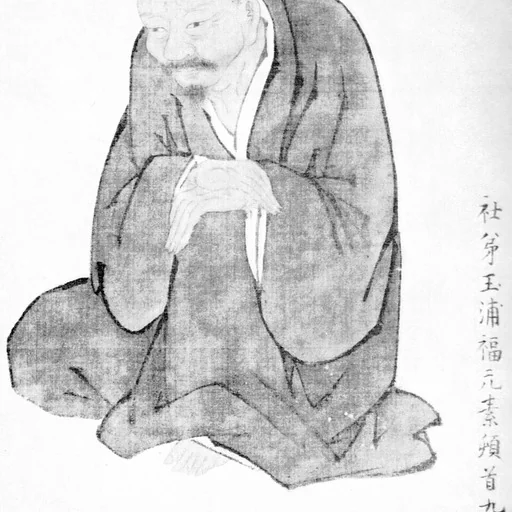
Artist
Ike no Taiga (池大雅; June 6, 1723, in Kyōto, Japan — May 30, 1776, in Kyōto) was a Japanese painter and calligrapher born in Kyoto during the Edo period.

 Landscape
 Untitled
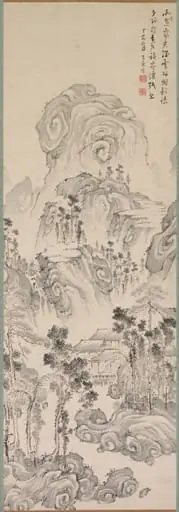 Landscape with Gentle Peaks
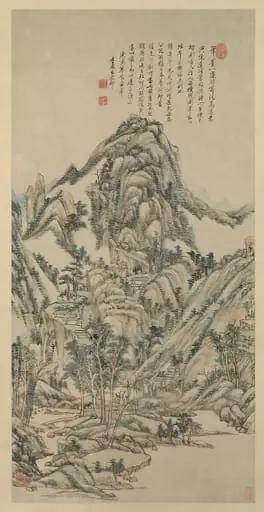 清 王原祁 為瞻亭畫七發妙劑圖 軸|Landscape for Zhanting
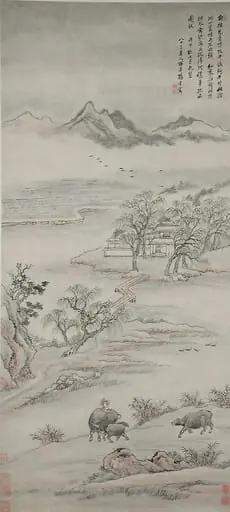 清 楊晉 滄洲牧牛圖 軸|Landscape with Figures
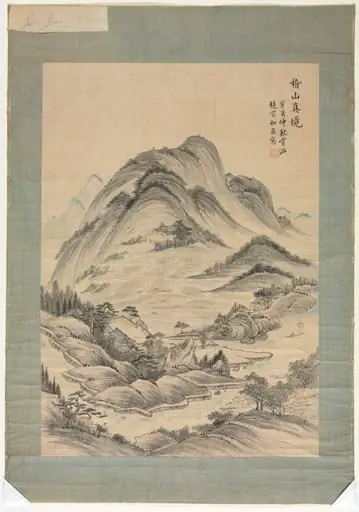 Landscape with Streams and Mountains
 Landscape
 Clouds Visiting a Mountain Retreat
 倣趙伯駒山水圖 軸|Landscape in the Style of Zhao Boju (Fang Zhao Boju shanshui)
 Spring Landscape
 Chinese Literatus Viewing a Valley