Artwork
池田孤邨筆 四季花鳥画|Flowers and Birds of the Four Seasons
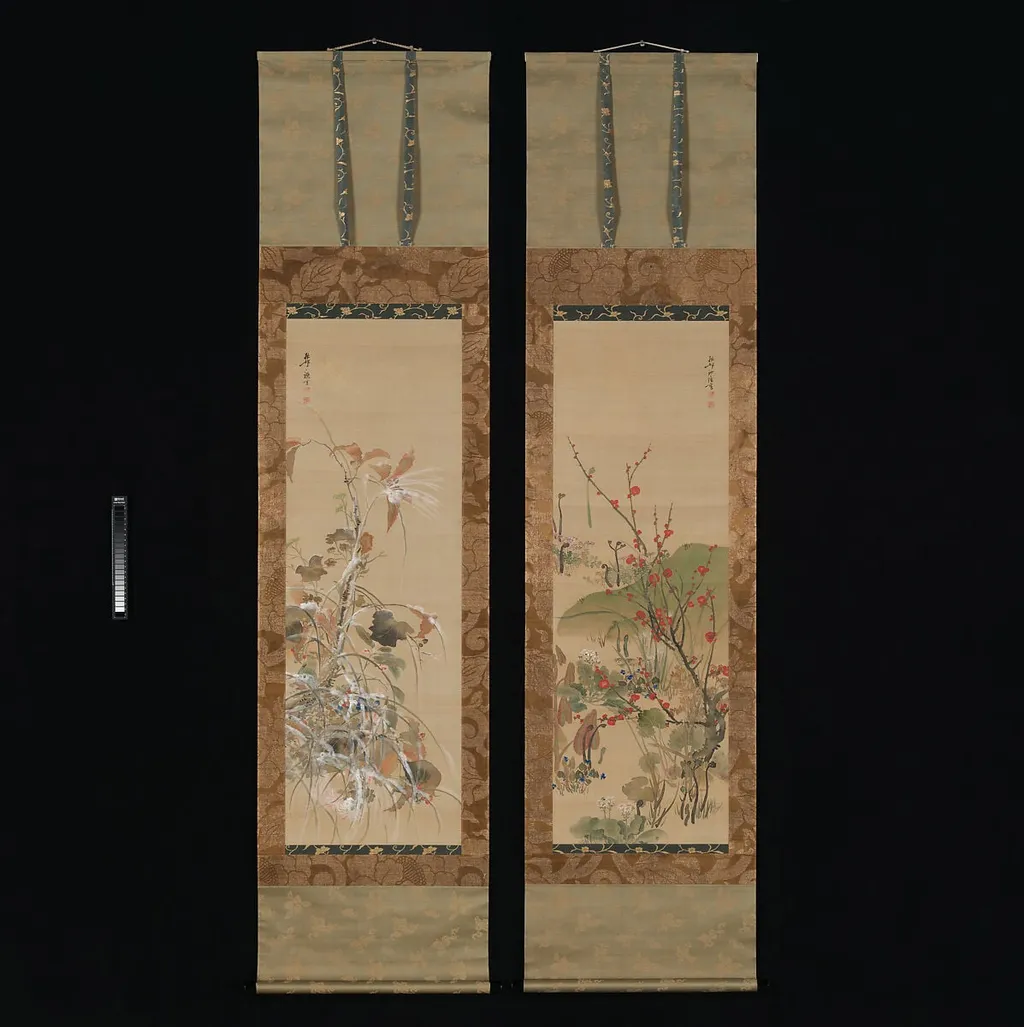
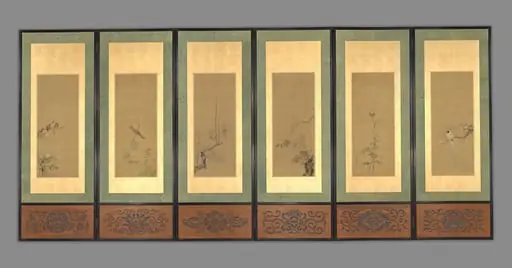
池田孤邨筆 四季花鳥画|Flowers and Birds of the Four Seasons is an ink painting by the Nihonga artist Ikeda Koson. It dates from 1850 and is held in the collection of the Metropolitan Museum of Art.
About this work
Overview
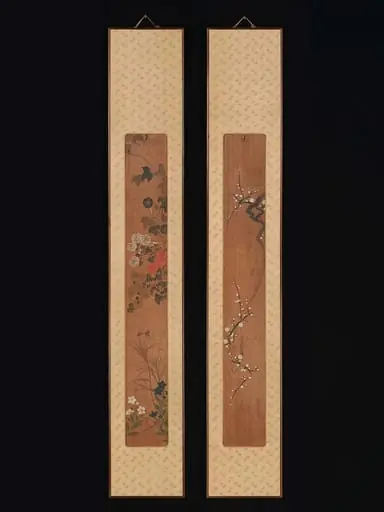
Ikeda Koson’s pair of hanging scrolls, dating from around 1850, present a seasonal tableau of flowers and birds. Executed on silk with ink, pigments and gold leaf, the works are arranged as two vertical panels: one illustrating spring and summer, the other autumn and winter. The composition balances delicate botanical detail with small avian figures, creating a harmonious view of nature’s cycle.
Subject & Meaning
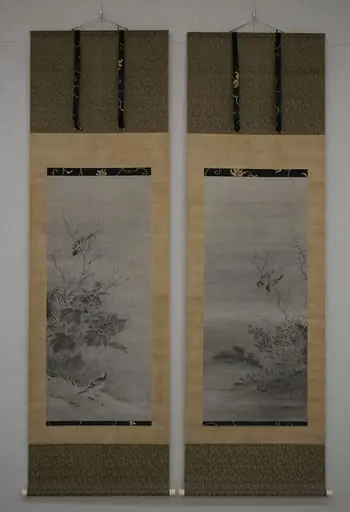
Each scroll concentrates on a single season’s flora, rendered with blooming branches, buds and ripe leaves. Tiny birds settle on the branches, suggesting the intimate relationship between plant life and wildlife. The juxtaposition of the two scrolls underscores the passage of time and the continuity of natural rhythms across the year.
Technique & Style
Koson employed traditional Japanese silk painting methods, layering ink outlines with translucent color washes. Gold leaf is applied behind the botanical elements, producing a luminous background that catches ambient light. The brushwork combines fine, precise lines for petals and feathers with broader washes for foliage, characteristic of mid‑nineteenth‑century ukiyo‑e painting.
History & Provenance
Created while Japan remained under the sakoku isolation policy, the scrolls were commissioned for the residence of a prosperous merchant rather than a religious institution. The use of gold leaf was both aesthetic and practical, enhancing the visual impact in candlelit interiors.
Context
During the late Edo period, secular decorative arts flourished among the urban merchant class, who favored seasonal motifs for interior decoration. Koson’s work reflects this trend, merging the refined elegance of courtly painting with the tastes of affluent, non‑noble patrons.
Legacy
The scrolls exemplify the period’s interest in seasonal representation and the technical skill of silk painting. They continue to be referenced in studies of Edo‑period decorative arts, illustrating how gold leaf and subtle coloration were employed to enrich domestic spaces.
Artist & collection