Artwork
Listening to the Wind in the Pines
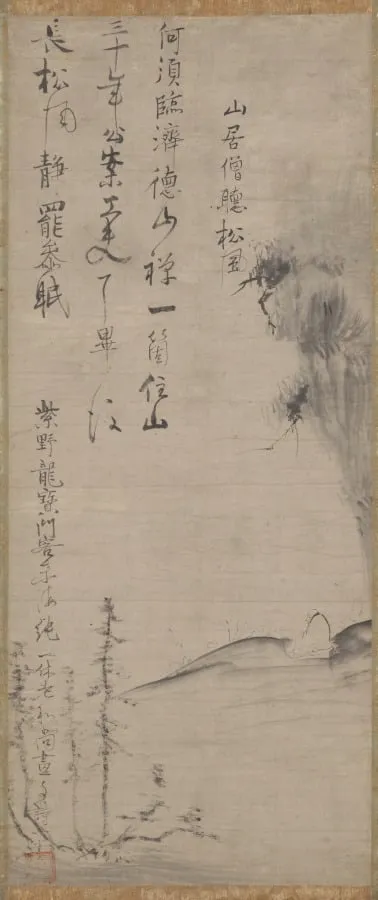
Listening to the Wind in the Pines is an unspecified painting by the Renaissance artist Ikkyū Sōjun. It dates from 1404 and is held in the collection of the Cleveland Museum of Art.
About this work
This painting is one of the few surviving works linked to Ikkyū, a Zen monk known for breaking rules.
A monk sits cross-legged under a pine tree, eyes half-closed, listening to the wind. The branches twist above him, ink strokes dark against the blank paper.
This painting is one of the few surviving works linked to Ikkyū, a Zen monk known for breaking rules. The poem at the top isn’t just decoration—it’s a riddle about enlightenment. Solve it, and you might understand why the monk looks so peaceful.
If you like quiet scenes like this, look up *Muromachi period (1392–1573)*.
Overview
Listening to the Wind in the Pines is a painting accompanied by a poem, created by a prominent Japanese Buddhist monk associated with Daitokuji temple in Kyoto.
Subject & Meaning
The work depicts a monk in contemplation beneath a pine tree, referencing two ninth-century Chinese Chan Buddhist monks. The accompanying poem explores the themes of Zen practice and enlightenment, posing a riddle that invites the viewer to reflect on the monk's serene state.
Technique & Style
The painting features a monk seated cross-legged under twisting pine branches, rendered in dark ink strokes against the blank paper, exemplifying a characteristic style of the period.
History & Provenance
Both the painting and its poem are attributed to a renowned Japanese Buddhist monk known for revitalizing Daitokuji temple, with Ikkyū being a possible candidate due to his association with unconventional Zen practices.
Context
This work is characteristic of the Muromachi period, a time when such serene and contemplative scenes were common in art, often reflecting the Zen Buddhist ideals of simplicity and mindfulness.
Artist & collection


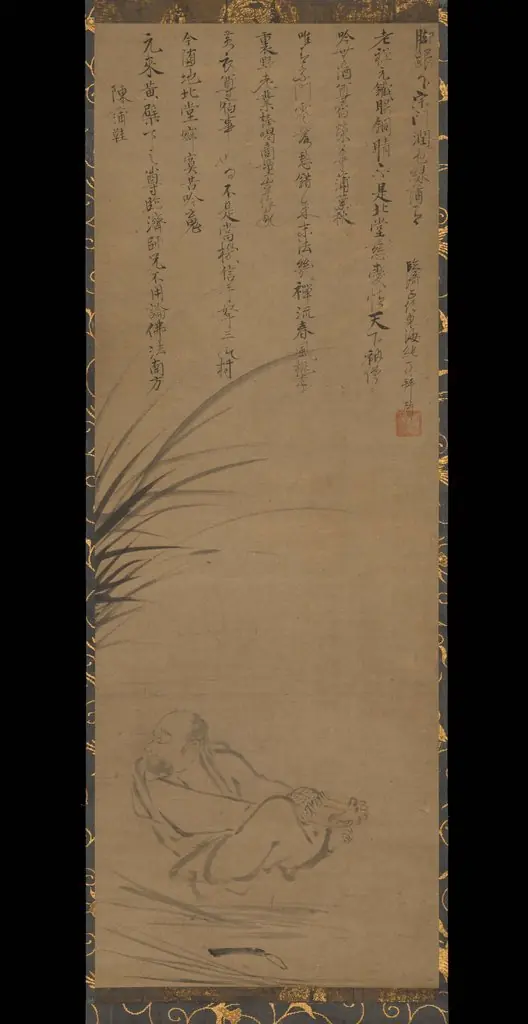
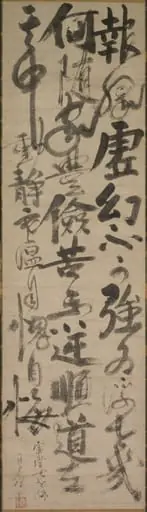
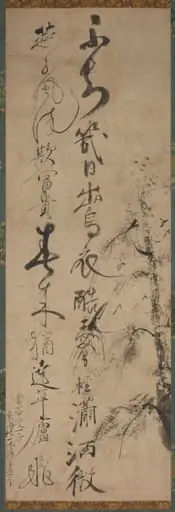
![Reeds and Geese, by Yishan Yining [Issan Ichinei]](https://artifactworldgallery.com/img/yishan-yining-issan-ichinei--reeds-and-geese--5f360303c5a40d05-w320.webp) Reeds and Geese
Reeds and Geese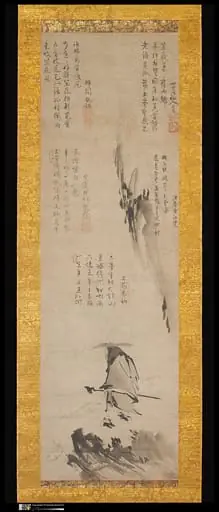 瑞巖龍惺・竹香全悟・九淵龍賝・南江宗沅・ 翺之慧鳳賛 東坡笠屐図|Su Shi (Dongpo) in a Bamboo Hat and Clogs
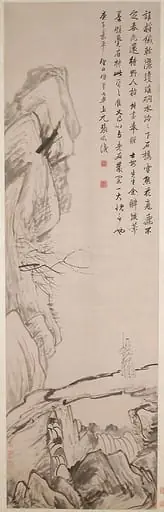 清 倣張風 石橋圖 軸|The Stone Bridge
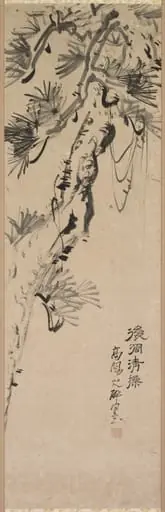 Aged Pine
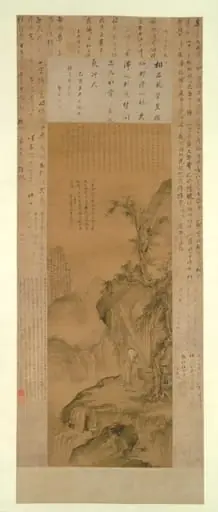 Layered Peaks and Splashing Waterfall: Portrait of Hua Yan as a Young Man
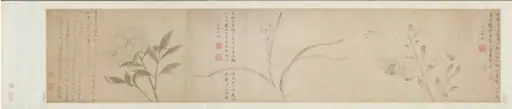 Ink Flowers
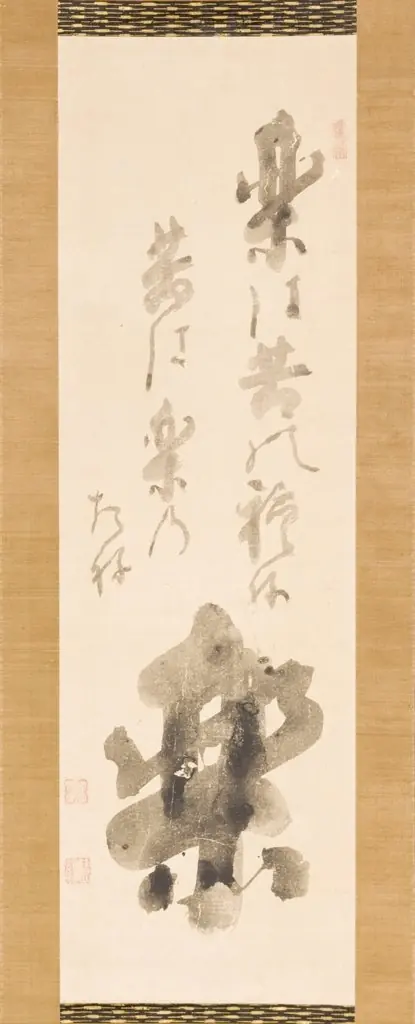 'JOY: In joy lie the seeds of sufferings; in sufferings lie the seeds of joy (RAKU: Raku wa kū no tane; Kū wa raku no tane)'
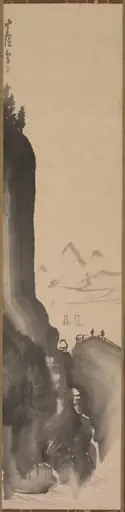 Mountains and Distant Boats