Artwork
Ink Flowers
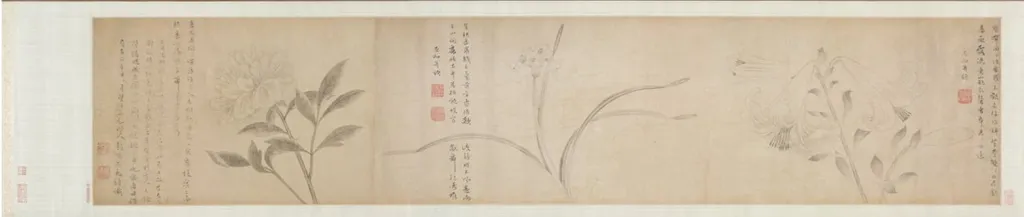
Ink Flowers is an unspecified painting by the Ming dynasty painting artist Zhao Zhong. It dates from 1361 and is held in the collection of the Cleveland Museum of Art.
About this work
Overview
Zhao Zhong created a series of ink-on-paper paintings depicting three specific flowers—lily, narcissus, and peony—each rendered without color.
Zhao Zhong created a series of ink-on-paper paintings depicting three specific flowers—lily, narcissus, and peony—each rendered without color. Unlike the brightly hued floral works common in his era, he relied solely on ink to define form, using fine lines and graded washes to suggest volume and texture. His approach diverged from academic conventions, emphasizing restraint and precision over decorative richness.
Subject & Meaning
The selection of lily, narcissus, and peony does not conform to any established seasonal or symbolic grouping in fourteenth-century Chinese culture. Their combination may reflect Zhao Zhong’s medical background, as each plant had documented therapeutic uses: lily for alleviating grief, peony bark for blood-related ailments. The pairing of these plants suggests a personal, possibly clinical, rationale rather than traditional poetic or calendrical associations.
Technique & Style
Zhao employed meticulous ink linework to outline each petal, leaf, and vein, while subtle washes provided gentle tonal transitions that model the forms without shading. The absence of color heightened the focus on structure and nuance, aligning with literati ideals of restraint. His technique echoes the precision of fine-style painting but strips away its chromatic embellishment, resulting in a quiet, introspective aesthetic.
History & Provenance
Zhao Zhong was trained as a physician, not a court artist, which likely shaped his unconventional approach to floral subjects. His works were not produced for imperial patronage or public display but may have served private or scholarly circles. The survival of these ink paintings suggests they were valued for their intellectual and technical qualities rather than their adherence to prevailing artistic norms.
Context
In the fourteenth century, floral painting typically followed established symbolic systems tied to seasons, virtues, or imperial iconography. Zhao’s choice of plants, unrelated to these frameworks, marks a departure from convention. His use of monochrome ink further resisted the dominant trend of colored decoration, positioning his work as an experimental, perhaps introspective, alternative to mainstream courtly aesthetics.
Legacy
Zhao Zhong’s ink flowers represent a quiet innovation in Chinese painting, demonstrating how medical knowledge could inform artistic subject matter. His disciplined use of ink influenced later literati artists who valued expressive restraint over ornamental display. Though not widely celebrated in his time, his work stands as an early example of interdisciplinary thinking in East Asian art.
Artist & collection

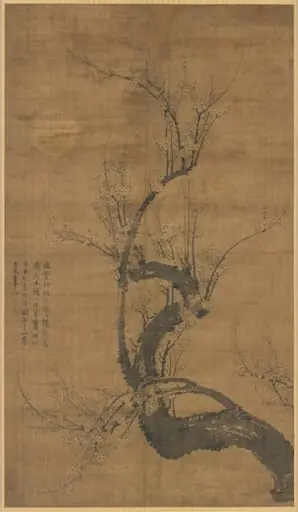 A Prunus in the Moonlight
![Reeds and Geese, by Yishan Yining [Issan Ichinei]](https://artifactworldgallery.com/img/yishan-yining-issan-ichinei--reeds-and-geese--5f360303c5a40d05-w320.webp) Reeds and Geese
Reeds and Geese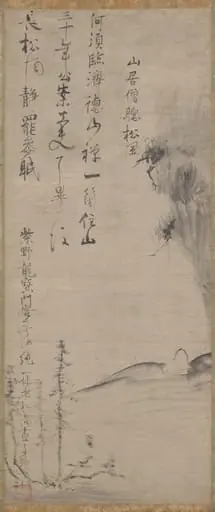 Listening to the Wind in the Pines
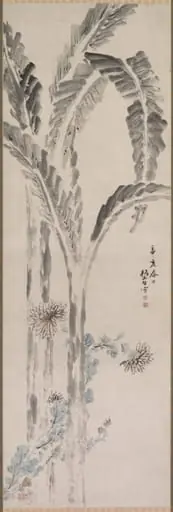 Banana Plant and Chrysanthemum
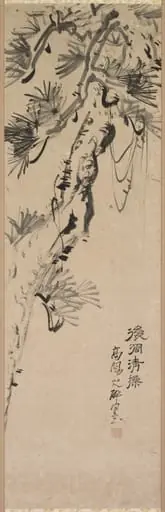 Aged Pine
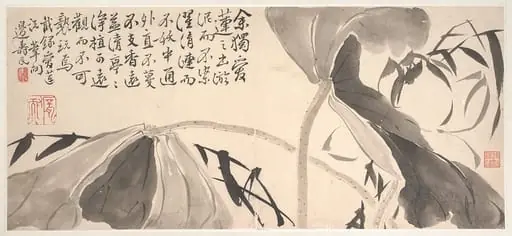 清 邊壽民 墨荷蘆葉圖 冊頁|Lotus Leaves and Water Reeds
 Landscape with Bamboo
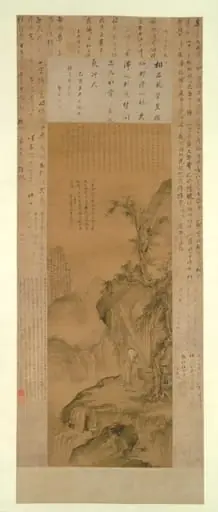 Layered Peaks and Splashing Waterfall: Portrait of Hua Yan as a Young Man
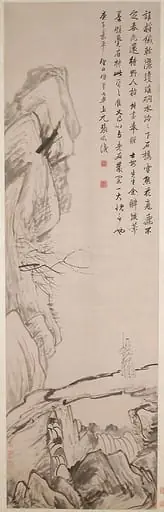 清 倣張風 石橋圖 軸|The Stone Bridge
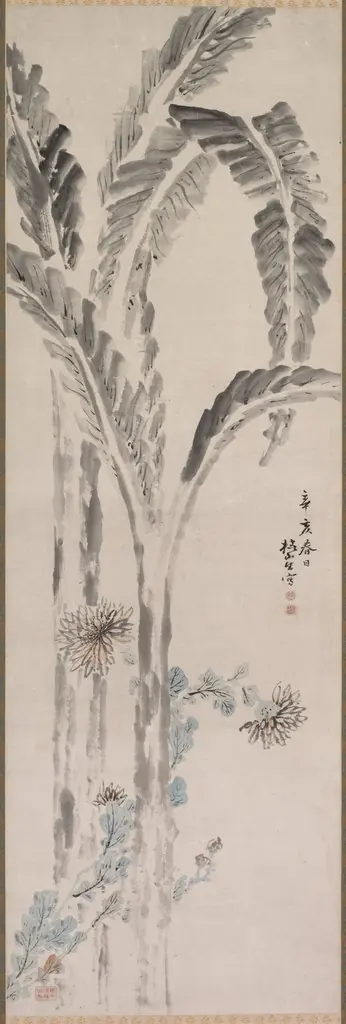 Banana Plant and Chrysanthemum
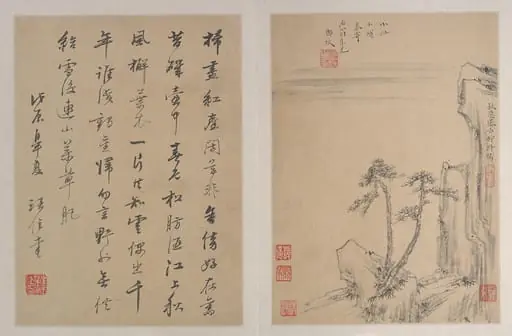 Untitled
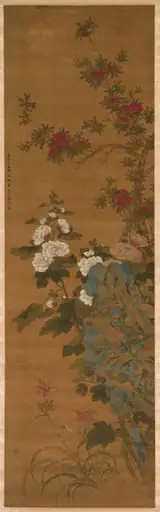 Flowers and Rocks