Artwork
Standard of Saint Sebastian
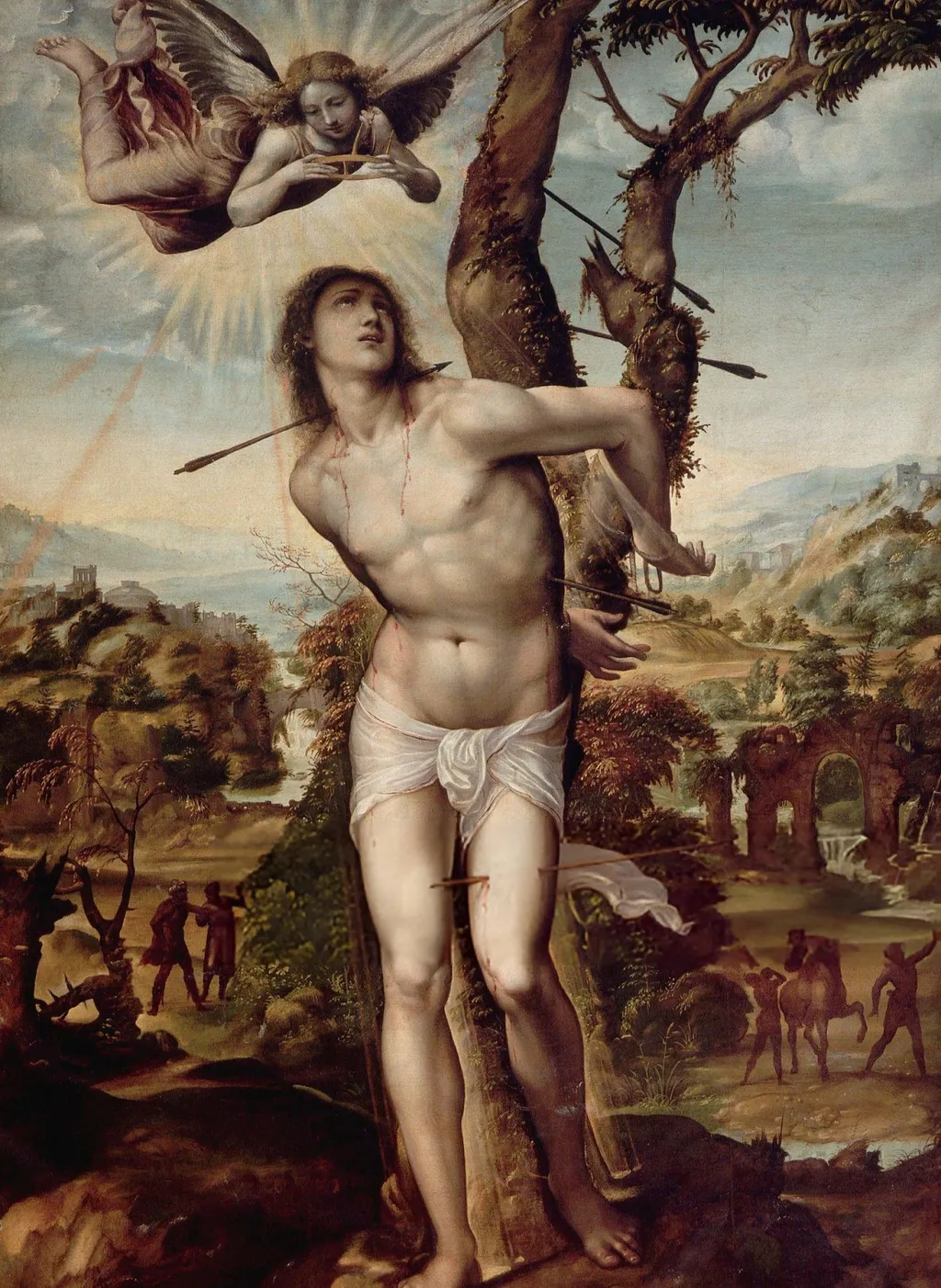
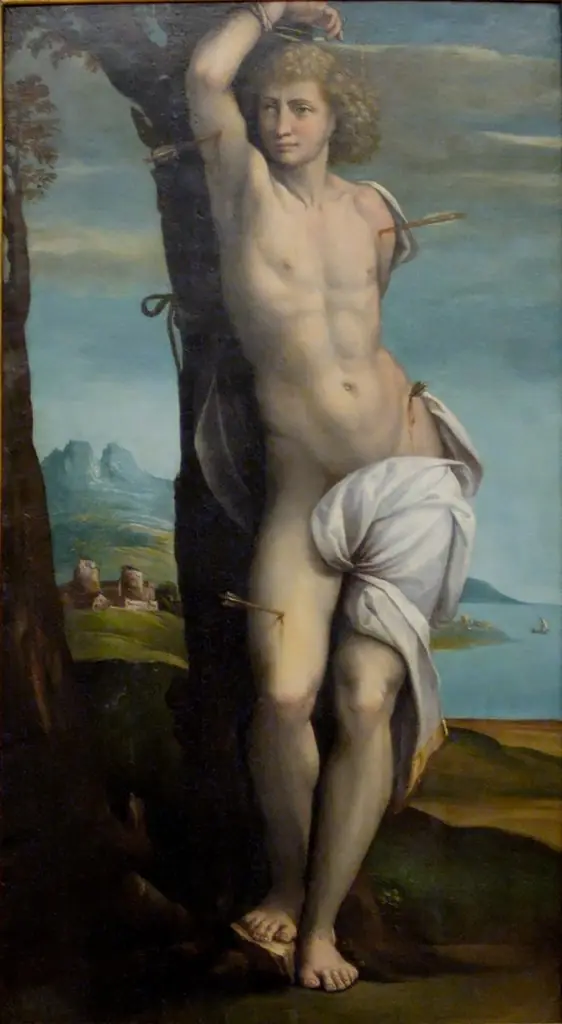
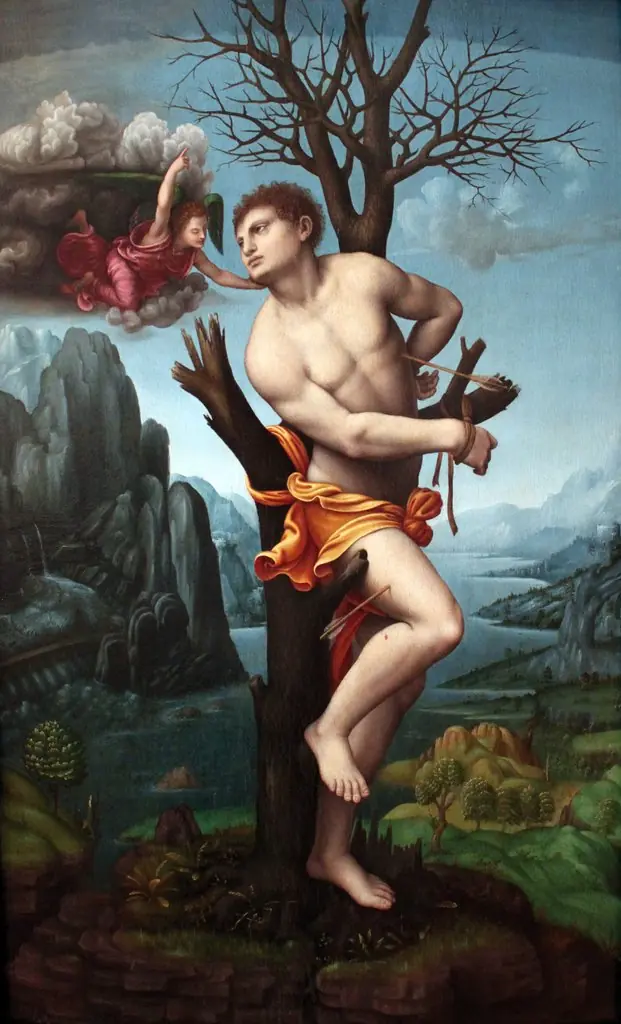
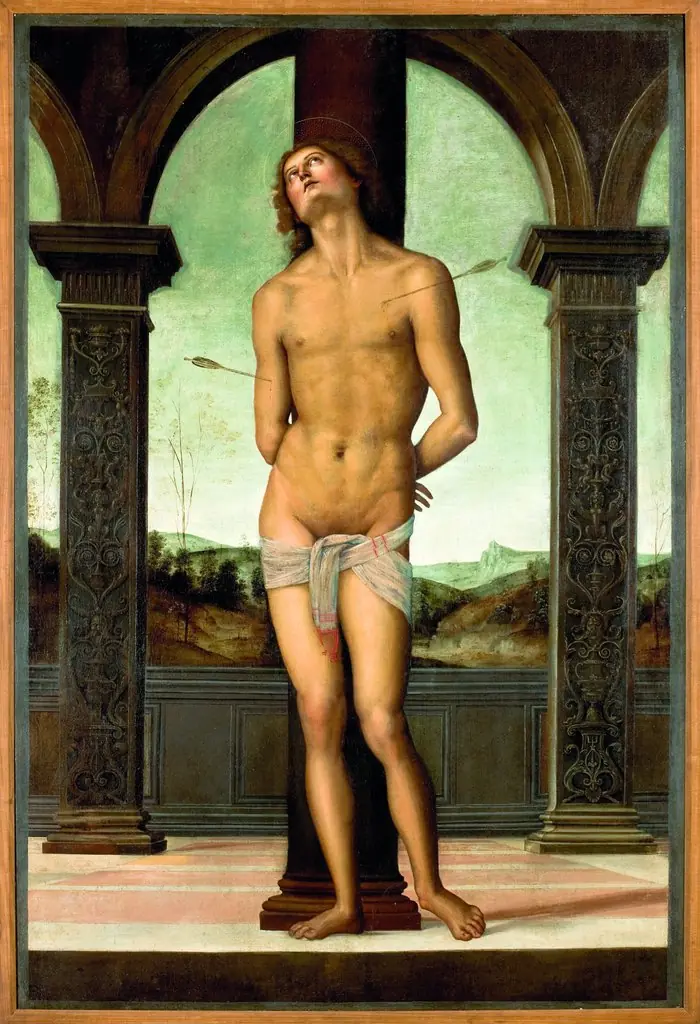
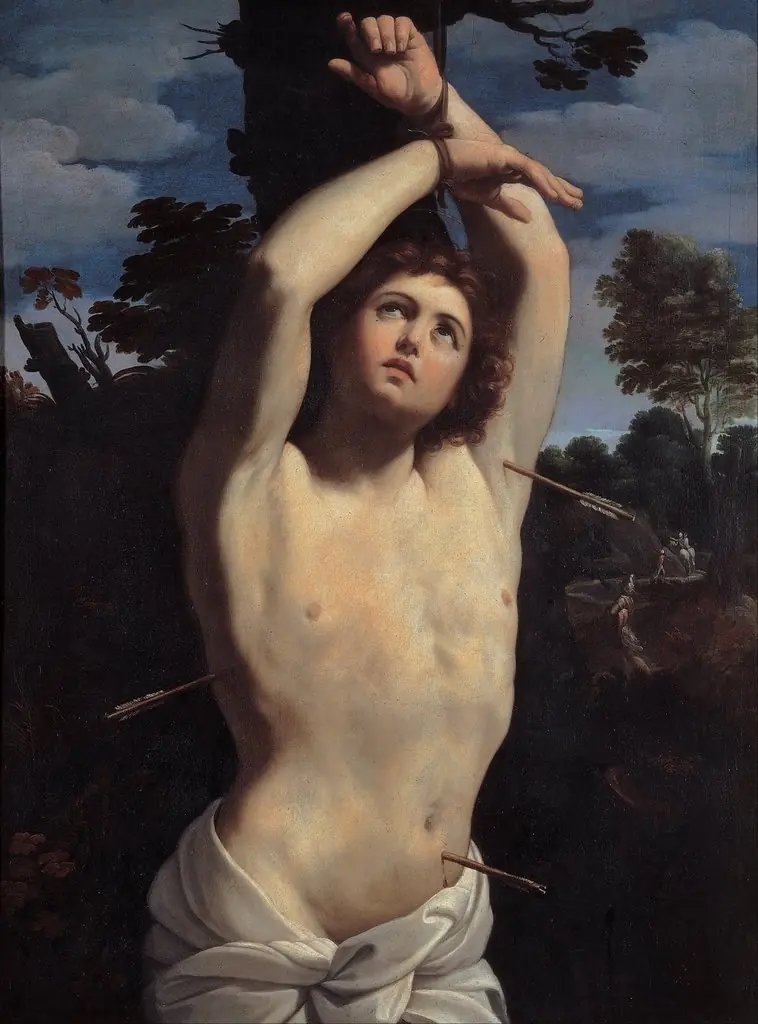
Standard of Saint Sebastian is an unspecified painting by Sodoma. It is held in the collection of the Uffizi Gallery. The work portrays Saint Sebastian bound to a tree, his torso exposed and pierced by numerous arrows.
About this work
Overview
The work portrays Saint Sebastian bound to a tree, his torso exposed and pierced by numerous arrows. A solitary angel hovers above, clutching an additional arrow, while a distant landscape of hills, trees, and small figures unfolds behind the scene, emphasizing the theme of martyrdom.
Subject & Meaning
The composition centers on the Christian martyr Saint Sebastian, whose suffering is highlighted by his vulnerable, unclothed state and the multitude of arrows. The presence of the angel suggests divine witness or intercession, reinforcing the narrative of faith endured through pain.
Technique & Style
Rendered in a painted medium, the piece employs a clear delineation between the foreground figures and the softer, atmospheric background. The contrast of stark, illuminated flesh against the muted landscape creates a dramatic focus on the saint’s physical torment.
History & Provenance
The painting is attributed to the Italian Renaissance artist known as Il Sodoma, active in the early 16th century. Its provenance traces back to collections that documented his oeuvre, though specific ownership details are limited in the available record.
Context
Depictions of Saint Sebastian were common in Renaissance art, reflecting the period’s interest in hagiographic subjects and the exploration of human anatomy under duress. The work aligns with contemporary devotional imagery intended for contemplation of martyrdom.
Own this work as a print
Artist & collection
Artist
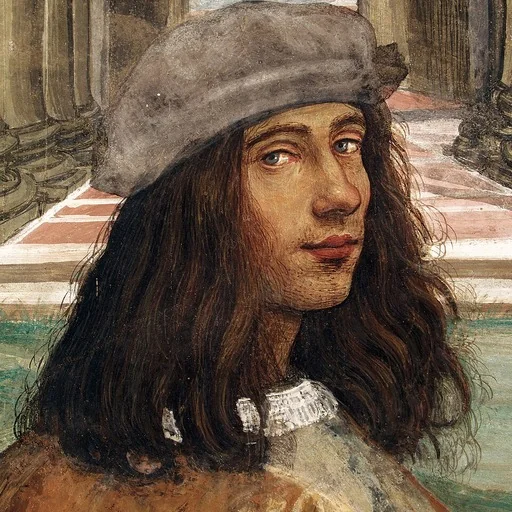
Il Sodoma was the name given to the Italian Renaissance painter Giovanni Antonio Bazzi.