Artwork
Street Scene
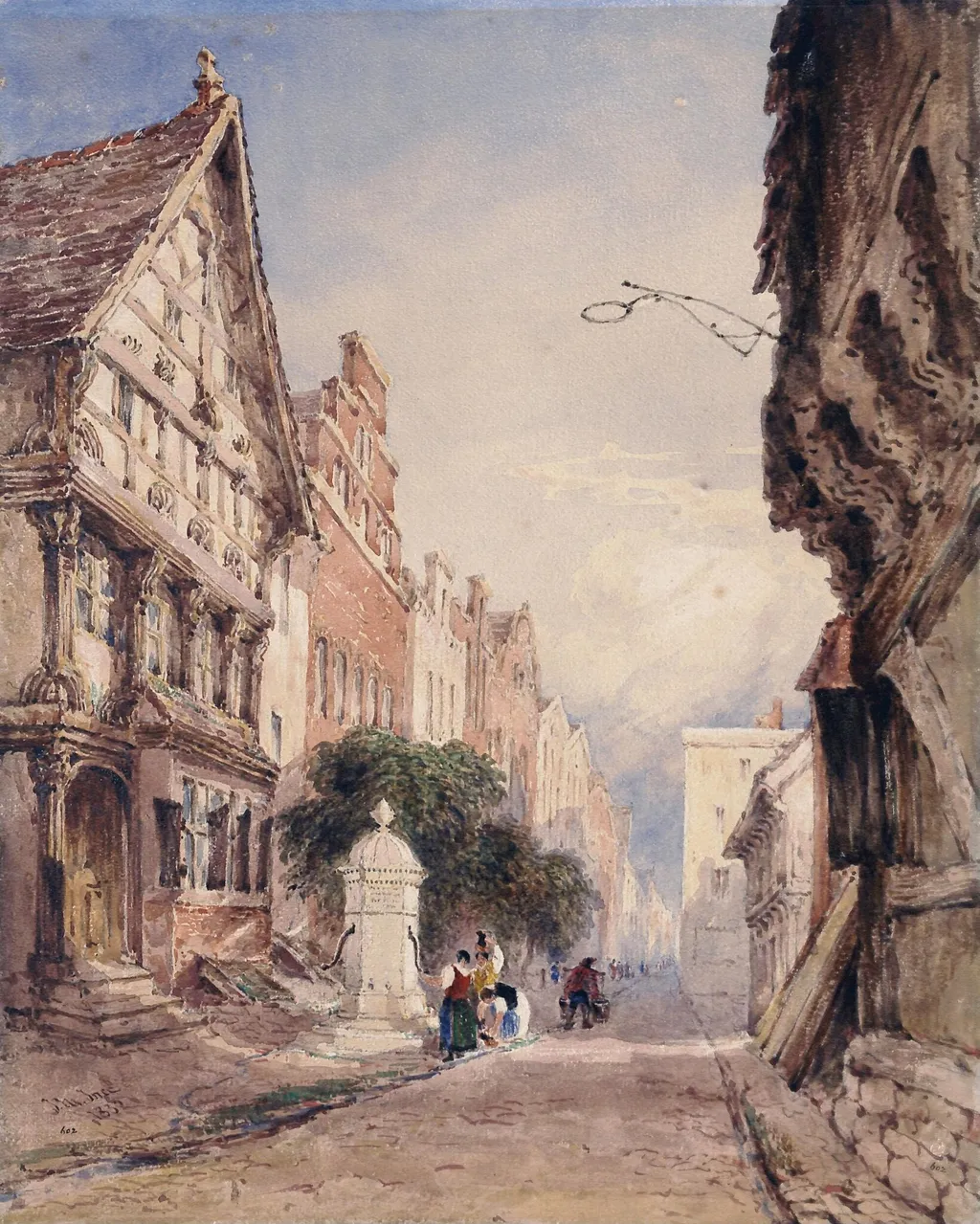
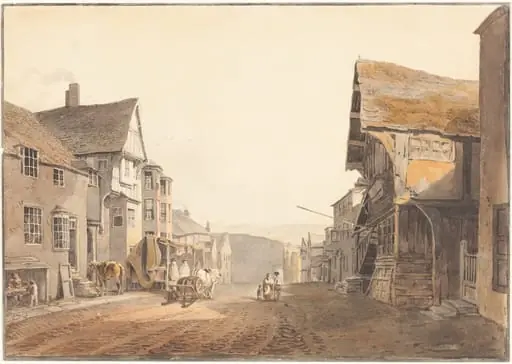
Street Scene is a watercolor work on paper by the Romanticist artist Ince. It dates from 1832 and is held in the collection of the Victoria and Albert Museum. Created in 1832, this watercolour depicts a modest urban street, rendered with delicate washes and restrained tonality.
About this work
Overview
Created in 1832, this watercolour depicts a modest urban street, rendered with delicate washes and restrained tonality. Signed by the artist Ince, the work captures a quiet moment in a European city, emphasizing atmosphere over narrative. The composition avoids dramatic action, instead focusing on the interplay of light, architecture, and sparse human presence to evoke a sense of stillness.
Subject & Meaning
The scene centers on a small fountain, flanked by a few figures going about their day, suggesting ordinary life rather than grand events.
The scene centers on a small fountain, flanked by a few figures going about their day, suggesting ordinary life rather than grand events. The buildings, with their steep roofs and narrow windows, reflect late Georgian or early Victorian urban design. The absence of clear social indicators or signage leaves the setting intentionally generic, inviting contemplation of everyday space rather than specific historical reference.
Technique & Style
Ince employed loose, fluid brushwork typical of watercolour sketching, allowing pigment to bleed subtly at edges and create soft transitions. Pale blues and warm browns dominate, with muted greens suggesting distant foliage. Light is used to model form, with buildings on the left rendered in sharper detail against a hazy, washed-out background, guiding the viewer’s gaze through atmospheric perspective.
History & Provenance
The work is dated and signed, indicating it was likely a finished piece rather than a preparatory study. While its early ownership is undocumented, its style aligns with British watercolour traditions of the 1830s, a period when topographical and genre scenes were popular among amateur and professional artists alike. No record of exhibition or major collection history is known.
Context
In the early 1830s, watercolour was gaining recognition as a serious medium, particularly in Britain, where artists explored urban and rural landscapes with increasing sensitivity. Ince’s work reflects this trend, capturing the quiet dignity of ordinary streetscapes amid rapid urbanization. The painting’s subdued palette and lack of overt sentiment place it within the quieter end of Romantic-era visual culture.
Legacy
Though not widely exhibited or reproduced, this work contributes to the broader understanding of 19th-century British watercolour practice. It exemplifies how artists used the medium’s transparency and portability to record the evolving urban environment with intimacy and restraint, influencing later generations interested in everyday scenes over monumental subjects.
Artist & collection
Artist
Edward Ince spent his life painting the London he saw from his studio window—chimney pots, gas lamps, the way light pooled in a puddle between cobblestones.

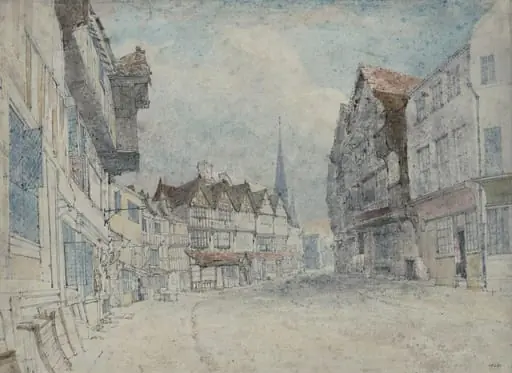 Street view in Hereford
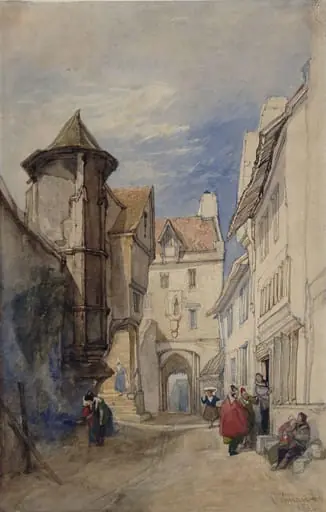 A Gateway in a Norman Town
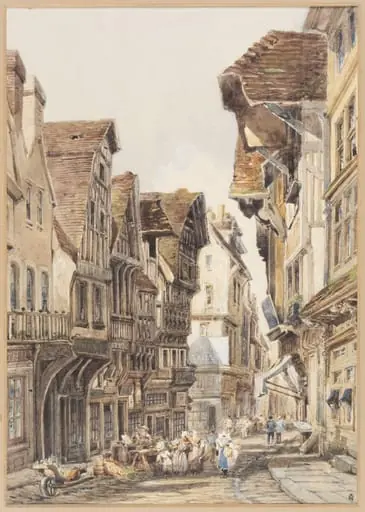 Old Houses at Lisieux, Normandy
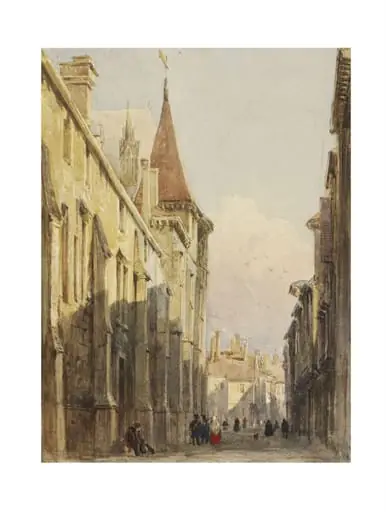 Street in Beauvais
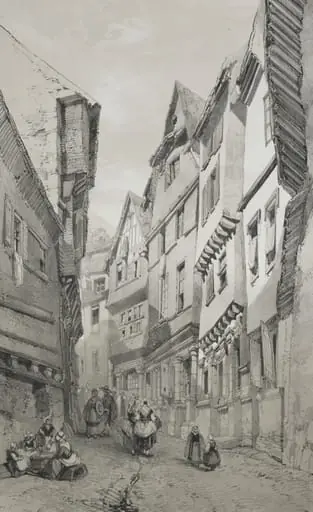 Voyages pittoresques et romantiques dans l'ancienne France. Bretagne: Morlaix
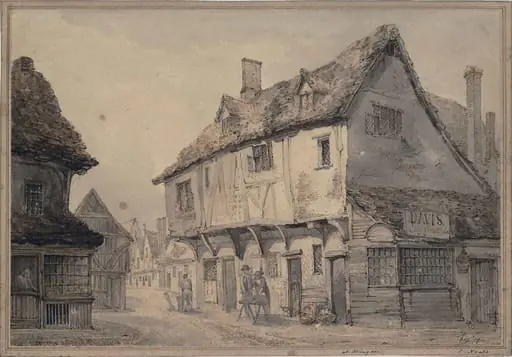 Old Houses at Abingdon, Berkshire
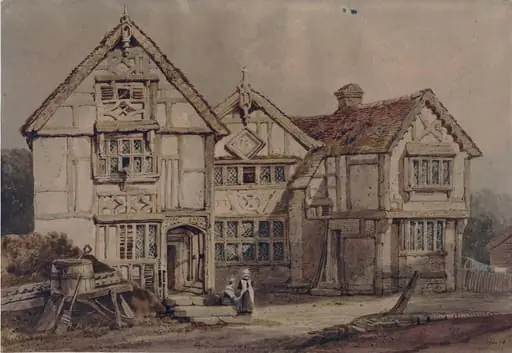 Old House at Pound's Bridge, near Tonbridge
 Conway in North Wales
 The Butter-Cross, Winchester
 Street with old houses