Artwork
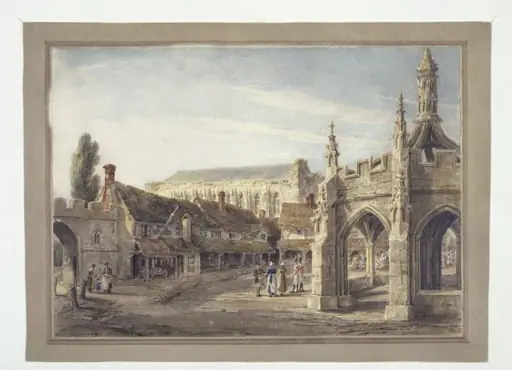
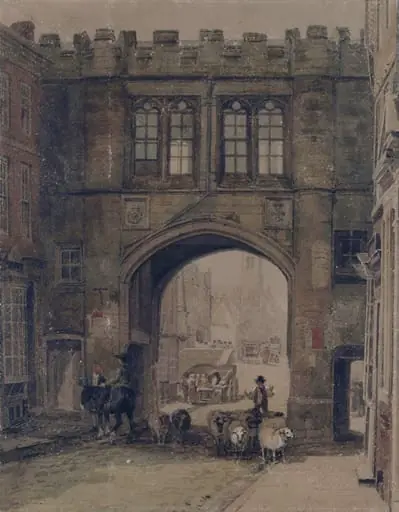
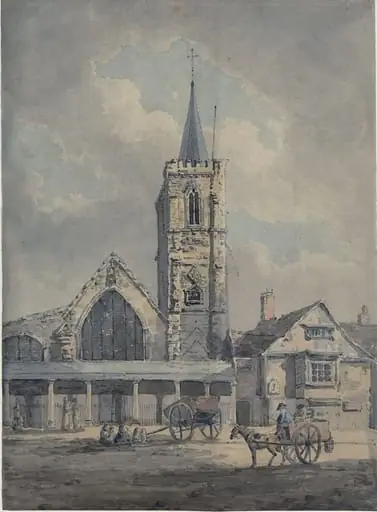
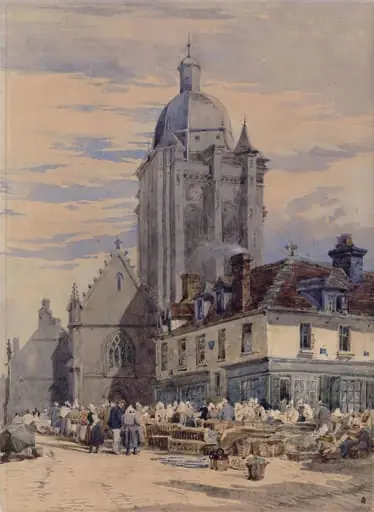
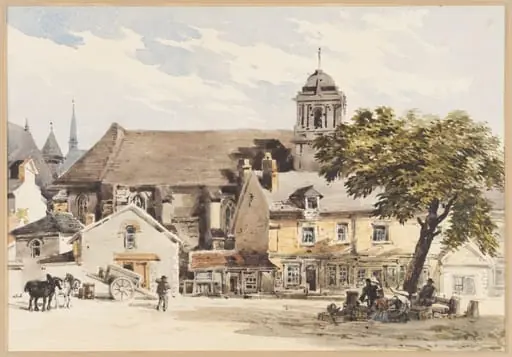
The Butter-Cross, Winchester
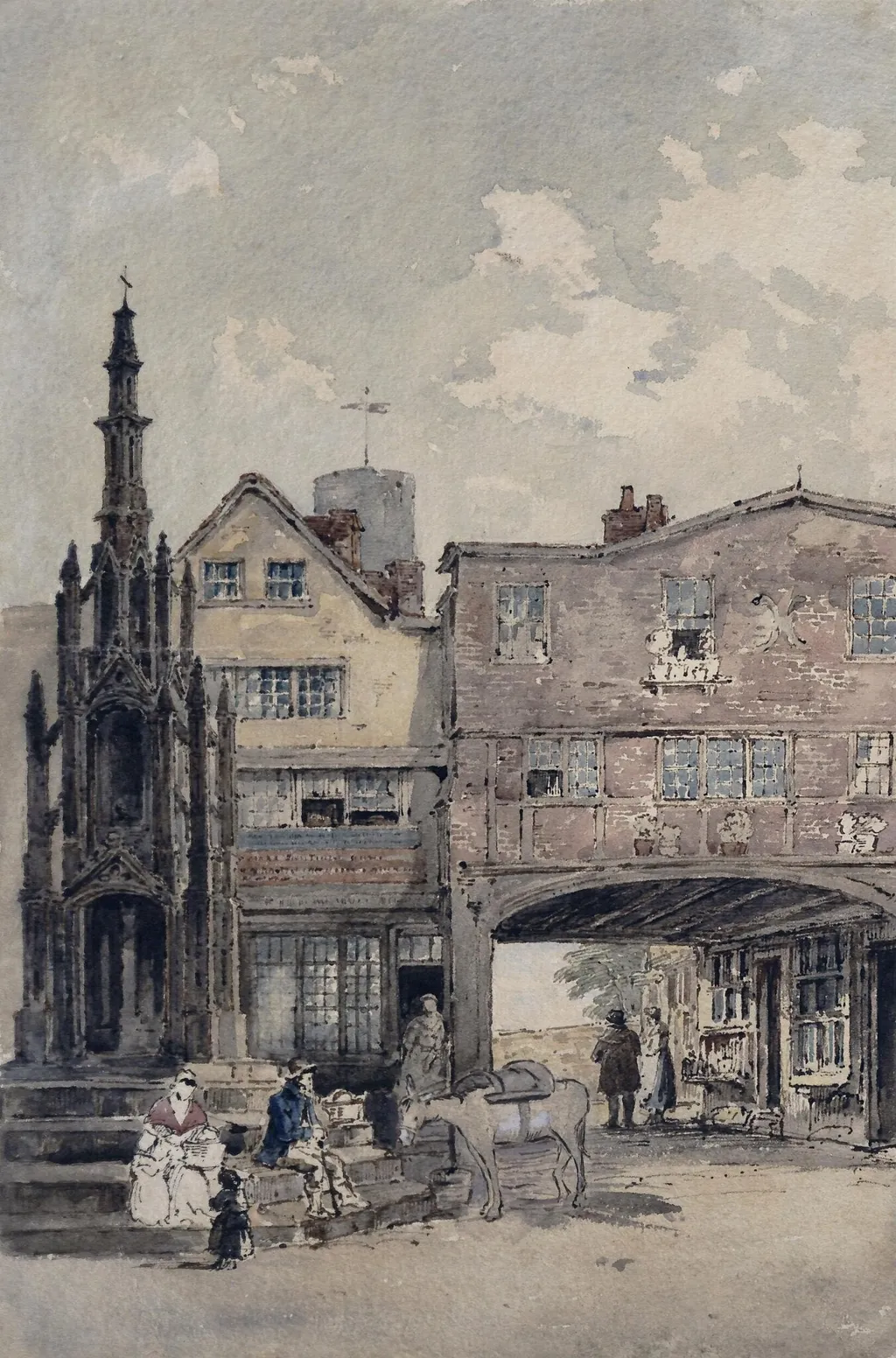
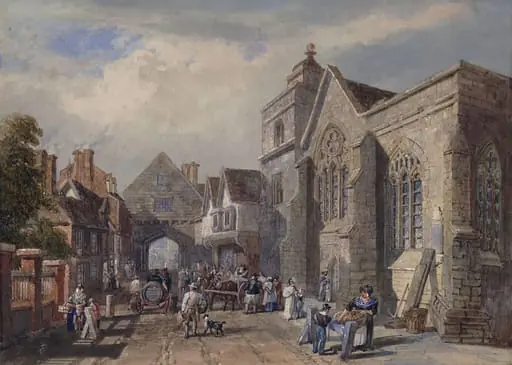
The Butter-Cross, Winchester is a watercolor work on paper by the Rococo painting artist Amelia Long. It dates from 1762 and is held in the collection of the Victoria and Albert Museum.
About this work
Overview
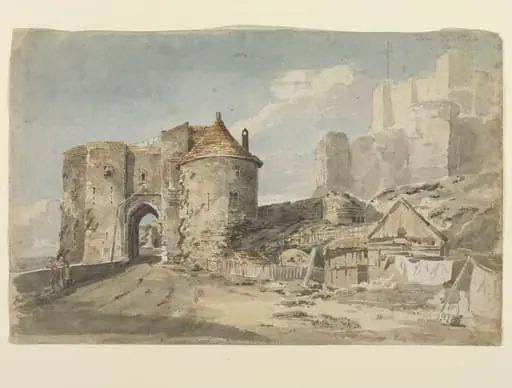
Painted in 1762 by Amelia Long, this watercolour captures the Butter-Cross in Winchester, a market structure that once stood at a key urban intersection.
Painted in 1762 by Amelia Long, this watercolour captures the Butter-Cross in Winchester, a market structure that once stood at a key urban intersection. Rendered in delicate washes, the scene presents an unassuming moment of daily life, with modest architecture and quiet human activity. The work reflects Long’s interest in topographical detail and the subtle interplay of light on weathered surfaces.
Subject & Meaning
The painting portrays ordinary urban life around a communal market site. A seated woman with a child, a standing figure nearby, and passersby suggest routine interactions. The tied horse and open shop indicate commerce and transit. The Butter-Cross, though no longer standing, was a hub of local trade; the image preserves its role as a social anchor rather than a monument.
Technique & Style
Long employed transparent watercolour washes to evoke soft daylight and muted shadows. Buildings are rendered with loose, suggestive brushwork, emphasizing texture over precision. The palette is restrained—earthy tones and pale hues—enhancing the sense of quiet realism. There is no dramatic focal point; instead, the composition invites slow observation.
History & Provenance
The painting is part of a small body of work by Amelia Long, an amateur artist from a well-connected family. It likely originated as a personal record of a familiar place, not intended for public display. Its survival suggests it was preserved within the family before entering institutional collections, possibly through later donations.
Context
In mid-18th century England, watercolour sketching was a common pastime among the educated middle class. Winchester, with its medieval heritage, attracted artists interested in antiquarian subjects. Long’s depiction aligns with a broader trend of documenting vernacular architecture before rapid urban change erased such scenes.
Legacy
Though not widely exhibited during her lifetime, Long’s work contributes to a quiet archive of domestic topography. The painting offers insight into how non-professional artists recorded their environments, preserving details of daily life that official records often omitted. It remains a modest but valuable witness to provincial England’s visual culture.
Artist & collection
Artist
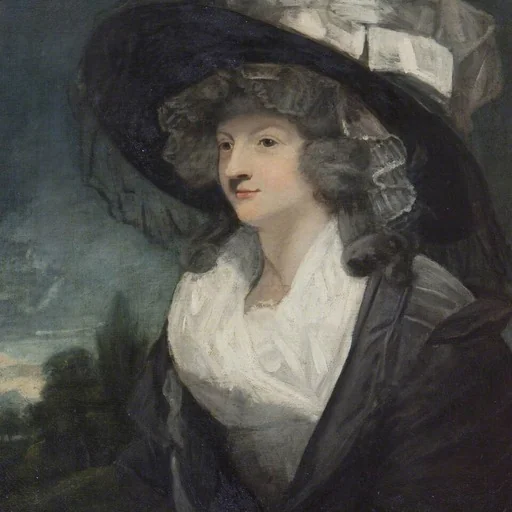
Amelia Hannah Long, Lady Farnborough (née Hume; 1772-1837) was a British watercolour painter who specialised in landscapes and botanical subjects.