Artwork
Jean George Wille
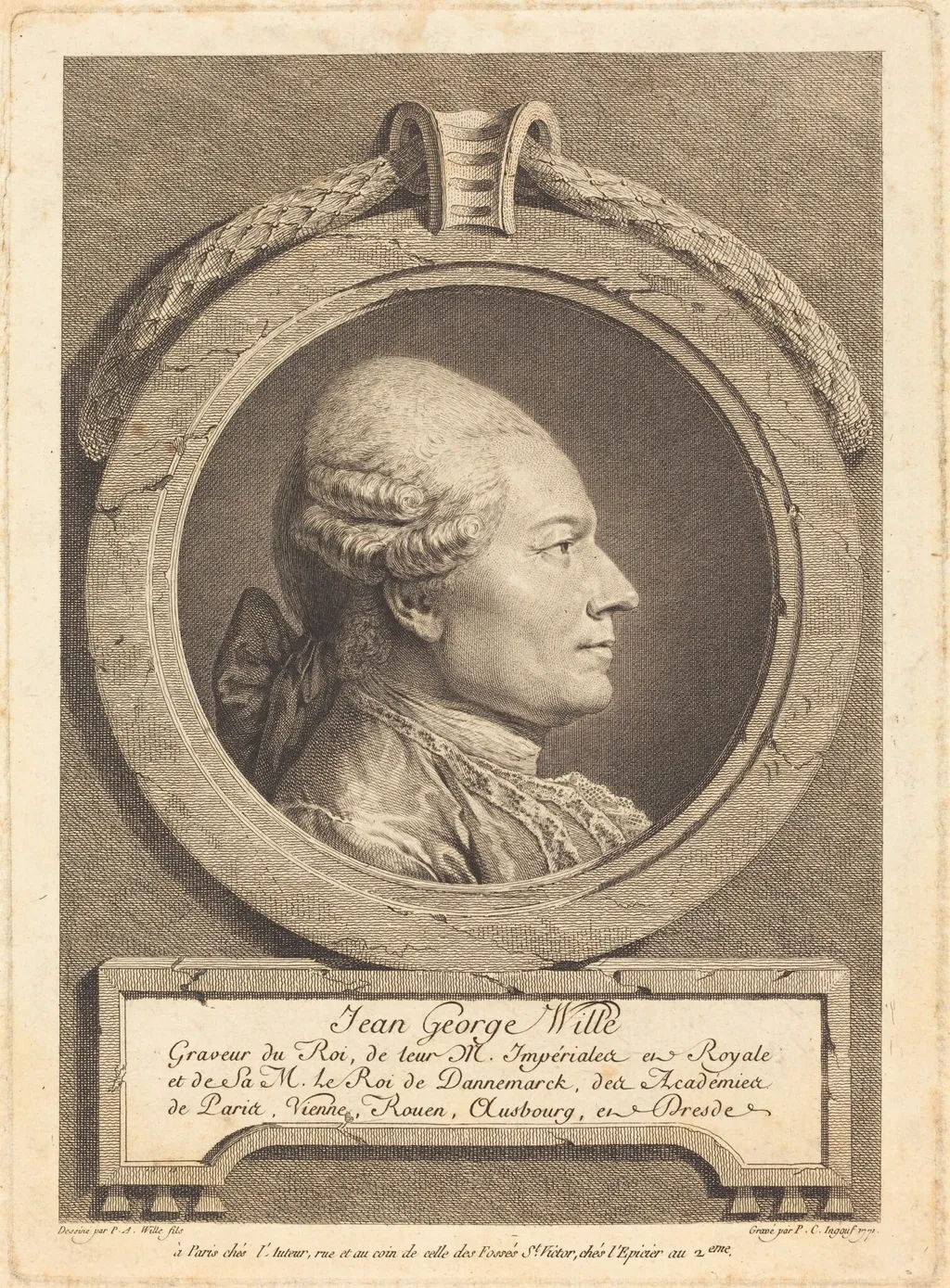
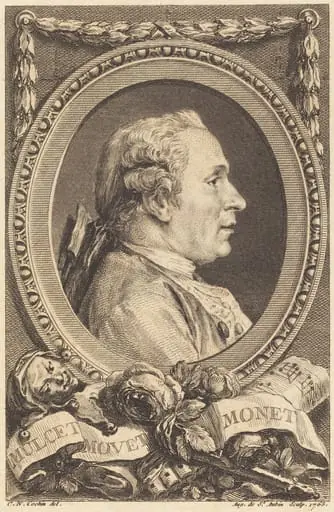
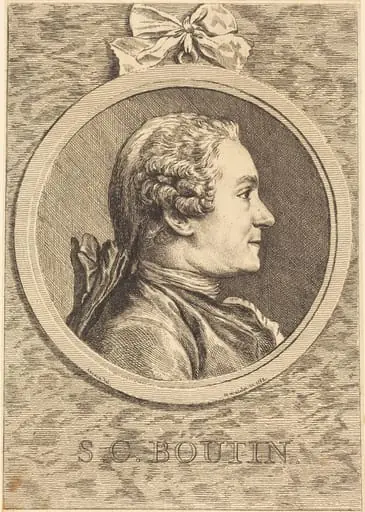
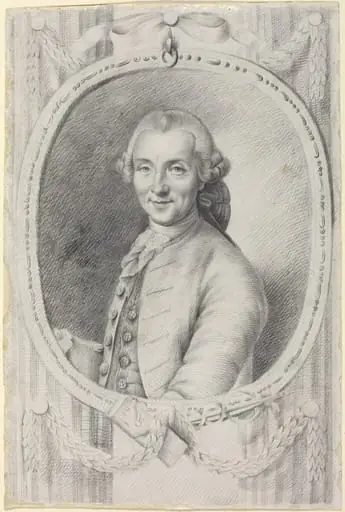
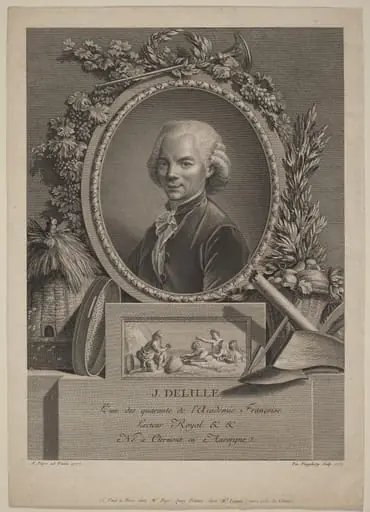
Jean George Wille is an ink print by the Romanticist artist Pierre-Charles Ingouf. It dates from 1771 and is held in the collection of the National Gallery of Art.
About this work
Overview
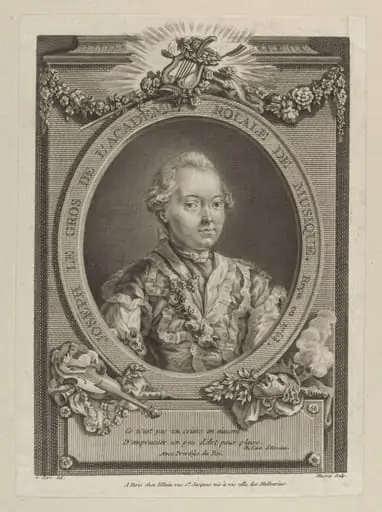
This 1771 engraving by Pierre-Charles Ingouf depicts Jean George Wille, a French printmaker active in the late 18th century.
This 1771 engraving by Pierre-Charles Ingouf depicts Jean George Wille, a French printmaker active in the late 18th century. Rendered in monochrome on laid paper, the portrait presents Wille in profile, his expression composed and reserved. The composition is framed by a delicate, lace-like border of fine lines, enhancing its formal precision. Above his head, a crown and laurel wreath suggest official recognition, aligning with his title as a royal engraver.
Subject & Meaning
Jean George Wille is portrayed not as an idealized figure but as a professional of established standing. The crown and wreath above him denote his appointment as 'Graveur du Roi,' a prestigious position in the French royal court. His gaze, directed away from the viewer, conveys quiet dignity rather than theatrical grandeur. The inclusion of his full title in the inscription reinforces the portrait’s function as a record of status and service to the monarchy.
Technique & Style
Ingouf employed the engraving technique, incising fine lines into a metal plate to create the image. The portrait’s detail—curls of hair, the texture of the high collar, and the intricate border—is achieved through controlled, deliberate strokes. The absence of tone or shading emphasizes line and form, characteristic of academic portraiture in mid-to-late 18th-century France. The paper’s laid texture subtly enhances the print’s tactile quality.
History & Provenance
Created in 1771, the print likely served to document Wille’s official role within the royal printmaking establishment. Such portraits were often circulated among patrons, colleagues, or institutions to affirm professional legitimacy. While specific early ownership records are sparse, the work’s survival reflects its role in preserving the reputations of court artisans during a period of increasing institutional recognition for printmakers.
Context
In 18th-century France, royal appointments in the arts were tightly regulated. The title 'Graveur du Roi' was granted to only a select few, granting privileges and access to court commissions. Wille’s portrait reflects the broader cultural practice of using print to legitimize professional identity. Similar portraits of engravers and designers were produced to reinforce the hierarchy and prestige of the royal academies and workshops.
Legacy
Though Wille’s own artistic output is less widely known today, this portrait endures as a document of the engraving profession’s institutional status. Ingouf’s work exemplifies how printmaking itself was used to memorialize practitioners within a system that valued technical mastery and royal patronage. The image remains a reference point for understanding the social standing of artisans in pre-revolutionary France.
Artist & collection