Artwork
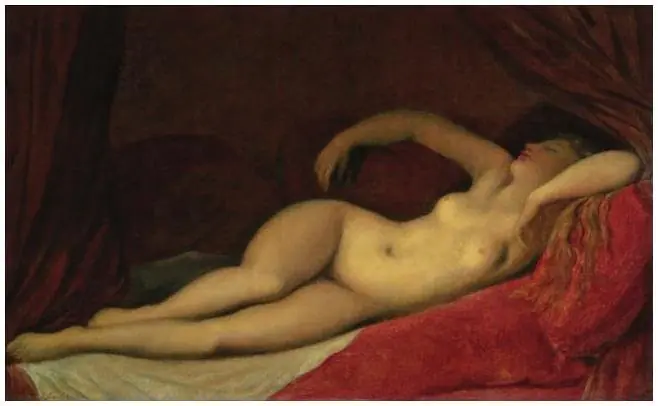
A Sleeping Odalisque
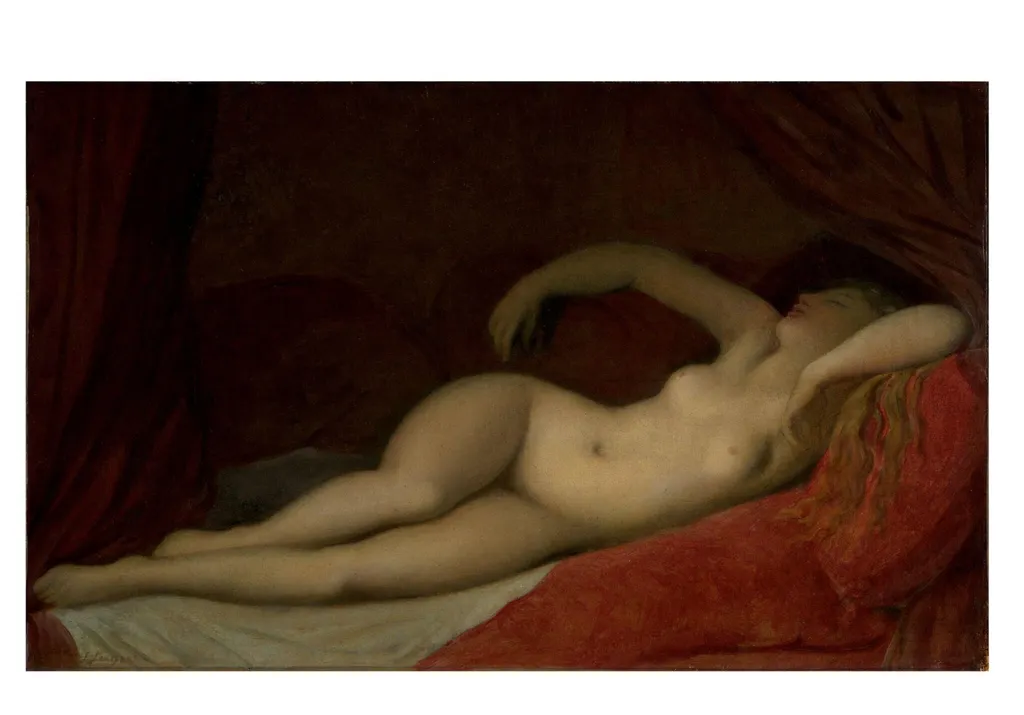
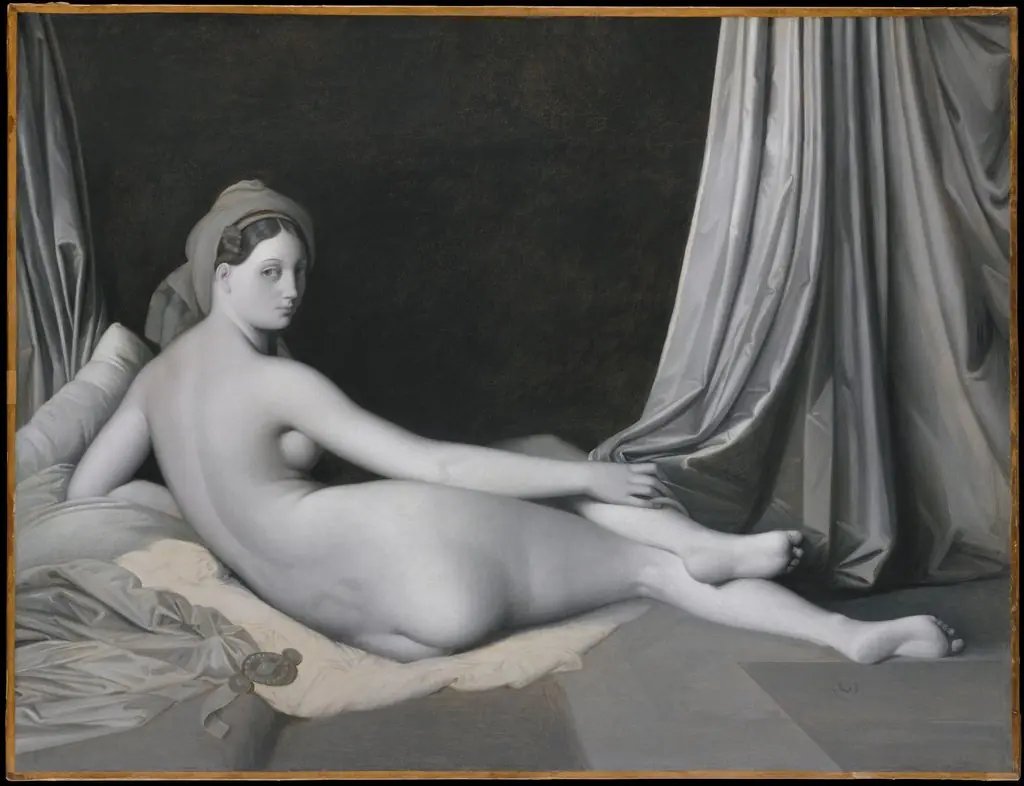
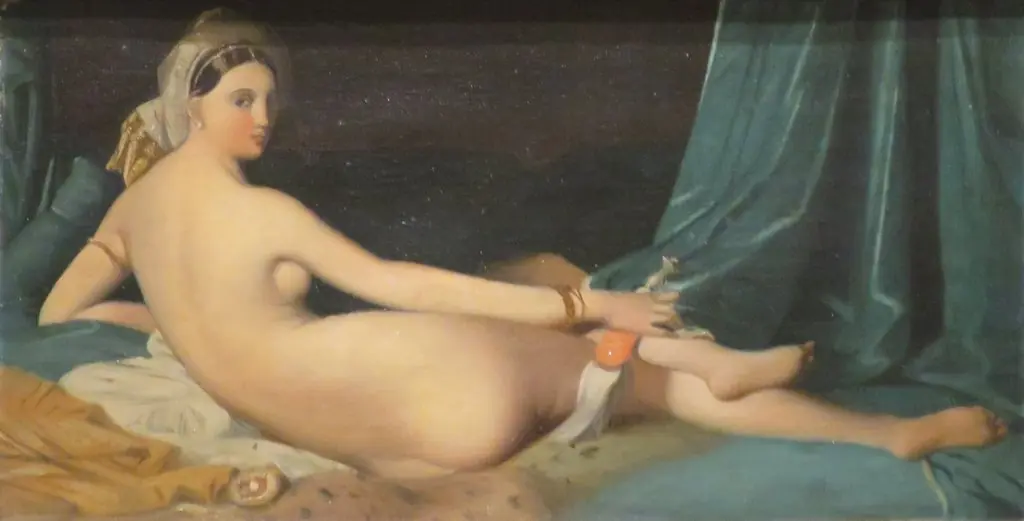
A Sleeping Odalisque is an oil painting by the Neoclassicist artist Jean Auguste Dominique Ingres. It dates from 1810 and is held in the collection of the Victoria and Albert Museum. Jean-Auguste-Dominique Ingres, born in Montauban in 1780, trained in Toulouse before entering Jacques-Louis David’s Paris studio in 1797.
About this work
Overview
He spent much of his career between Rome and Paris, returning permanently to the French capital in his final years, where he died in 1867 at age 87.
Jean-Auguste-Dominique Ingres, born in Montauban in 1780, trained in Toulouse before entering Jacques-Louis David’s Paris studio in 1797. He became a leading figure in French academic art, known for his disciplined line and classical ideals. Though celebrated for historical subjects, his portraits and reclining nudes also defined his legacy. He spent much of his career between Rome and Paris, returning permanently to the French capital in his final years, where he died in 1867 at age 87.
Subject & Meaning
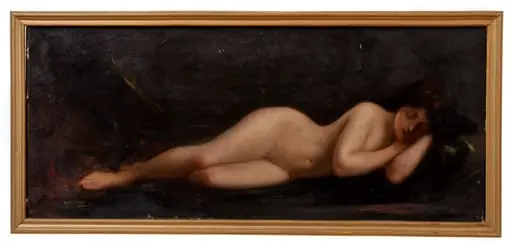
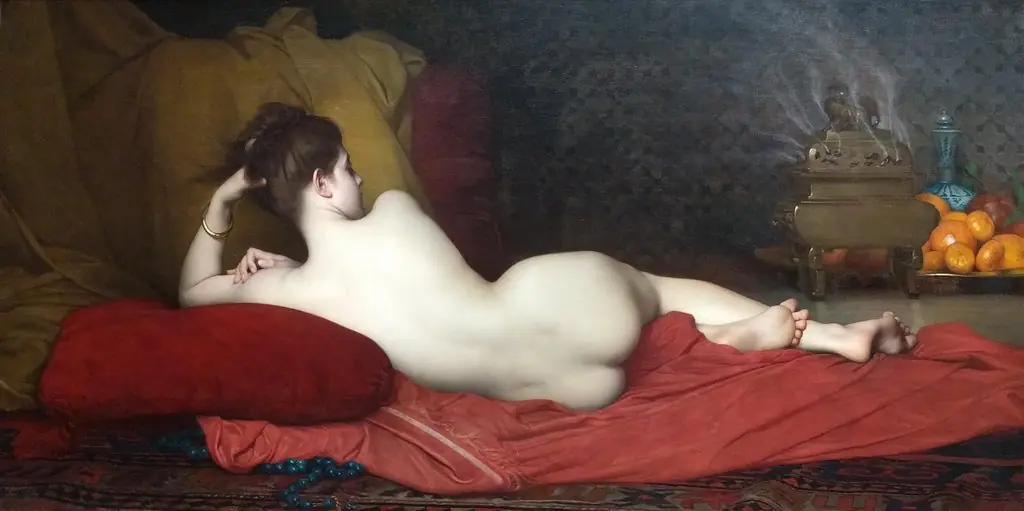
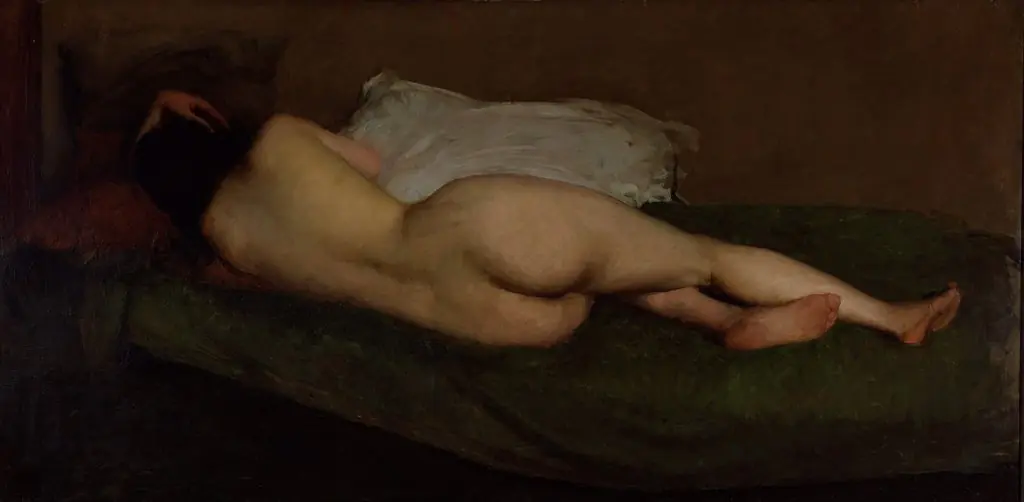
The figure depicts a reclining woman, posed with quiet stillness, her body turned away from the viewer. Unlike mythological or narrative nudes, this form avoids overt symbolism, instead emphasizing form and surface. The absence of a harem setting or contextual narrative shifts focus to the body as an object of contemplation. Ingres presents her not as an erotic fantasy but as a sculptural ideal, detached and serene.
Technique & Style
Ingres rendered the figure with meticulous precision, using smooth, uninterrupted brushwork to mimic the sheen of polished marble. The contours of the body follow a rigid, almost architectural linearity, especially from neck to hip. The red velvet backdrop contrasts with the pale skin, enhancing the sense of cool detachment. Shadows are subdued, avoiding dramatic contrast, reinforcing the statue-like stillness of the subject.
History & Provenance
This painting is widely regarded as a preparatory study for one of Ingres’s later odalisque compositions, though the exact final work remains uncertain. Likely created during his time in Rome between 1810 and 1830, it reflects his deep engagement with classical form and Orientalist themes. Its early provenance is undocumented, but it entered public collections in the 20th century, valued for its role in tracing his artistic development.
Context
Ingres worked amid rising tensions between classical and romantic aesthetics in early 19th-century France. While Delacroix embraced color and emotion, Ingres prioritized line and restraint. His odalisques emerged from a fascination with Orientalism, filtered through European ideals of beauty rather than ethnographic accuracy. These works responded to both academic tradition and the growing market for private, intimate imagery among collectors.
Legacy
Ingres’s reclining nudes, including this study, influenced later artists by redefining the female form as an abstract ideal rather than a narrative element. His emphasis on contour and surface texture anticipated modernist concerns with form and line. Though initially seen as detached or cold, these works are now recognized for their quiet innovation within the academic tradition, bridging classical discipline and emerging modern sensibilities.
Own this work as a print
Artist & collection

Artist
Jean-Auguste-Dominique Ingres was a French Neoclassical painter. Ingres was profoundly influenced by past artistic traditions and aspired to become the guardian of academic orthodoxy against the ascendant Romantic…