Artwork
Peisaj cu cumpănă
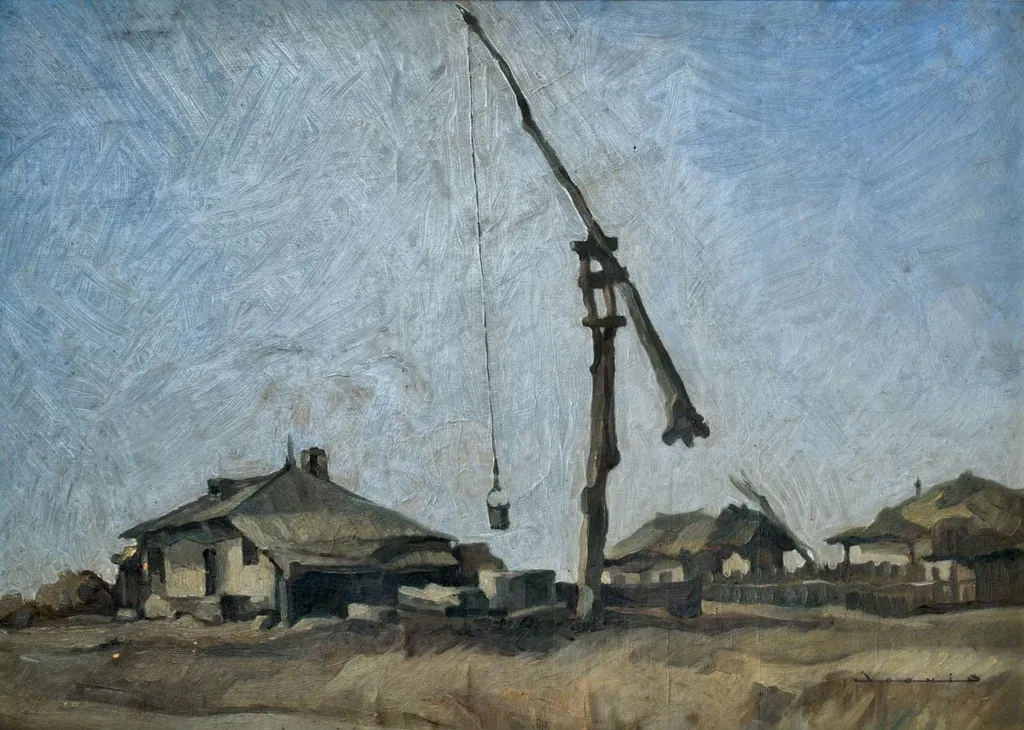
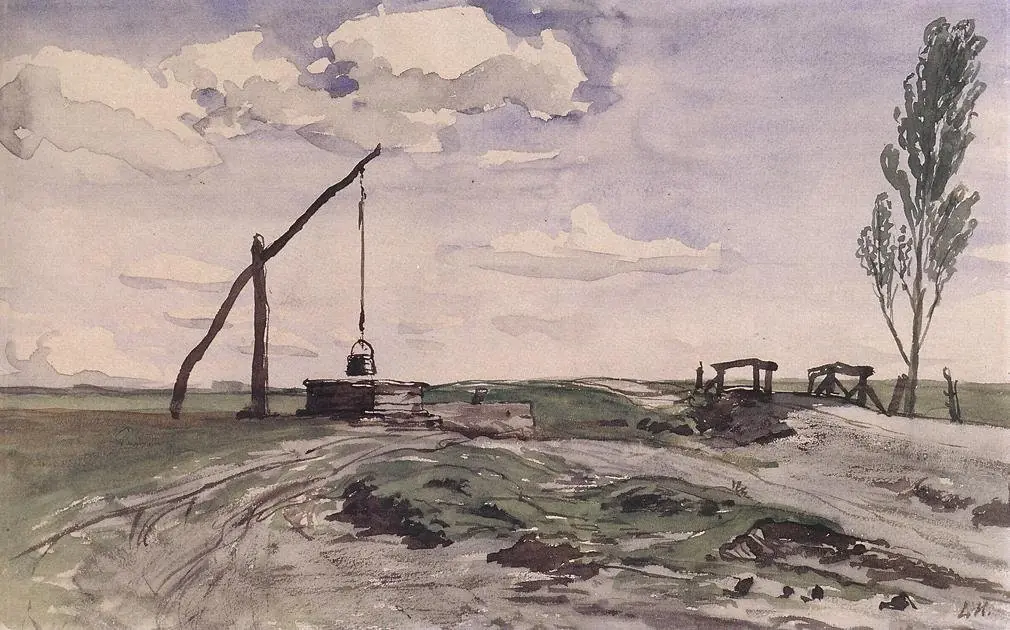
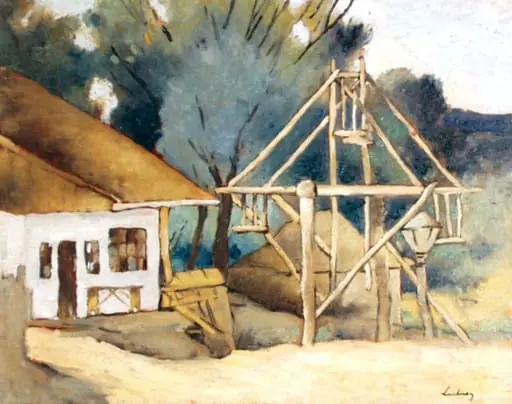
Peisaj cu cumpănă is a print by Ionel Ioanid. It is held in the collection of the Bucharest Municipality Museum. This image depicts a tranquil rural scene, centered on a wooden well with a hanging rope and bucket.
About this work
Overview
Simple, weathered houses with thatched roofs line the background, their forms unadorned and grounded in local building traditions.
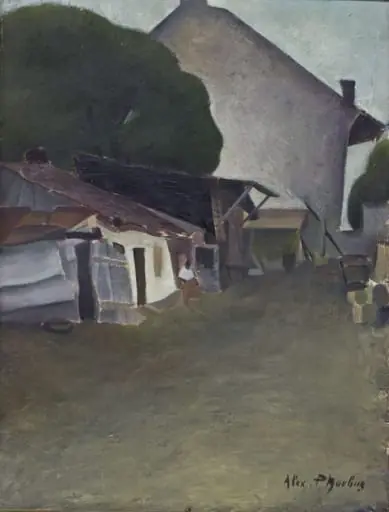
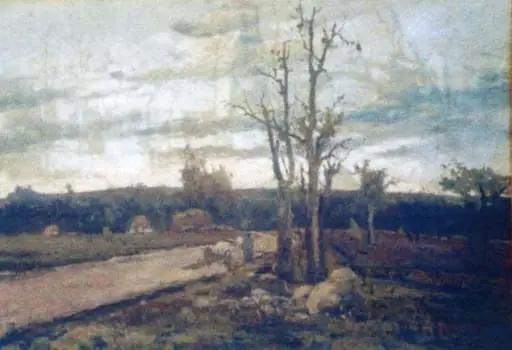
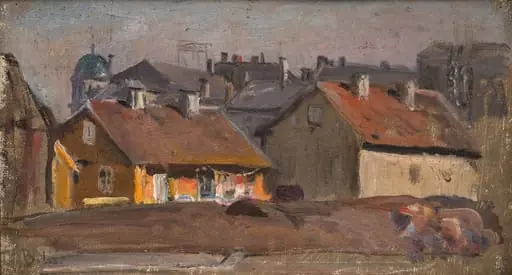
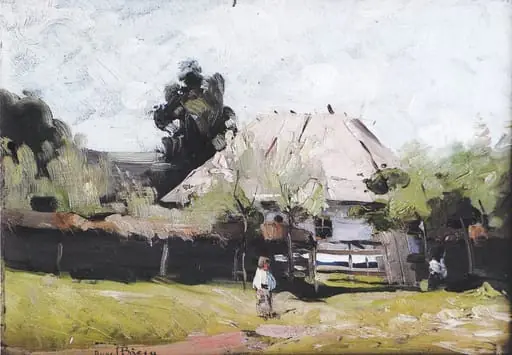
This image depicts a tranquil rural scene, centered on a wooden well with a hanging rope and bucket. Simple, weathered houses with thatched roofs line the background, their forms unadorned and grounded in local building traditions. The sky is softly rendered in pale tones, while the earth beneath appears cracked and uneven, suggesting dry conditions. Movement is implied only by the well’s suspended rope, hinting at an imminent, quiet action.
Subject & Meaning
The composition focuses on the well as the sole point of potential activity in an otherwise still landscape. It reflects daily rural life, where access to water shaped routines and community existence. The absence of people emphasizes solitude and the quiet endurance of ordinary routines, turning the well into a silent witness to domestic rhythms rather than a stage for human drama.
Technique & Style
The painting employs loose, textured brushwork to suggest the roughness of walls and the dryness of soil. Thatched roofs and wooden structures are rendered with minimal detail, favoring overall atmosphere over precision. The sky’s pale washes and the ground’s patchy tones create a muted palette, reinforcing the scene’s stillness and the weight of the environment over individual features.
History & Provenance
The work’s origins are not documented in detail, but its subject matter aligns with late 19th- to early 20th-century regional depictions of peasant life in Eastern Europe. Its style suggests it may have been produced by a local artist or amateur painter, possibly for private or community use rather than formal exhibition. The Museum of Ethnography holds similar works, indicating a regional interest in documenting vernacular architecture and rural customs.
Context
In agrarian communities of the period, the well was more than a utility—it was a social anchor, often the focal point of morning or evening routines. The painting’s quietness reflects a time before mechanization, when water collection demanded physical labor and shaped the rhythm of daily life. The worn houses and bare earth convey economic modesty and a deep connection to the land.
Legacy
This image contributes to a broader visual record of rural life in regions where traditional architecture and subsistence practices persisted into the modern era. Though not widely known, such works preserve the aesthetics and conditions of everyday existence outside urban centers. Collections like those at the Museum of Ethnography continue to safeguard these perspectives as cultural artifacts of ordinary resilience.
Artist & collection
Artist
Ionel Ioanid made prints of Romanian landscapes in the mid-20th century. His print Peisaj cu cumpănă shows a quiet river scene with a balance scale on the bank, suggesting the weighing of harvest or time. The work…