Artwork
Hanul părăsit (Scrânciobul)
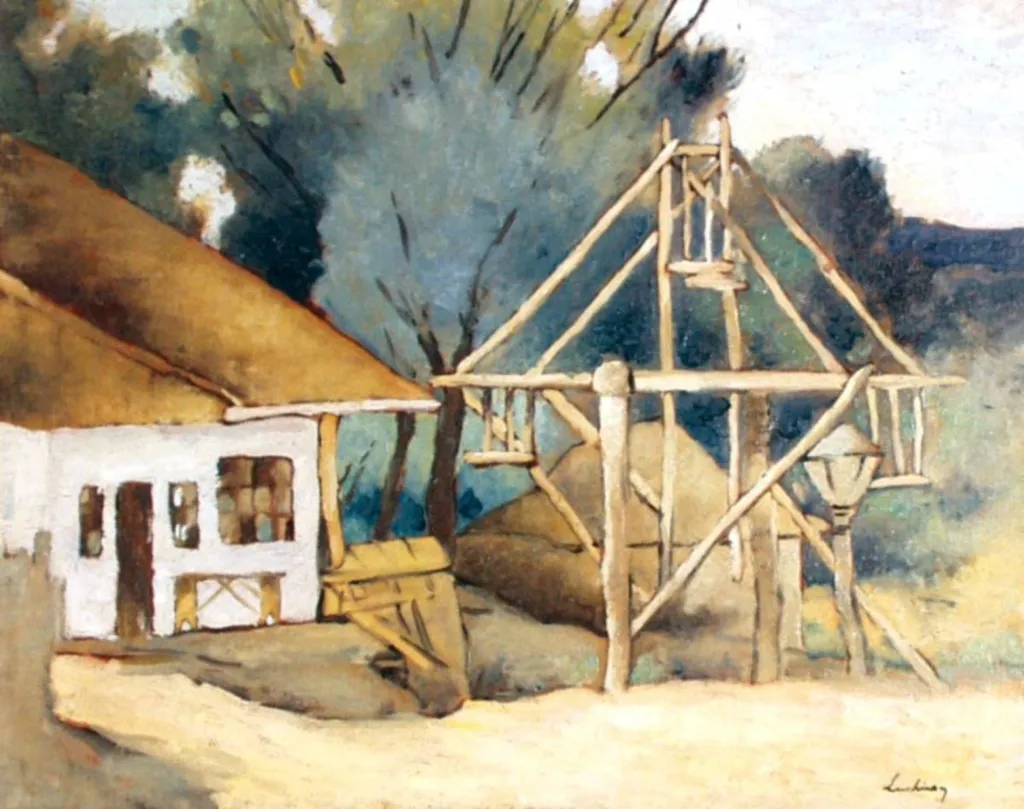
Hanul părăsit (Scrânciobul) is an unspecified painting by the Art Nouveau artist Ștefan Luchian. It dates from 1902 and is held in the collection of the National Museum of Art of Romania.
About this work
Overview
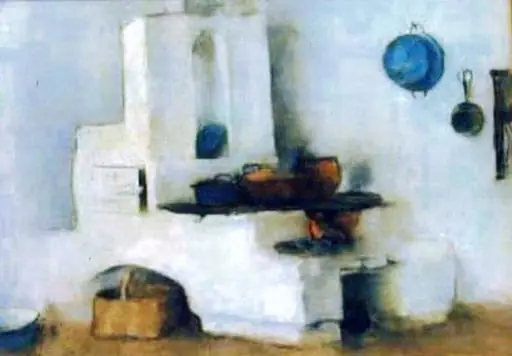
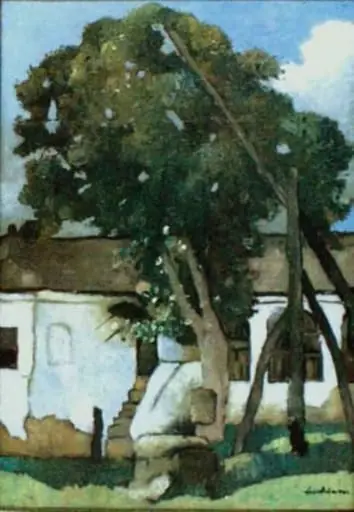
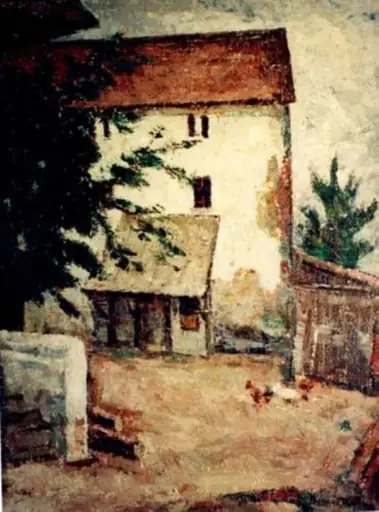
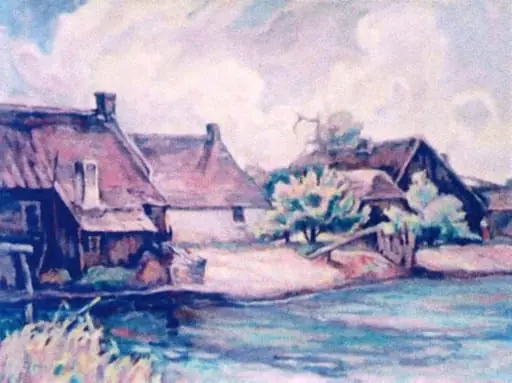
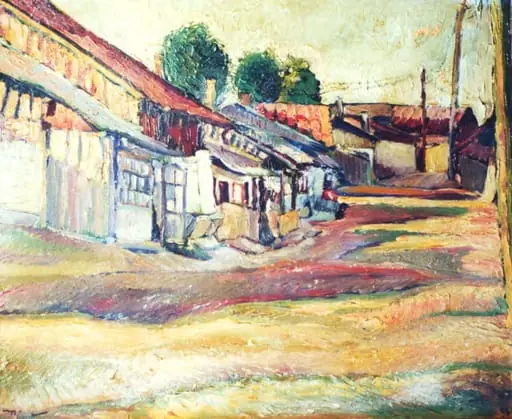
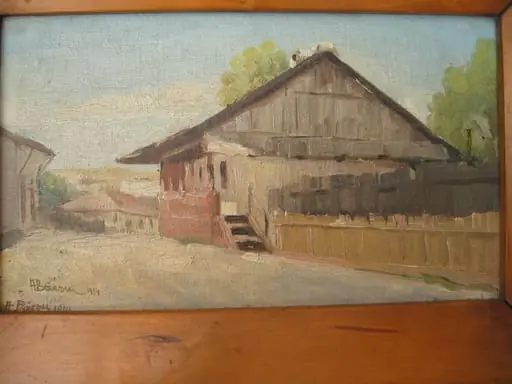
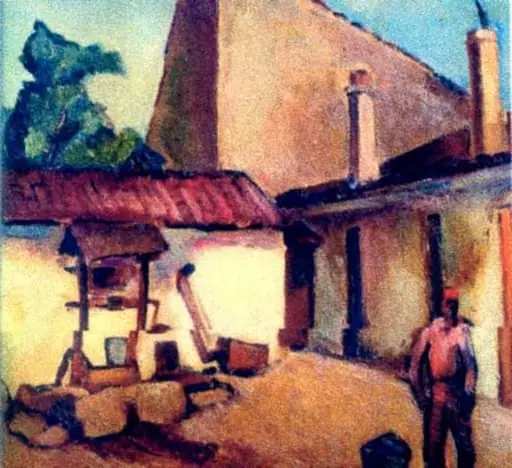
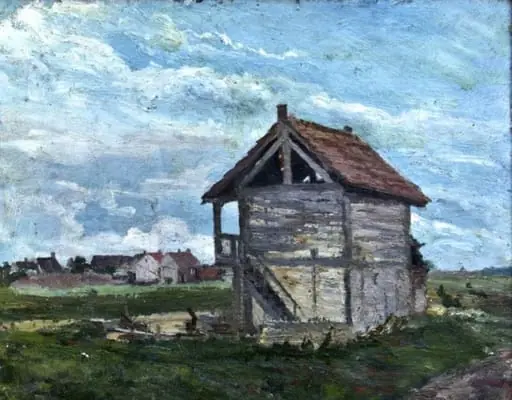
The composition centers on a weathered white building and a simple wooden framework, set against a backdrop of dense foliage and open sky.
Painted around 1902, Hanul părăsit (Scrânciobul) is a quiet landscape by Romanian artist Ștefan Luchian. It captures a rural scene with minimal human presence, focusing on the interplay of structure and nature. The composition centers on a weathered white building and a simple wooden framework, set against a backdrop of dense foliage and open sky. Luchian’s approach avoids dramatic tension, favoring stillness and subtle observation.
Subject & Meaning
The painting presents an abandoned rural structure, possibly a roadside inn or storage shed, surrounded by natural elements. The ladder and lantern suggest prior human activity, now deserted. There is no narrative drama—only the quiet evidence of use and decay. The title, meaning 'The Abandoned Inn,' reinforces a sense of solitude, inviting reflection on transience rather than telling a specific story.
Technique & Style
Luchian applied paint with loose, deliberate brushwork, leaving visible strokes that lend texture to both foliage and walls. His palette relies on muted earth tones—ochres, browns, and soft grays—balanced by a pale sky and the building’s white surface. The technique avoids idealization; instead, it emphasizes material presence and atmospheric light, aligning with late 19th-century naturalist tendencies in Romanian art.
History & Provenance
Created during Luchian’s mature period, the work reflects his deep engagement with Romanian rural life. It was likely painted near Bucharest, where he frequently traveled for inspiration. The painting remained in private collections after its completion and was later acquired by Romanian national institutions. Its preservation reflects its recognition as a representative example of early 20th-century Romanian landscape painting.
Context
Luchian worked during a time when Romanian artists were turning away from academic traditions toward personal, observational styles. Hanul părăsit aligns with broader European trends in plein air painting and the interest in everyday rural scenes. Unlike romanticized depictions of the countryside, Luchian’s version avoids sentimentality, presenting nature and architecture with unembellished honesty.
Legacy
The painting endures as a quiet testament to Luchian’s sensitivity to light, texture, and place. It influenced later Romanian painters who sought to capture the essence of the land without embellishment. While not widely exhibited internationally, it holds a significant position within Romania’s modern art canon for its restraint and emotional subtlety.
Artist & collection

Artist
Ștefan Luchian was a Romanian painter, famous for his landscapes and still life works.