Artwork
Femeie citind
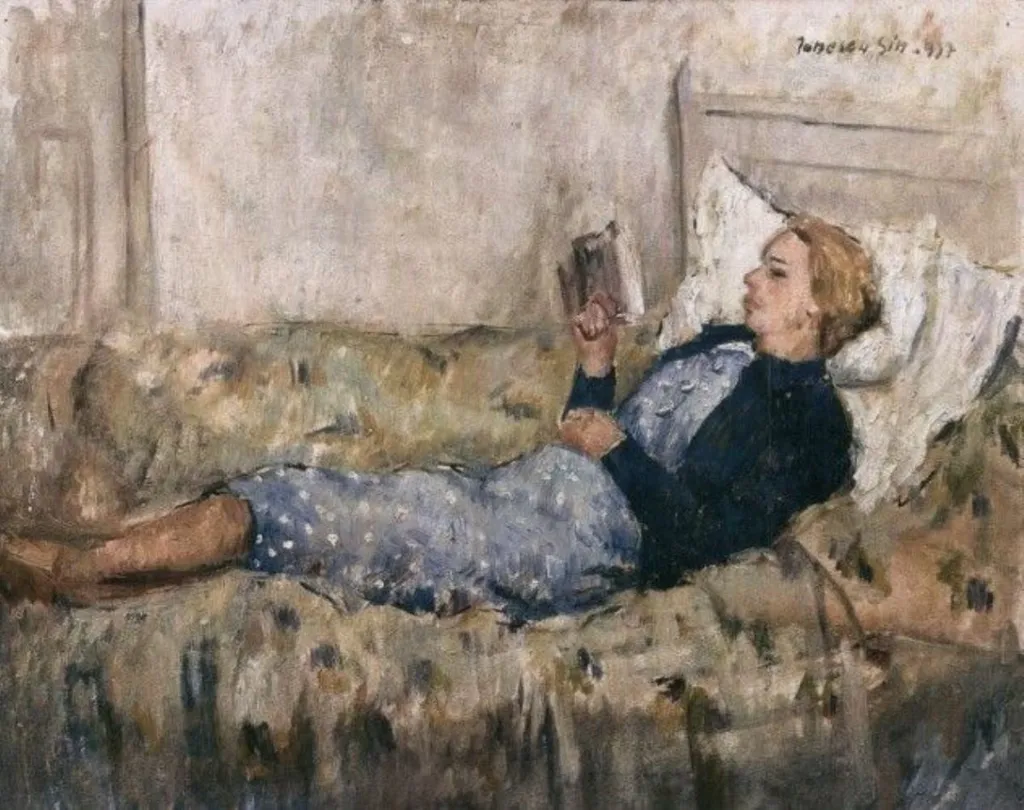
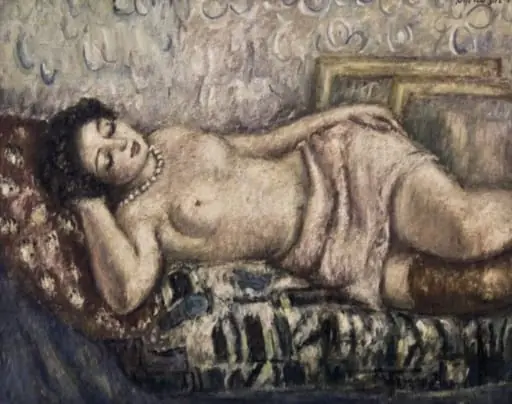
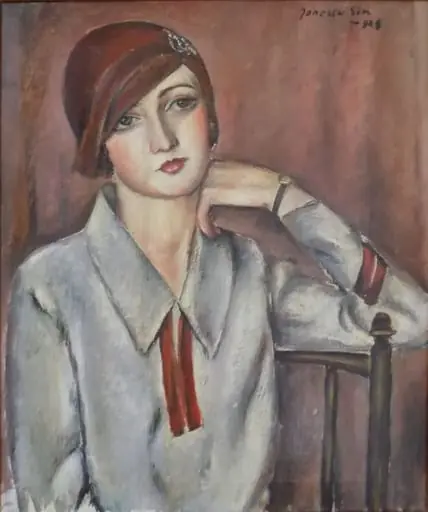
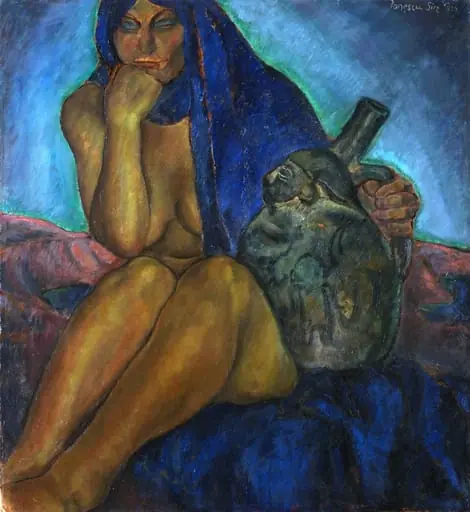
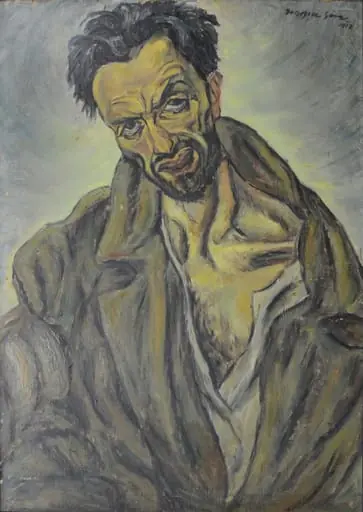
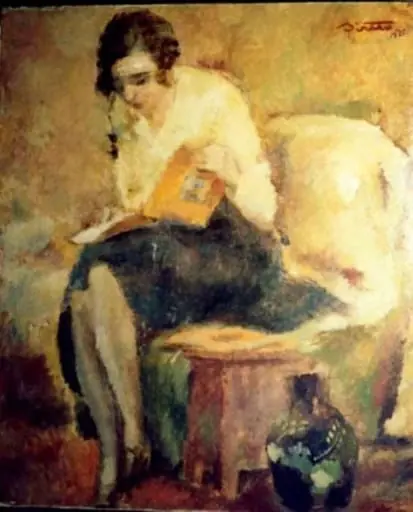
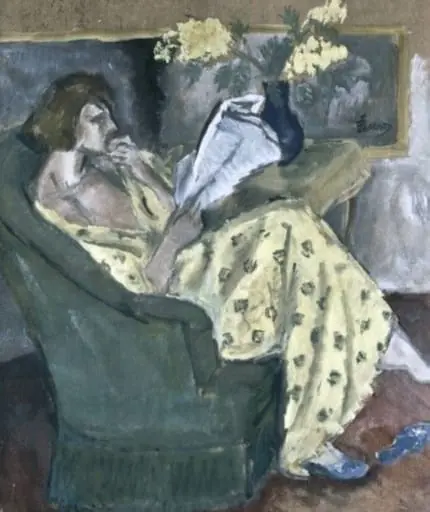
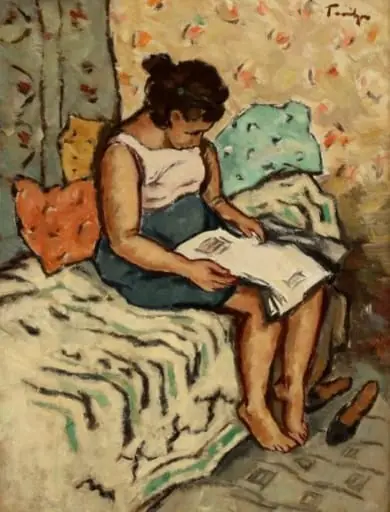
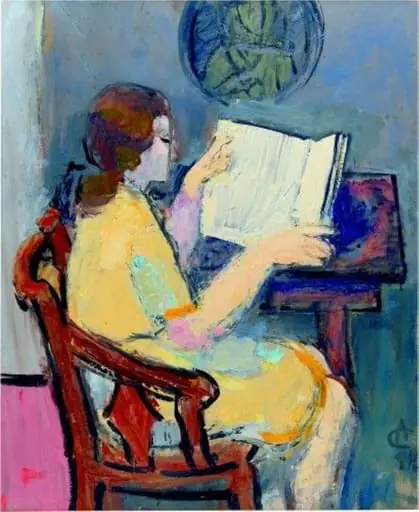
Femeie citind is an unspecified painting by Gheorghe Ionescu-Sin. It dates from 1937 and is held in the collection of the National Museum of Art of Romania.
About this work
Overview
Painted in 1937 by Gheorghe Ionescu-Sin, Femeie citind captures a quiet moment of solitude. The subject, a woman absorbed in reading, is rendered with a sense of intimacy and restraint. The composition focuses on her presence, framed by a dimly lit interior that suggests domestic quietude. The work belongs to a period in Romanian art that favored everyday scenes over grand narratives.
Subject & Meaning
The woman, seated on a worn couch, is depicted in deep concentration, her hands holding an open book. Her posture and expression convey inward focus rather than performance. The absence of narrative detail—no other figures, no clear context—shifts emphasis to the act of reading itself, suggesting introspection as a private, personal ritual within ordinary life.
Technique & Style
Thick, loosely applied brushwork gives the painting a tactile, unpolished texture, reinforcing its sense of realism. The artist employs chiaroscuro to isolate the woman’s face in a band of light, while the surrounding room recedes into shadow. This contrast heightens emotional focus without melodrama, and the muted palette—dominated by browns and grays—enhances the atmosphere of quiet endurance.
History & Provenance
Created during the interwar period in Romania, the painting remained in private hands for much of the 20th century. It was not widely exhibited until later scholarly interest in regional modernism revived attention to Ionescu-Sin’s oeuvre. Its current location reflects institutional efforts to preserve lesser-known works of Romanian visual culture from the era.
Context
In 1930s Romania, artists increasingly turned to domestic interiors and ordinary subjects as a counterpoint to political grandeur. Ionescu-Sin’s work aligns with this trend, drawing from both local realism and broader European modernist tendencies. The painting’s subdued tone reflects a cultural moment where personal quietude offered a subtle form of resistance to public spectacle.
Legacy
Femeie citind is now recognized as a representative example of Romanian interwar genre painting. It contributes to a broader understanding of how artists captured private life with psychological nuance, avoiding sentimentality. While not widely reproduced, it remains a touchstone in studies of Romanian modernism and the depiction of female interiority in regional art.
Artist & collection
Artist
Gheorghe Ionescu-Sin made prints and portraits in 1910s–1930s Bucharest, where he documented everyday life and the human figure.