Artwork
Nud cu idol
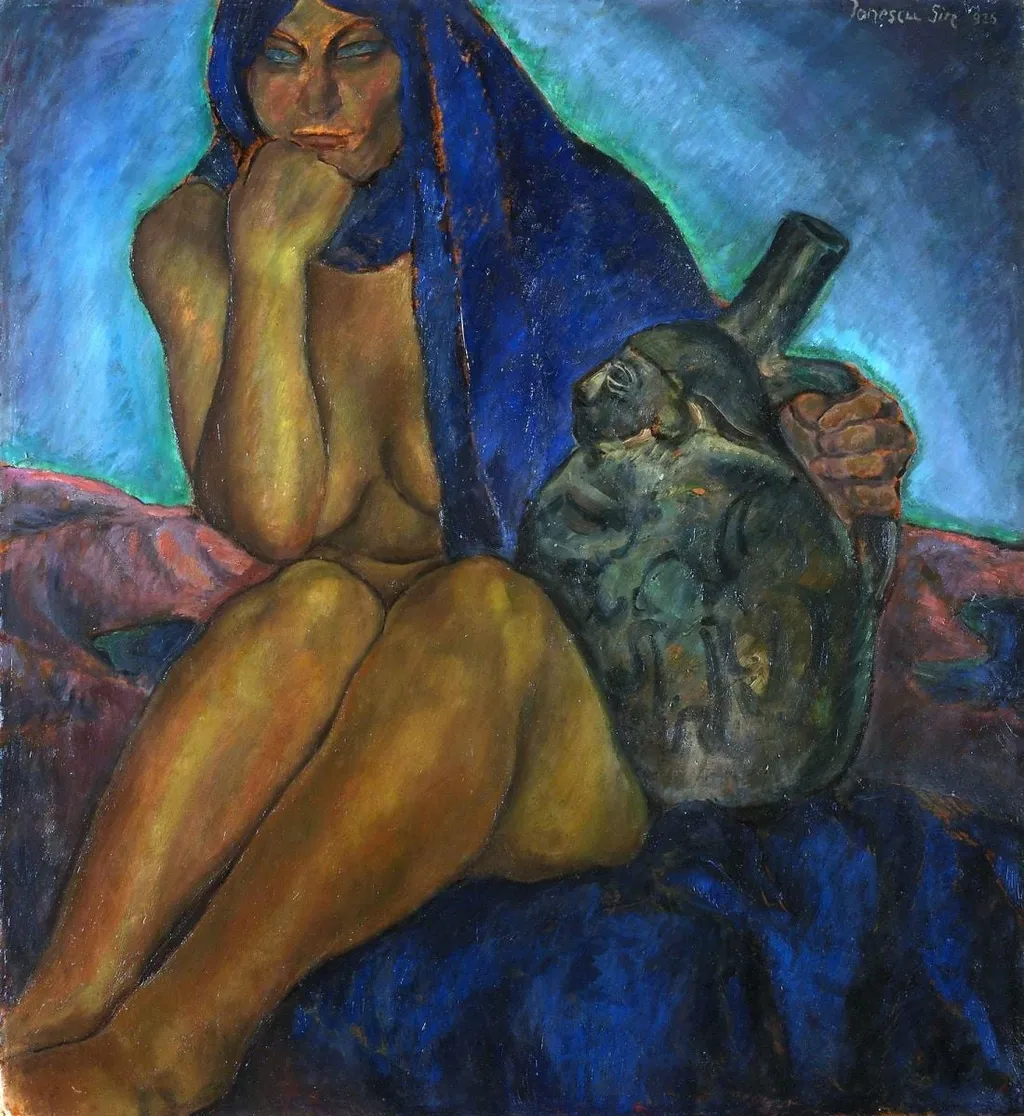
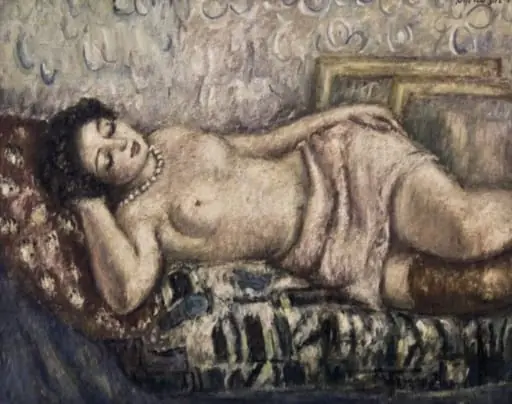
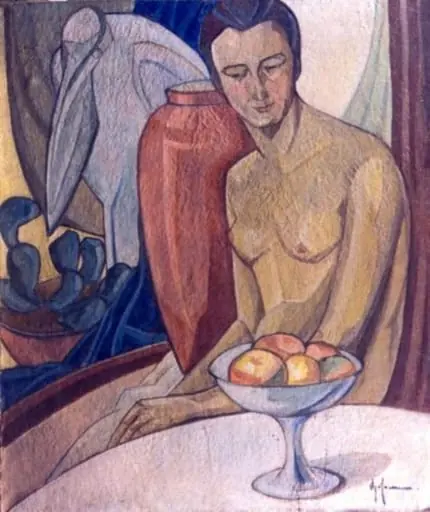
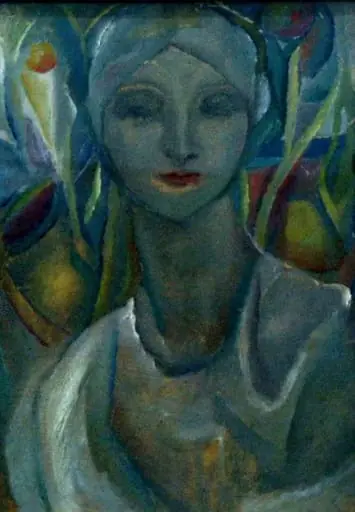
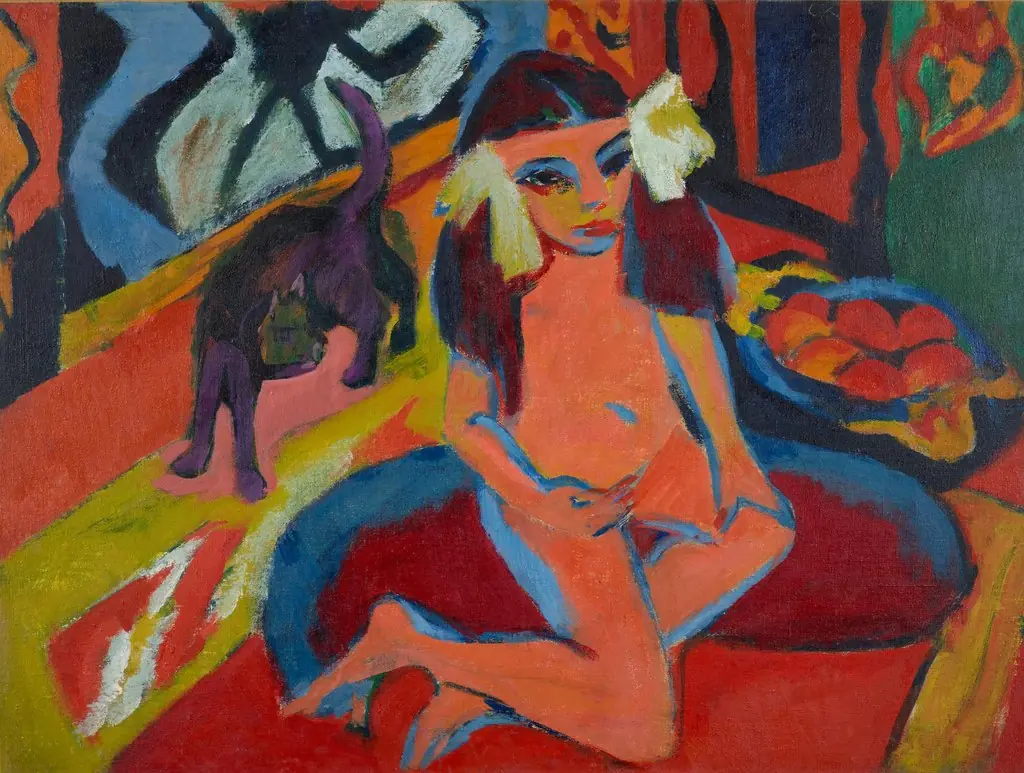
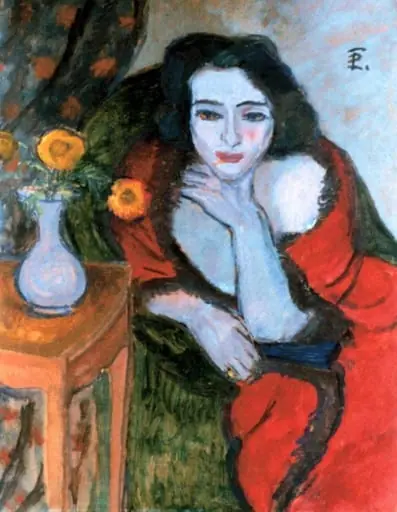
Nud cu idol is an unspecified painting by Gheorghe Ionescu-Sin. It is held in the collection of the Lucian Pop Art Collection. This painting depicts a solitary nude woman in a contemplative pose, seated with legs crossed and hand resting on her chin.
About this work
Overview
This painting depicts a solitary nude woman in a contemplative pose, seated with legs crossed and hand resting on her chin.
This painting depicts a solitary nude woman in a contemplative pose, seated with legs crossed and hand resting on her chin. A dark blue cloth drapes over her head and shoulders, partially concealing her form. A large green vase rests beside her on the ground. The background blends muted blues and greens, with subtle hints of red and brown in the foreground, creating a quiet, enclosed atmosphere that emphasizes stillness and introspection.
Subject & Meaning
The figure’s downward gaze and restrained posture suggest inward reflection rather than external engagement. The draped cloth may imply modesty, ritual, or emotional shielding, contrasting with her nudity. The presence of the vase, an object associated with containment or ritual use, adds ambiguity—perhaps symbolizing memory, absence, or the passage of time. The scene resists narrative clarity, inviting quiet contemplation over explicit meaning.
Technique & Style
Color is used with restraint, favoring cool blues and greens to unify the composition and soften edges between figure and environment. The brushwork is subtle, avoiding sharp definition, which enhances the sense of intimacy. Light falls gently across the form, modeling volume without dramatic contrast. The composition is deliberately closed, with the figure centered and the vase anchoring the lower right, reinforcing a sense of solitude and balance.
History & Provenance
The work is attributed to Gheorghe Ionescu-Sin, a Romanian painter active in the mid-20th century. While not widely exhibited internationally, it appears in private and regional collections in Romania. Its origins are tied to a period when Romanian artists were exploring psychological depth through figurative subjects, often away from state-mandated socialist realism. The painting’s provenance remains largely undocumented beyond national archives.
Context
Created during a time when Romanian art was navigating political pressures, this work reflects a quiet resistance to ideological conformity. Ionescu-Sin’s focus on solitary, introspective figures aligned with broader European trends in post-war figurative painting, yet retained a distinctly local sensibility. The absence of overt symbolism or narrative places it within a tradition of psychological portraiture rather than political or mythological allegory.
Legacy
Though not widely reproduced, the painting is recognized in Romanian art circles as an example of intimate, non-didactic figurative work from the mid-century. It contributes to a lesser-known strand of Romanian modernism that prioritized emotional nuance over public messaging. Scholars reference it in studies of gender, solitude, and the domestic gaze in Eastern European art of the period.
Artist & collection
Artist
Gheorghe Ionescu-Sin made prints and portraits in 1910s–1930s Bucharest, where he documented everyday life and the human figure.