Artwork
The Slaughtered Pig
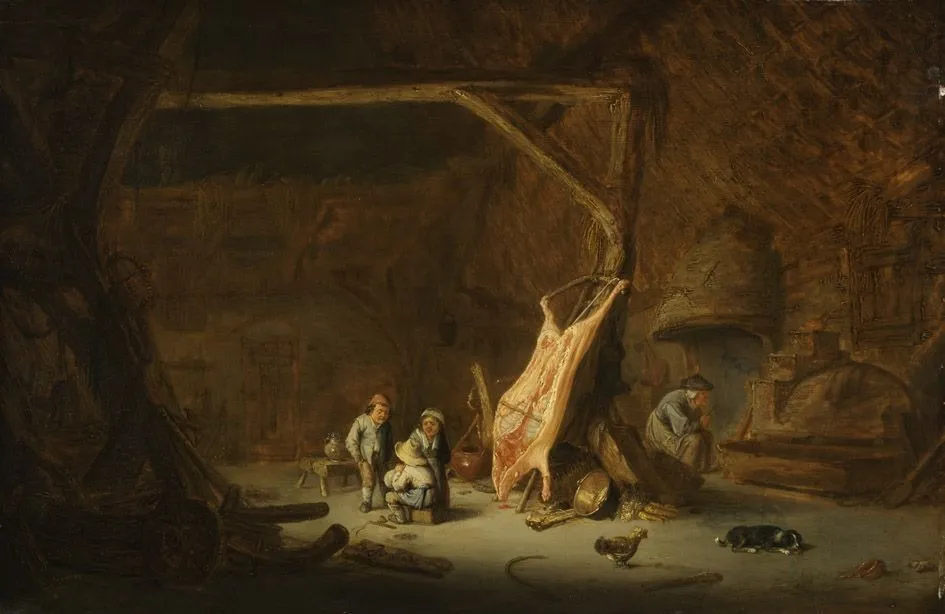
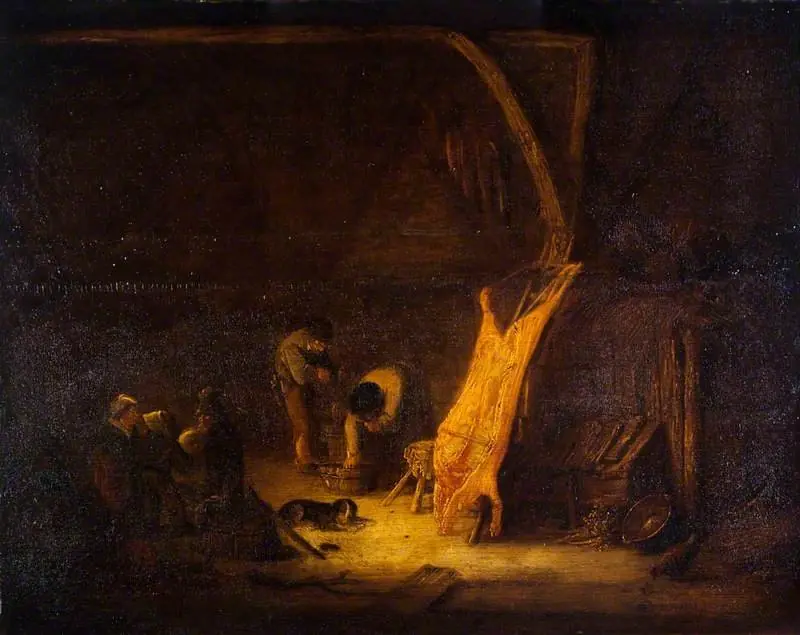
The Slaughtered Pig is an unspecified painting by the Dutch Golden Age artist Isaac van Ostade. It dates from 1639 and is held in the collection of the Bavarian State Painting Collections.
About this work
Overview
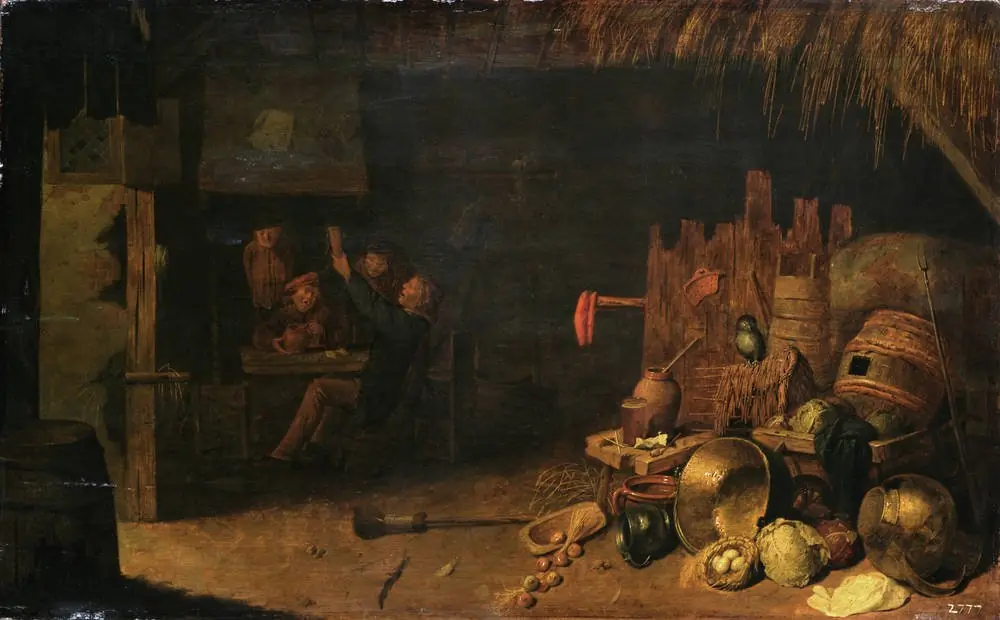
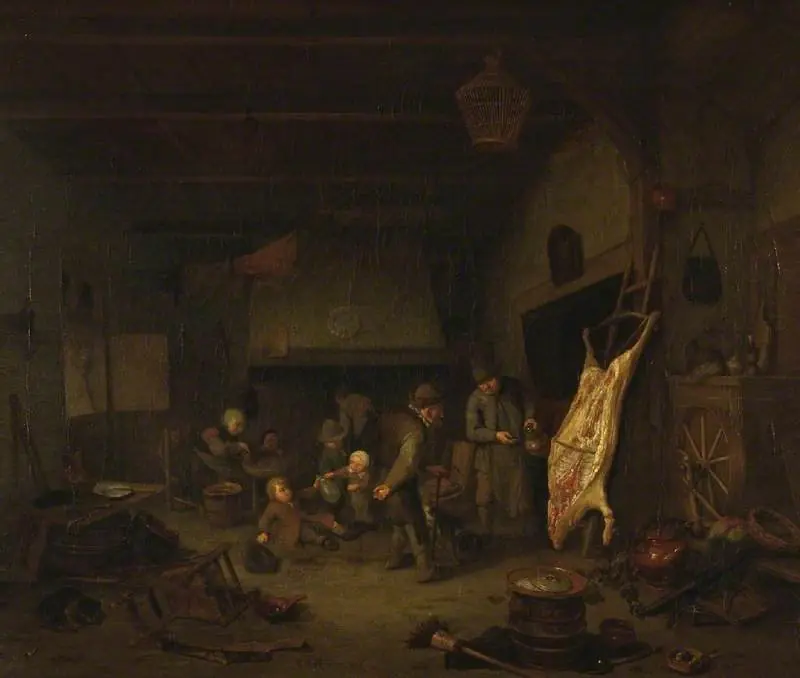
The composition centers on the pale, lifeless body of the animal, its legs splayed outward, which dominates the dimly lit space.
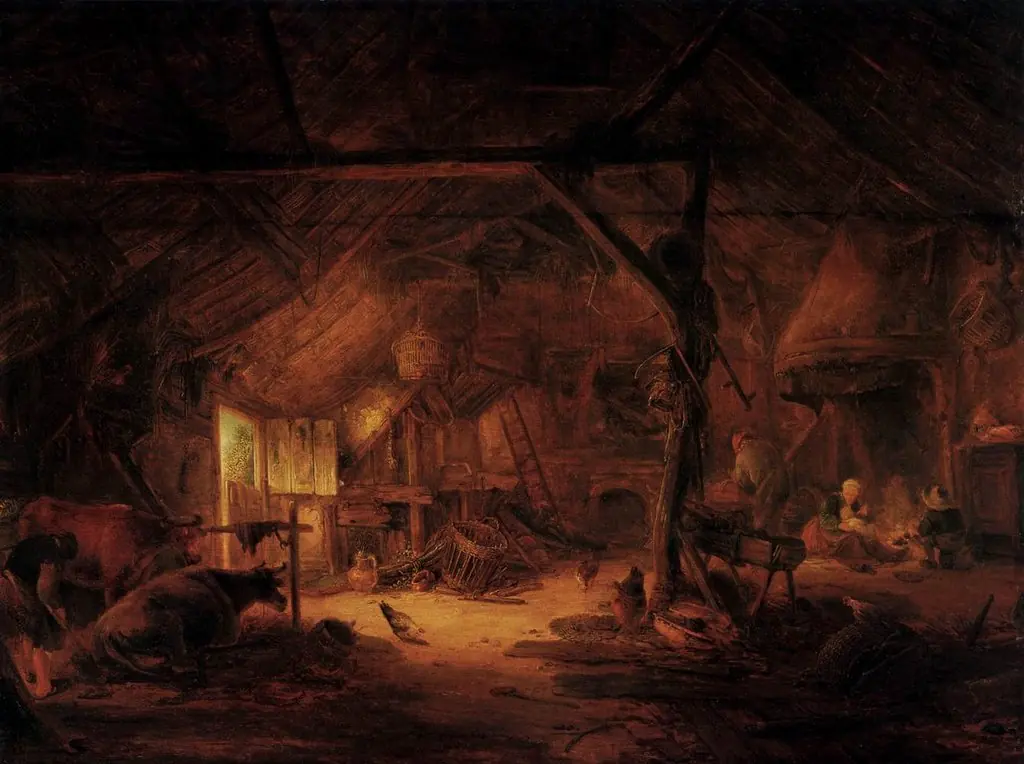
The Slaughtered Pig, painted by Isaac van Ostade in 1639, is a Dutch genre scene depicting the carcass of a pig suspended from a wooden beam within a rustic interior. Executed when the artist was approximately eighteen years old, the work demonstrates his early engagement with the depiction of humble, everyday subjects characteristic of the Haarlem school. The composition centers on the pale, lifeless body of the animal, its legs splayed outward, which dominates the dimly lit space. Van Ostade employs a restrained palette and focused illumination to highlight the texture of the flesh against the shadowed background, creating a somber and still atmosphere. A dog lies on the floor in the foreground, adding a secondary element of narrative life to the otherwise static scene. Scattered objects in the room contribute to the sense of a working environment. This painting reflects van Ostade's development as a painter of peasant life and interior scenes, a genre he would continue to explore throughout his brief career before his death in 1649. The work stands as an early example of his ability to infuse mundane subjects with a quiet, observational gravity.
Subject & Meaning
The composition centers on the pale carcass, its limbs spread outward, occupying the dimly lit room. A dog lies on the floor, and assorted objects are scattered nearby, suggesting a functional space where meat preparation occurs. The stillness and subdued lighting invite contemplation of mortality and the ordinary labor of rural life.
Technique & Style
Van Ostade employs a restrained palette of muted earth tones, allowing the contrast between light and shadow to model the pig’s flesh and the surrounding interior. The chiaroscuro effect creates a sense of depth, while the careful rendering of texture— from the animal’s skin to the rough timber—demonstrates the artist’s attention to material detail.
History & Provenance
Painted in 1639, The Slaughtered Pig has remained in public ownership, entering the Alte Pinakothek’s holdings in the 19th century. Its presence in this German museum reflects the broader European interest in Dutch genre paintings, which were collected for their narrative qualities and technical proficiency.
Artist & collection