Artwork
Still life of Fruit and Flowers
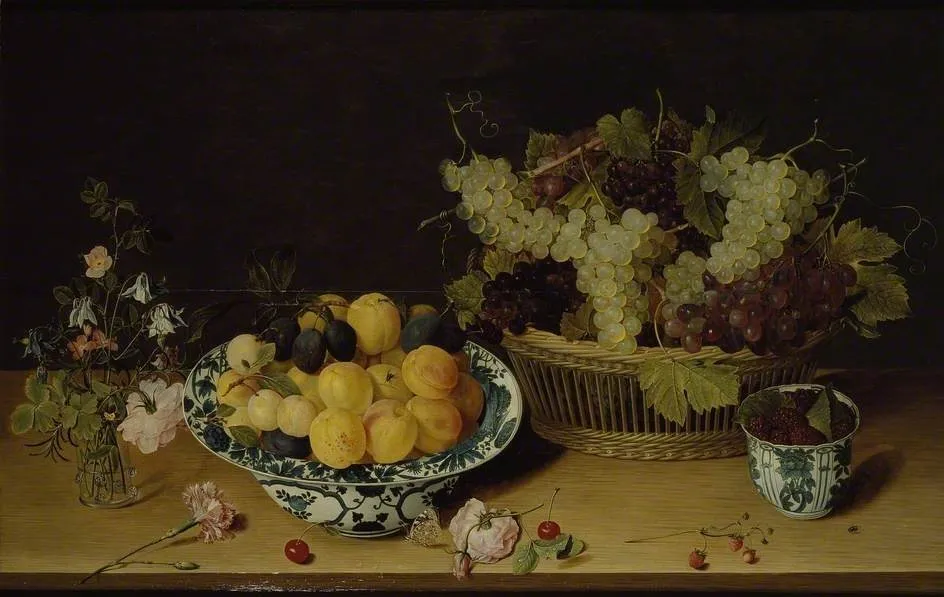
Still life of Fruit and Flowers is an oil painting by Isaak Soreau. It dates from 1634 and is held in the collection of the Ashmolean Museum.
About this work
Overview
Painted around 1634, this oil-on-canvas still life by Isaak Soreau presents a modest yet deliberate arrangement of fruit and blossoms on a wooden surface.
Painted around 1634, this oil-on-canvas still life by Isaak Soreau presents a modest yet deliberate arrangement of fruit and blossoms on a wooden surface. The composition is restrained, with no overt drama or symbolism, focusing instead on the quiet presence of everyday objects. It resides in the Ashmolean Museum, where it represents a quiet strand of Dutch and Flemish still-life tradition from the early 17th century.
Subject & Meaning
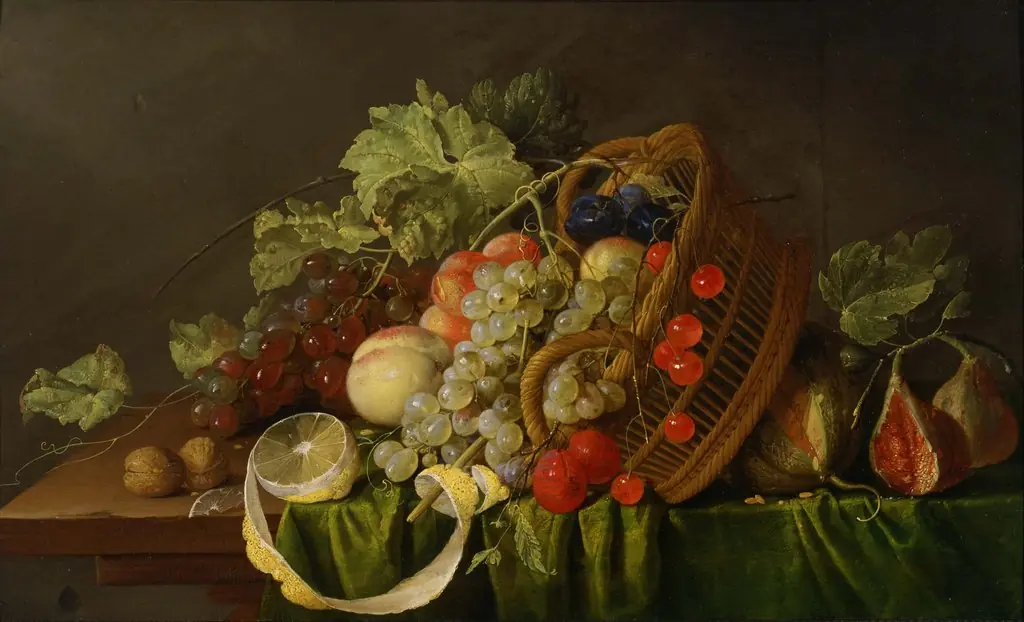
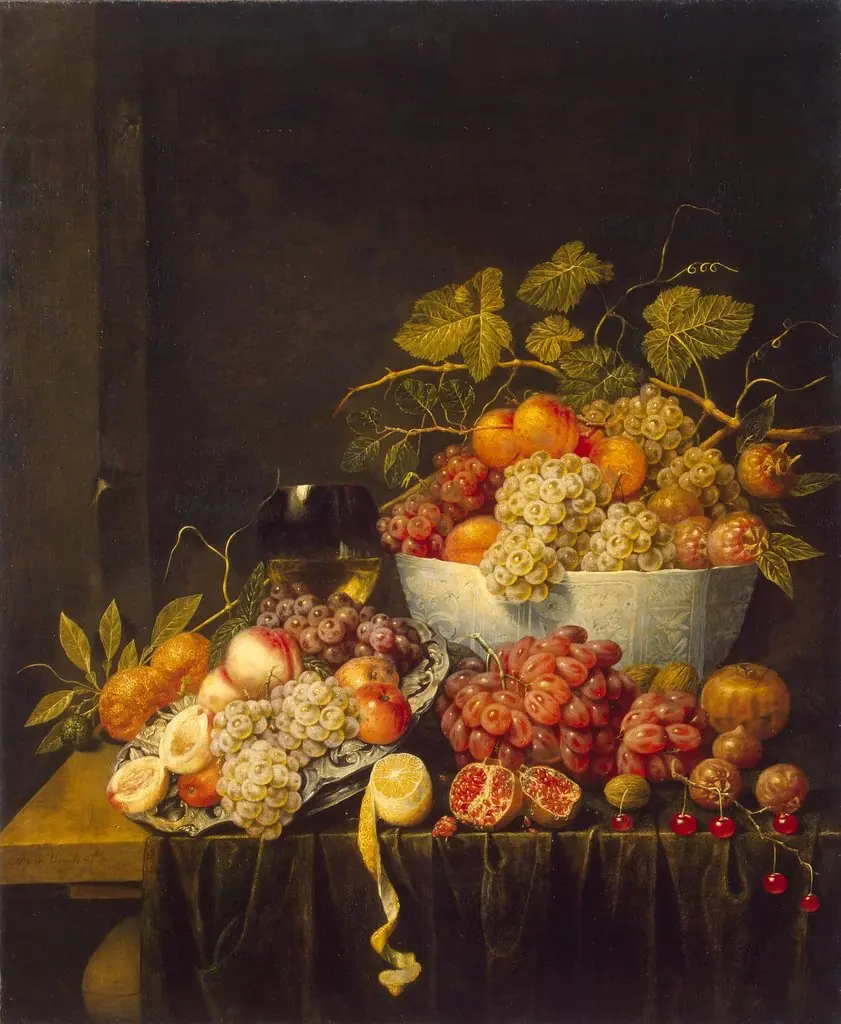
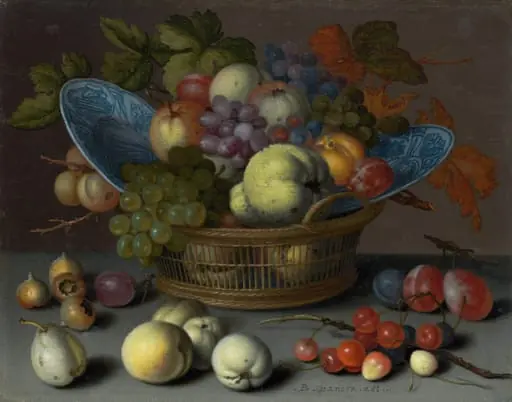
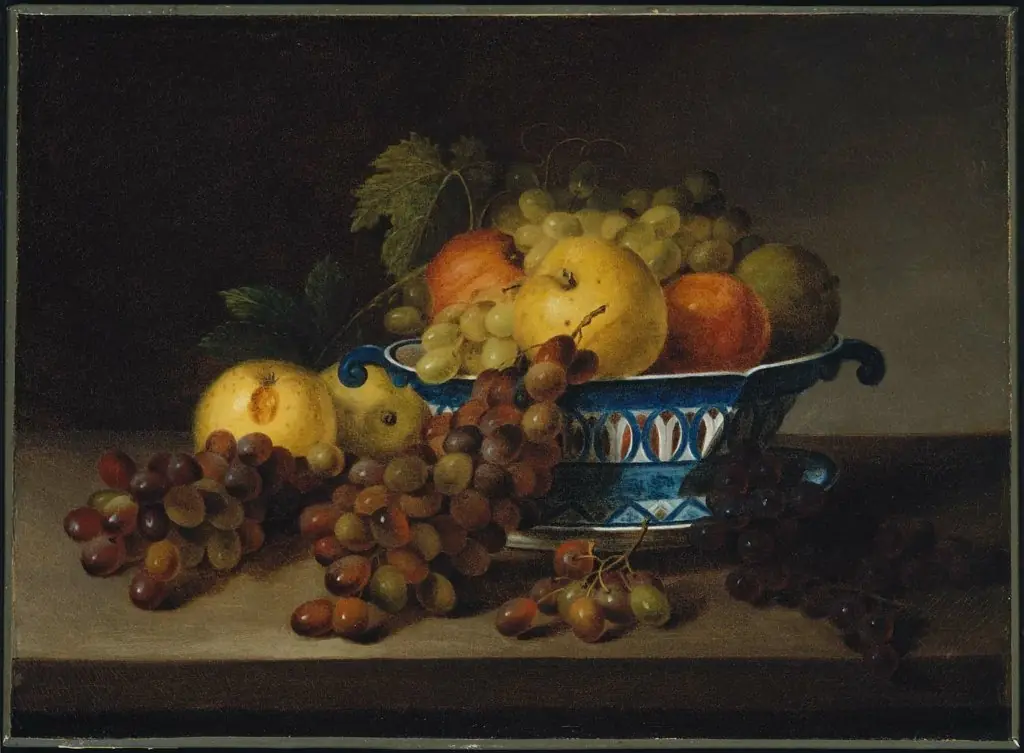
The painting includes peaches, plums, and grapes alongside pink and white carnations, arranged without theatrical flourish. These elements were common in Northern European still lifes, often evoking themes of transience and seasonal change. Yet here, no skulls, watches, or wilting petals signal moralizing intent. The objects are presented as they are—gathered, observed, and held in stillness.
Technique & Style
Soreau employs soft, muted tones—pale greens, dusty pinks, and warm yellows—to render textures with subtle precision. Light falls from the left, casting gentle shadows that define the curvature of fruit and the delicate folds of petals. The background recedes into deep brown, isolating the arrangement and enhancing its intimacy. Brushwork is controlled, avoiding flamboyance in favor of quiet observation.
History & Provenance
The painting entered the Ashmolean Museum’s collection in the 19th century, though its earlier ownership remains undocumented. It was likely produced in the Netherlands or Flanders during a period when still-life painting flourished among middle-class patrons. Soreau’s limited surviving oeuvre suggests he worked within regional workshops, producing works for domestic interiors rather than public display.
Context
In the 1630s, still-life painting in the Low Countries was increasingly valued for its technical precision and quiet contemplation. Unlike grander historical or religious works, these paintings appealed to collectors seeking harmony in domestic spaces. Soreau’s work aligns with this trend, reflecting a cultural preference for order, naturalism, and the aesthetic dignity of ordinary things.
Legacy
Isaak Soreau’s reputation rests on a small number of surviving works, and this painting is among the clearest examples of his approach. It contributes to the broader understanding of how regional artists interpreted still-life conventions without resorting to allegory or excess. Today, it stands as a quiet testament to the observational discipline of 17th-century Northern European painting.
Artist & collection

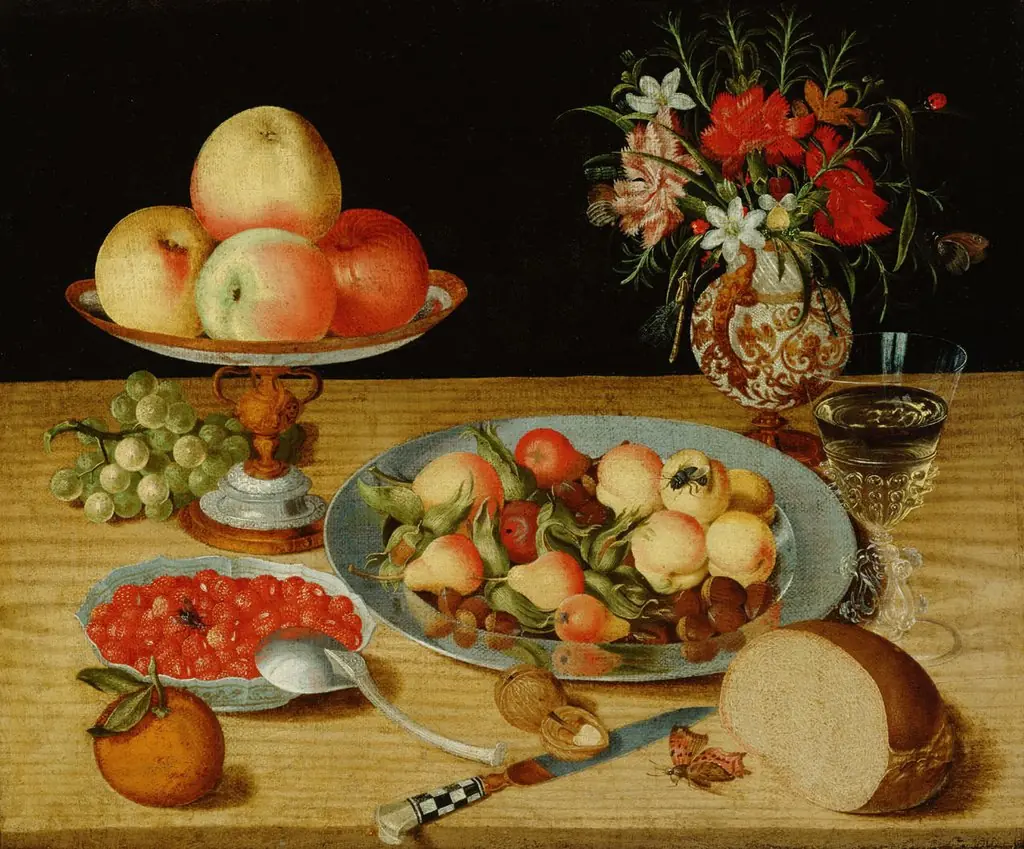 Still life with fruit, wine glass and vase of flowers
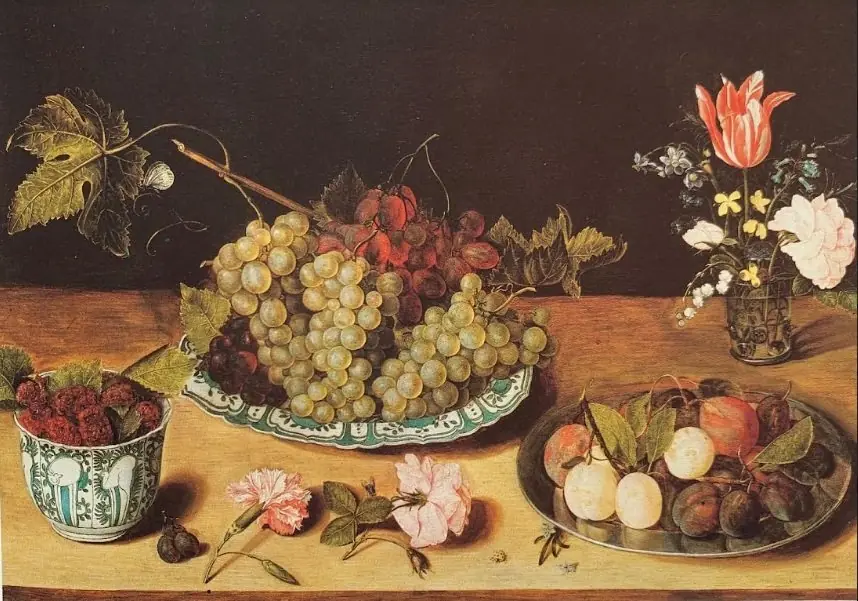 Glass of flowers, plate with grapes, plate with plums and crow cup of black raspberries
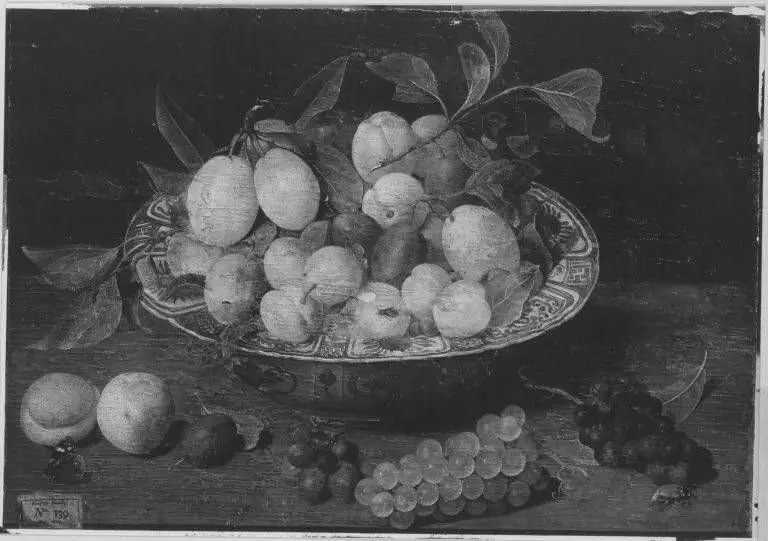 Früchtestillleben
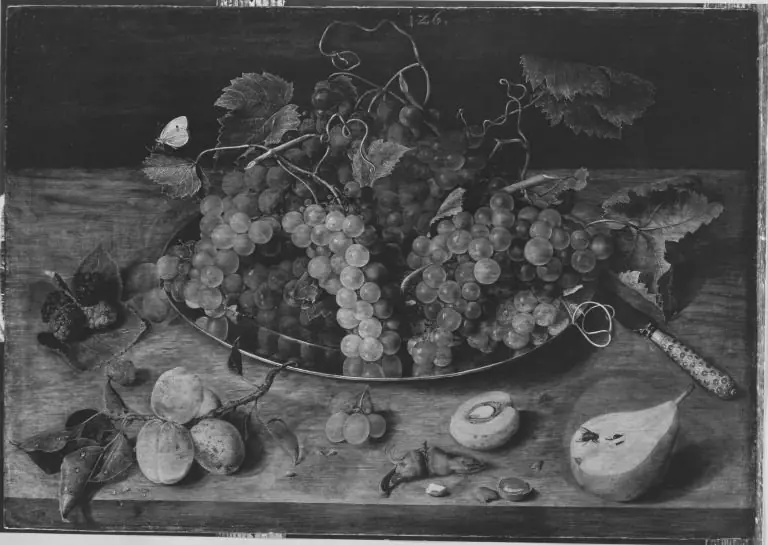 Stillleben mit Früchten
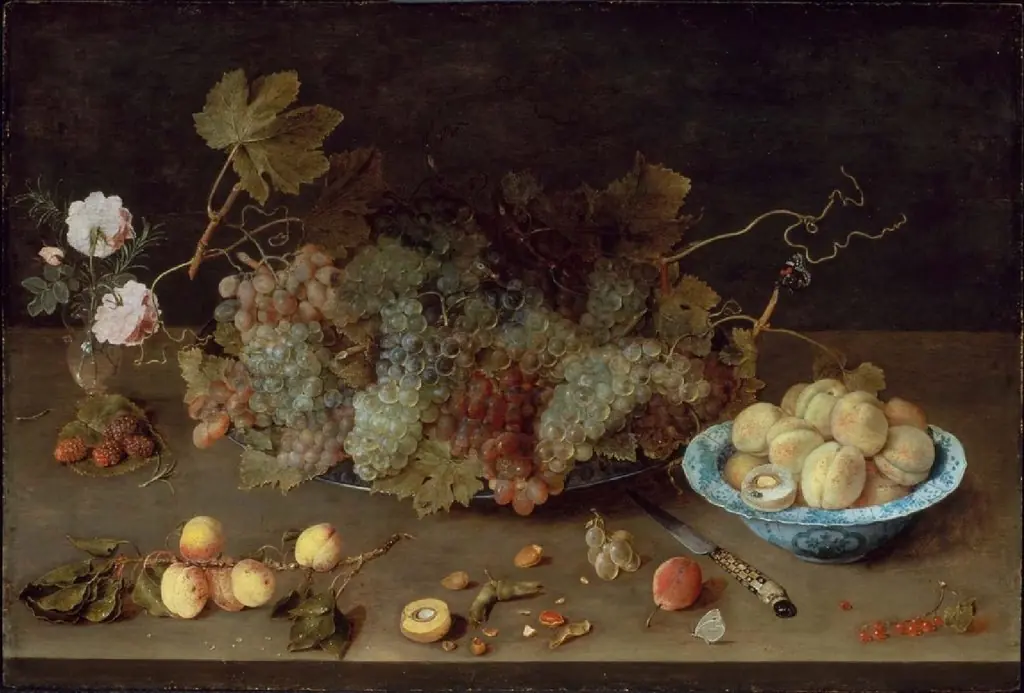 Still Life with Grapes on a Platter
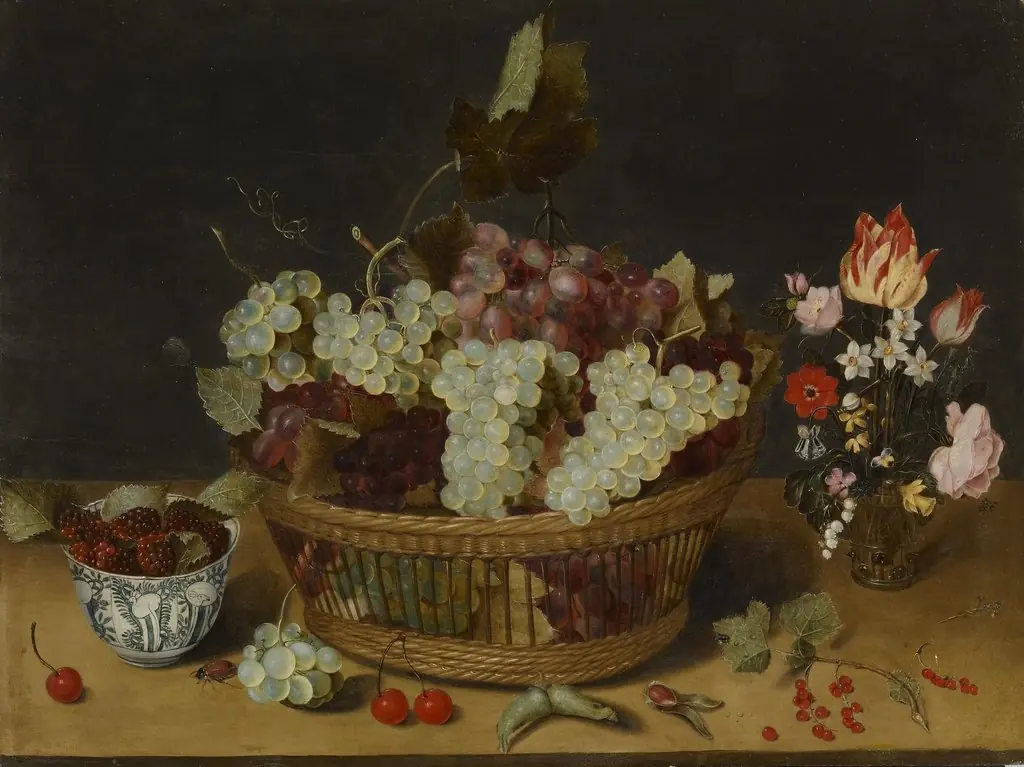 Still Life with Chinese Bowl and Vase of Flowers
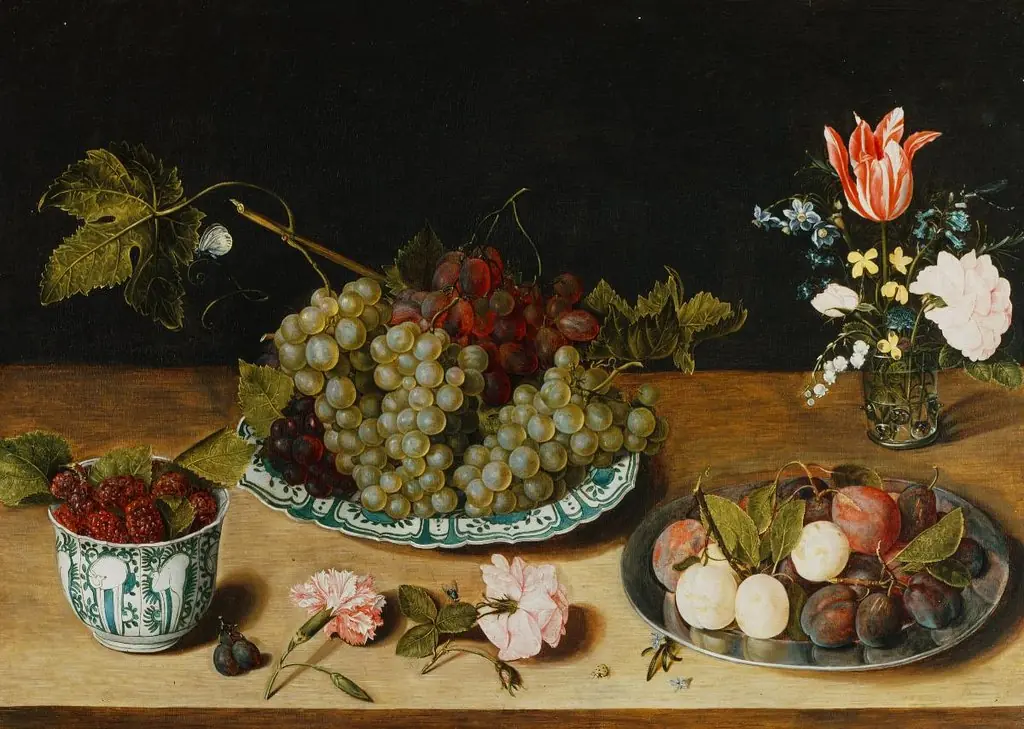 Stillleben mit Früchten und Blumensträusslein