Artwork
Still Life with Grapes on a Platter
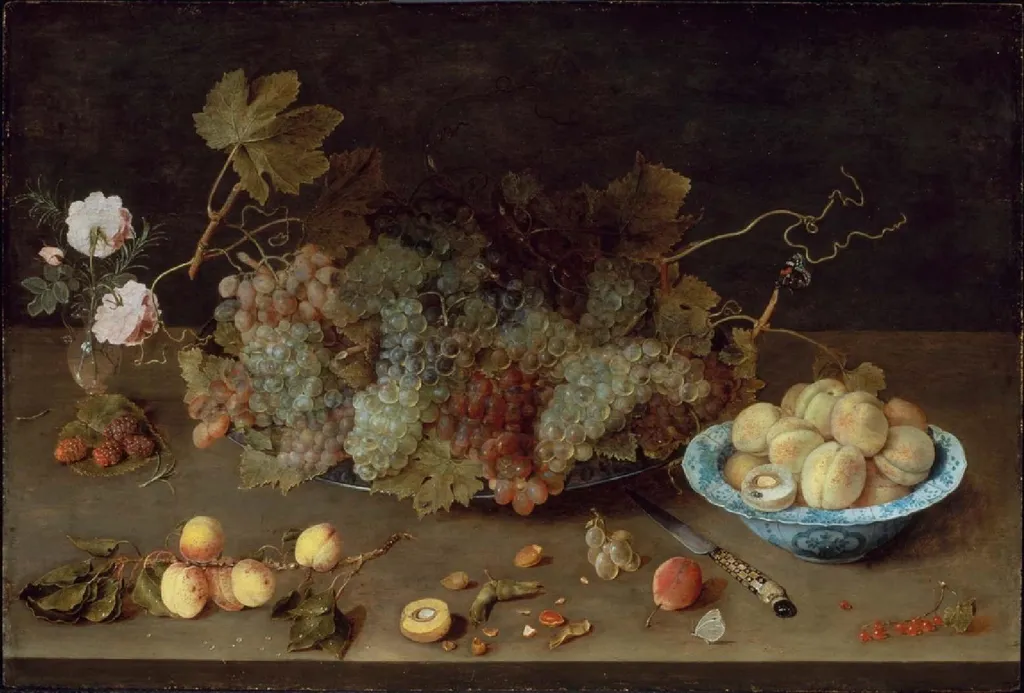
Still Life with Grapes on a Platter is an oil painting by the Dutch Golden Age artist Isaak Soreau. It dates from 1634 and is held in the collection of the Museum of Fine Arts Boston.
About this work
Overview
The dark, unadorned background isolates the objects, drawing focus to their textures and the play of natural light across their surfaces.
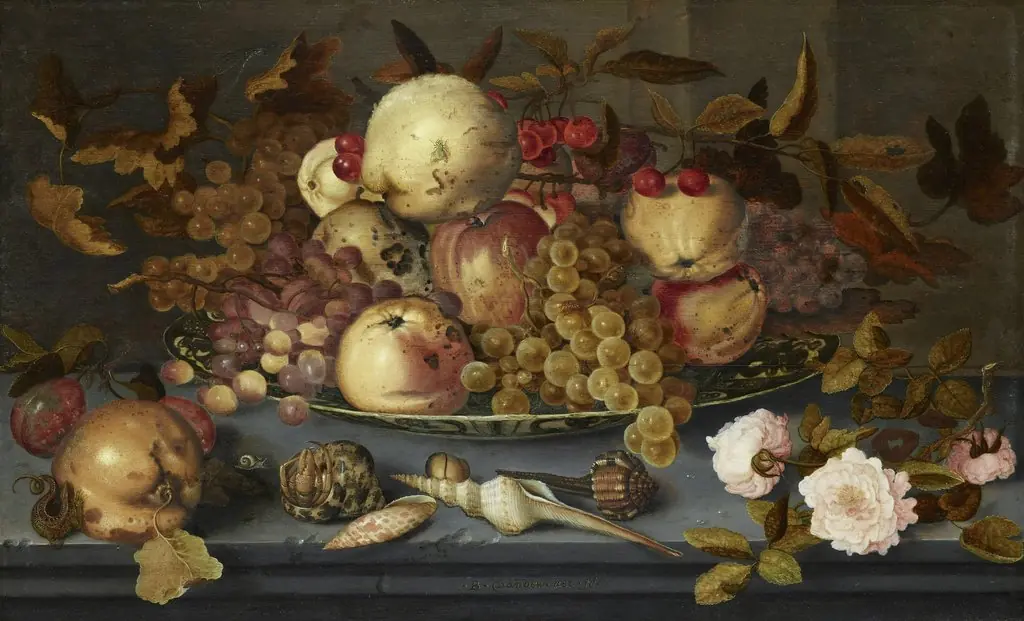
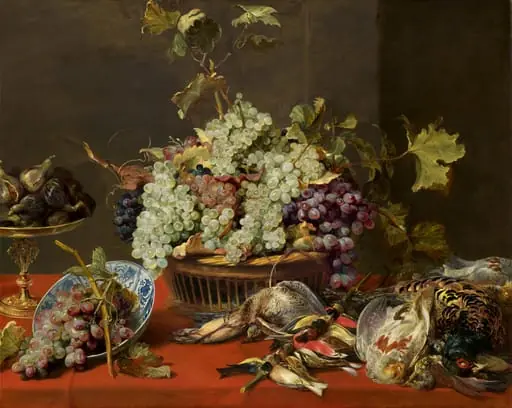
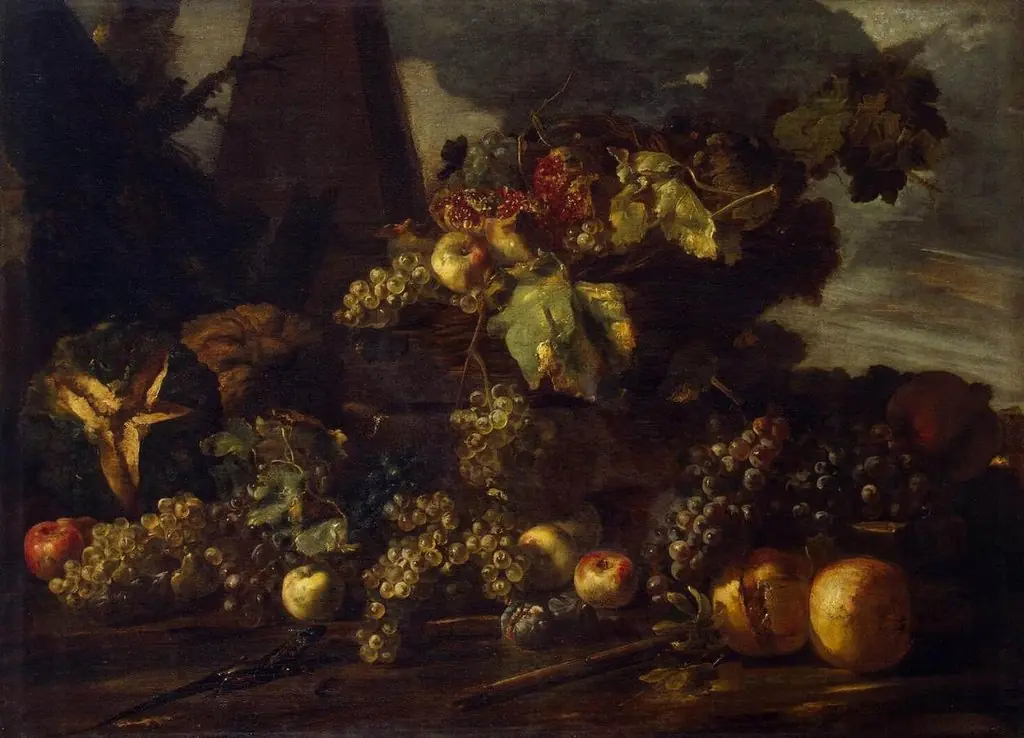
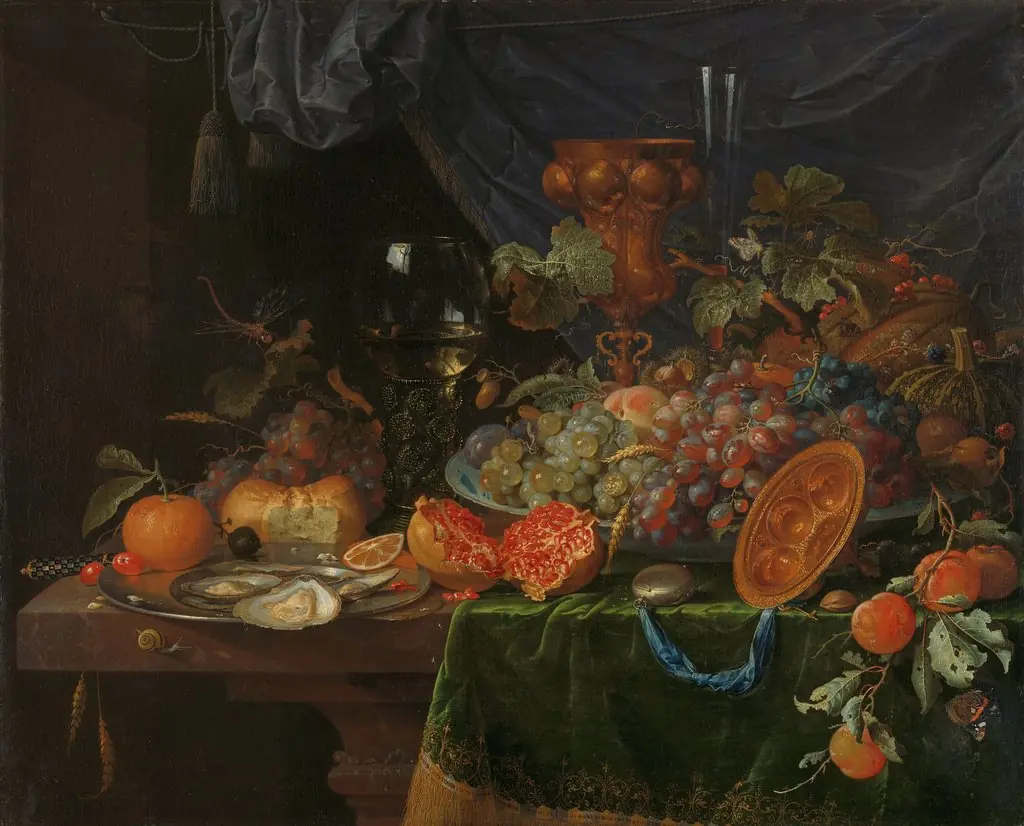
Painted around 1634, Still Life with Grapes on a Platter is an oil on canvas work by Dutch artist Isaak Soreau. It resides in the collection of the Museum of Fine Arts, Boston. The composition centers on a modest table setting laden with ripe fruit, arranged with quiet precision. The dark, unadorned background isolates the objects, drawing focus to their textures and the play of natural light across their surfaces.
Subject & Meaning
The painting presents a selection of seasonal produce—grapes, peaches, and strawberries—some whole, others partially consumed or sliced. The half-eaten fruit suggests transience, a common theme in Dutch still lifes of the period. The knife, resting nearby, implies human presence and the act of consumption. These elements together evoke a quiet meditation on abundance and impermanence.
Technique & Style
Soreau employs chiaroscuro to model the fruit with subtle gradations of light and shadow, enhancing their three-dimensionality. The grapes glisten as if damp, their skins reflecting ambient light, while the peaches glow with a soft, internal warmth. Brushwork is precise yet unobtrusive, prioritizing realism over ornamentation. The palette is restrained, relying on natural hues to convey texture and ripeness without artificial embellishment.
History & Provenance
The painting entered the Museum of Fine Arts, Boston’s collection in the early 20th century, though its earlier ownership remains undocumented. It is one of the few known works by Isaak Soreau, a relatively obscure artist active in the Dutch Republic during the 1630s. Its survival and preservation reflect its quiet significance within the broader tradition of Dutch still-life painting.
Context
Created during the height of Dutch still-life painting, the work aligns with regional trends that celebrated domestic abundance and the sensory qualities of everyday objects. While not overtly moralizing, it shares the era’s fascination with material detail and the fleeting nature of earthly pleasures. Soreau’s approach is less theatrical than contemporaries like Claesz or Heda, favoring intimacy over grandeur.
Legacy
Though Soreau’s oeuvre is limited, this painting contributes to the understanding of minor Dutch still-life practitioners who refined the genre’s observational rigor. Its quiet realism and sensitivity to light offer a nuanced counterpoint to more elaborate compositions of the time. Today, it stands as a representative example of modest, yet meticulously observed, 17th-century Dutch domestic still life.
Artist & collection

 Still life with fruit, wine glass and vase of flowers
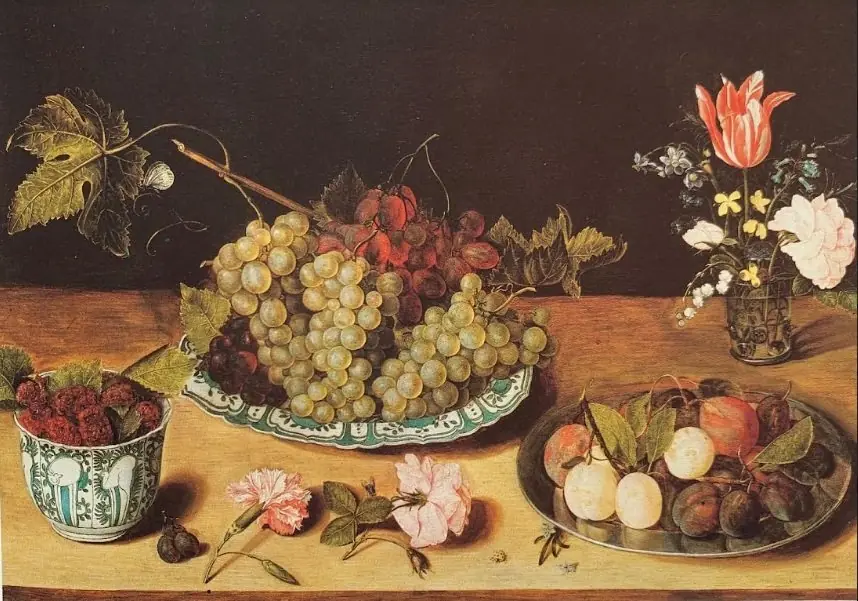 Glass of flowers, plate with grapes, plate with plums and crow cup of black raspberries
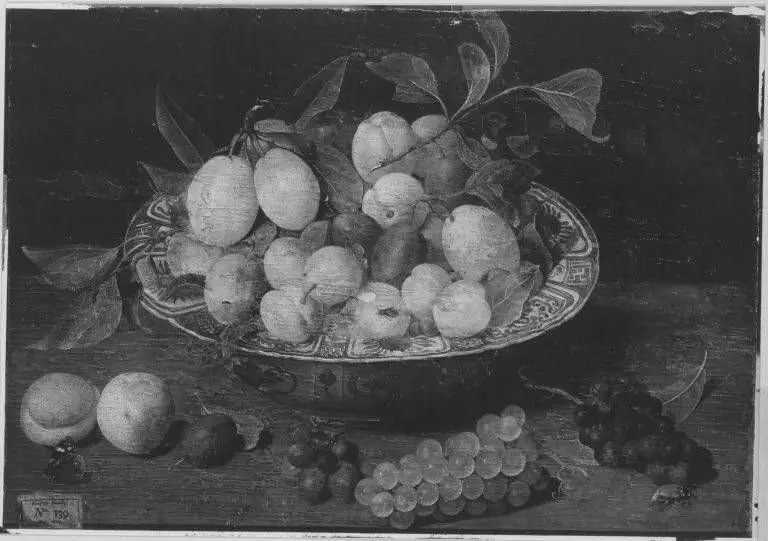 Früchtestillleben
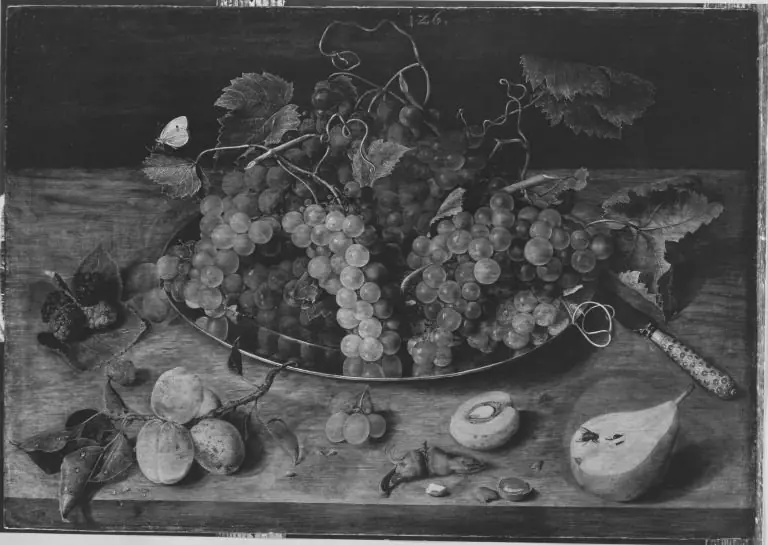 Stillleben mit Früchten
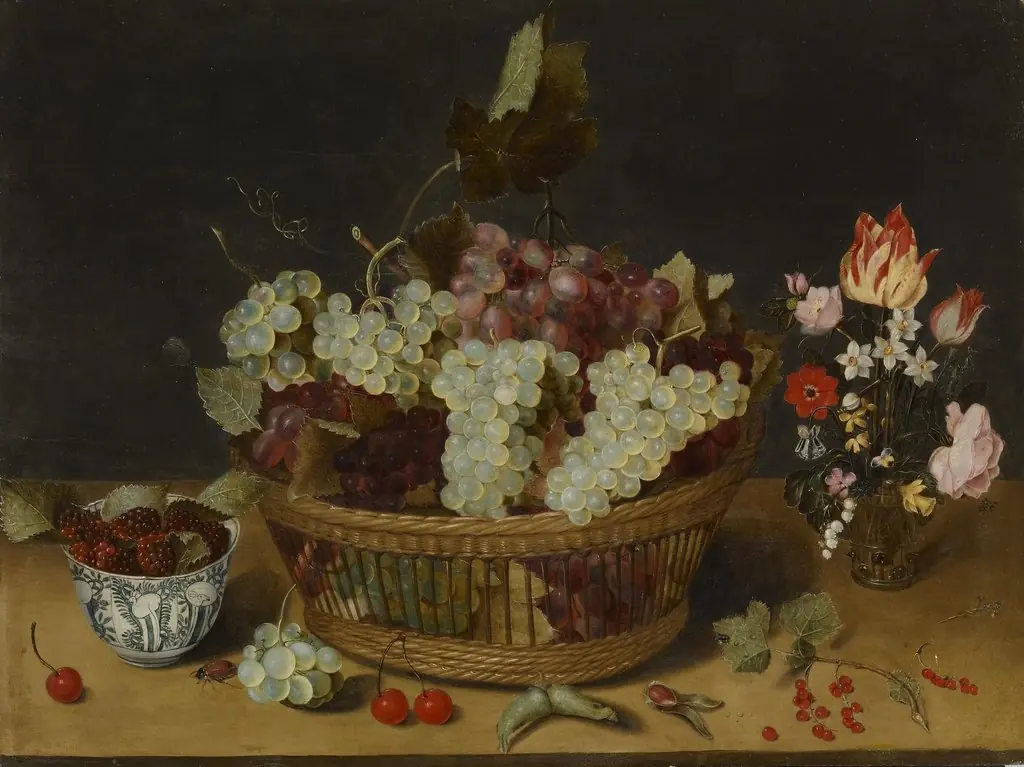 Still Life with Chinese Bowl and Vase of Flowers
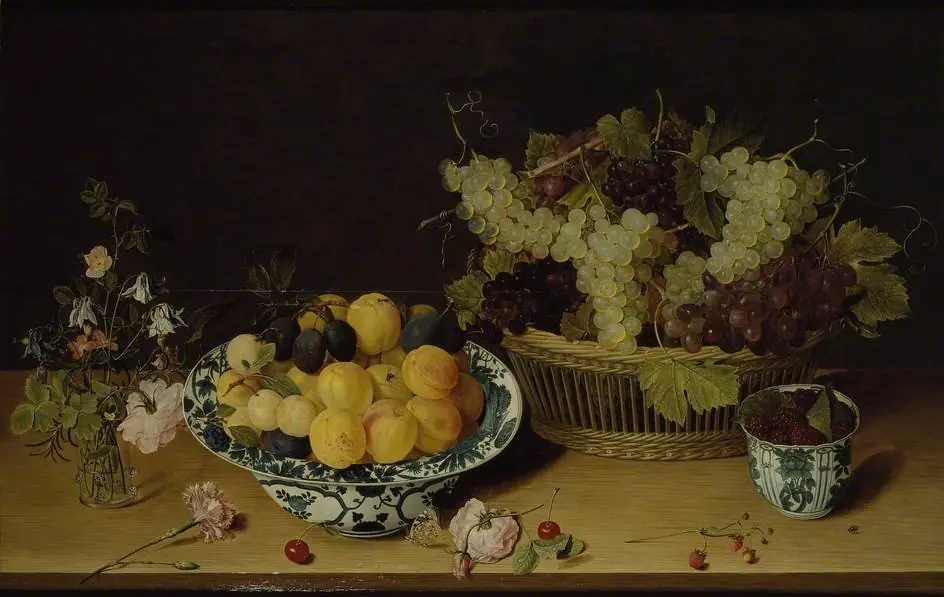 Still life of Fruit and Flowers
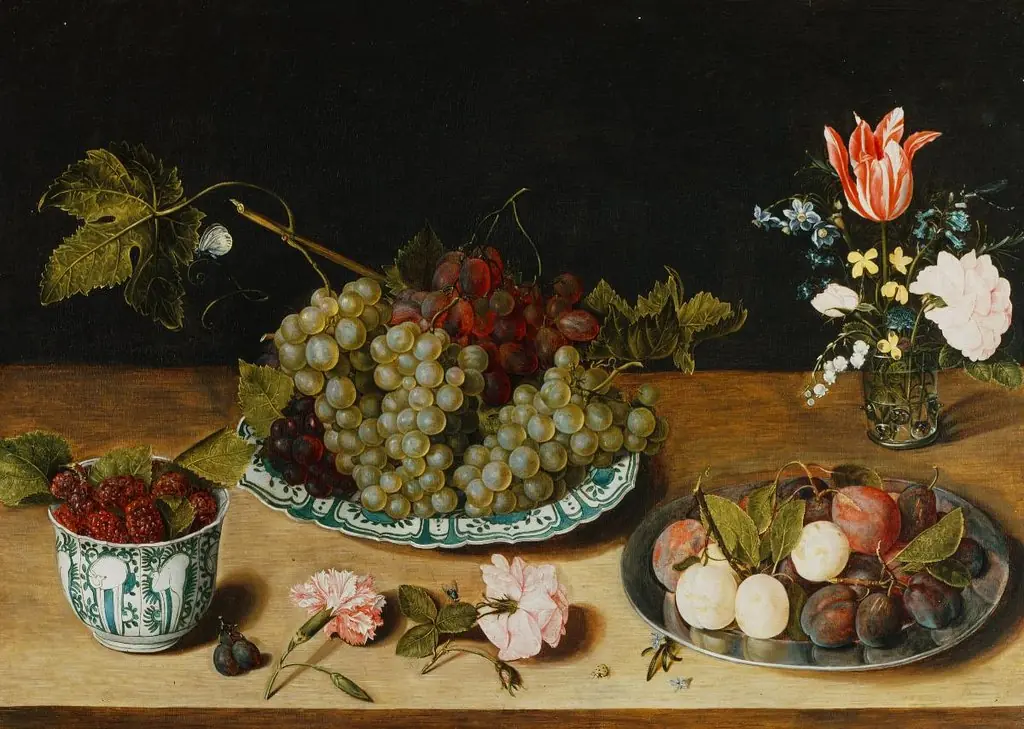 Stillleben mit Früchten und Blumensträusslein