Artwork
Peisaj din Dobrogea (Balcic)
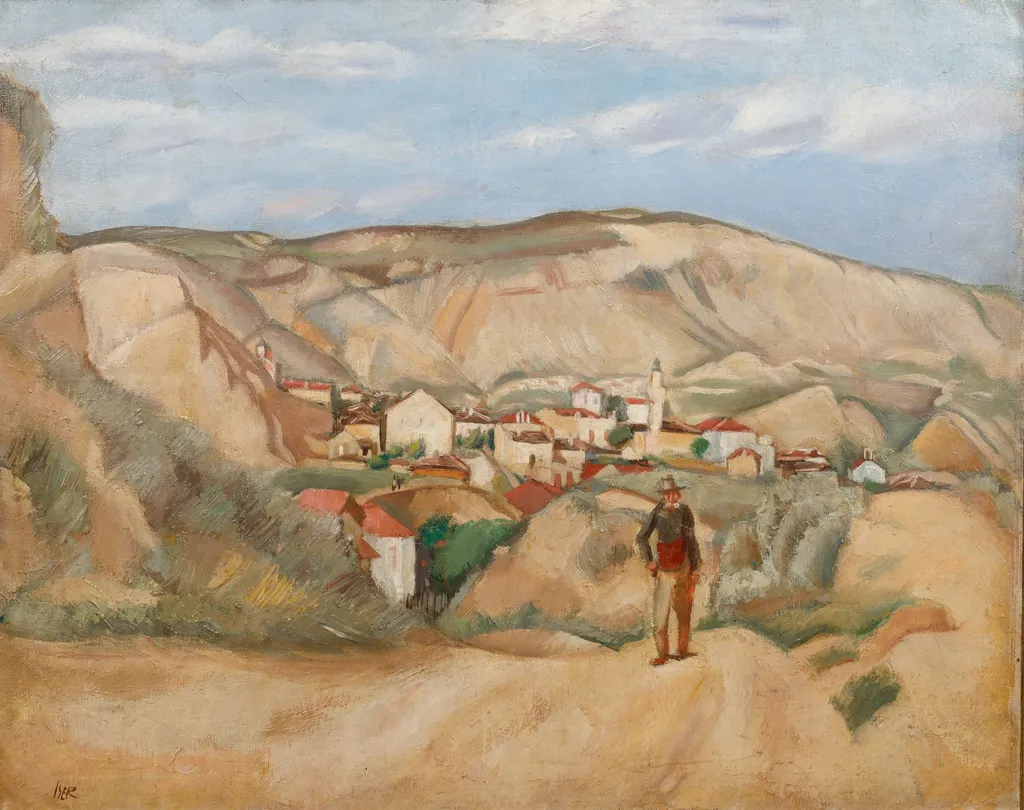
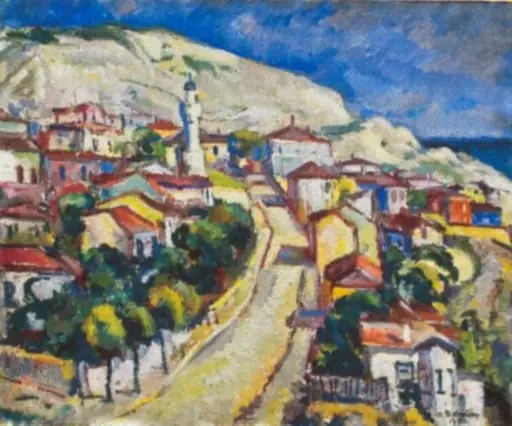
Peisaj din Dobrogea (Balcic) is a print by Iosif Iser. It dates from 1919 and is held in the collection of the National Museum of Art of Romania.
About this work
Overview
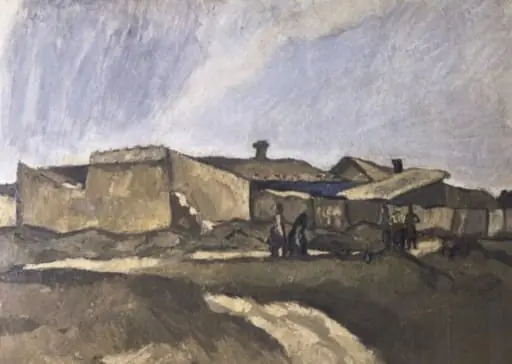
Painted around 1919 by Iosif Iser, Peisaj din Dobrogea (Balcic) captures a quiet rural scene in the Dobrogea region of Romania.
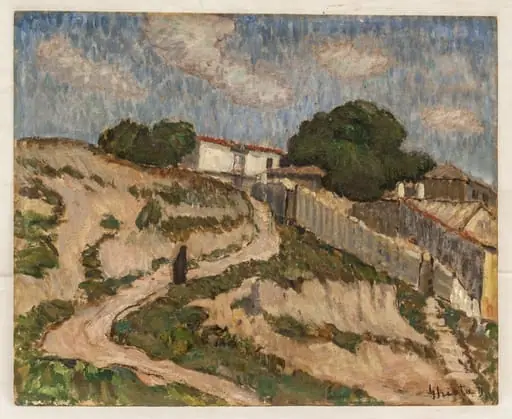
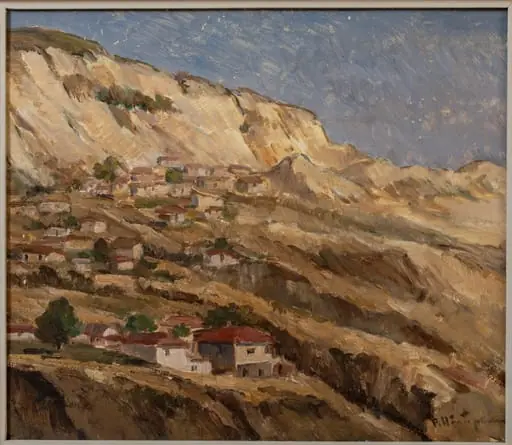
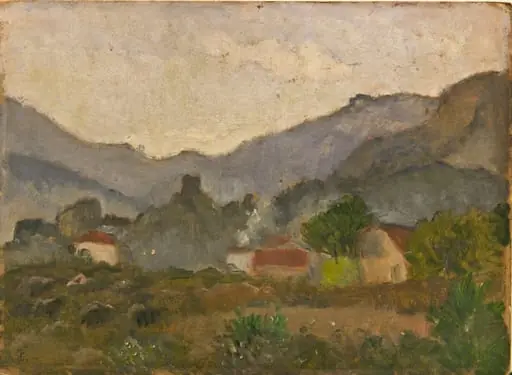
Painted around 1919 by Iosif Iser, Peisaj din Dobrogea (Balcic) captures a quiet rural scene in the Dobrogea region of Romania. The composition centers on a modest village nestled in rolling hills, rendered with restrained color and minimal detail. A solitary figure walks along a path in the foreground, anchoring the viewer’s gaze within the landscape. The work reflects a contemplative approach to rural life, avoiding dramatic narrative in favor of atmospheric stillness.
Subject & Meaning
The painting presents a humble village in Balcic, surrounded by undulating terrain and simple architecture. The lone figure, dressed in dark clothing and a hat, suggests quiet daily movement rather than action. There is no indication of celebration or hardship—only the rhythm of ordinary existence. The absence of human interaction or architectural grandeur emphasizes solitude and harmony with the land, evoking a sense of enduring, unremarkable life.
Technique & Style
Iser employs a muted palette dominated by earthy browns, beiges, and soft grays, unifying the hills, buildings, and path into a cohesive whole. Brushwork is subdued, with forms suggested rather than sharply defined. The composition is deliberately flat and balanced, with the horizon line placed high to emphasize the expanse of land. Light is diffuse, eliminating strong shadows, which enhances the calm, timeless quality of the scene.
History & Provenance
Created shortly after World War I, the painting emerged during a period of national redefinition in Romania. Iser, known for his landscapes and genre scenes, often depicted rural life with sensitivity. While specific ownership history is not documented, the work aligns with early 20th-century Romanian artistic trends that valued regional identity and quiet realism over romanticized or urban themes.
Context
In the post-war years, Romanian artists increasingly turned to native landscapes and peasant life as subjects of cultural affirmation. Iser’s work fits within this movement, rejecting academic grandeur in favor of intimate, unembellished views. The Dobrogea region, with its distinct topography and multicultural heritage, offered a quiet alternative to the more frequently painted Transylvanian or Moldavian scenes, making this painting a subtle regional statement.
Legacy
Though not widely exhibited or reproduced, Peisaj din Dobrogea (Balcic) remains representative of Iser’s consistent focus on understated rural beauty. It contributes to a broader Romanian modernist tradition that valued observation over spectacle. The painting’s quietude resonates with later generations of artists who sought to capture the dignity of everyday landscapes without embellishment or sentimentality.
Artist & collection