Artwork
Ramiro I rey de Asturias
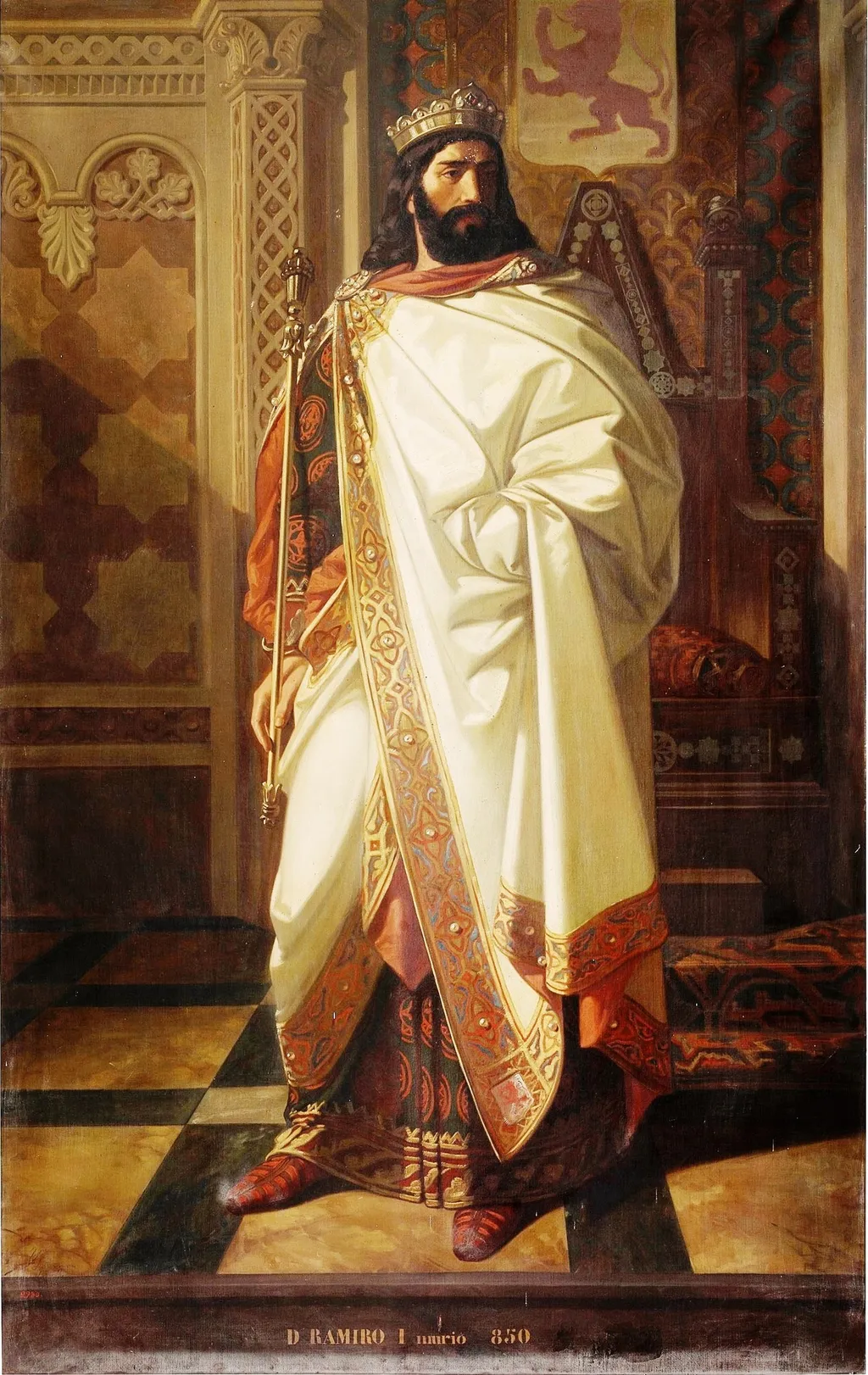
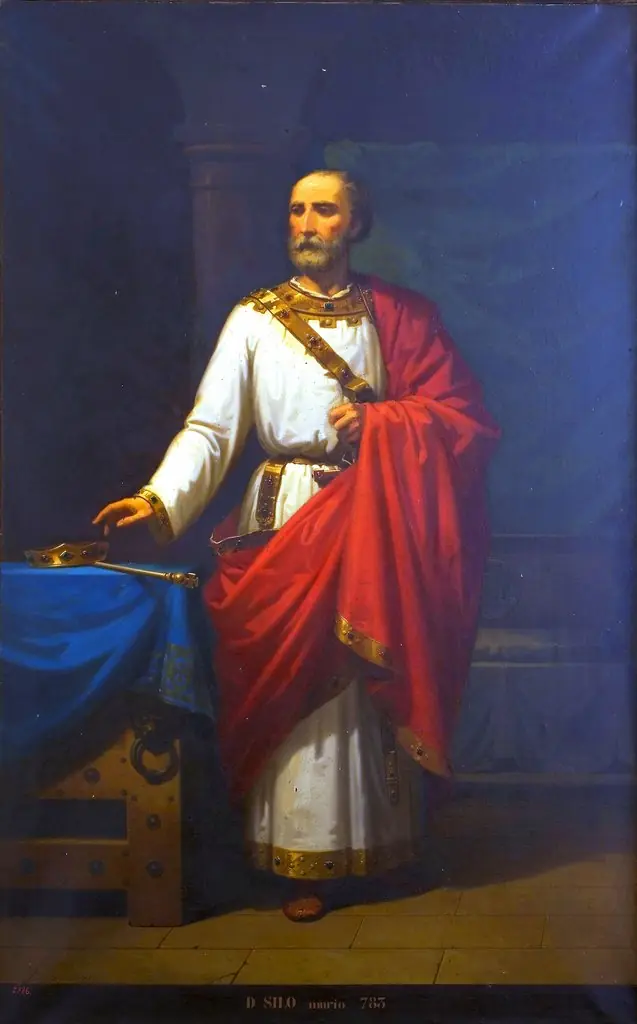
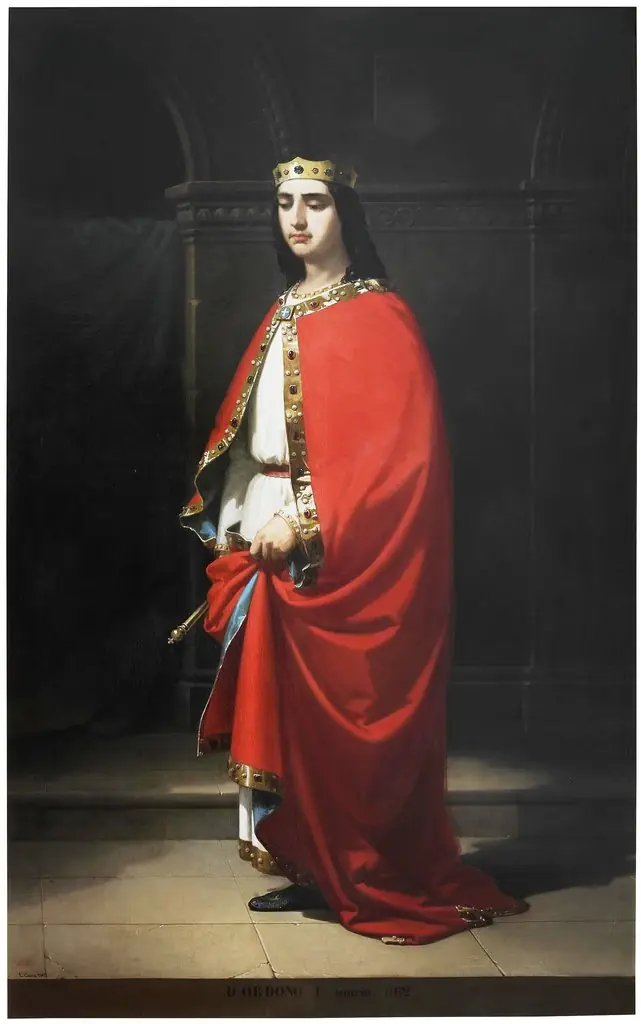
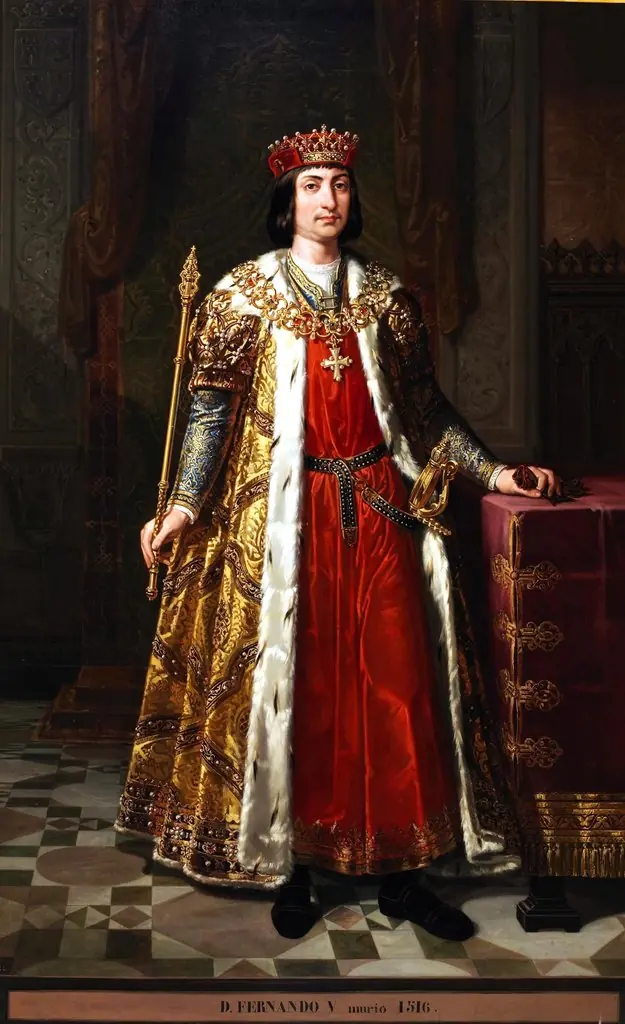
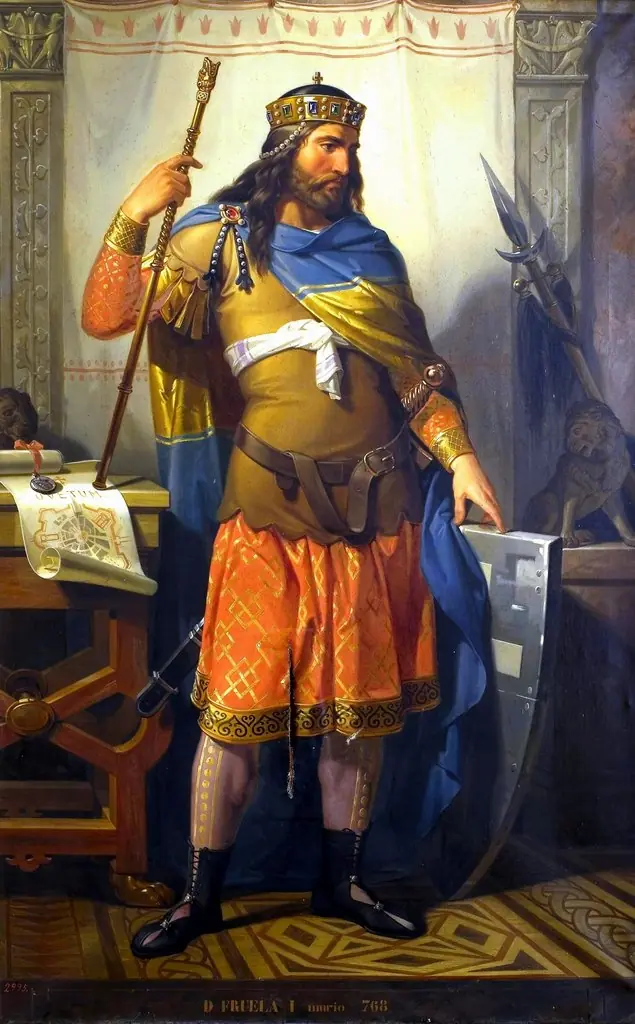
Ramiro I rey de Asturias is an oil painting by Isidoro Lozano. It dates from 1852 and is held in the collection of the Museo del Prado.
About this work
Overview
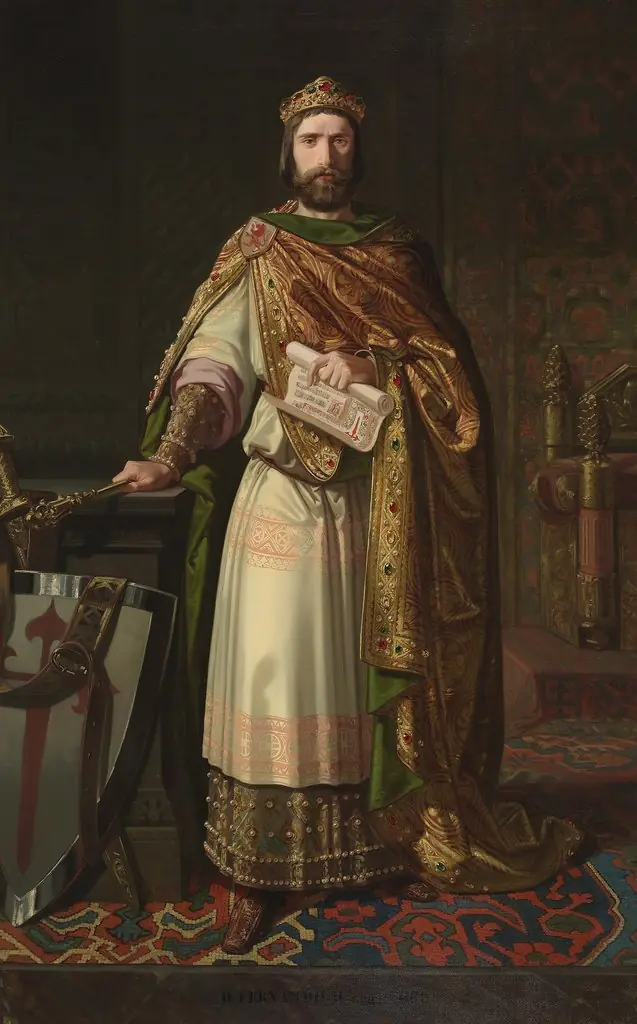
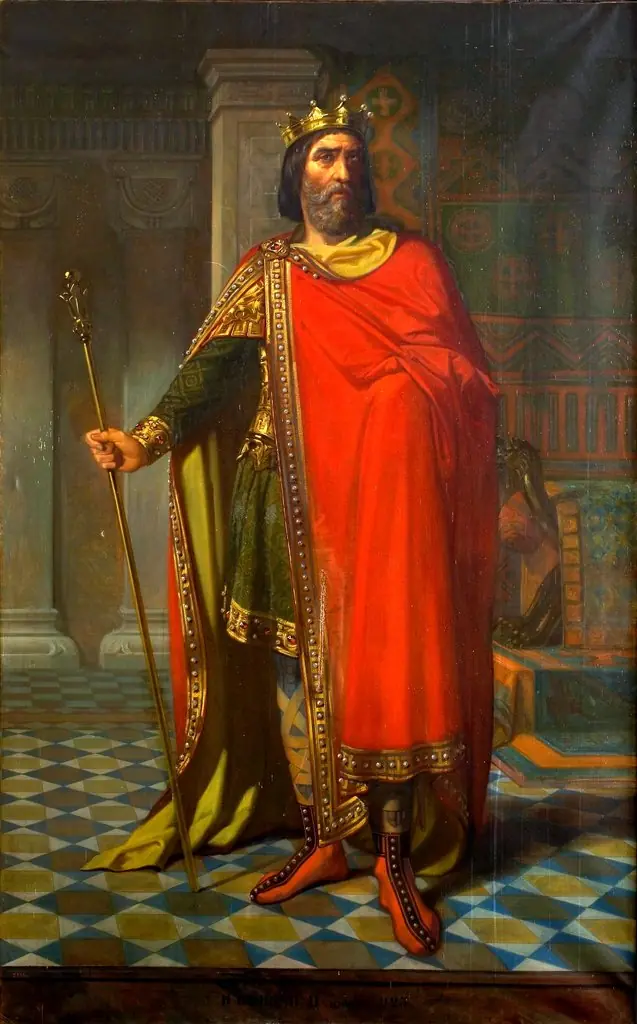
The composition places the monarch on a stone step before an interior resembling a Romanesque church, his posture solemn and his attire richly detailed.
Isidoro Lozano’s 1852 oil on canvas presents a regal figure identified as Ramiro I, the early medieval king of Asturias. The composition places the monarch on a stone step before an interior resembling a Romanesque church, his posture solemn and his attire richly detailed. The work is part of the Museo del Prado’s collection, offering a nineteenth‑century visual interpretation of an early Spanish ruler.
Subject & Meaning
The painting portrays Ramiro I (d. 850) in full regal regalia: a white mantle edged in red and gold, a crown, and a scepter topped with a cross, while his right hand rests on a sword. The inclusion of ecclesiastical architectural elements and the inscription of his death year underscore his dual role as both a political and a Christian leader in the formation of the Asturian kingdom.
Technique & Style
Lozano employs a smooth, academic brushwork typical of mid‑nineteenth‑century Spanish historic painting. The contrast between the luminous white robe and the darker stone step creates a focal point on the king’s figure. Subtle modeling of fabric folds and the delicate rendering of the background’s patterned walls demonstrate a careful attention to texture and spatial depth.
History & Provenance
Created in 1852, the canvas entered the Museo del Prado’s holdings, where it remains on display. Its acquisition reflects the museum’s 19th‑century interest in works that dramatize Spain’s early medieval past, aligning with contemporary nationalist narratives that sought to trace modern Spain’s origins to the Asturian kingdom.
Context
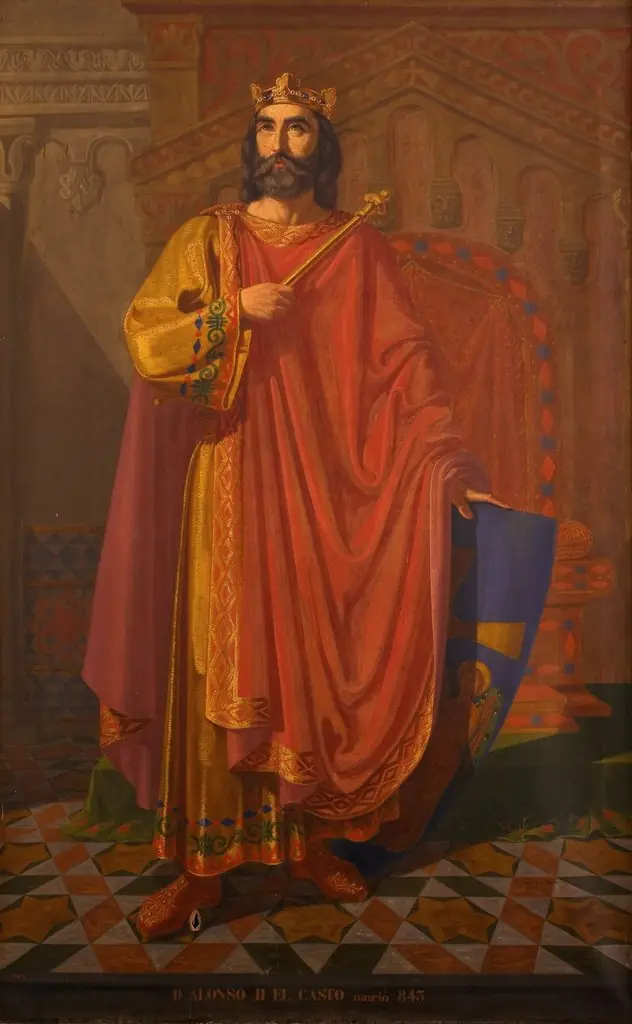
Ramiro I is celebrated for consolidating the Asturian realm after the death of his predecessor, Alfonso II, and for defending the Christian territories against Muslim incursions. By the 1850s, Spanish artists frequently revisited such figures to evoke a sense of historical continuity, situating the early monarch within a romanticized, quasi‑religious setting that emphasizes his role as a defender of the faith.
Artist & collection