Artwork
Fernando el Católico
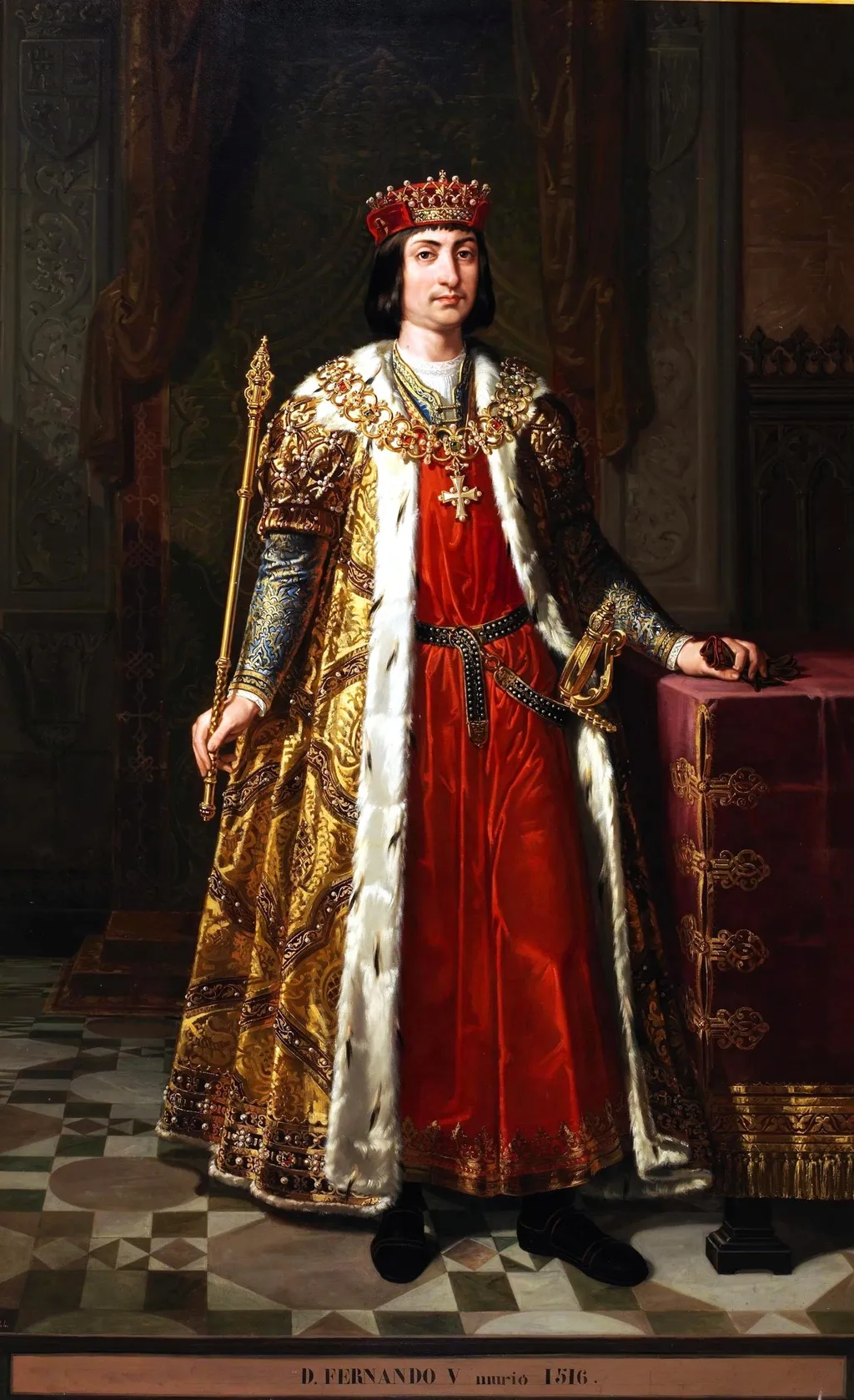
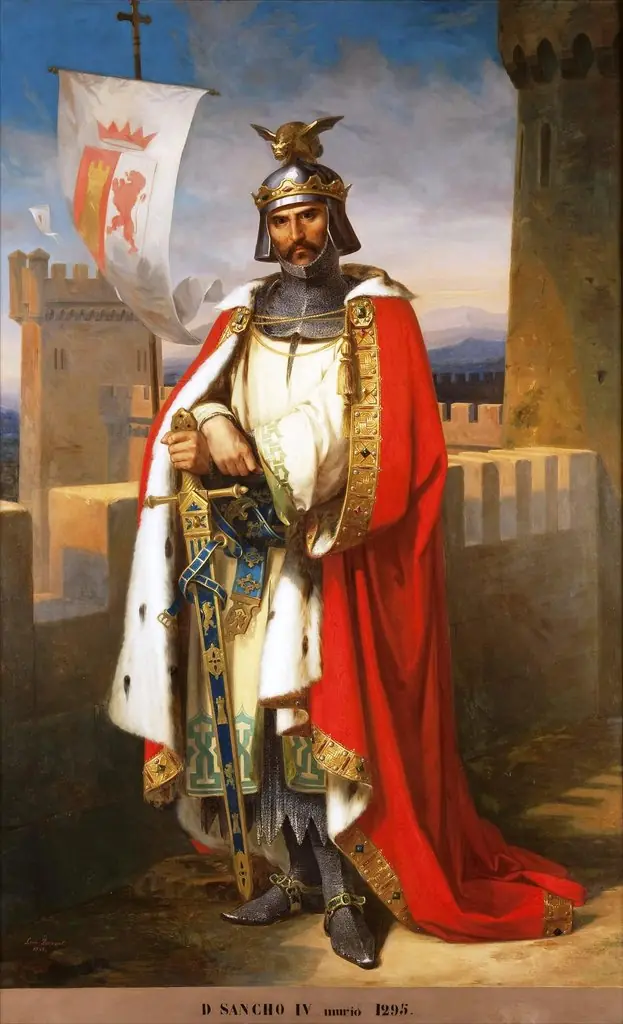
Fernando el Católico is an oil painting by Bernardino Montañés. It dates from 1848 and is held in the collection of the Museo del Prado.
About this work
FERNANDO V murio 1516"*—meaning this is likely King Ferdinand V of something, though the painting itself was made much later.
This painting shows a man dressed as a king. He wears a heavy gold robe with red fur trim, a red tunic, and a crown. His right hand rests on a red cushion, and he holds a golden staff in his left. The floor has a checkered black-and-white pattern, and the background looks like a dark, patterned wall.
The signature at the bottom reads *"D. FERNANDO V murio 1516"*—meaning this is likely King Ferdinand V of something, though the painting itself was made much later. The gold and red colors stand out sharply against the dark background.
Check out chiaroscuro to see how artists use light and shadow this way.
Overview
Bernardino Montañés executed an oil painting titled *Fernando el Católico* in 1848. The work, now part of the Museo del Prado collection, portrays a regal figure in sumptuous attire, rendered with a stark contrast of gold and red against a dark, patterned backdrop.
Subject & Meaning
The central figure is presented as a monarch, wearing a heavy gold robe trimmed in red fur, a crimson tunic, and a crown. He rests his right hand on a red cushion and holds a golden staff in his left, suggesting authority and ceremonial power. The inscription “D. FERNANDO V murio 1516” links the image to King Ferdinand V, although the painting itself was produced centuries later.
Technique & Style
Montañés employs chiaroscuro to model the figure, allowing the luminous gold and scarlet garments to emerge from a shadowy, checkered floor and a dark, patterned wall. The brushwork emphasizes texture in the fur trim and the reflective quality of the metal objects, while the background remains subdued to focus attention on the regal presence.
History & Provenance
Created in the mid‑nineteenth century, the painting entered the holdings of the Museo del Prado, where it remains on display. Its provenance prior to acquisition by the museum is not extensively documented, but the work reflects a 19th‑century interest in historic Spanish monarchs.
Context
The portrait aligns with a broader Romantic fascination with Spain’s past, particularly the reign of Ferdinand the Catholic, who ruled jointly with Isabella I. By the 1840s, artists often revisited historical subjects to evoke national identity, using contemporary techniques to reinterpret earlier figures.
Artist & collection