Artwork
The Courtesan Karahama of Yamashiroya Performing the Tea Ceremony (from the series Models for Fahions: New Designs as Fresh as Young Leaves)
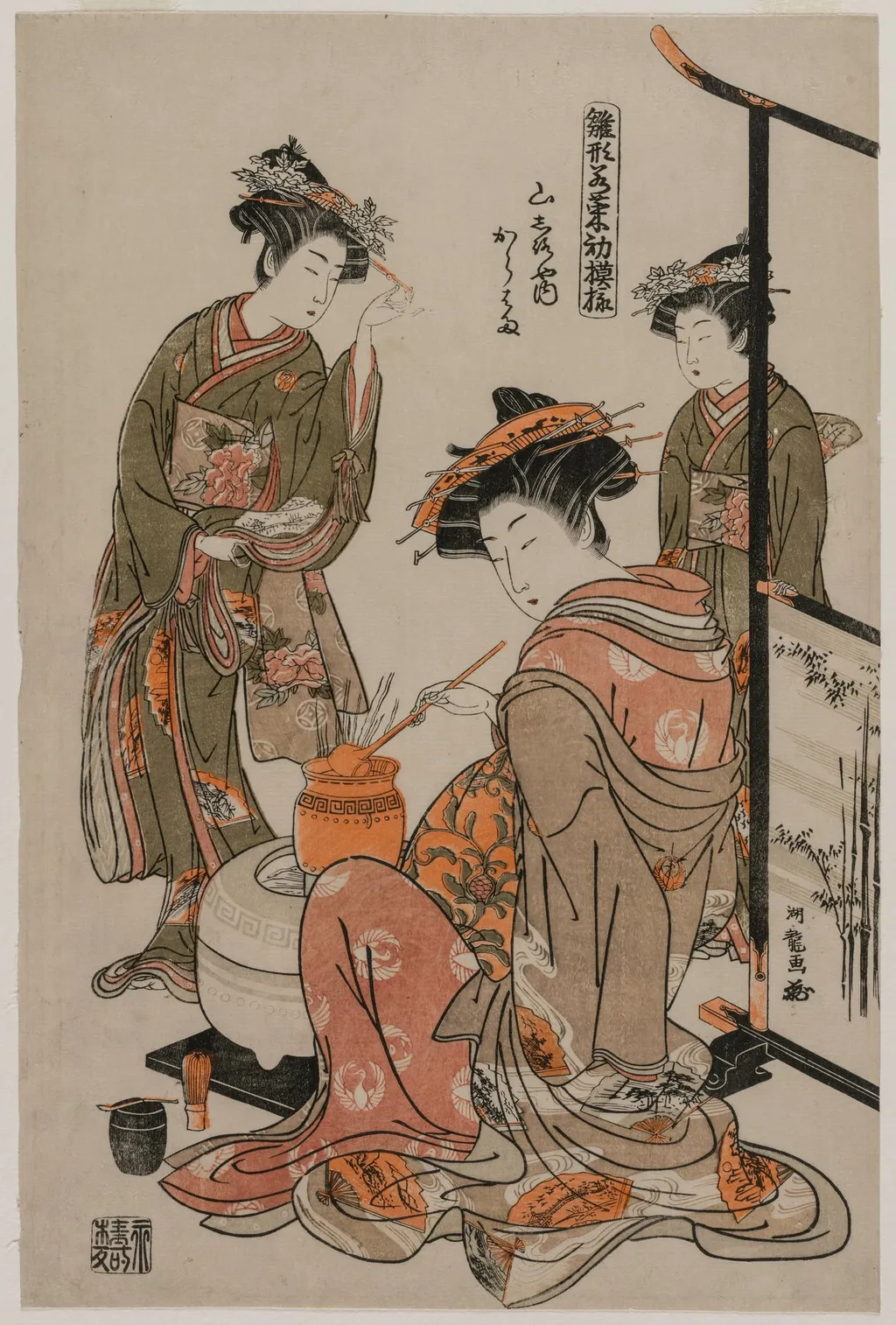
The Courtesan Karahama of Yamashiroya Performing the Tea Ceremony (from the series Models for Fahions: New Designs as Fresh as Young Leaves) is a print by the Romanticist artist Isoda Koryūsai. It dates from 1774 and is held in the collection of the Cleveland Museum of Art.
About this work
Overview
Created around 1774 by Isoda Koryūsai, this woodblock print is part of a series titled Models for Fashions: New Designs as Fresh as Young Leaves.
Created around 1774 by Isoda Koryūsai, this woodblock print is part of a series titled Models for Fashions: New Designs as Fresh as Young Leaves. It depicts a tea ceremony scene featuring three women, rendered in the ukiyo-e style. Though presented as a tranquil domestic moment, the print functions as a fashion catalog, highlighting contemporary textile designs and hairstyles worn by courtesans of the Yoshiwara pleasure district.
Subject & Meaning
The scene portrays a courtesan from the Yamashiroya establishment performing the tea ceremony, flanked by two attendants. The ritual’s calm structure frames the display of elaborate garments and ornate hairstyles, transforming a private act into a public showcase of style. The composition subtly elevates the courtesan’s role as a trendsetter, linking aesthetic refinement with social status in Edo-period urban culture.
Technique & Style
Koryūsai employed clean outlines and flat, unmodulated colors typical of ukiyo-e printing. Patterns on the robes—floral, wave-like, and geometric—are rendered with precision, emphasizing texture and design over depth or shadow. The figures are arranged in a shallow space, with minimal background detail, directing focus entirely to clothing and posture. This stylistic restraint enhances the print’s function as a fashion reference.
History & Provenance
The print was produced during the height of ukiyo-e’s popularity in Edo, when fashion magazines in print form became sought-after commodities. It entered the collection of The Cleveland Museum of Art through established acquisition channels, likely as part of a broader 20th-century effort to preserve Japanese woodblock prints. Its survival in good condition reflects its cultural value and careful handling over time.
Context
In late 18th-century Edo, courtesans were central figures in fashion dissemination, their attire setting trends among merchants and townspeople. Publishers commissioned artists to document these styles in series like this one, catering to a growing consumer market. The tea ceremony, traditionally a refined cultural practice, was repurposed here as a stage for displaying luxury textiles, blending tradition with commercial appeal.
Legacy
This print exemplifies how ukiyo-e artists merged artistry with commerce, documenting ephemeral trends that otherwise left no physical trace. Its preservation offers insight into the visual culture of Edo’s pleasure quarters and the role of print media in shaping identity and desire. Today, it remains a key reference for scholars studying fashion, gender, and mass visual communication in pre-modern Japan.
Artist & collection

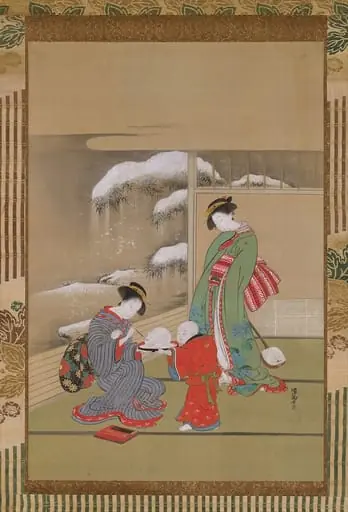
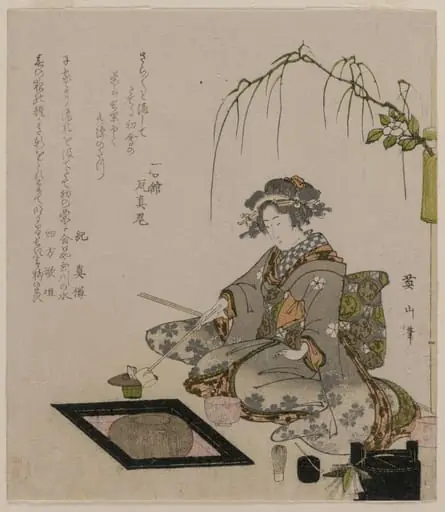 Woman Performing the Tea Ceremony
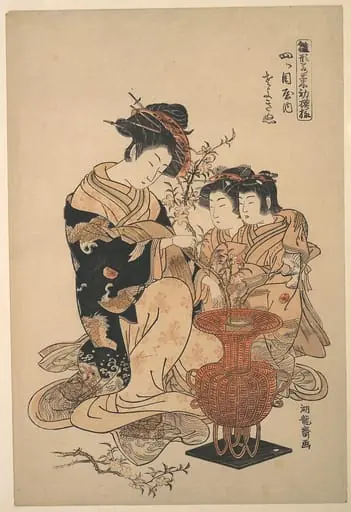 礒田湖竜斎画「雛形若菜初模様 四ツ目屋内 さよぎぬ」|The Courtesan Sayoginu of the Yotsumeya Brothel, from the series “A Pattern Book of the Year’s First Designs, Fresh as Spring Herbs” (Hinagata wakana hatsu moyō)
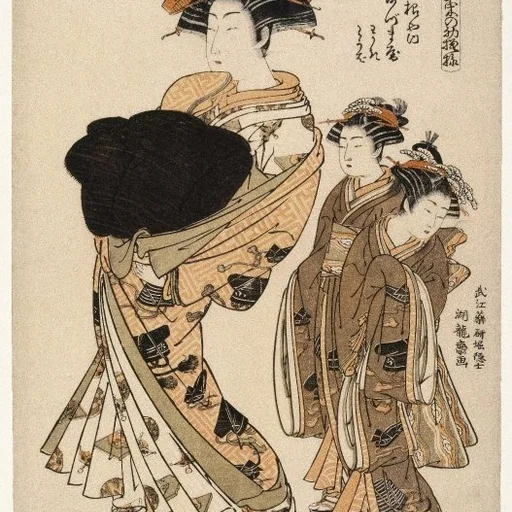
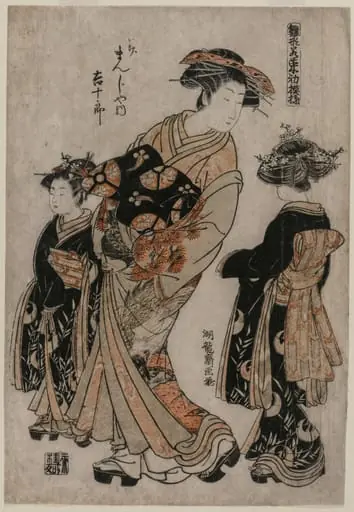 The Courtesan Kichijuro of Kage Manjiya with Two Kamuro (from the series Models for Fashions: New Designs as Fresh as Young Leaves)
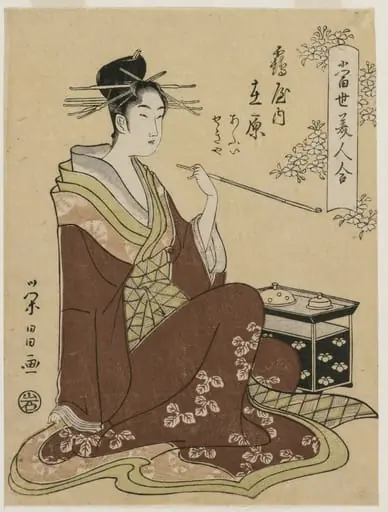 The Courtesan Ariwara of the Tsuruya Seated by a Smoking Chest (From the series A Collection of Modern Beauties)
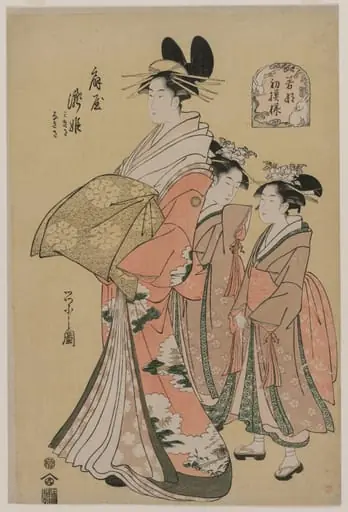 The Courtesan Takihime and Attendants (from the series New Patterns of Young Greens)
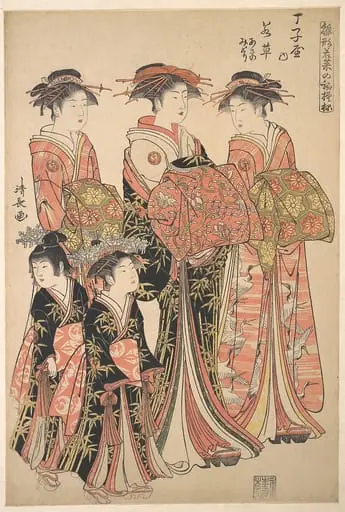 鳥居清長画 「雛形若菜の初模様 丁子屋の若草・ あさの・みどり」|The Courtesan Wakakusa of the Chōjiya Brothel, and Attendants Asano and Midori, from the series “A Pattern Book of the Year’s First Designs, Fresh as Spring Herbs” (Hinagata wakana no hatsumoyō)