Artwork
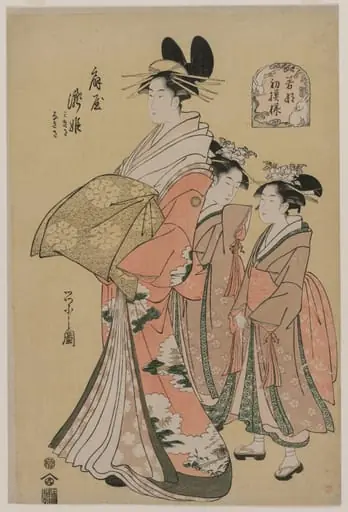
鳥居清長画 「雛形若菜の初模様 丁子屋の若草・ あさの・みどり」|The Courtesan Wakakusa of the Chōjiya Brothel, and Attendants Asano and Midori, from the series “A Pattern Book of the Year’s First Designs, Fresh as Spring Herbs” (Hinagata wakana no hatsumoyō)
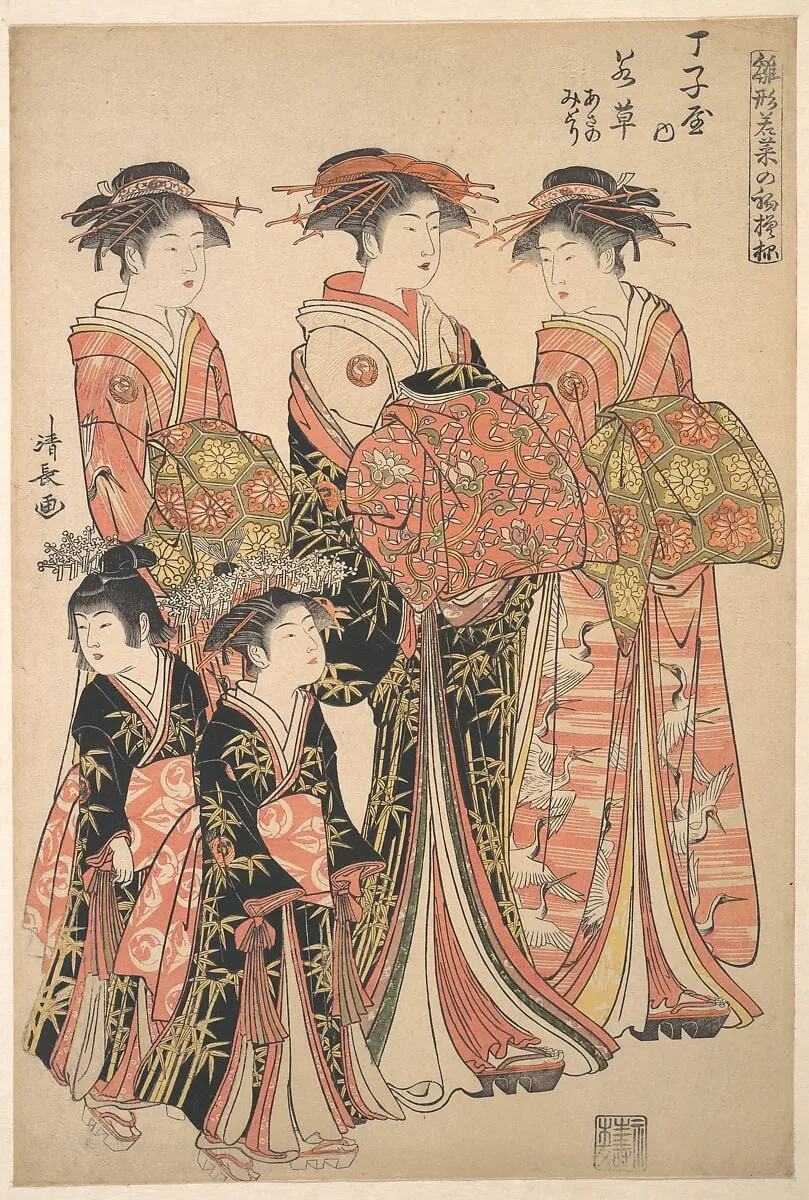
鳥居清長画 「雛形若菜の初模様 丁子屋の若草・ あさの・みどり」|The Courtesan Wakakusa of the Chōjiya Brothel, and Attendants Asano and Midori, from the series “A Pattern Book of the Year’s First Designs, Fresh as Spring Herbs” (Hinagata wakana no hatsumoyō) is an ink print by the Romanticist artist Torii Kiyonaga. It dates from 1783 and is held in the collection of the Metropolitan Museum of Art.
About this work
Overview
This 1783 woodblock print by Torii Kiyonaga depicts four women in elaborate attire, showcasing early spring fashion. Held at The Metropolitan Museum of Art, it features vibrant colors, intricate patterns, and ornate fans.
Subject & Meaning
The print highlights the Courtesan Wakakusa of the Chōjiya Brothel, accompanied by attendants Asano and Midori, and another figure. The composition emphasizes their fashionable spring robes and accessories, capturing the elegance of the era's high society.
Technique & Style
Characterized by bold pink, black, and gold hues, the print showcases Kiyonaga's mastery of woodblock printing. Delicate floral patterns on the clothing and detailed, lace-like fan designs exemplify the precision of his technique.
History & Provenance
Created around 1783 as part of the series "Hinagata wakana no hatsumoyō" (A Pattern Book of the Year’s First Designs, Fresh as Spring Herbs), the print is signed by the artist in a discreet corner signature.
Context
This work was designed to display the latest spring fashion trends, reflecting the cultural significance of seasonal attire in 18th-century Japan. It catered to the interest of the urban populace in Edo's fashionable elite.
Legacy
As a representative of Torii Kiyonaga's oeuvre, this print contributes to the artist's reputation for capturing the beauty of Edo's high society women. It remains a notable example of late Edo period woodblock printing.
Artist & collection

 The Courtesan Takihime and Attendants (from the series New Patterns of Young Greens)
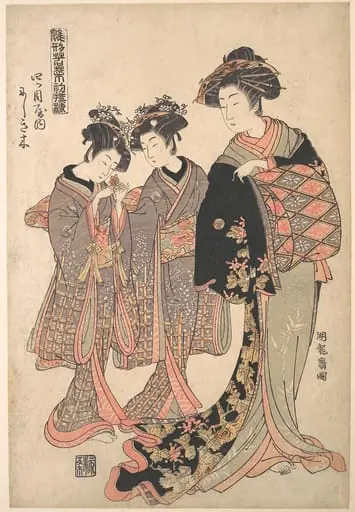 『雛形若菜初模様 四ツ目屋内 にしき木』|The Courtesan Nishikigi of the Yotsumeya Brothel, from the series “A Pattern Book of the Year’s First Designs, Fresh as Spring Herbs” (“Hinagata wakana hatsu moyō”)
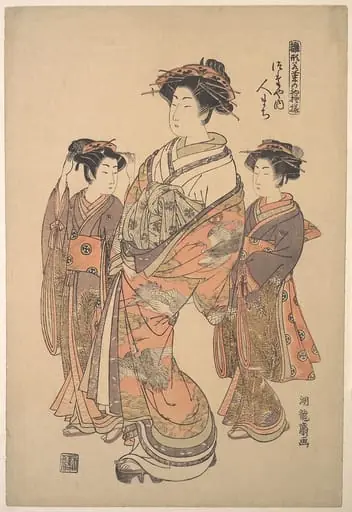 『雛形若菜の初模様 つたや内 人まち』|The Courtesan Hitomachi of the Tsutaya Brothel, from the series “A Pat-tern Book of the Year’s First Designs, Fresh as Spring Herbs” (“Hinagata wakana no hatsu moyō”)
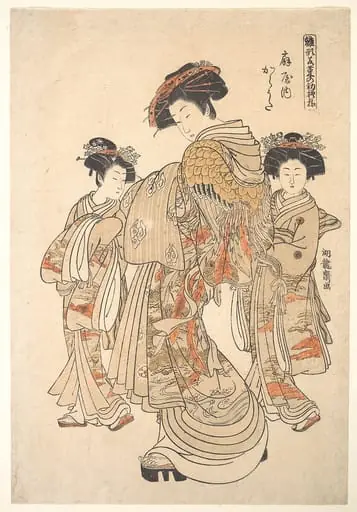 『雛形若菜の初模様 扇屋内 からうた』|The Courtesan Karauta of the Ōgiya Brothel, from the series “A Pattern Book of the Year’s First Designs, Fresh as Spring Herbs” (“Hinagata wakana no hatsu moyō”)
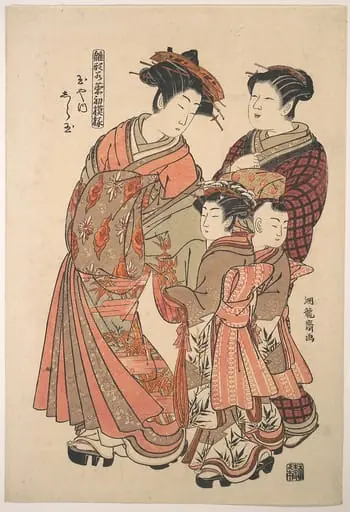 『雛形若菜初模様 玉や内 しら玉』|The Courtesan Shiratama of the Tamaya Brothel, from the series “A Pat-tern Book of the Year’s First Designs, Fresh as Spring Herbs” (“Hinagata wakana hatsu moyō”)
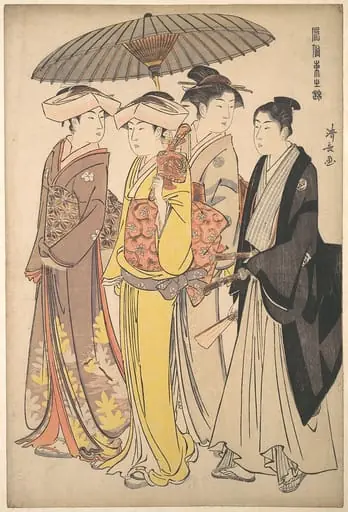 「風俗東之錦」 武家の息女と侍女と若党 |A Lady from a Samurai Household with Three Attendants, from the series A Brocade of Eastern Manners (Fūzoku Azuma no nishiki)
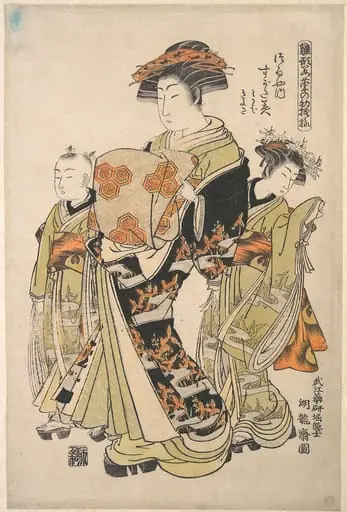 『雛形若菜の初模様 つるや内 すがたみ』|The Courtesan Sugatami of the Tsuruya Brothel, from the series “A Pat-tern Book of the Year’s First Designs, Fresh as Spring Herbs” (“Hinagata wakana no hatsu moyō”)
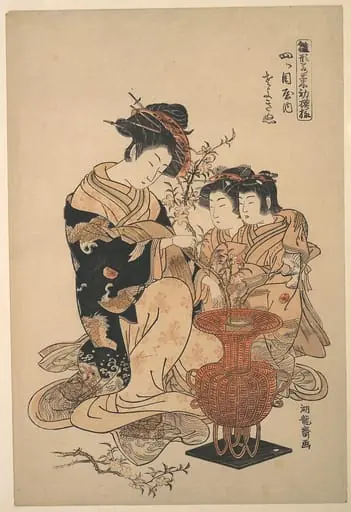 礒田湖竜斎画「雛形若菜初模様 四ツ目屋内 さよぎぬ」|The Courtesan Sayoginu of the Yotsumeya Brothel, from the series “A Pattern Book of the Year’s First Designs, Fresh as Spring Herbs” (Hinagata wakana hatsu moyō)
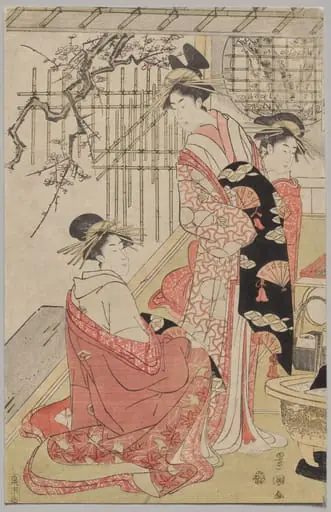 Courtesans of the Ōgiya on a Spring Outing
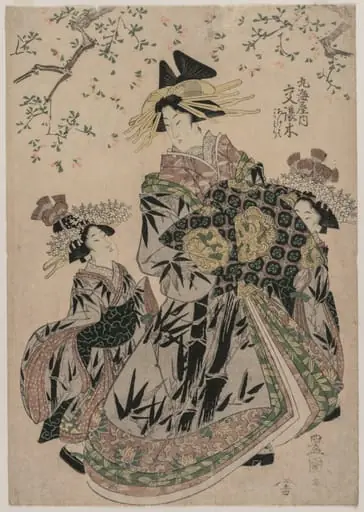 The Courtesan Katakoshigi (?) of Maruebiya with her Kamuro Ageha and Midori