Artwork
礒田湖竜斎画「雛形若菜初模様 四ツ目屋内 さよぎぬ」|The Courtesan Sayoginu of the Yotsumeya Brothel, from the series “A Pattern Book of the Year’s First Designs, Fresh as Spring Herbs” (Hinagata wakana hatsu moyō)
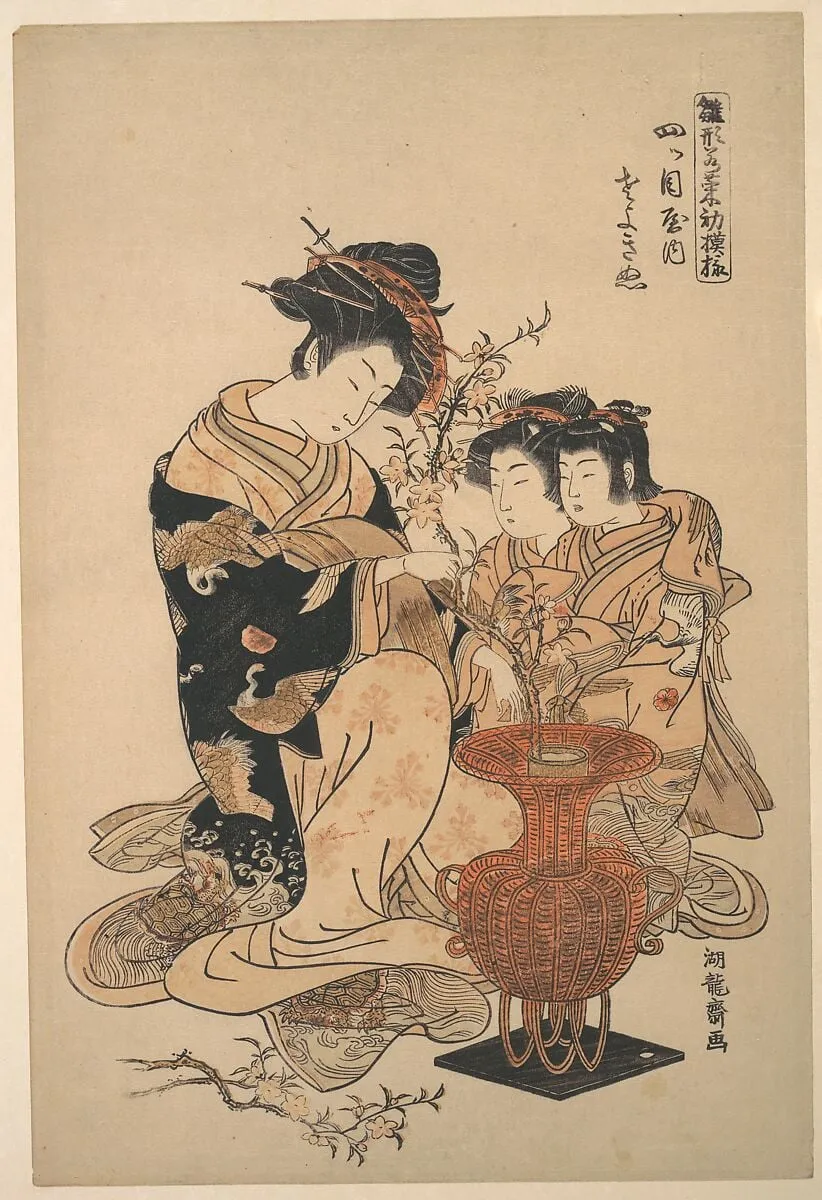
礒田湖竜斎画「雛形若菜初模様 四ツ目屋内 さよぎぬ」|The Courtesan Sayoginu of the Yotsumeya Brothel, from the series “A Pattern Book of the Year’s First Designs, Fresh as Spring Herbs” (Hinagata wakana hatsu moyō) is an ink print by the Romanticist artist Isoda Koryūsai. It dates from 1776 and is held in the collection of the Metropolitan Museum of Art.
About this work
Overview
This woodblock print, dated 1776, is the work of Isoda Koryūsai and is part of the series "A Pattern Book of the Year’s First Designs, Fresh as Spring Herbs" (Hinagata wakana hatsu moyō). It depicts Courtesan Sayoginu of the Yotsumeya Brothel and is currently housed at The Metropolitan Museum of Art.
Subject & Meaning
The print portrays Courtesan Sayoginu in a serene setting, emphasizing her elegance. She wears a black kimono adorned with birds and flowers, and a red headband, while holding a plant with white, yellow-centered flowers. A red, wicker-patterned vase sits before her, set against a light brown background. The composition conveys the courtesan’s refinement.
Technique & Style
Executed in woodblock print with ink and color on paper, the piece showcases Koryūsai’s mastery of ukiyo-e techniques. The detailed, intricate designs on the kimono and the textured appearance of the wicker vase demonstrate the artist’s attention to detail and ability to capture subtle textures through print.
History & Provenance
Created in 1776, this print is part of a specific series by Isoda Koryūsai. It is now part of The Metropolitan Museum of Art’s collection, though the full provenance history prior to its acquisition is not detailed here.
Context
While often associated with broader Japanese aesthetics, this work specifically aligns with the Edo period’s ukiyo-e movement, focusing on beauty and leisure. However, the initial description’s reference to “Romanticism” may be misleading, as this term more commonly applies to Western art movements; the piece is better understood within the context of Japanese ukiyo-e.
Legacy
As part of Isoda Koryūsai’s oeuvre, the print contributes to the artist’s reputation for capturing the elegance of courtesans and the beauty of everyday life in 18th-century Japan. Its presence in a major museum collection ensures its study and appreciation by a broad audience.
Artist & collection
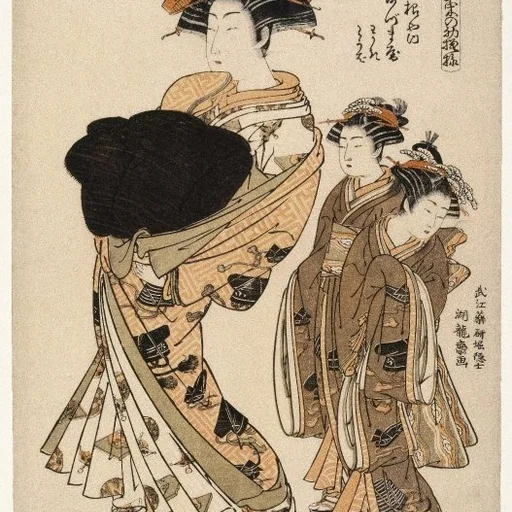

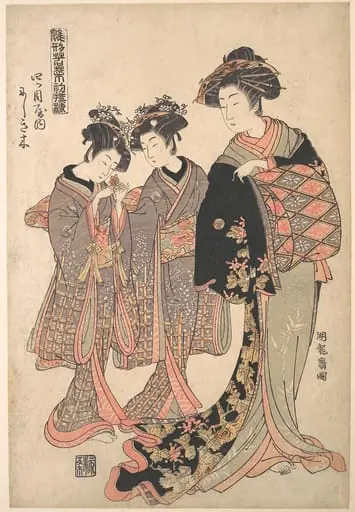 『雛形若菜初模様 四ツ目屋内 にしき木』|The Courtesan Nishikigi of the Yotsumeya Brothel, from the series “A Pattern Book of the Year’s First Designs, Fresh as Spring Herbs” (“Hinagata wakana hatsu moyō”)
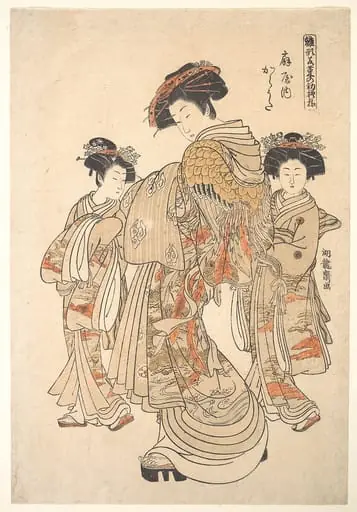 『雛形若菜の初模様 扇屋内 からうた』|The Courtesan Karauta of the Ōgiya Brothel, from the series “A Pattern Book of the Year’s First Designs, Fresh as Spring Herbs” (“Hinagata wakana no hatsu moyō”)
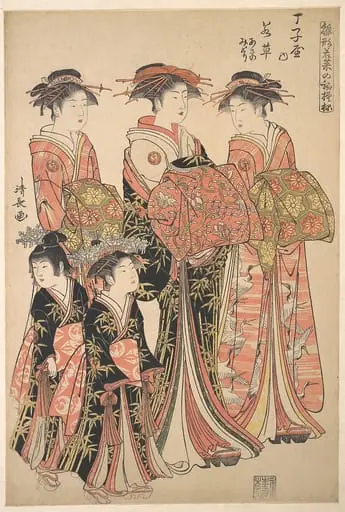 鳥居清長画 「雛形若菜の初模様 丁子屋の若草・ あさの・みどり」|The Courtesan Wakakusa of the Chōjiya Brothel, and Attendants Asano and Midori, from the series “A Pattern Book of the Year’s First Designs, Fresh as Spring Herbs” (Hinagata wakana no hatsumoyō)
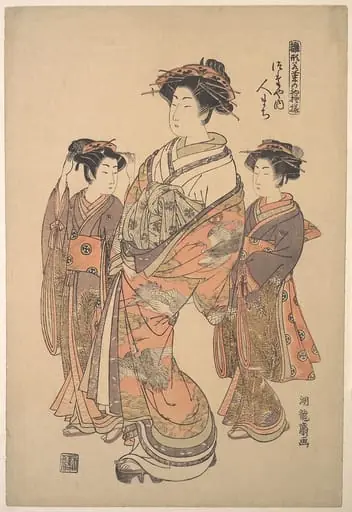 『雛形若菜の初模様 つたや内 人まち』|The Courtesan Hitomachi of the Tsutaya Brothel, from the series “A Pat-tern Book of the Year’s First Designs, Fresh as Spring Herbs” (“Hinagata wakana no hatsu moyō”)
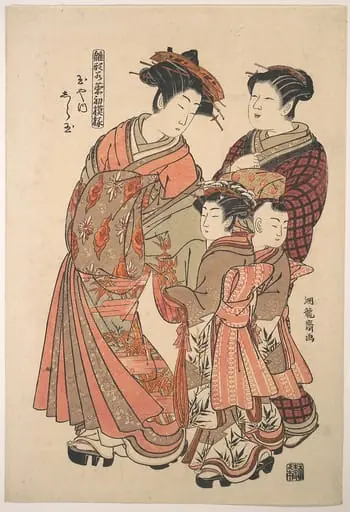 『雛形若菜初模様 玉や内 しら玉』|The Courtesan Shiratama of the Tamaya Brothel, from the series “A Pat-tern Book of the Year’s First Designs, Fresh as Spring Herbs” (“Hinagata wakana hatsu moyō”)
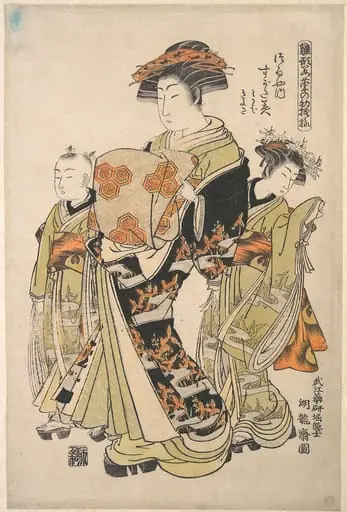 『雛形若菜の初模様 つるや内 すがたみ』|The Courtesan Sugatami of the Tsuruya Brothel, from the series “A Pat-tern Book of the Year’s First Designs, Fresh as Spring Herbs” (“Hinagata wakana no hatsu moyō”)
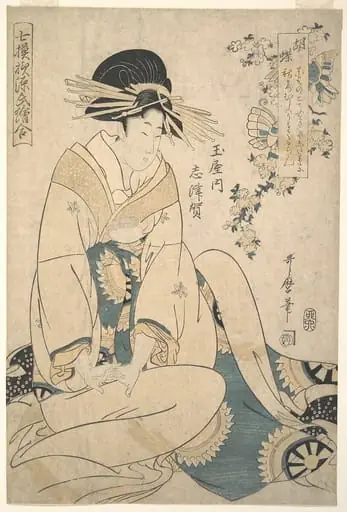 玉屋内 志津賀|A Courtesan
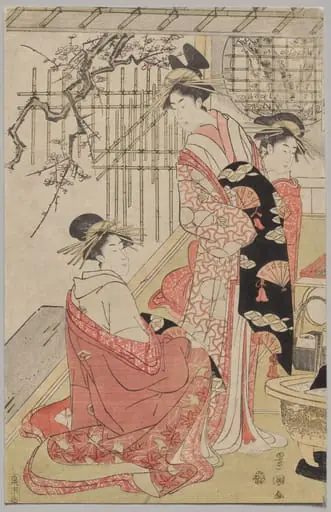 Courtesans of the Ōgiya on a Spring Outing