Artwork
Joc de copii
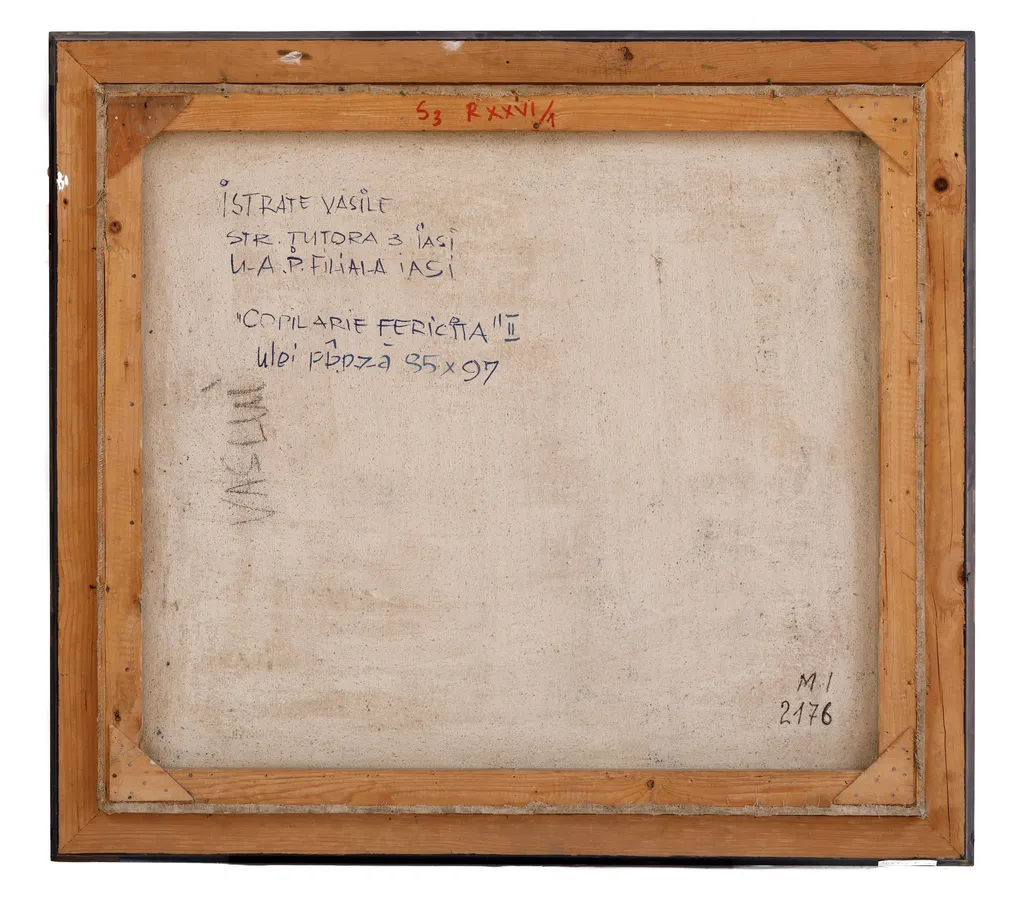
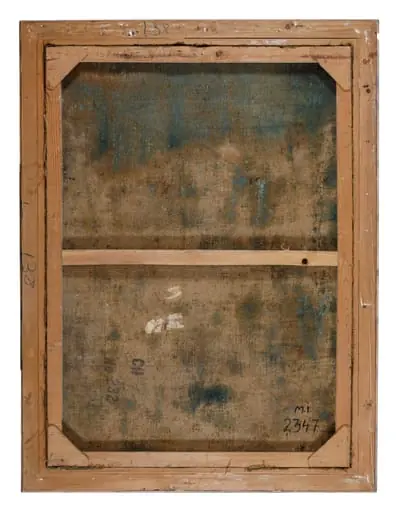
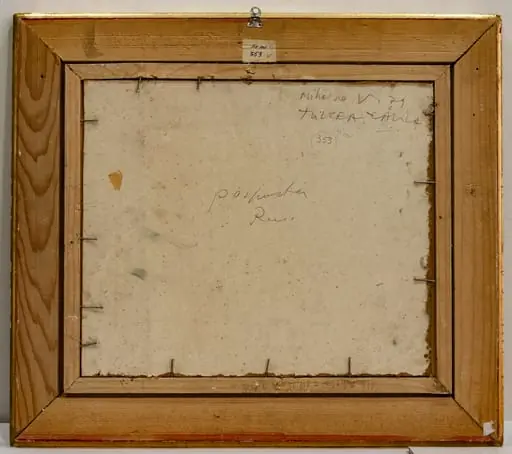
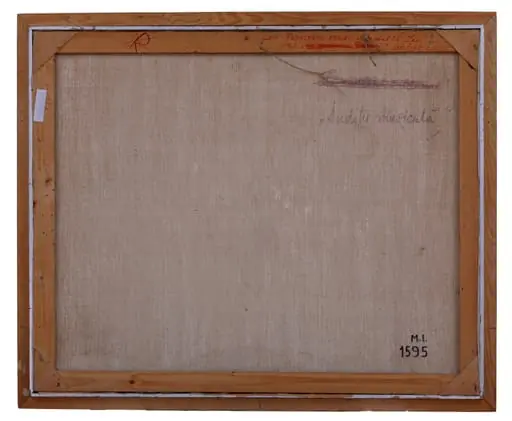
Joc de copii is a print by Istrate Vasile. It is held in the collection of the Moldova National Museum Complex. A wooden frame holds a blank canvas marked only by faint blue ink inscriptions and worn surface details.
About this work
Overview
No imagery appears on the canvas, only legible but untranslated script, suggesting a non-Latin linguistic origin.
A wooden frame holds a blank canvas marked only by faint blue ink inscriptions and worn surface details. The title, Joc de copii—Romanian for 'children’s game'—is the sole textual identifier. The frame shows signs of age, with red handwritten numbers in the upper corner. Dimensions are 65 by 97 centimeters. No imagery appears on the canvas, only legible but untranslated script, suggesting a non-Latin linguistic origin.
Subject & Meaning
The phrase 'children’s game' implies a reference to play, ritual, or social activity among young people, though no visual representation of such activity exists. The faded ink names and words may record participants, rules, or a localized tradition. Without further context, the work resists literal interpretation, functioning instead as an artifact of unrecorded cultural practice, possibly tied to oral or communal memory.
Technique & Style
The work is executed in minimal, non-illustrative means: ink applied directly to unprimed canvas, with no brushwork or compositional structure beyond scattered script. The handwriting appears hurried, utilitarian, not decorative. The wooden frame, aged and unvarnished, complements the austerity. The absence of color, form, or texture emphasizes the primacy of language over image.
History & Provenance
The piece is associated with the Museum of Ethnography, suggesting it was collected as part of a cultural documentation effort. Its origins likely lie in a rural or regional Romanian community, where such inscriptions may have been made during informal gatherings. The red numerals on the frame may indicate cataloging or inventory marks from the early 20th century, though no artist or date is known.
Context
In early 20th-century Eastern Europe, ethnographers often collected everyday objects and inscriptions to preserve vanishing folk traditions. This work may have been gathered during fieldwork, where children’s games were noted as cultural expressions. The use of non-standard script and lack of artistic intent align with vernacular practices, distinguishing it from formal art traditions of the period.
Legacy
As an artifact without a known creator or clear narrative, Joc de copii endures as a mute witness to overlooked cultural moments. Its value lies not in aesthetic achievement but in its capacity to evoke absence—the names, voices, and rituals that once animated the space it now holds. It invites reflection on what is lost when traditions are recorded but not understood.
Artist & collection
Artist
A Romanian artist from the mid-20th century, Istrate Vasile made prints and paintings of daily life.