Artwork
Saint Andrew
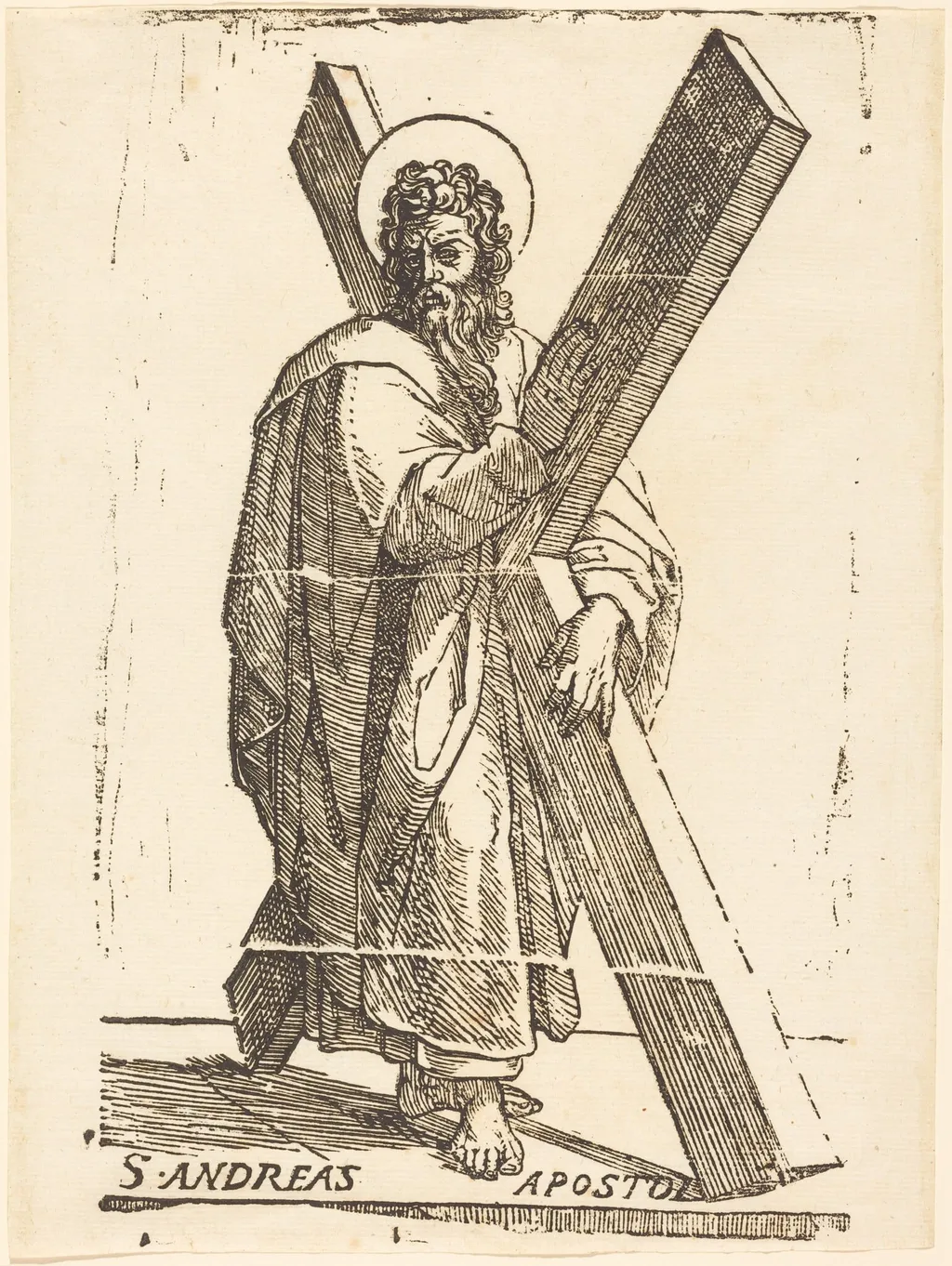
Saint Andrew is an ink print by the Renaissance artist Italian 16th Century. It dates from 1626 and is held in the collection of the National Gallery of Art.
About this work
Overview
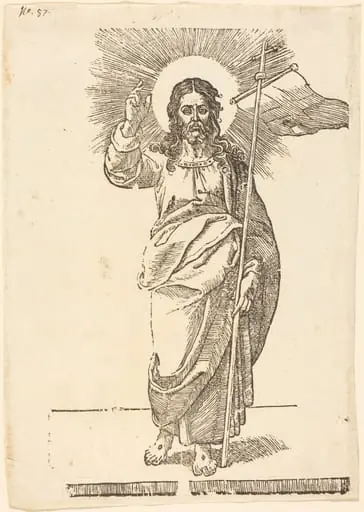
This woodcut on laid paper depicts Saint Andrew, one of Christ’s apostles, rendered in monochrome black ink.
This woodcut on laid paper depicts Saint Andrew, one of Christ’s apostles, rendered in monochrome black ink. The image is composed with strong, clean lines and deliberate shading to suggest volume and texture. The figure stands behind a large X-shaped cross, which dominates the composition. The print’s simplicity and focus on form reflect the conventions of early modern Northern European printmaking, where clarity and symbolic weight took precedence over ornamental detail.
Subject & Meaning
Saint Andrew is shown holding the instrument of his martyrdom—the diagonal cross, later known as the Saltire. His bare feet and modest robes emphasize humility and devotion. The cross, larger than life and centrally positioned, transforms the image into a devotional symbol rather than a narrative scene. The beard and curly hair align with traditional iconography, reinforcing his identity as an early Christian martyr and patron saint of several regions.
Technique & Style
Executed as a woodcut, the image was carved into a wooden block, with raised areas inked and pressed onto paper. The artist used bold, incised lines to define form and subtle hatching to suggest shadow and depth. The absence of color focuses attention on line and contrast, a hallmark of the medium. The precision of the carving indicates a skilled hand, balancing expressive power with the technical constraints of relief printing.
History & Provenance
The print likely dates to the late 15th or early 16th century, a period when woodcuts were widely used for religious imagery in both devotional and educational contexts. While its exact origin is undocumented, its style aligns with workshop production in the Rhineland or Low Countries. Such prints were often distributed as single sheets, collected in albums, or used as models for other media, reflecting the growing demand for portable sacred imagery.
Context
During the late Middle Ages and early Reformation, woodcuts served as accessible tools for religious instruction, especially among the literate laity. Saint Andrew, as a prominent apostle and patron of Scotland and Greece, was a common subject in devotional prints. This image fits within a broader tradition of saintly portraiture that prioritized symbolic recognition over naturalism, reinforcing faith through visual familiarity.
Legacy
This woodcut exemplifies how printmaking democratized religious imagery before the advent of mass reproduction. Its enduring clarity and symbolic focus influenced later devotional prints and contributed to the standardization of saintly iconography. Though unsigned and anonymous, it remains a representative artifact of the printmaker’s role in shaping visual piety across early modern Europe.
Artist & collection

Artist
A 16th-century Italian sculptor left us small bronze works in dark brown and gold.