Artwork
Prophet and Sybil
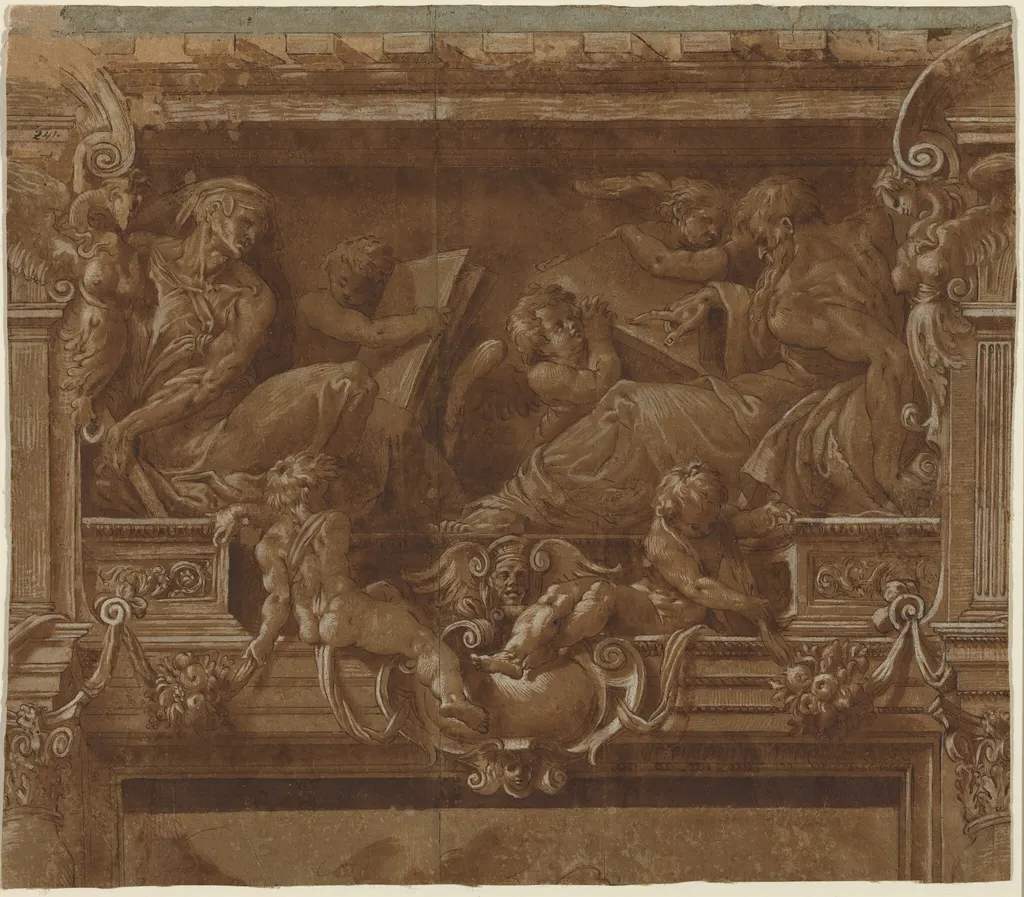
Prophet and Sybil is an ink drawing by the Renaissance artist Italian 16th Century. It dates from 1550 and is held in the collection of the National Gallery of Art.
About this work
Overview
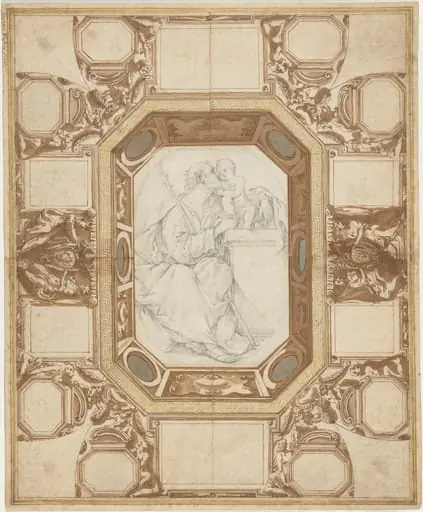
Prophet and Sybil is a drawing executed in pen and brown ink, with additional brown wash applied over a graphite underdrawing. The work is composed of two sheets of laid paper that have been joined and mounted onto a canvas support, creating a single, continuous surface.
Technique & Style
The artist employed a combination of line work and tonal washes, beginning with graphite sketches that were later intensified with ink. Brown wash layers add depth, while selective highlights in white enhance contrast and delineate forms. The use of laid paper, known for its textured surface, contributes to the drawing’s tactile quality.
Subject & Meaning
The title suggests a juxtaposition of a prophetic figure and a Sybil, a woman reputed for delivering oracles in antiquity. The composition likely explores themes of divination and the transmission of hidden knowledge, reflecting the historical interplay between male and female seers.
History & Provenance
The drawing is presented as a single entity formed from two joined sheets, indicating it may have been created as a larger work or later expanded. No specific information about its date, creator, or ownership history is provided.
Artist & collection

Artist
A 16th-century Italian sculptor left us small bronze works in dark brown and gold.

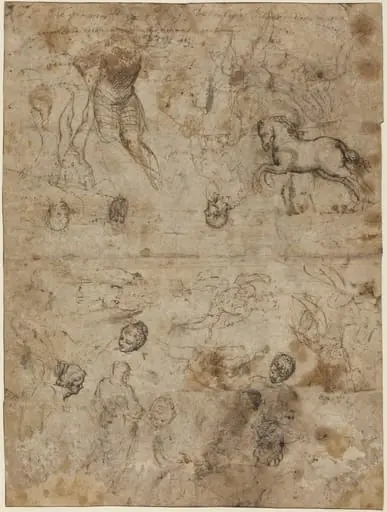
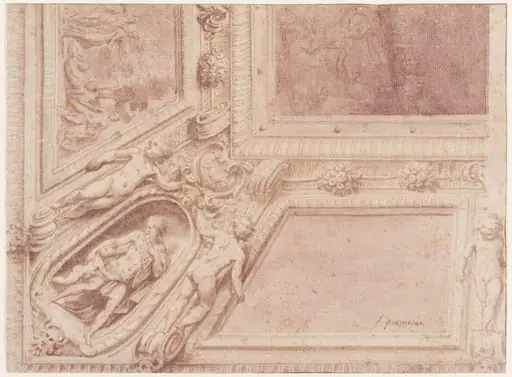 Design for a ceiling with a deep cove, showing a corner only
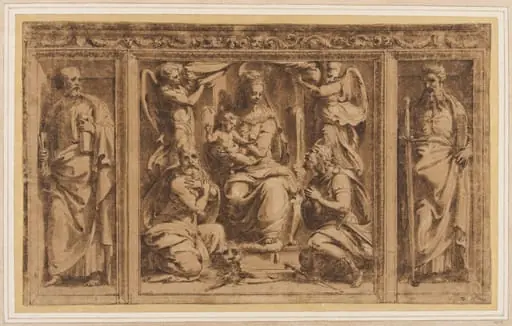 Design for three painted or sculptured panels in an ornamented frame: in the middle the Virgin and Child adorded by St Jerome and a king; to the left and right St Peter and St Paul
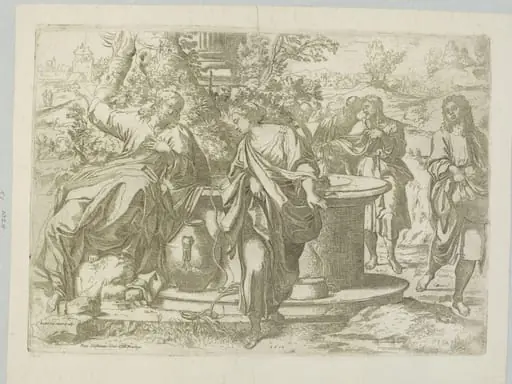 Christ and the Woman of Samaria
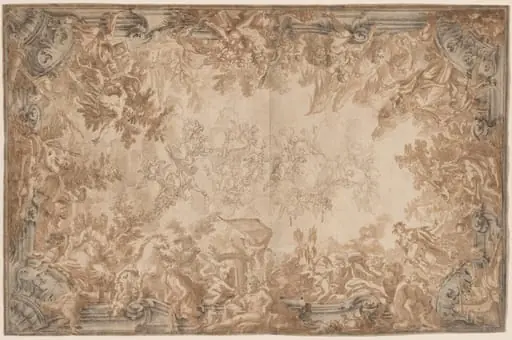 The Triumph of Empire, with the Four Continents
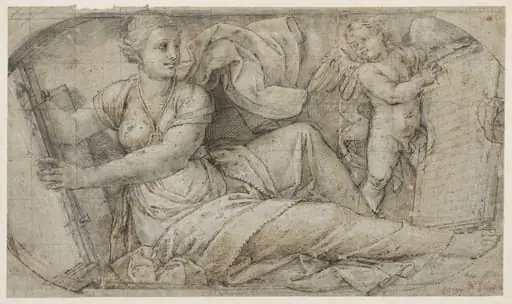 Reclining sibyl holding a book, with a winged putto supporting an inscribed tablet
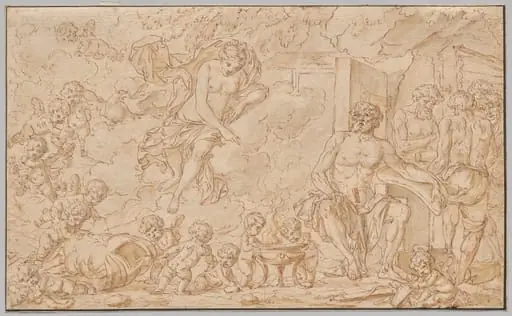 Venus at the Forge of Vulcan
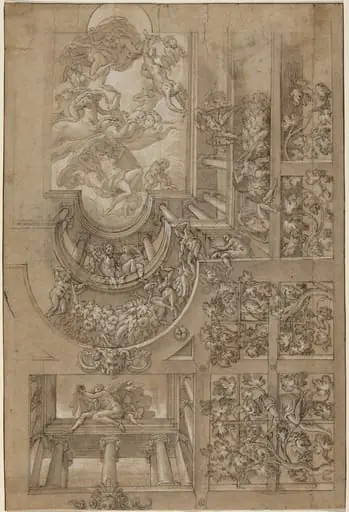 Illusionistic Ceiling with a Grape Arbor, Figures Poised on Galleries, and a Central Scene of Olympian Gods
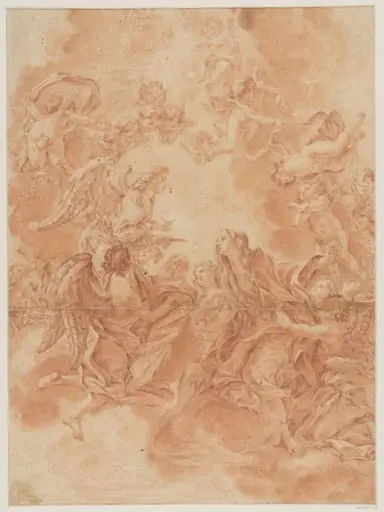 The Communion of St Mary Magdalene
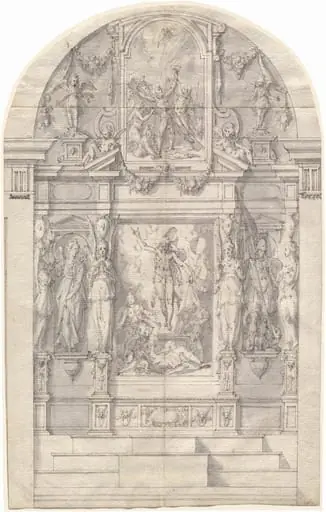 An Elaborate Altar with the Resurrection of Christ and the Martyrdom of Saint Andrew
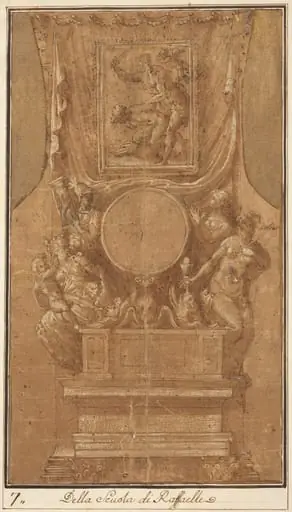 Design for an Altar
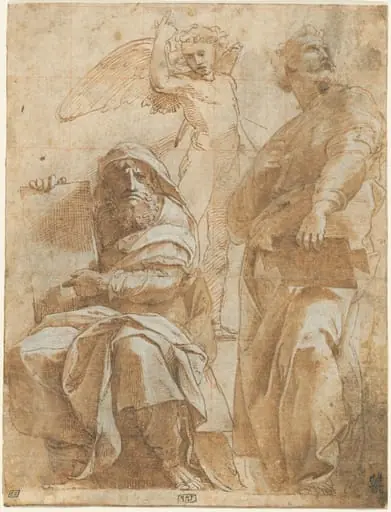 The Prophets Hosea and Jonah
 Ceiling with Allegorical Figures and the Arms of Pope Sixtus V (Guerra's outer drawing); Saint Joseph and the Christ Child (Viani's central drawing)