Artwork
Grotesque with a Satyr
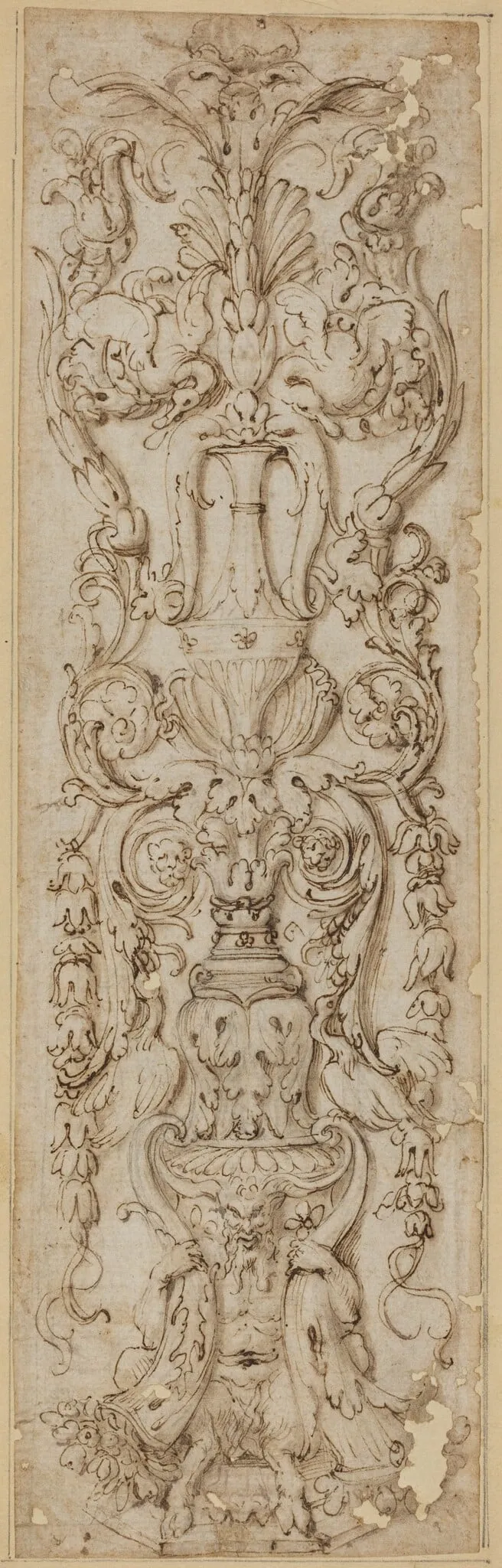
Grotesque with a Satyr is a chalk drawing by the Renaissance artist Italian 16th Century. It dates from 1550 and is held in the collection of the National Gallery of Art.
About this work
Overview
Grotesque with a Satyr is a drawing executed on laid paper. The work combines pen work, brown ink, and a wash applied over an initial black‑chalk sketch. It measures within the scale typical of Renaissance studies and is presently held in the collection of the National Gallery of Art in Washington, D.C.
Technique & Style
The artist began with a black‑chalk underdrawing, establishing the composition before overlaying it with fine pen lines and brown ink. A diluted wash adds tonal depth, creating a subtle contrast between the crisp linear elements and the softer shaded areas. This layered approach reflects the period’s interest in drawing as both preparatory and finished art.
History & Provenance
Created during the European Renaissance, the piece entered the National Gallery of Art’s holdings through acquisition in the twentieth century. Documentation traces its provenance to private collections before its donation to the museum, where it has been catalogued as part of the institution’s drawing department.
Context
The subject—a satyr rendered in a grotesque manner—aligns with Renaissance artists’ fascination with classical mythology and the exploration of hybrid, fantastical figures. Such motifs were often employed to demonstrate skill in rendering anatomy, movement, and expressive detail, serving both scholarly and decorative purposes within the era’s artistic discourse.
Artist & collection

Artist
A 16th-century Italian sculptor left us small bronze works in dark brown and gold.

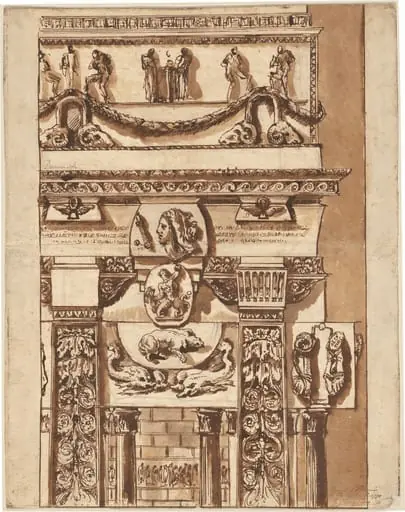 Fantasy of a Façade with Bizarre Ornaments
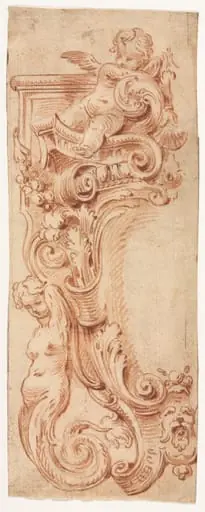 Design for a Cartouche
 Nereid Ridden by Two Children
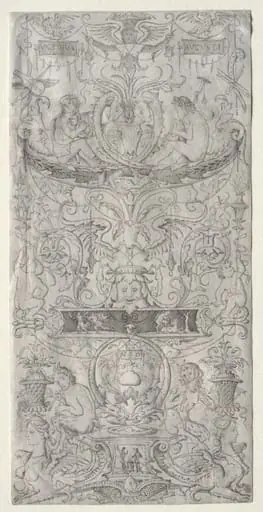 Panel of Ornament Inscribed Victoria Augusta
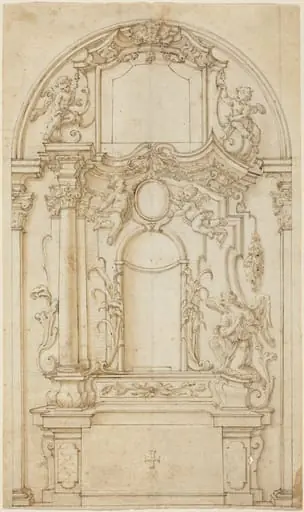 Study for an Altar and a Reredos
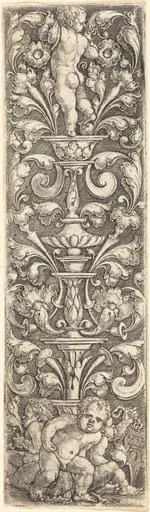 High Ornament
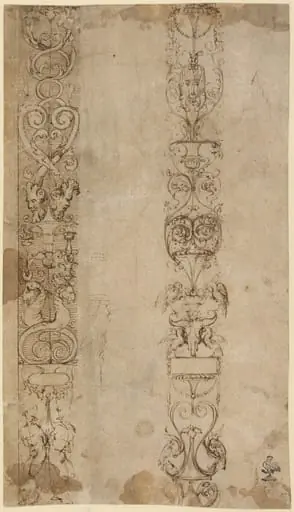 Grotteschi
 Ornament Panel: Triton Ridden by a Child
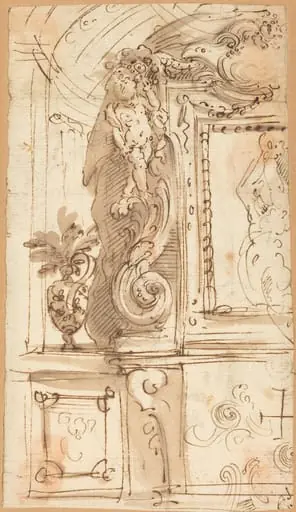 An Elaborately Sculpted Frame
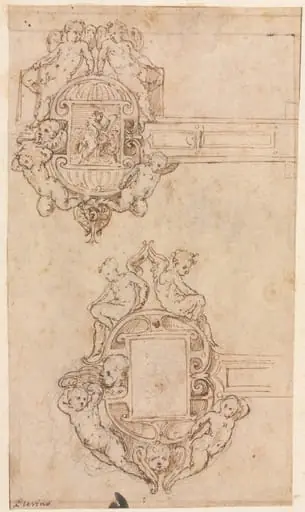 Design for Decorative Hinges (recto)
 Ornament Panel: Four Children with a Cat and a Dog
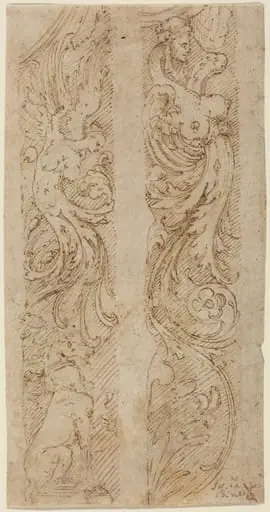 Grotesque Decorations for Wall Panels