Artwork
Putti in the Clouds
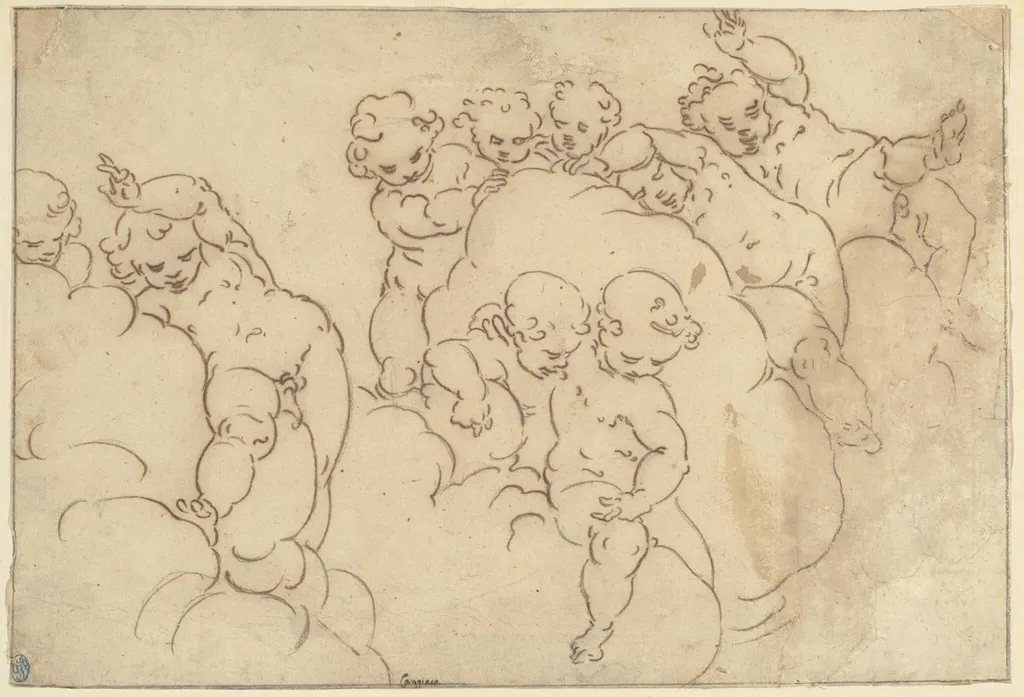
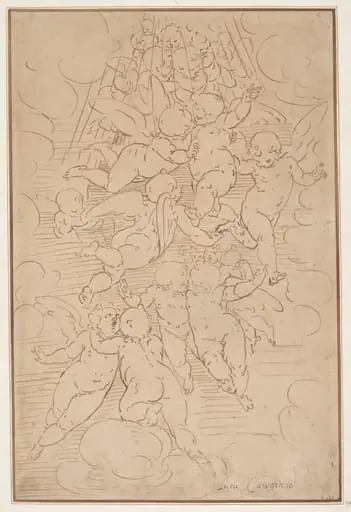
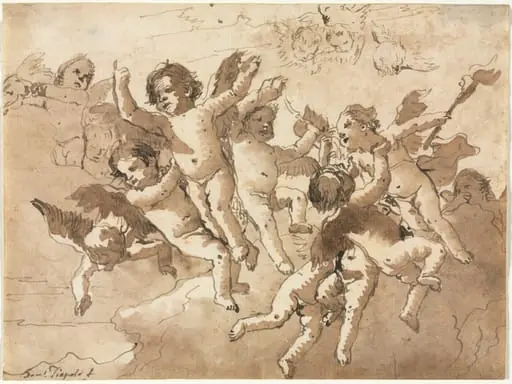
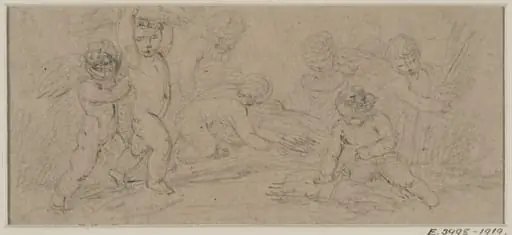
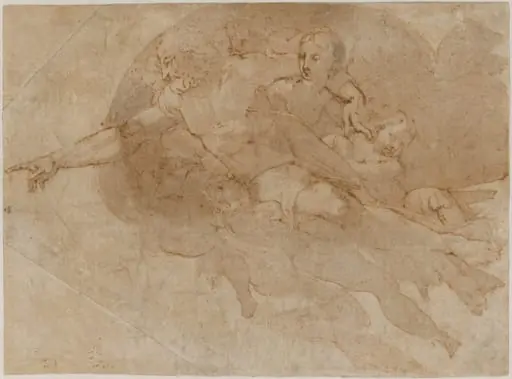
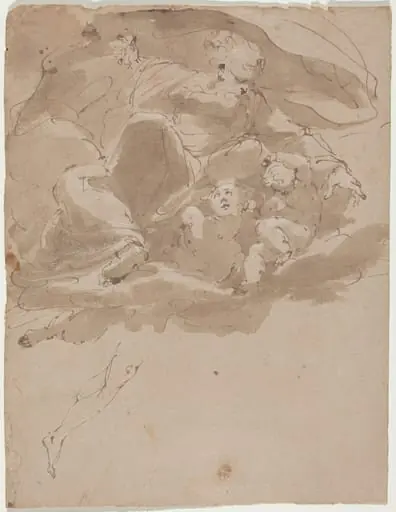
Putti in the Clouds is a chalk drawing by the Baroque artist Italian 17th - 18th century. It dates from 1601 and is held in the collection of the National Gallery of Art. This drawing, executed in pen and brown ink over black chalk on laid paper, depicts two putti floating amid swirling clouds.
About this work
Overview
This drawing, executed in pen and brown ink over black chalk on laid paper, depicts two putti floating amid swirling clouds.
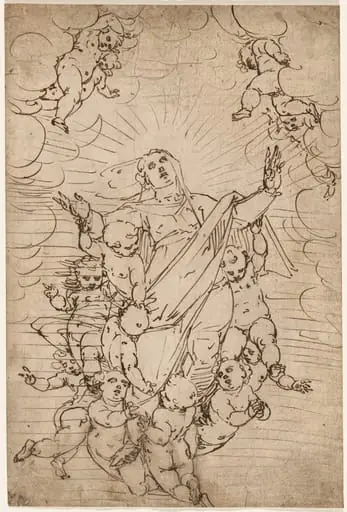
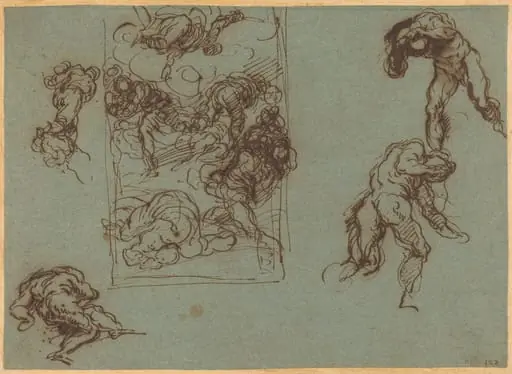
This drawing, executed in pen and brown ink over black chalk on laid paper, depicts two putti floating amid swirling clouds. Its spontaneous, sketchlike quality suggests it was a preparatory study rather than a finished work. The artist employed minimal strokes to suggest form, with wings rendered as swift lines and faces as simple dots. Faint grid markings remain visible, indicating its role in planning larger compositions.
Subject & Meaning
The two putti, traditional symbols of divine presence in Baroque religious art, are shown in mid-air, unmoored from earthly gravity. Their playful, weightless posture aligns with the era’s fascination with celestial movement and spiritual ascent. Though simplified, their arrangement conveys a sense of motion and ethereal lightness, reinforcing their function as heavenly attendants in decorative programs.
Technique & Style
The artist used cross-hatching to model the clouds, creating volume through layered, intersecting lines. Ink over chalk allowed for both precision and fluidity, while the loose handling reflects a working method focused on rapid exploration. The minimal definition of forms—wings as quick strokes, faces as indistinct marks—demonstrates how Baroque draftsmen prioritized movement and atmosphere over detail in preliminary studies.
History & Provenance
The drawing likely originated in a studio where ceiling frescoes were planned, possibly for a church or palace. Its survival suggests it was valued as a working document, not discarded after use. The presence of grid lines indicates it was part of a systematic transfer process, common in large-scale decorative projects of the period, though its exact origin remains undocumented.
Context
In the Baroque era, artists routinely produced quick studies to test compositions before executing monumental frescoes. This sketch reflects a broader practice of using paper to explore spatial dynamics and figure placement. Similar sheets by contemporaries reveal how fleeting, informal drawings served as vital steps in realizing grand, illusionistic ceilings filled with hovering angels and divine drama.
Legacy
This drawing exemplifies how Baroque draftsmanship transformed preliminary sketches into expressive records of creative thought. Its vitality, achieved through economy of line, influenced later artists who valued the energy of the sketch over polished finish. Today, such works offer insight into the iterative process behind monumental art, bridging the gap between concept and execution.
Artist & collection
Artist
This artist worked in late 17th- to 18th-century Italy, specializing in bronze reliefs and ink drawings on paper.