Artwork
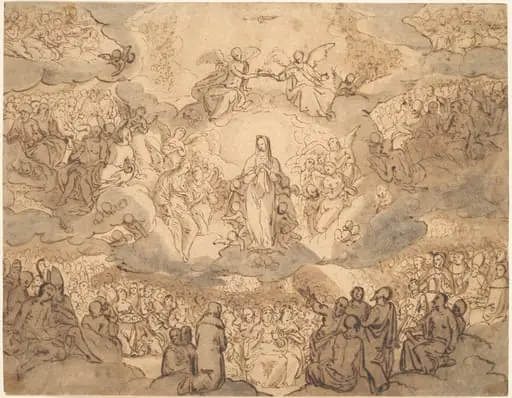
The Virgin in Glory
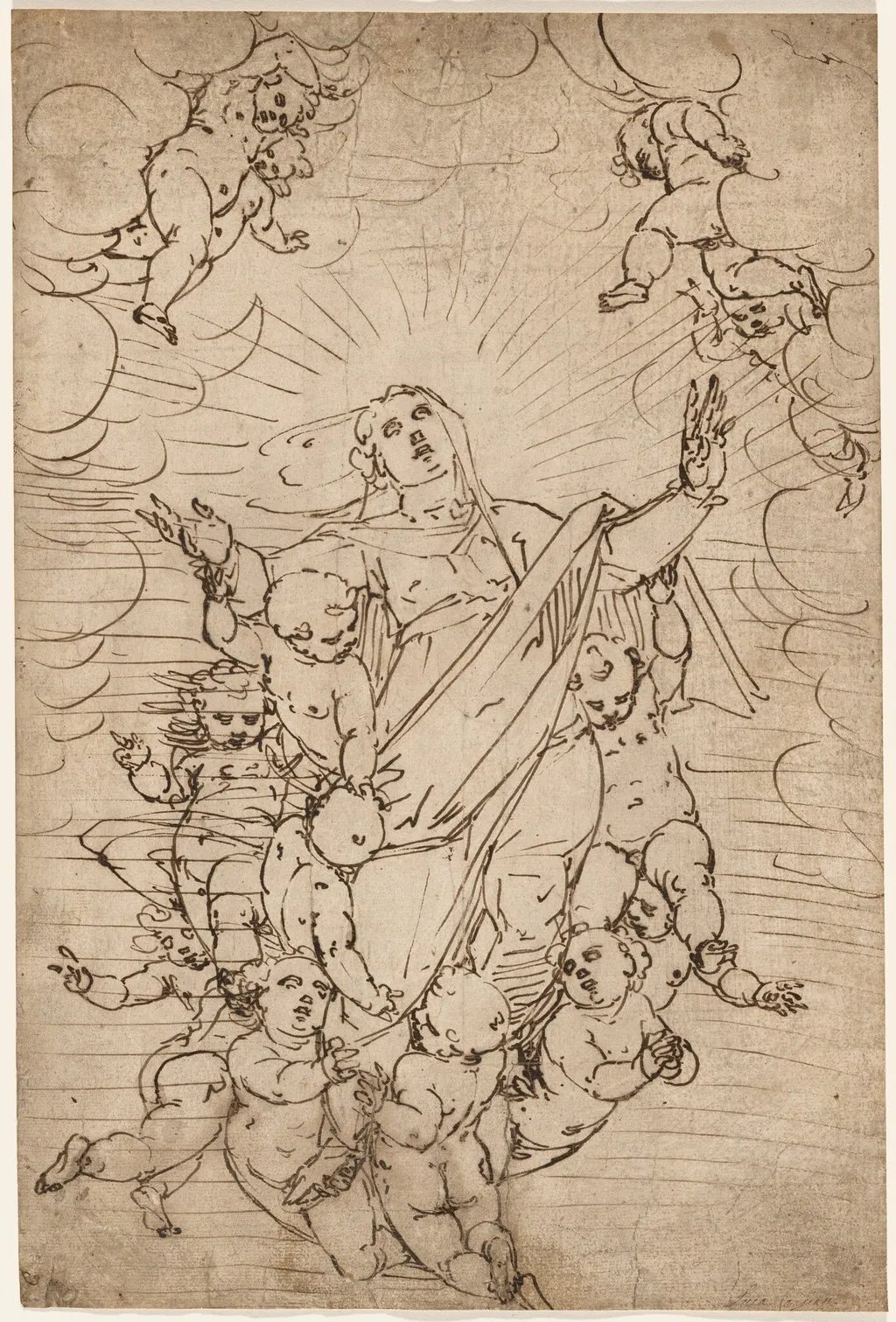
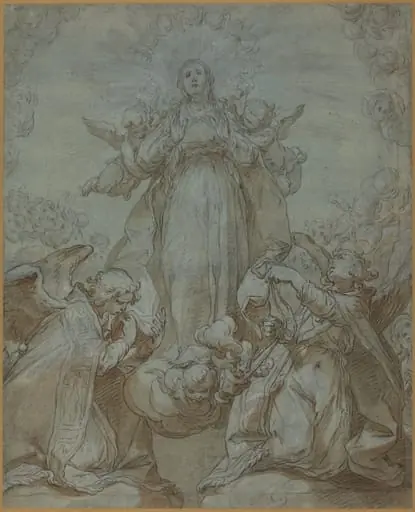
The Virgin in Glory is an ink drawing by the Renaissance artist Luca Cambiaso. It dates from 1564 and is held in the collection of the National Gallery of Art.
About this work
Overview
Luca Cambiaso’s drawing titled *The Virgin in Glory* dates to around 1564. Executed with pen and brown ink on laid paper, the work presents a compact composition of figures suspended in a celestial setting. The central figure, arms uplifted, is encircled by smaller winged beings, all rendered against a loosely suggested cloudscape.
Subject & Meaning
The central female figure is traditionally identified as the Virgin Mary, elevated in a state of divine exaltation. The surrounding winged figures, likely angels, emphasize her sanctity and intercessory role. The upward gesture of the Virgin conveys a sense of prayerful ascent, while the ethereal grouping suggests a heavenly assembly.
Technique & Style
Cambiaso employs rapid, sketchy strokes of pen, creating a network of overlapping lines that generate tonal variation through cross‑hatching. This method produces a subtle modeling of volume, giving the figures a three‑dimensional presence despite the two‑dimensional medium. The approach reflects the Renaissance practice of using line work to suggest depth and light.
History & Provenance
Created in the mid‑sixteenth century, the drawing belongs to Cambiaso’s mature period, when he was active in Genoa. While specific ownership records are scarce, the piece has been catalogued in several European collections of Renaissance drawings, indicating its recognition as a representative example of the artist’s devotional studies.
Artist & collection


 The Virgin, Queen of Heaven
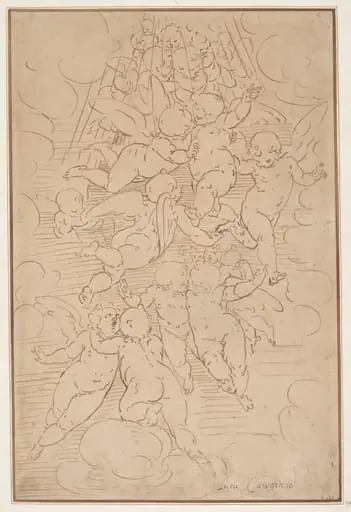 A Group of Angels in Glory
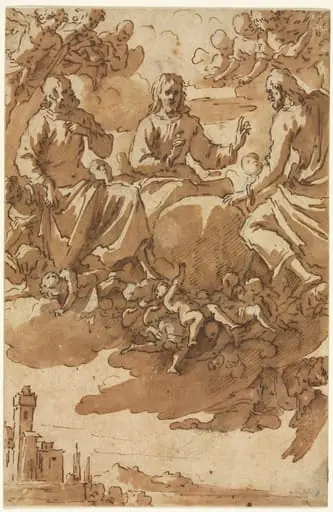 Christ in Glory with Two Saints
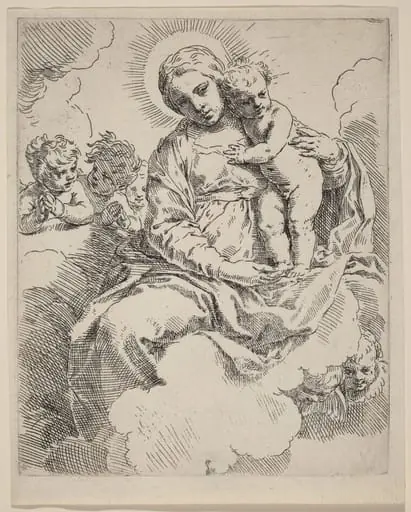 The Virgin and Child
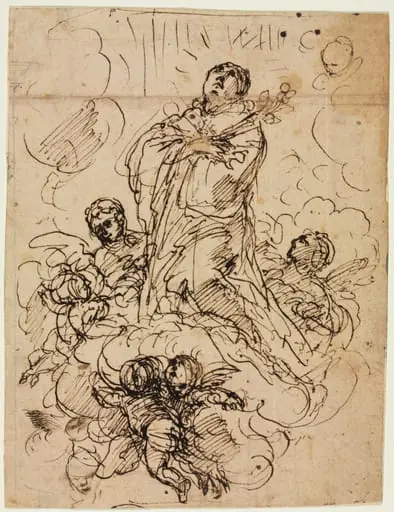 Apotheosis of a Saint
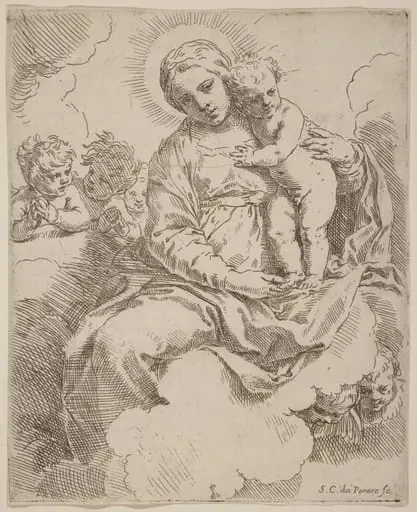 The Virgin and Child
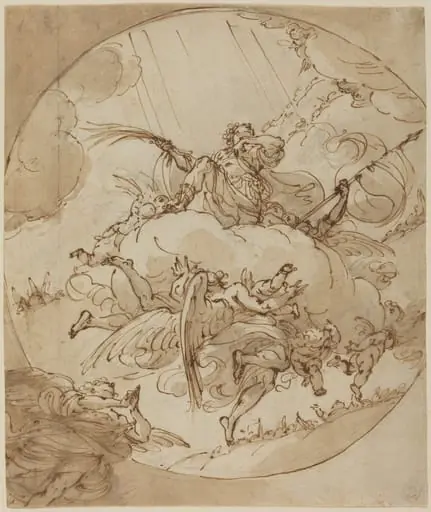 The Apotheosis of San Vitale
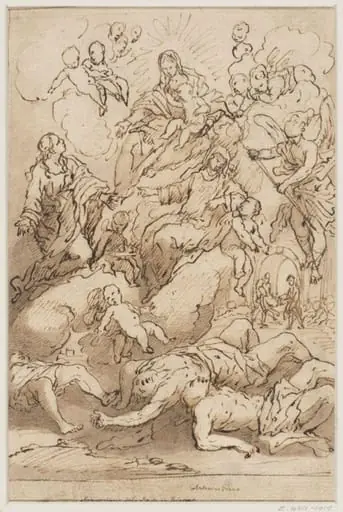 Anniversary of the Plague at Palermo
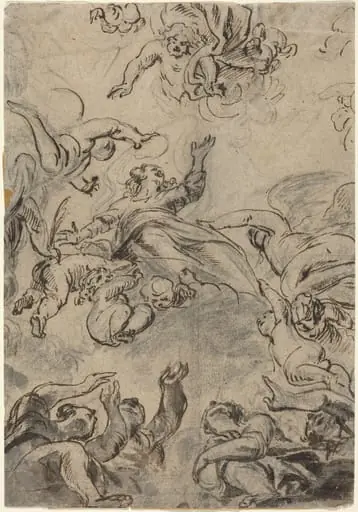 The Assumption of the Virgin
 Apollo in his chariot, design for a ceiling painting
 Blessed Maria Vittoria Fornari's Vision of the Trinity
 The Virgin in Glory