Artwork
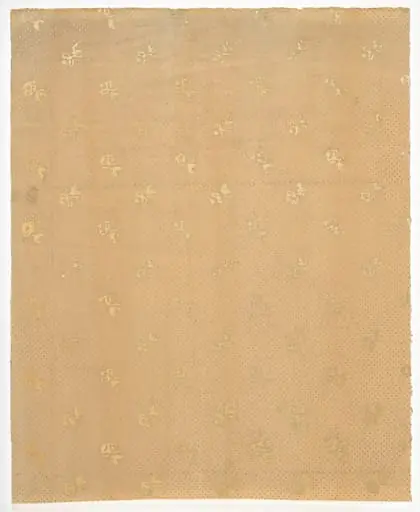
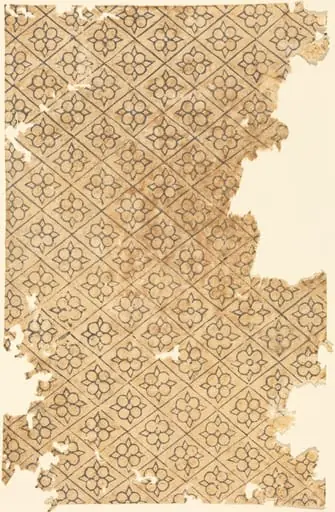
Endpaper with Floral Pattern
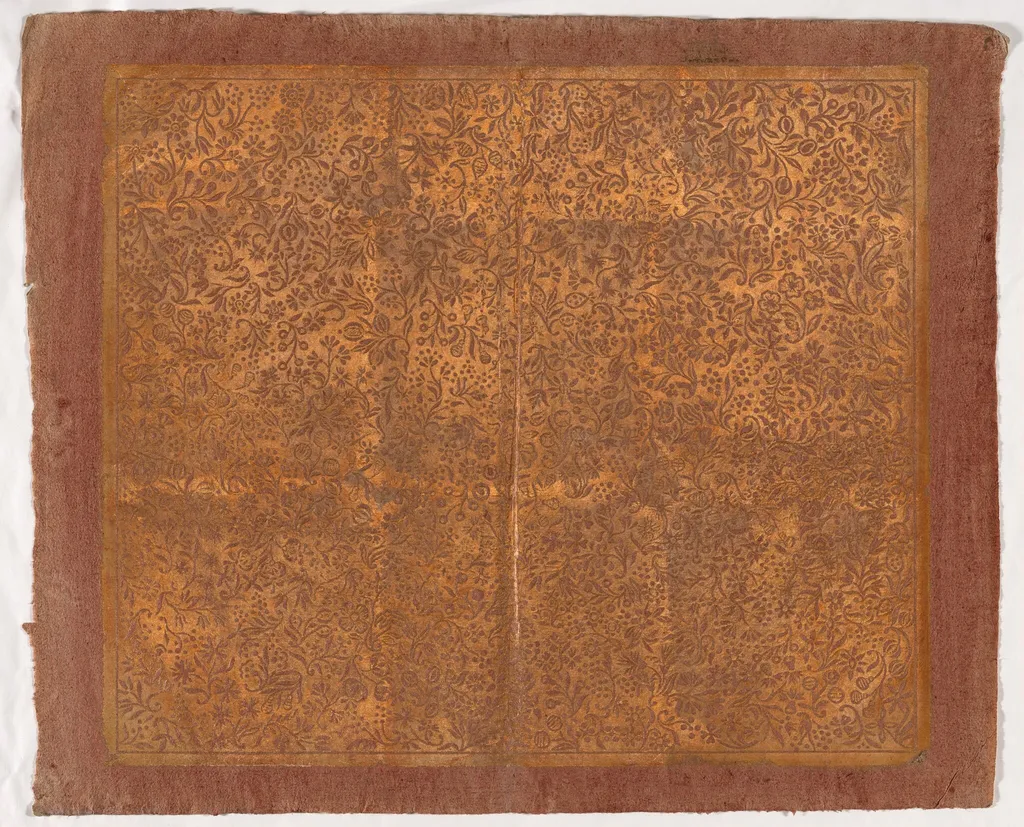
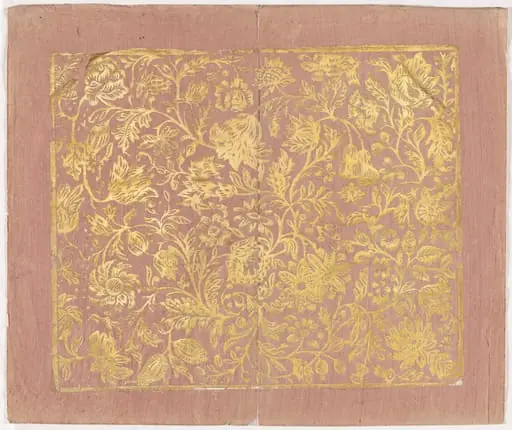
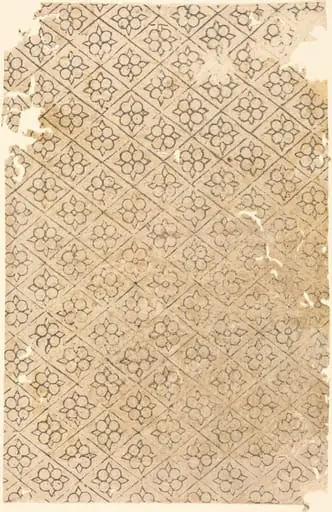
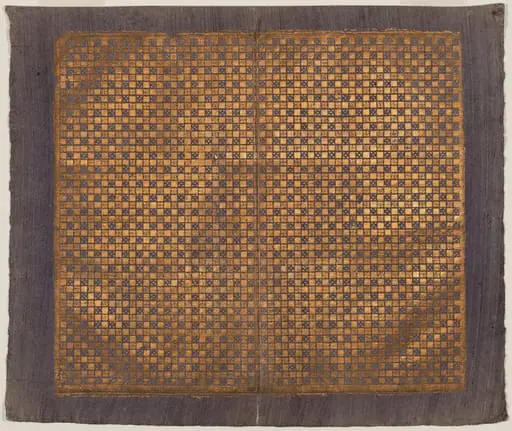
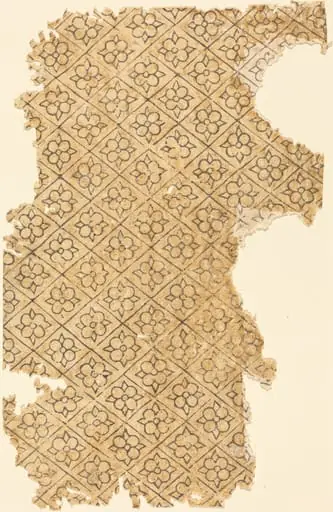
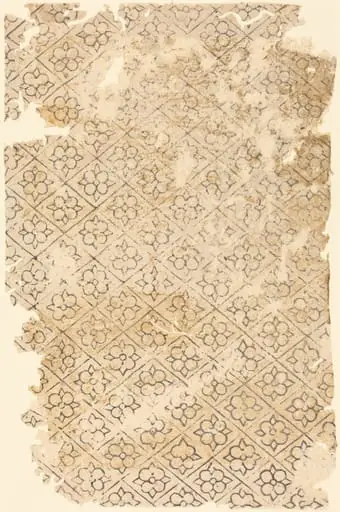
Endpaper with Floral Pattern is an ink print by the Baroque artist Italian 18th Century. It dates from 1750 and is held in the collection of the National Gallery of Art. The work is a hand‑cut woodblock print executed in metallic gold ink on a sheet of rose‑toned paper that has been hand‑washed.
About this work
Overview
The work is a hand‑cut woodblock print executed in metallic gold ink on a sheet of rose‑toned paper that has been hand‑washed. The surface is covered entirely with a repeating ornamental motif of tiny leaves, blossoms and swirling forms, rendered in warm brown tones that catch the light. The paper’s edges appear uneven and a faint central crease suggests it once formed part of a bound volume.
Technique & Style
The image was produced by carving the design into a wooden block, inking the raised surfaces with gold pigment, and pressing the block onto the prepared paper. The use of metallic ink creates a luminous effect against the soft rose background, while the repetitive, interlaced foliage reflects decorative traditions found in early modern bookbinding and manuscript illumination.
Subject & Meaning
The decorative pattern serves a primarily ornamental purpose, intended to embellish the interior of a book or similar object. Its continuous, symmetrical arrangement and luxurious material convey a sense of refinement and status, aligning with historical practices of using gilt decoration to signal the value of a text or its owner.
History & Provenance
The piece is identified as an endpaper, a leaf traditionally placed at the beginning or end of a bound volume. Its hand‑washed paper and gold woodcut technique suggest a production date in the late 19th to early 20th century, a period when such ornamental endpapers were common in fine publishing.
Artist & collection

Artist
This Italian artist carved bronze figures in the 18th century, blending myth and motion in metal.


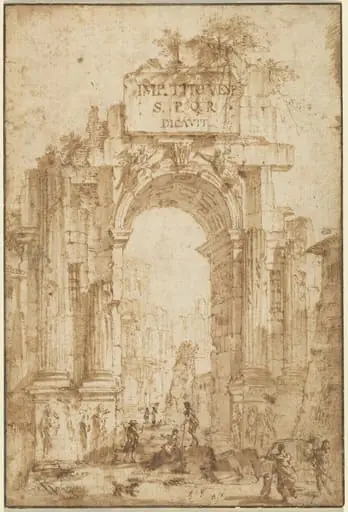
![Design for a Wall of a Music Room [recto], by Italian 18th Century](https://artifactworldgallery.com/img/italian-18th-century--design-for-a-wall-of-a-music-room-recto--1582534309a804bd-w320.webp)