Artwork
Endpaper
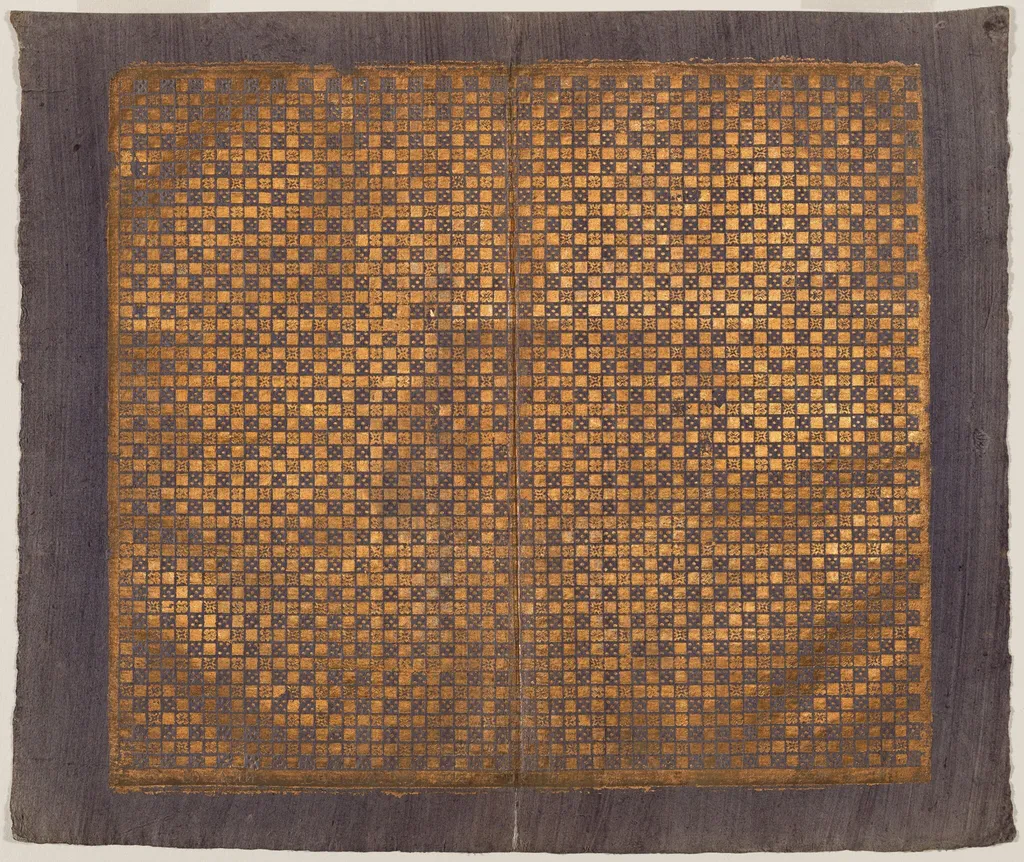
Endpaper is an ink print by the Romanticist artist Johann Lechner. It dates from 1802 and is held in the collection of the National Gallery of Art.
About this work
Overview
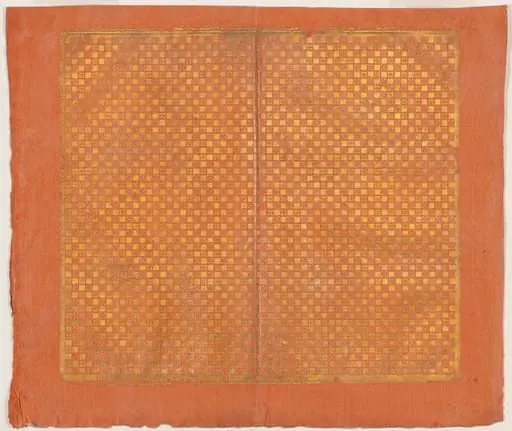
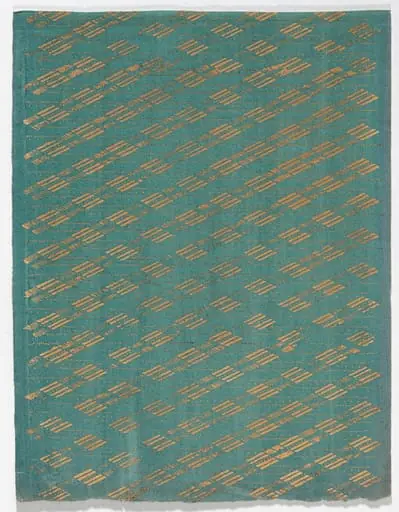
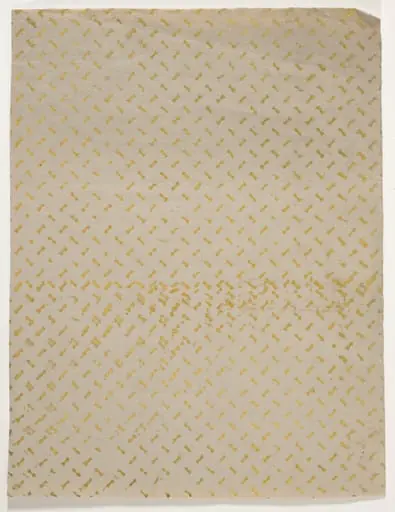
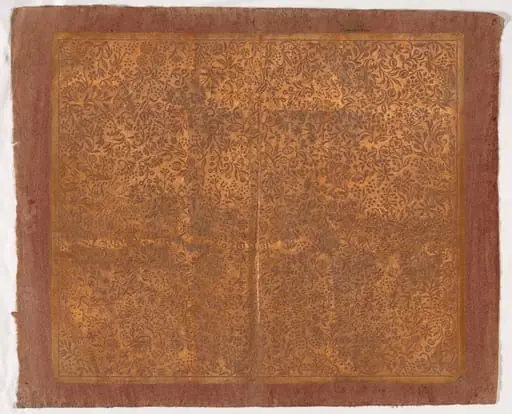
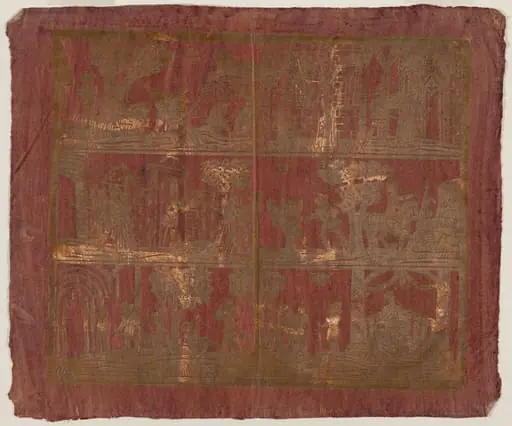
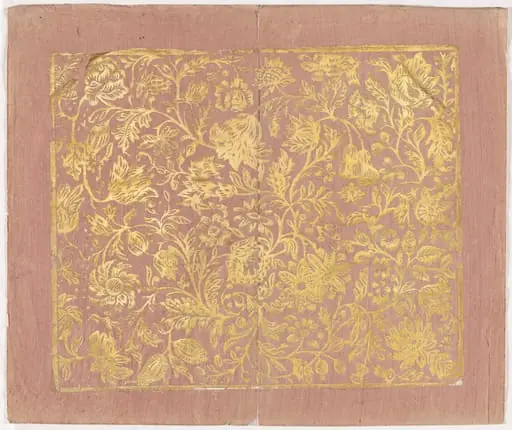
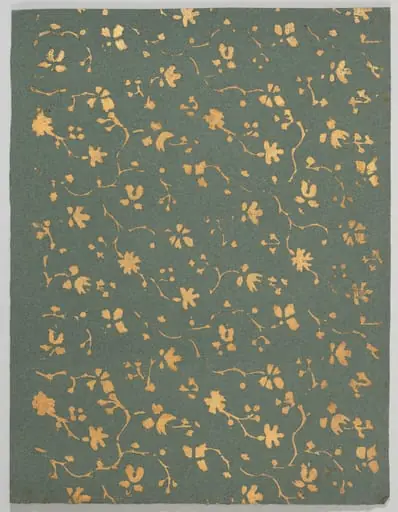
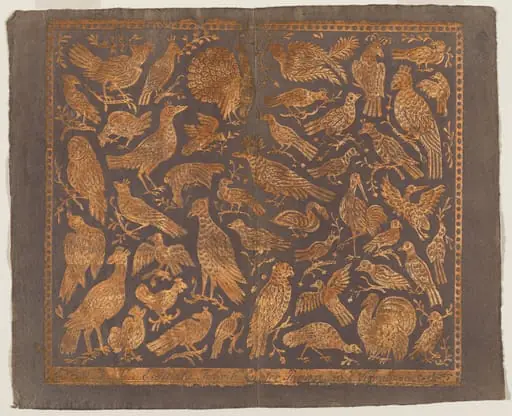
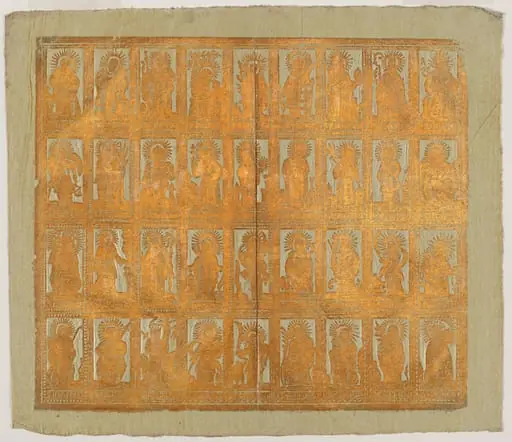
Created in 1802 by the German printmaker Johann Lechner, this work is a woodcut executed with gold metallic ink on a hand‑washed sheet of purple paper. The piece consists of a folded sheet whose surface is covered with a dense grid of tiny squares and linear motifs, framed by thin gold bands at the top and bottom.
Subject & Meaning
The composition consists of an ordered array of geometric squares, most of them filled with gold pigment, while a few contain darker brown or blue shapes. The repetitive, precise pattern reflects the decorative borders commonly employed in early‑19th‑century book design, emphasizing symmetry and the visual pleasure of surface ornamentation.
Technique & Style
Lechner employed a traditional woodcut method, carving the design into a block that transferred the image onto the paper. Gold metallic ink was applied to the block, producing a sharp, reflective contrast against the deep purple ground. The hand‑washed paper gives the sheet a subtle texture and uneven tone, while the frayed edges suggest age and handling.
History & Provenance
The print originates from the period when book interiors were embellished with elaborate borders and endpapers. Though specific ownership records are scarce, the work is typical of Lechner’s output for publishers seeking ornamental prints for binding and folio decoration in the early 1800s.
Artist & collection