Artwork
Mântuitorul Iisus Hristos, îmbrăcat în sacos lung galben-crem-bej, cu mantie verde, pe umăr, cu aureolă din raze de lumină, atinge cu mângâiere, ocrotire și Binecuvântare creștetul și umerii Sfântului Apostol Petru, care stă îngenuncheat în fața Domnului. Sfântul Petru este îmbrăcat în sacos verde, cu mantie galbenă-bronzie, primind cheile Împărăției Raiului. Simon Petru, fratele Sfântului Apostol Andrei, pescar evreu din Betsaida, este unul dintre primii discipoli ai Mântuitorului. Sfântul Petru a fost unul dintre cei mai apropiați ucenici și apostoli. În registrul superior, este cerul verde-kaki, cu nouri învolburați, cu striații mici roșii, ca de amurg. În registrul inferior sunt dealuri brune-cafenii, iar în registrul îndepărtat se văd zidurile caselor cetății Ierusalimului. Pictura este încadrată de un chenar liniar roșu-vermillon. Cromatica este autumnală, vernisată, barocă: brun-cafeniu, ocru, bej, crem, verde de China, negru. Inscripția din româno-chirilică se traduce IC XC Iisus Hristos Sf Petru.
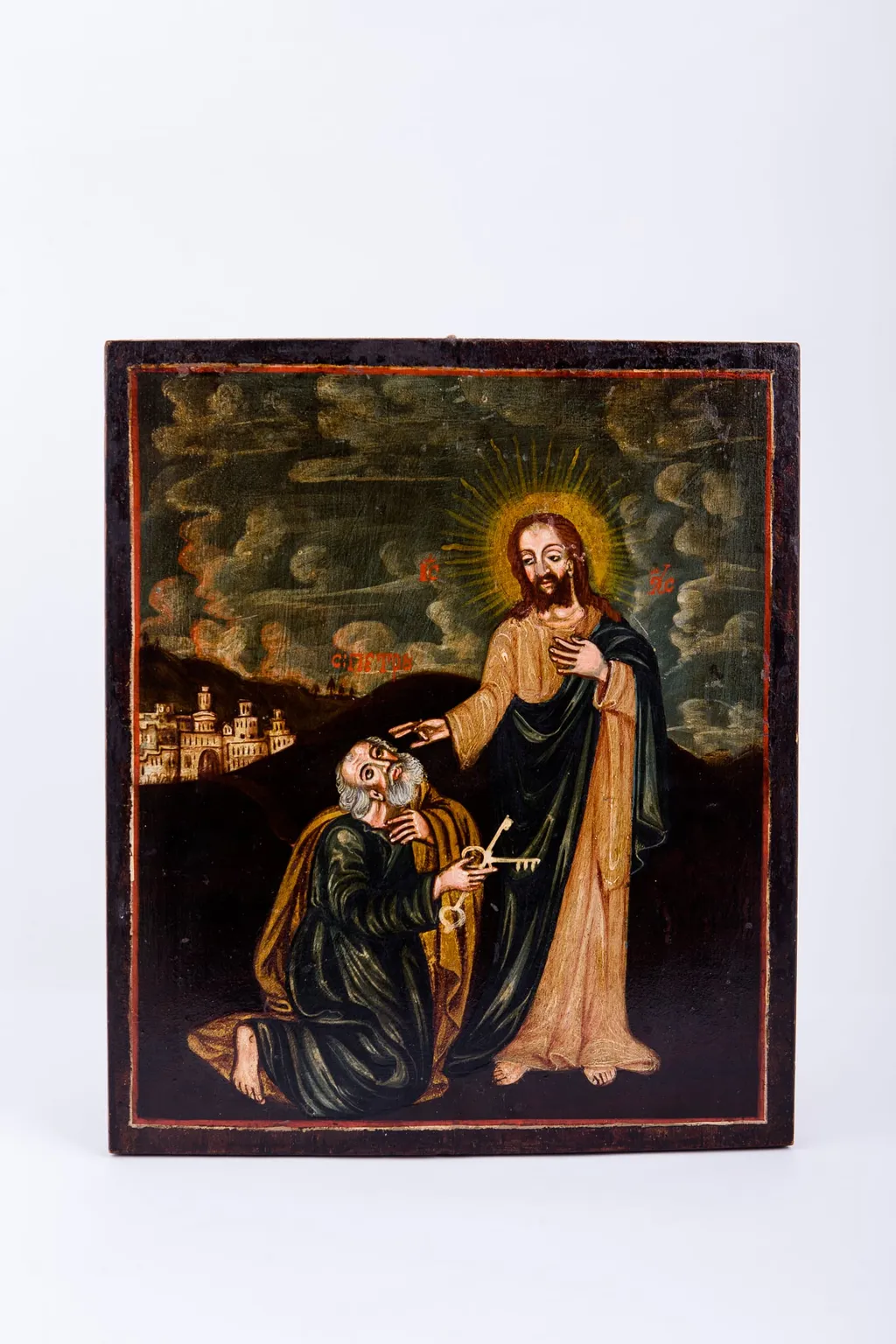
Mântuitorul Iisus Hristos, îmbrăcat în sacos lung galben-crem-bej, cu mantie verde, pe umăr, cu aureolă din raze de lumină, atinge cu mângâiere, ocrotire și Binecuvântare creștetul și umerii Sfântului Apostol Petru, care stă îngenuncheat în fața Domnului. Sfântul Petru este îmbrăcat în sacos verde, cu mantie galbenă-bronzie, primind cheile Împărăției Raiului. Simon Petru, fratele Sfântului Apostol Andrei, pescar evreu din Betsaida, este unul dintre primii discipoli ai Mântuitorului. Sfântul Petru a fost unul dintre cei mai apropiați ucenici și apostoli. În registrul superior, este cerul verde-kaki, cu nouri învolburați, cu striații mici roșii, ca de amurg. În registrul inferior sunt dealuri brune-cafenii, iar în registrul îndepărtat se văd zidurile caselor cetății Ierusalimului. Pictura este încadrată de un chenar liniar roșu-vermillon. Cromatica este autumnală, vernisată, barocă: brun-cafeniu, ocru, bej, crem, verde de China, negru. Inscripția din româno-chirilică se traduce IC XC Iisus Hristos Sf Petru. is a drawing by Ivan Zugravul din Rășinari. It is held in the collection of the ASTRA National Museum Complex. This religious panel depicts Jesus Christ blessing Saint Peter, who kneels in reverence as he receives the keys to the Kingdom of Heaven.
About this work
Overview
The composition is divided into three horizontal zones: a hazy celestial sky above, a grounded landscape below, and a distant view of Jerusalem’s walls.
This religious panel depicts Jesus Christ blessing Saint Peter, who kneels in reverence as he receives the keys to the Kingdom of Heaven. The composition is divided into three horizontal zones: a hazy celestial sky above, a grounded landscape below, and a distant view of Jerusalem’s walls. A red-vermillion frame encloses the scene, reinforcing its sacred character. The palette favors autumnal tones—ochres, beiges, and muted greens—applied with a polished, baroque finish.
Subject & Meaning
The scene illustrates Christ’s commissioning of Peter as the foundational apostle, a moment rooted in the Gospel of Matthew. Christ’s tender touch and raised hand convey divine authority and mercy, while Peter’s kneeling posture signifies humility and acceptance. The keys symbolize spiritual leadership entrusted to him. The inclusion of Jerusalem in the distance alludes to the earthly center of the emerging Church, anchoring the divine act in historical and theological context.
Technique & Style
The painting employs a refined, layered glazing technique typical of late Baroque devotional art, enhancing the luminosity of the figures’ garments and halos. Soft transitions between tones—creamy robes against earthy hills—create depth without harsh contrast. The aureole around Christ is rendered as radiating lines rather than a solid disk, suggesting ethereal light. Brushwork remains controlled, favoring quiet solemnity over dramatic motion, aligning with Eastern Christian iconographic traditions.
History & Provenance
The inscription in Romanian Cyrillic—IC XC Iisus Hristos Sf Petru—confirms its origin in a Romanian Orthodox context, likely produced in the 18th or early 19th century. The stylistic choices, including the color scheme and compositional structure, reflect local workshop practices influenced by Byzantine models and Western baroque aesthetics. Its survival suggests it was venerated in a church or private chapel, possibly in Moldavia or Wallachia.
Context
During the period of its creation, Romanian religious art often blended Byzantine iconography with European decorative trends. This work aligns with a broader trend of devotional imagery emphasizing personal encounter with the divine, particularly among clergy and monastic communities. The choice of Peter as recipient of the keys resonated with Orthodox teachings on apostolic succession and ecclesiastical authority.
Legacy
The painting exemplifies a regional tradition of Orthodox devotional panels that prioritized spiritual intimacy over grandeur. Its restrained palette and gentle gestures distinguish it from more theatrical Western counterparts, reflecting a contemplative piety. While not widely documented in major collections, such works remain important in local ecclesiastical heritage, preserving a visual language of faith rooted in both Eastern and local cultural sensibilities.
Artist & collection
Artist
A Wallachian icon painter active in the late 18th century, Ivan Zugravul din Rășinari made small religious panels for churches and homes.

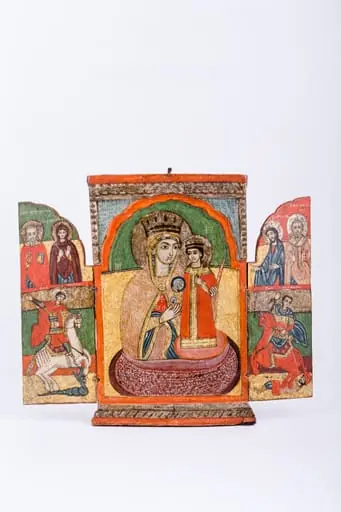 Icoana este un triptic - ansamblu de trei panouri pictate, unite prin conținut tematic iconografic comun și prin balamalele, prin care fețele laterale se închid de cea centrală. Tripticul este asemenea unei cărți sau ferestre, deschise-închise. Având stabilitate icoana centrală, tripticul poate avea valoarea de altar zburător. Tema centrală, care dă și titlul întregului ansamblu este Maica Domnului ține în brațe Pruncul Iisus Hristos, care Binecuvântează cu mâna dreaptă și ține globul pământesc cu crucea. Mântuitorul stă în picioare pe genunchii Maicii Domnului. Maica Domnului este înveșmântată în mantie cu maforion gălbui-crem-bej cu interiorul verde-roșu și ciupag auriu, are coroană și aureolă. Pruncul Iisus Hristos este înveșmântat în roșu sângeriu, cu bordură dantelată aurie, cu aureolă. Fondul icoanei este galben, în registrul inferior și verde în registrul superior. Icoana este încadrată de un chenar orange, portocaliu și un chenar crestat, basorelief, motivul funiei, de culoarea naturală a lemnului. În tematica fețelor laterale sunt reprezentați Sfântul Mare Mucenic Gheorghe purtător de biruință, Sfântul Mare Mucenic Dimitrie izvorâtor de mir, Sfânta Mare Cuvioasă Parascheva, Sfântul Ioan Botezătorul și doi sfinți ierarhi. Ușițe tripticului închizânduse, se realizează o imagine boltită, asemenea unor uși de biserică, pe care este inscripția în româno-chirilică: IC XC NIKA Iisus Hristos Biruiește! Cromatică: roșu vermillon, roșu-portocaliu, galben, verde, acajou, stacojiu, brun, bej,olive, auriu, negru. Inscripția pe icoana centrală, din româno-chirilică se traduce MP IC XC Maica Domnului Iisus Hristos.
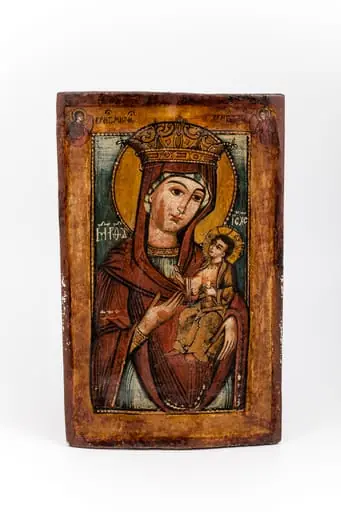 Maica Domnului ține în brațe Pruncul Iisus Hristos, care arată cu mâna dreaptă înspre Maica Domnului, prezentându-ne-o. Maica Domnului este înveșmântată în mantie cu maforion roșu-stacojiu, cu interiorul verde-olive și ciupag brodat auriu-bronziu. Veșmântul este de o eleganță deosebită. Pruncul Iisus Hristos este înveșmântat cu sacos și omofor alb-rozaliu, de asemenea, cu omofor brun-ocru, cu coroană și aureolă pe cap. Maica Domnului cu mâna dreaptă ni-L arată pe Mântuitorul Iisus Hristos ca fiind Calea. Adevărul și Viața, este tip Hodighitria. Fondul icoanei este verde-olive foarte deschis, până la transparent, verdele fiind culoarea Duhului Sfânt. Cromatică: roșu stacojiu, brun, acajou, brun-ocru, brun, bej, alb, verde-olive, negru. Icoana este încadrată și de un chenar decorativ-geometrizant-ramă brun-ocru. Inscripția din româno-chirilică se traduce MP IC XC Maica Domnului Iisus Hristos. Icoana este de iconostas. Desenul, cromatica, compoziția, fondul, încadrarea, trăsăturile chipurilor sunt deosebit de frumoase. Pe ramă pictată pe aceeași bucată de lemn, în colțurile superioare, stânga-dreapta, sunt Sfinții Arhangheli Mihail și Gavriil. Icoana se remarcă mult și prin supradimensionarea capului-chipului, maforiomului și aureolei Maicii Domnului, care parcă vor să iasă din încadrarea icoanei propriu-zise, accentuându-se ocrotirea și aplecare înspre noi, întreaga icoană fiind ca un acoperământ pogorât. Icoana aparține autorului Ivan Zugravul din Rășinari.
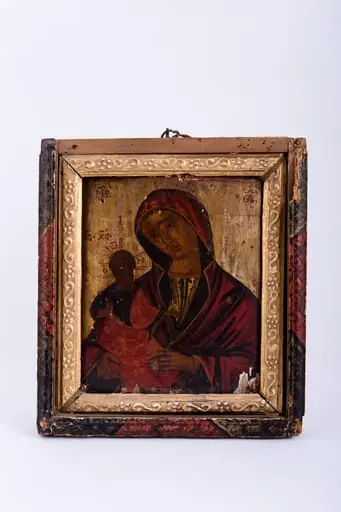 Maica Domnului ține în brațe Pruncul Iisus Hristos, care Binecuvântează cu mâna dreaptă și ține globul pământesc cu crucea, la dimensiune foarte mică, asemenea unui măr. Maica Domnului este înveșmântată în mantie cu maforion roșu stacojiu cu interiorul negru și ciupag auriu. Pruncul Iisus Hristos este înveșmântat în roșu sângeriu și negru interior, cu aureolă. Culorile Maicii Domnului reprezintă noblețea împărătească, suferința monahică și nădejdea bucuriei Învierii. Culorile Mântuitorului reprezintă suferința monahică și patima dureroasă a Jertfei. Fondul icoanei este auriu bizantin. Chipurile și trăsăturile fețelor sunt brune, întunecate cromatic, dar luminoase prin privire, atitudine și aureole. Cromatică: roșu stacojiu, roșu, brun, bej, auriu, negru. Inscripția din româno-chirilică se traduce MP IC XC Maica Domnului Iisus Hristos. Icoana este încadrată de o ramă dublă: interior, aurie, exterior, bicoloră - roșu, maro.
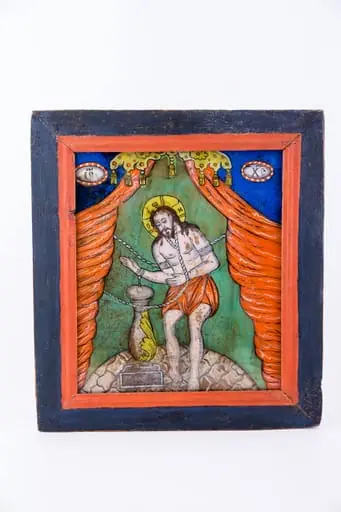 Icoana reprezintă una dintre Patimile Mântuitorului Iisus Hristos. Locul este din curtea casei lui Pilat din Pont, unde a fost chinuit, biciuit și judecat Domnul Iisus Hristos, legat fiind de stâlpul infamiei, pe locul numit pe vremuri Gavata, adică pardosit cu pietre. Iisus Hristos are mijlocul și coapsele înfășurate într-o pânză-țesătură roșie -roșu culoarea muceniciei și a jertfei. Are trupul plin de răni și urme roșii de biciuire. Este legat cu lanțuri și funii. Este într-o poziție mai aplecată, din durere și smerenie. Întreaga narațiune iconografică este dezvăluită și arătată prin gestul ridicării unor draperii albastre cu interiorul roșu, reprezentând și cerurile deschizându-se printr-o înțelegere concret de umană. Deasupra este un candelabru galben de lumină, sugerând Soarele dreptății. Icoana este din Mărginimea Sibiului. Cromatica este vie și directă: roșu, albastru, galben, verde olive. Inscripția din registrul superior în româno-chirilică se traduce IC XC Iisus Hristos.
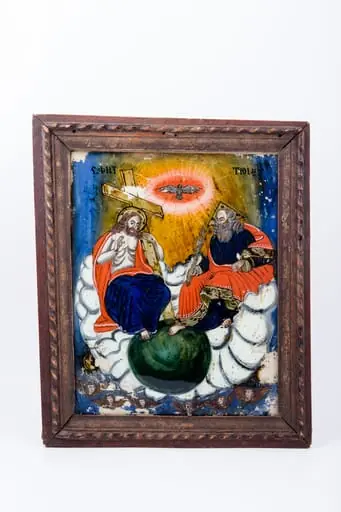 Dumnezeu-Fiul ține Crucea pe umărul stâng, Dumnezeu-Tatăl are aureolă triunghiulară, reprezentând Sfânta Treime. Tatăl și Fiul sunt înveșmântați în roșu vermillon și albastru cobalt și se sprijină amândoi cu tălpile goale de sfera Pământului, de culoare verde smarald. În registrul îndepărtat superior este cerul albastru, cu o deschidere galbenă de lumină, de unde se pogoară Sfântul Duh, sub forma porumbelului, pe un mănunchi de raze luminoase. În registrul inferior este o mandorlă mare de nouri albi, pe care se sprijină întreaga compoziție treimic-iconografică. Inscripția din româno-chirilică se traduce Sfânta Treime. Cromatica este vie și puternică: roșu vermillon, galben-ocru, orange, albastru cobalt, alb, negru. Este o icoană greco-catolică, din Mărginimea Sibiului, necanonică.
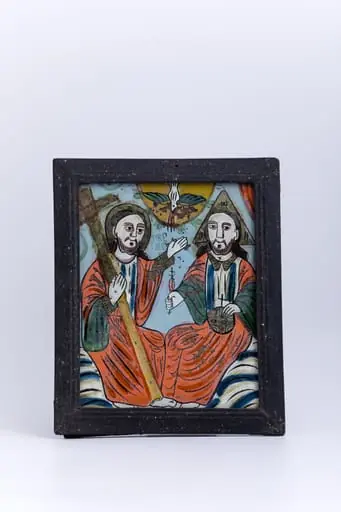 Icoana reprezintă Sfânta Treime. Dumnezeu-Tatăl are globul pământesc albastru pe genunchi și arătă către Fiul Iisus Hristos Binecuvântând lumea. Dumnezeu-Fiul are Crucea galbenă-aurie pe umărul drept și arătă către Dumnezeu-Tatăl. Dumnezeu-Tatăl și Dumnezeu-Fiul sunt înveșmântați în roșu vermillon și verde smarald cu albastru cobalt. Deasupra, în registrul superior este un soare galben, din care pe un mănunchi de raze luminoase, se pogoară Sfântul Duh, sub forma porumbelului alb. Astfel este prezentă întreaga Sfântă Treime. Între Dumnezeu-Tatăl și Fiul este un spațiu luminos de galben. Fondul icoanei este cerul albastru cobalt-regal, înconjurat de lumina galbenă-solară. Cromatica este luminoasă și armonioasă: roșu vermillon, albastru regal și cobalt, galben chihlimbar, verde smarald, gri, alb, negru.Inscripția din româno-chirilică se traduce Treime. Icoana este din Nordul Transilvaniei, Nicula.
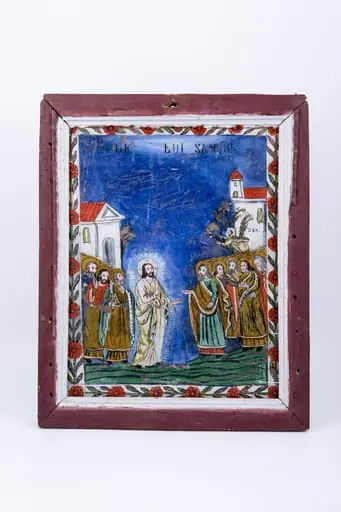 Icoana ilustrează Duminica lui Zaheu vameșul. Central este Mântuitorul Iisus Hristos, urmat de ucenici și locuitorii cetății, având împrejurul Lui mulțime - opt personaje. Într-un smochin este Zaheu, care doritor să-L vadă și să-L cunoască pe Iisus Mesia, se urcă asemenea unui copil, fără de nici o rușine sau constrângere. Mântuitorul îl vede și-i spune să se dea jos, să-L primească în casa lui. Bucurie! În registrul îndepărtat, sunt elemente de arhitectură, cetatea. Fondul este albastru regal înspre cobalt, în degrade. Veșmintele sunt pământii: brun, nisipii, bej, maro, kaki, roșii vermilon. Un personaj, ducându-și mâna la față, râde de copilăria lui Zaheu. Slava Lui Dumnezeu se vede prin Lumina albă de raze luminoase, care Îl înveșmântează. Întreaga tematică iconografică este încadrată de un chenar decorativ fitomorf. Icoana este deosebită, atât prin tematica abordată, cât și prin realizarea picturală, artistică, estetică. Întrega imagine este o altă interpretare a Învierii Domnului Iisus Hristos, prin Bucuria dăruită prin nădejdea mântuirii! Cromatica este dulce-luminoasă și armonioasă: brun, bej, kaki, olive, roșu vermillon, albastru regal, albastru cobalz, alb, negru. Icoana este de Laz, Valea Sebeșului și este datată 1901. Inscripția din româno-chirilică se traduce Duminica lui Zaheu Zah.
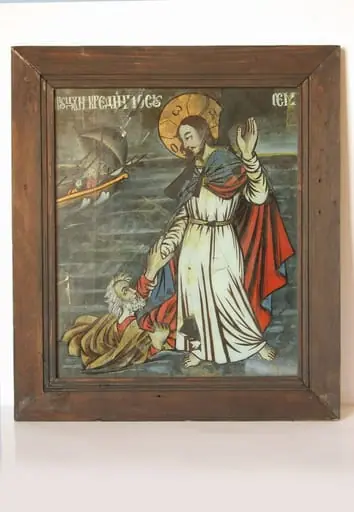 Mântuitorul Iisus Hristos și Mult-necredinciosul Petru
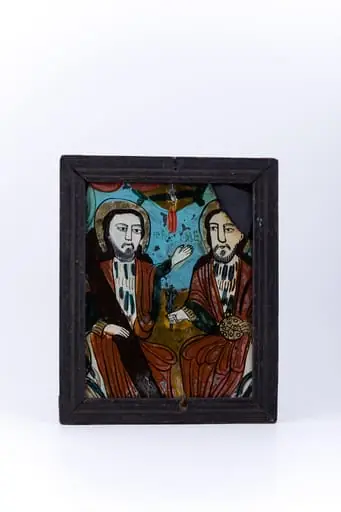 Icoana reprezintă Sfânta Treime. Dumnezeu-Tatăl are globul pământesc bronziu pe genunchi și arătă cu mâna dreaptă, în care are sceptrul împărătesc cu crucea, Bincuvântând întreaga lume. Dumnezeu-Fiul are Crucea pe umărul drept. Dumnezeu-Tatăl și Dumnezeu-Fiul sunt înveșmântați în roșu vermillon-acajou, cu sacosuri albe, dungate cu liniuțe subțiri albastre. Amândoi-dimpreună se sprijină cu picioarele pe o mandorlă de nouri albi-gri, rotunzi și bogați, fiind așezați ca pe un tron împărătesc. Deasupra, în registrul superior este un spațiu luminos de auriu de chihlimbar, din care pe un mănunchi de raze luminoase, se pogoară Sfântul Duh, sub forma porumbelului alb. Astfel este prezentă întreaga Sfântă Treime. Între Dumnzeu-Tatăl, Fiul și Sfântul Duh este un spațiu galben-auriu. Fondul icoanei este cerul albastru cerulem-regal, încadrat de un chenar decorativ geometrizant format din semicercuri roșii, asemenea unor petale de ruje. Inscripția din româno-chirilică se traduce Treime. Cromatica este luminoasă și armonioasă: roșu vermillon-acajou, verde văratic-mușchi de pădure, albastru ceruleum-regal, auriu-bronziu, galben-chihlimbar, gri, brun, alb, negru. Icoana este din Nordul Transilvaniei, Nicula.
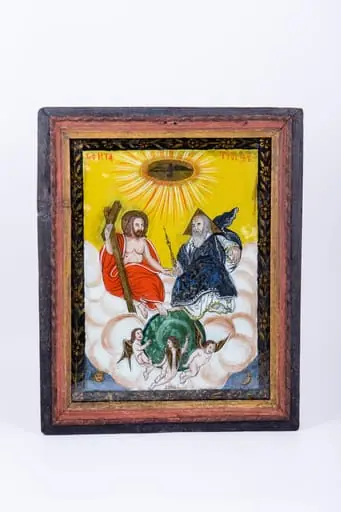 Icoana reprezintă Sfânta Treime. Dumnezeu-Tatăl și Dumnezeu-Fiul sunt înveșmântați în roșu vermillon, verde închis și albastru regal ultramarin bleumarin. În registrul îndepărtat este cerul galben-luminos, Dumnezeu-Fiul ține pe brațul drept Crucea. Duhul Sfânt este într-o mandorlă de raze luminoase bronzii, izvorând din lumină. În registrul inferior, sunt trei îngeri, cu aripi, care susțin de jos, în zbor, globul pământesc de culoare verde smarald, pe care stau cu picioarele Dumnezeu-Tatăl și Fiul Lui Dumnezeu. Inscripția din româno-chirilică se traduce Sfânta Troiță. Cromatica este luminoasă și armonioasă: roșu vermillon, albastru regal ultramarin bleumarin, bleu-ciel, verde smarald, verde brad, galben chihlimbar, alb, auriu, negru. Trăsăturile chipurilor sunt rafinat desenate. Este o icoană pictată de Pavel Zamfir Zugravu din Laz, Valea Sebeșului. Icoana este datată 1888. Ceea ce este de un impact vizual-artistic deosebit sunt veșmântul Lui Dumnezeu-Tatăl, albastru unduios, de înaltul Cerului, cu detalii minuțios-rafinate, floral-punctiforme, de verde pe alb, carnația anatomică a Fiului Lui Dumnezeu, culoarea de verde-smarald a sferei globului pământesc și lumina galbenă de chihlimbar al Cerului - Raiului.
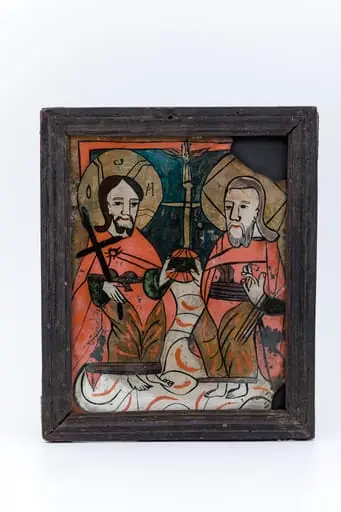 Icoana reprezintă Sfânta Treime. Dumnezeu-Tatăl și Dumnezeu-Fiul susțin împreună globul pământesc cu o cruce mare deasupra, apărând ca un sfânt chivot, ca pe o Biserică țin Pământul. Dumnezeu-Fiul, fiind alături, ține Crucea pe umărul drept. Dumnezeu-Tatăl are aureola în formă de triunghi echilateral, simbolizând Sfânta Treime. Dumnezeu-Tatăl și Dumnezeu-Fiul sunt îmbrăcați în veșminte în combinație de roz-corai, brun-bronziu, negru. Sfântul Duh se pogoară prin deschiderea Cerurilor. Fondul icoanei este cerul albastru ultramarin, cu influențe ușoare de indigo. În registrul inferior sunt nori albi, cu striații corai. Cromatica este armonioasă: roz-corai, albastru ultramarin bleu-marin, alb, gri-antracit, brun-bronziu, kaki, ocru-muștar, alb, negru. Alăturarea cromatică: roz corai, albastru ultramarin și brun-bronziu este excepțională. Inscripția din româno-chirilică se traduce Sfânta Treime. Icoana este din Nordul Transilvaniei, Nicula.
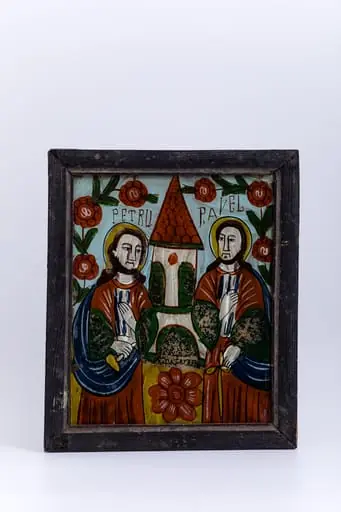 Icoana îi reprezintă pe cei doi Apostoli Sfinții Petru și Pavel, Petru cu cheile Împărăției Cerești în mână și pe Pavel cu sabia Cuvântului în mână, susținând împreună chivotul unei biserici, simbolul Bisericii sobornicești și apostolești. Biserica este situată în registrul îndepărtat, dar este redată în așa fel încât să fie înțeleasă ca și cum ar fi dusă pe umeri de Sfinții Apostoli. Au mantiile roșii vermillon, și veșmintele cu sacos-uri verzi și albastre cobalt. Fondul icoanei este cerul albastru bleu-ciel, în partea superioară, pe margini, și un câmp galben-chihlimbar, în spațiul de miez. În registrul inferior, fondul este un rând de galben chihlimbar-muștar, pe latura superioară. Cheile și crucea sunt simboluri puternice. Se creează astfel un triunghi de semnificații teologice: crucea-chivotul de biserică-cheile Raiului. Chipurile sunt foarte expresive, cu trăsături fine. Inscripția din româno-chirilică se traduce Petru Pavel. Compoziția este rezistentă și cromatica armonioasă: roșu vermillon-stacojiu, albastru cobalt, ultramarin și bleu-marin, verde văratic, galben chihlimbar, brun, gri, alb zinc, negru, auriu. Inscripția din româno-chirilică se traduce Petru Pavel. Icoana este din Nordul Transilvaniei, Nicula.