Artwork
Dolbadarn Castle
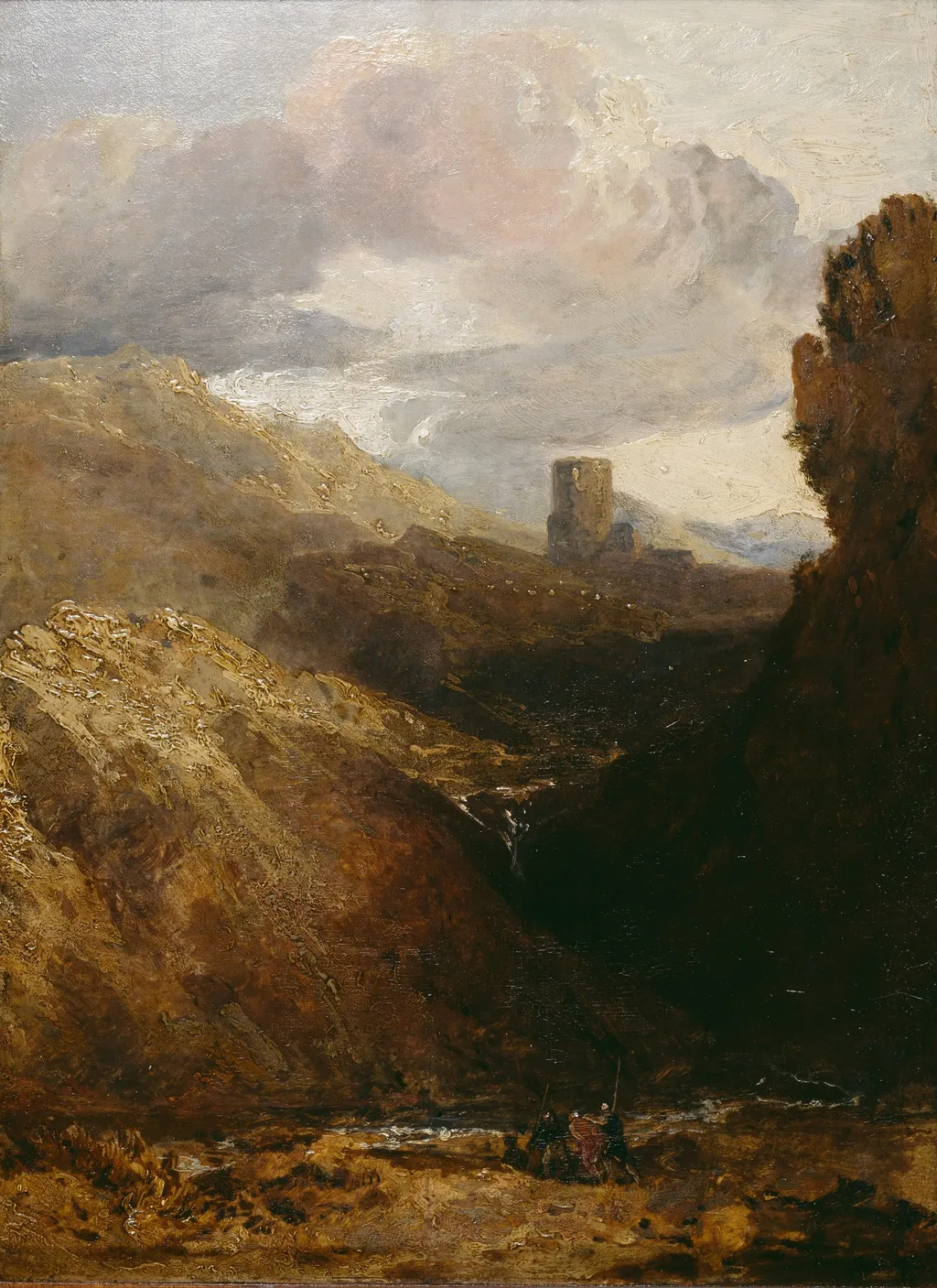
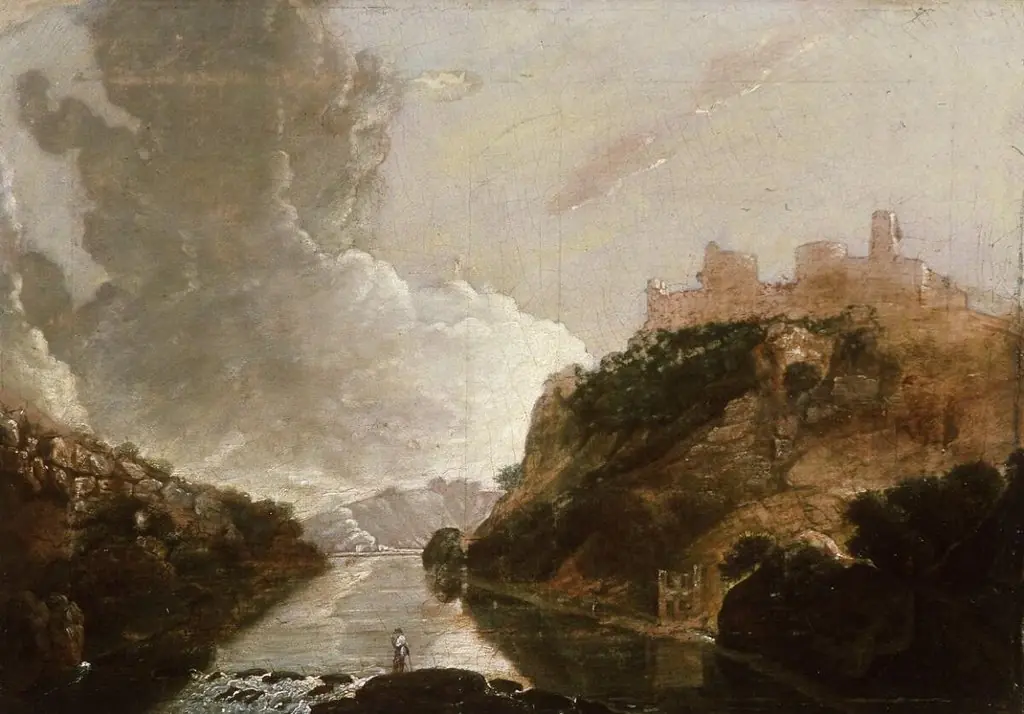
Dolbadarn Castle is an oil painting by Joseph Mallord William Turner. It dates from 1800 and is held in the collection of the National Library of Wales.
About this work
Overview
The painting was among two submitted to the Royal Academy in 1800 as Turner’s diploma pieces, securing his membership.
Painted between 1798 and 1799, Dolbadarn Castle is an oil work by J.M.W. Turner, produced after a sketching tour of North Wales. It emerged from a series of on-site studies made in Snowdonia, later refined in his London studio. The painting was among two submitted to the Royal Academy in 1800 as Turner’s diploma pieces, securing his membership. It now resides in the National Library of Wales, alongside related preparatory drawings held at Tate Britain.
Subject & Meaning
The painting portrays Dolbadarn Castle, a 13th-century fortress in the Welsh mountains, framed by steep, mist-wrapped peaks. Rather than focusing on historical narrative, Turner emphasizes the structure’s vulnerability against the overwhelming scale of nature. The castle appears small yet enduring, suggesting a quiet tension between human endeavor and the permanence of the landscape.
Technique & Style
Turner employed thick, textured brushwork in the foreground to convey the roughness of rock and earth, contrasting with softer, atmospheric handling of the distant mountains. Warm stone tones in the castle’s walls anchor the composition, while hazy skies and diffused light unify the scene. His method blends topographical accuracy with emotional resonance, anticipating his later explorations of light and weather.
History & Provenance
Created during Turner’s early career, the painting was part of a group of Welsh landscapes developed from sketches in his TB XLVI notebook. It was accepted by the Royal Academy in 1800 as a diploma submission, a formal requirement for full membership. The work entered the National Library of Wales’ collection in the 20th century, where it remains as a key example of Turner’s formative landscape practice.
Context
In the late 1790s, Turner traveled extensively through Wales, responding to the Romantic fascination with wild, untamed scenery. His depictions of castles like Dolbadarn aligned with contemporary interest in national identity and the sublime. These works helped redefine British landscape painting, shifting focus from idealized vistas to emotionally charged natural settings.
Legacy
Dolbadarn Castle marks a pivotal moment in Turner’s transition from topographical drafts to expressive landscapes. It influenced later artists seeking to convey nature’s grandeur through atmospheric effects and structural contrast. Though less known than his later seascapes, this painting remains a foundational work in understanding his evolving vision of landscape as a psychological and physical force.
Own this work as a print
Artist & collection
Artist
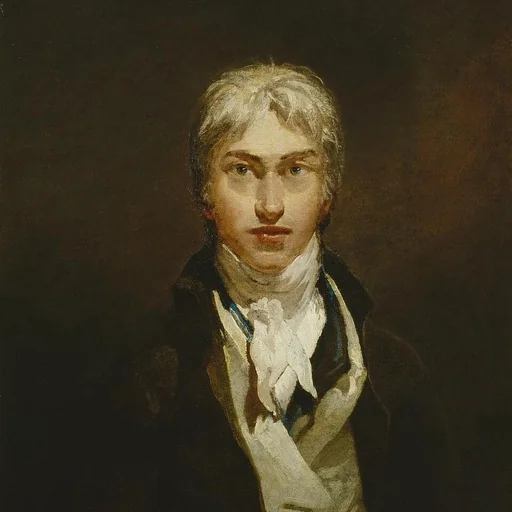
Joseph Mallord William Turner was born in 1775 at Maiden Lane, Covent Garden, where his father kept a barber and wig-making shop.

 Waterfalls in the Environs of Rome
 View in Cumberland
 Helvellyn
 Mountain Landscape
 Waterfall
 Valley of Aosta: Snowstorm, Avalanche, and Thunderstorm
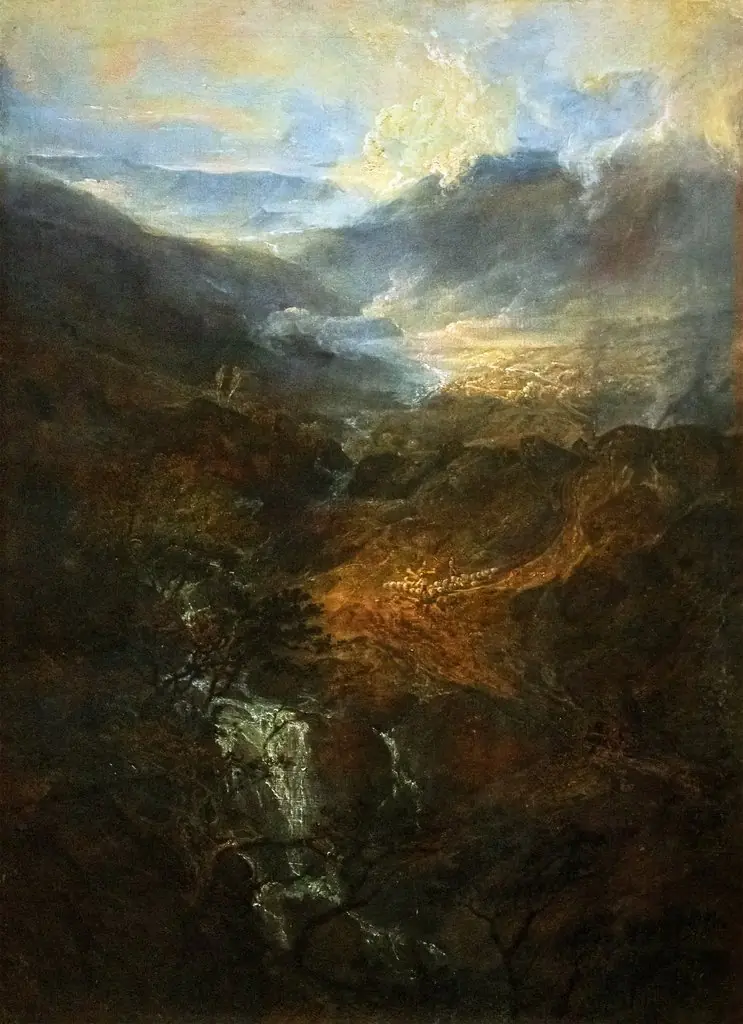 Morning amongst the Coniston Fells, Cumberland
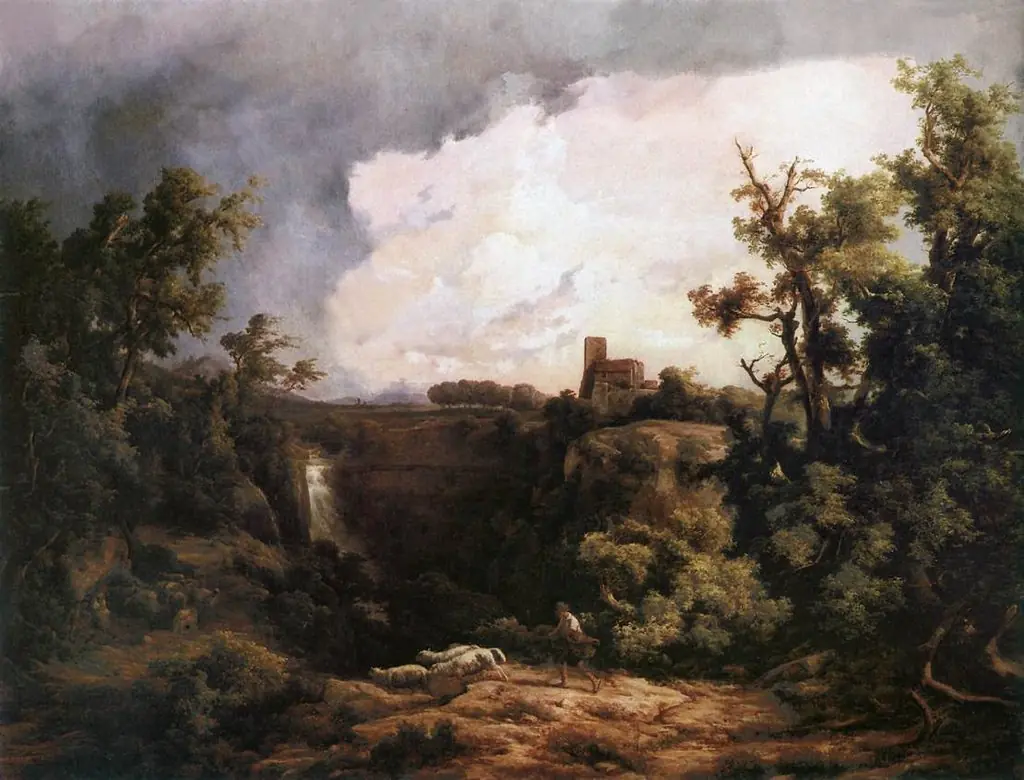 Aqua Nera near Rome
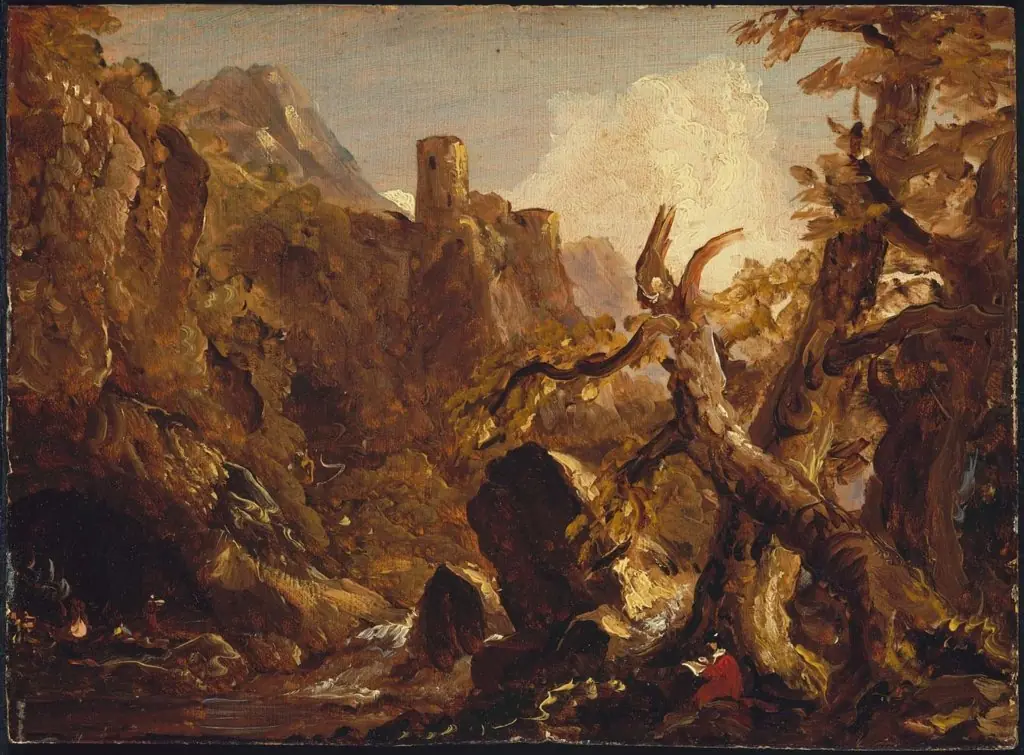 Salvator Rosa Sketching Banditti
 A View in the Basses Alpes.
 Valley of Aosta: Snowstorm, Avalanche, and Thunderstorm
 Kilgerran Castle