Artwork
Morning amongst the Coniston Fells, Cumberland
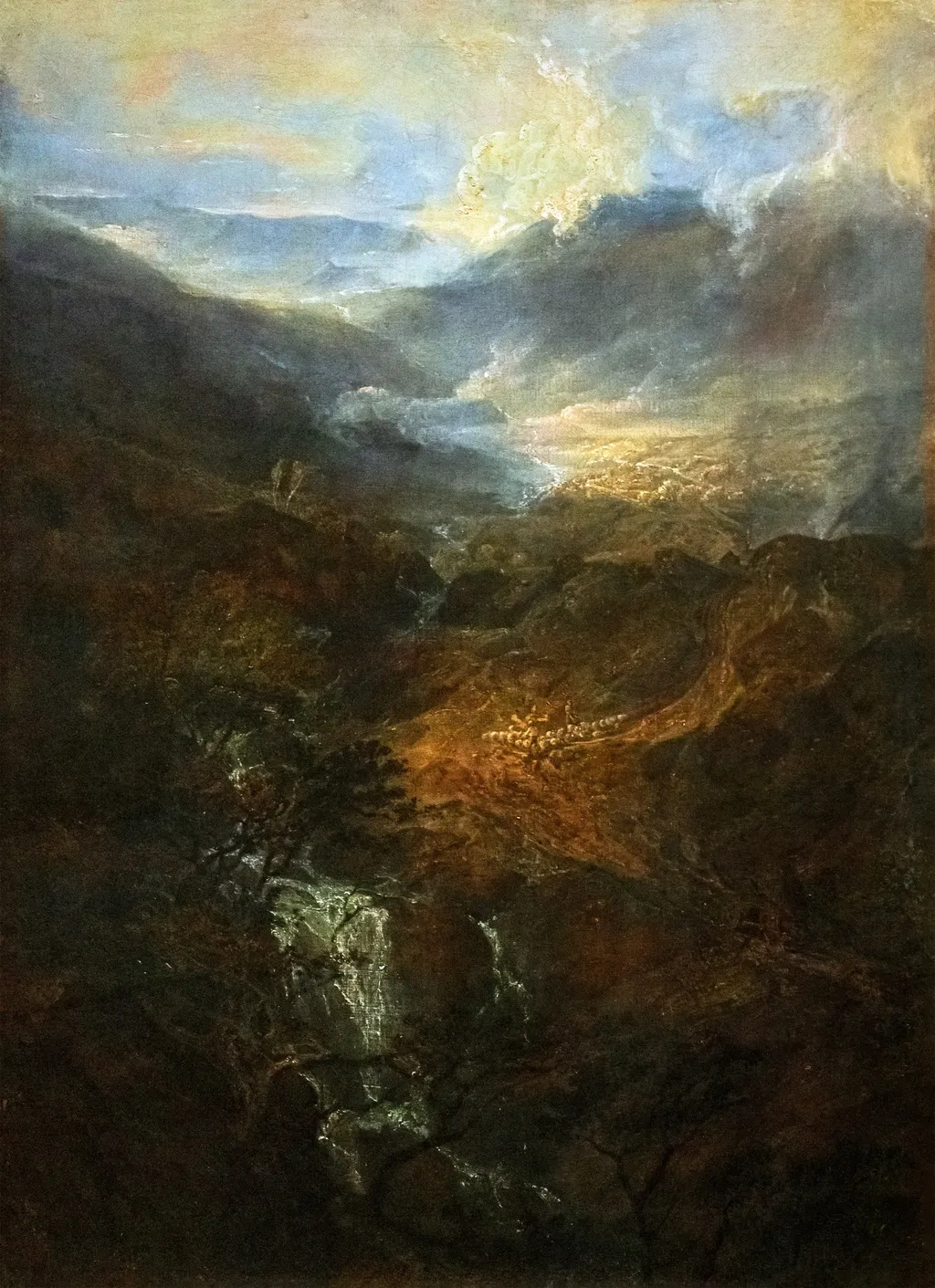
Morning amongst the Coniston Fells, Cumberland is an oil painting by Joseph Mallord William Turner. It dates from 1800 and is held in the collection of the National Gallery. J.
About this work
Overview
J. M. W. Turner painted *Morning amongst the Coniston Fells, Cumberland* around 1798. The oil work captures a quiet dawn over the Coniston landscape in Cumbria, with a low sun breaking through a cloud‑filled sky and illuminating the hills and a winding stream in the foreground.
Subject & Meaning
The composition centers on the Old Man of Coniston, a distinctive rocky outcrop that dominates the horizon. Turner pairs the natural forms with atmospheric mist and golden light, suggesting the fleeting transition from night to day and evoking a sense of the sublime in the English countryside.
Technique & Style
Turner employs layered glazing to build luminous depth, allowing thin washes of pigment to interact with underlying tones. The subtle modulation of light across clouds and water creates a atmospheric perspective that draws the eye inward, while the restrained palette emphasizes the warm glow of sunrise against cooler shadows.
History & Provenance
The painting was first shown publicly at the Royal Academy exhibition of 1798, held in Somerset House. In the exhibition catalogue Turner paired the work with four lines from Milton’s *Paradise Lost*, linking the visual scene to a poetic meditation on mist and sunrise.
Context
Contemporary critics, such as the Whitehall Evening Post, praised the piece for its convincing sense of distance, noting that viewers might feel as though they could step directly into the landscape. The work reflects Turner’s early interest in atmospheric effects that would later define his mature oeuvre.
Own this work as a print
Artist & collection
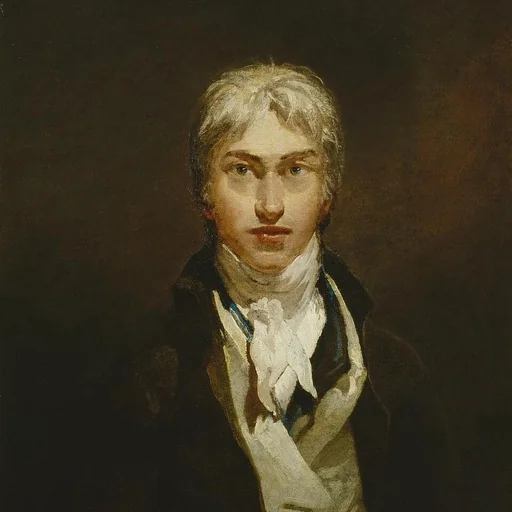
Artist
Joseph Mallord William Turner was born in 1775 at Maiden Lane, Covent Garden, where his father kept a barber and wig-making shop.

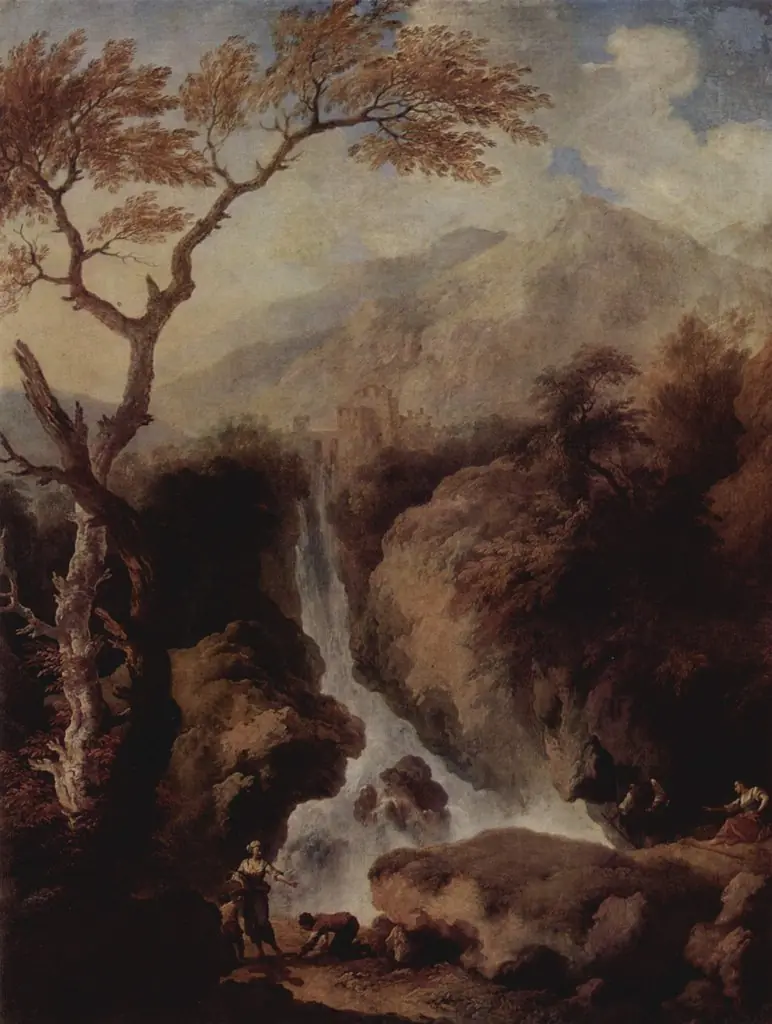 Waterfalls in the Environs of Rome
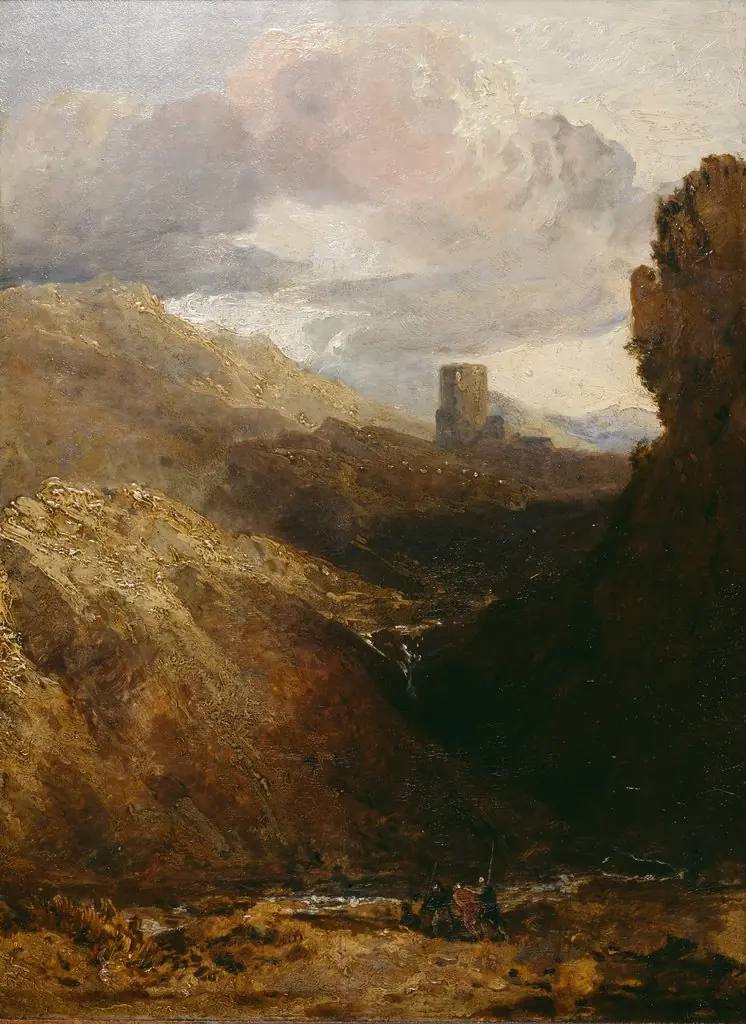 Dolbadarn Castle
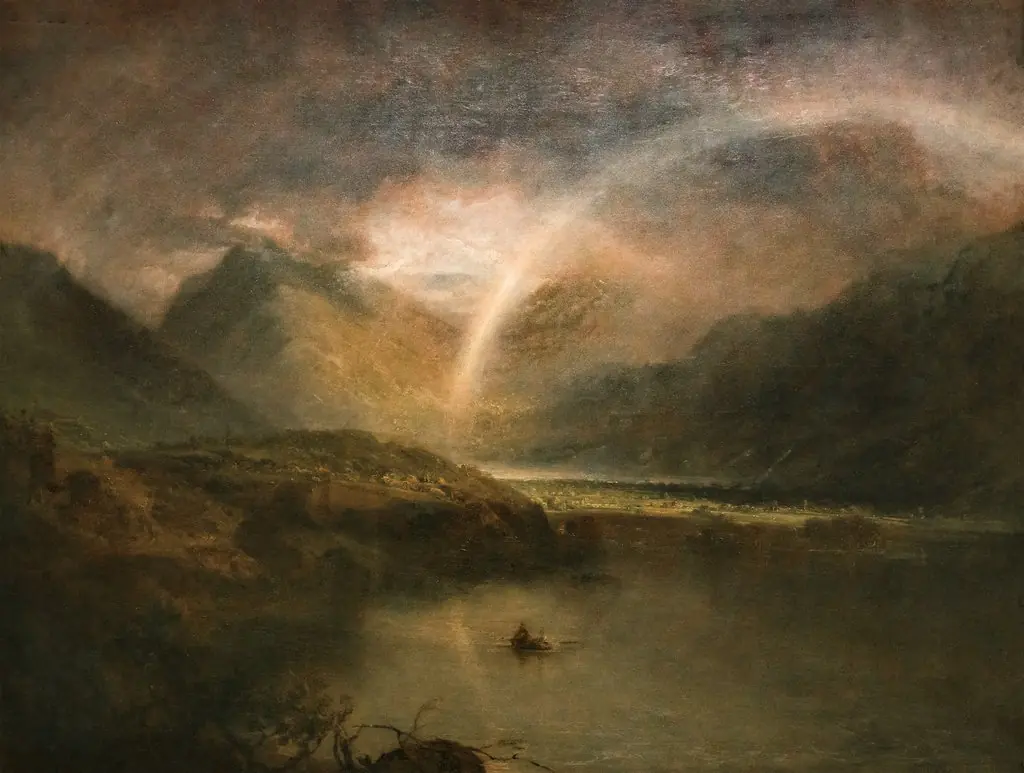 Buttermere Lake, with Park of Cromackwater, Cumberland, a Shower
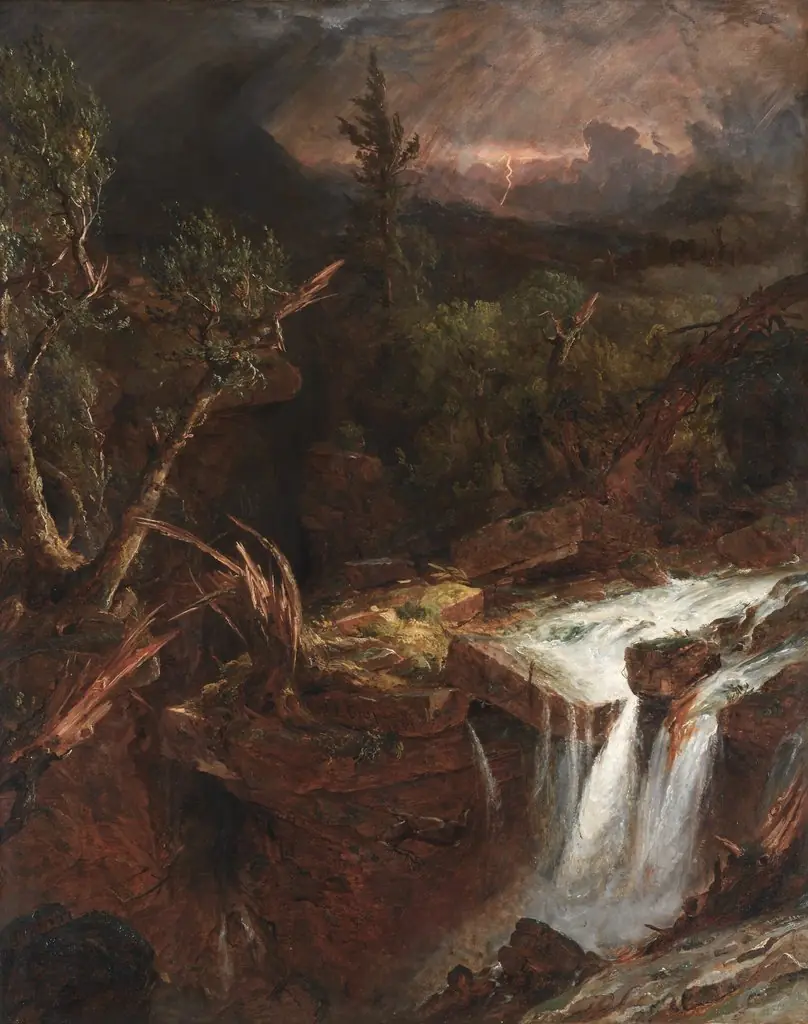 The Clove - A Storm Scene in the Catskill Mountains
 The Clove - A Storm Scene in the Catskill Mountains
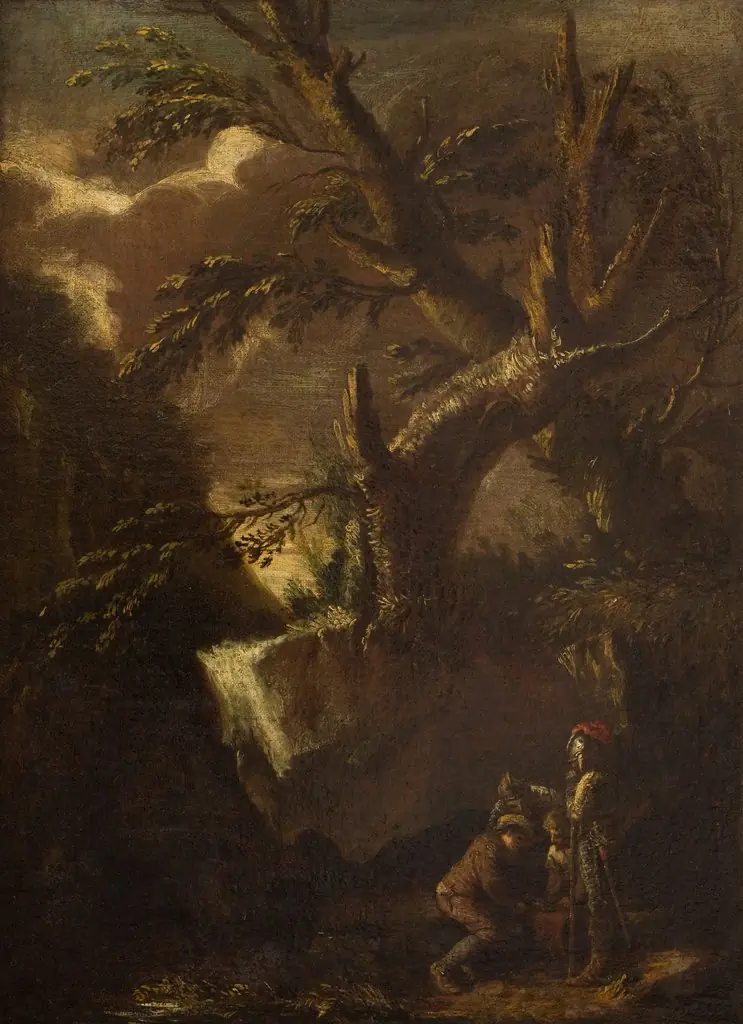 Landscape with Dice Players
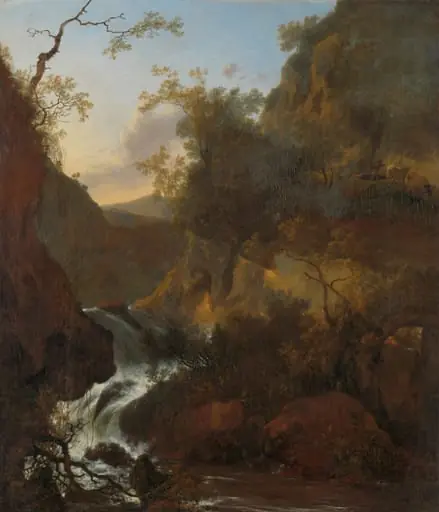 A waterfall
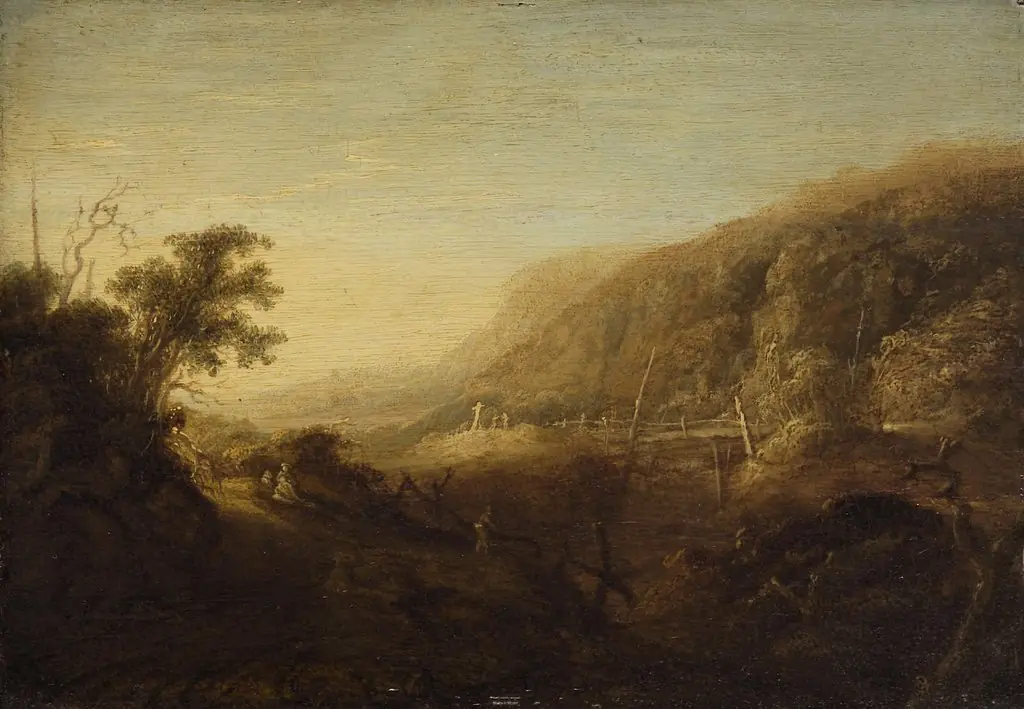 Abendliche Berglandschaft
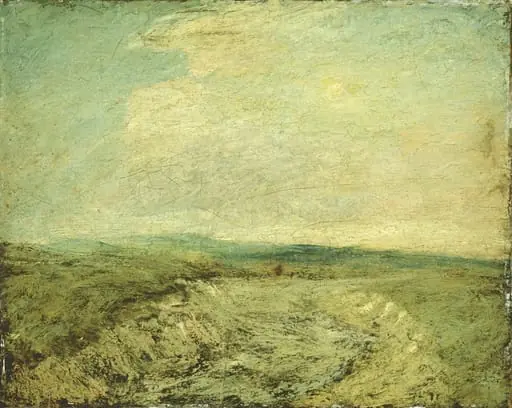 The Essex Canal
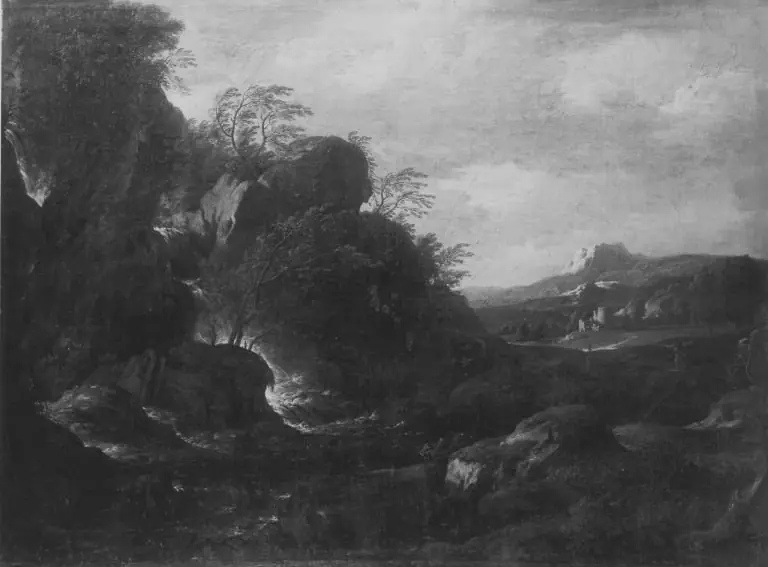 Gebirgslandschaft
 Landscape with Indian
 Gewitterlandschaft