Artwork
Helvellyn
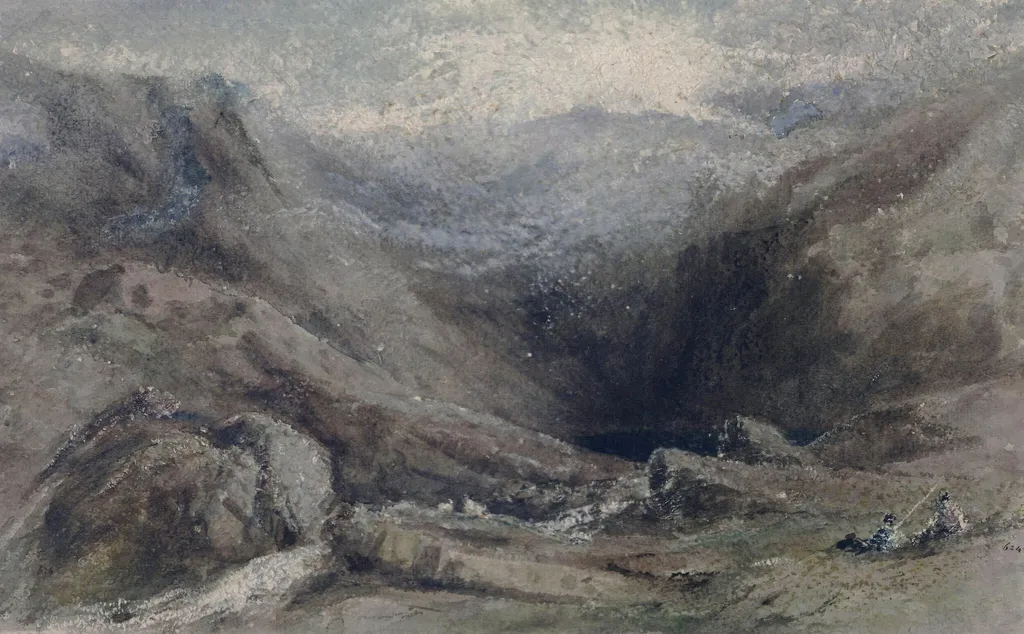
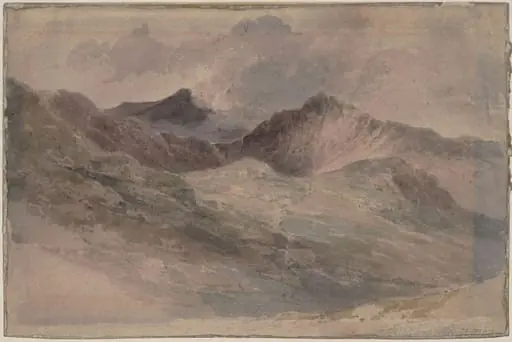
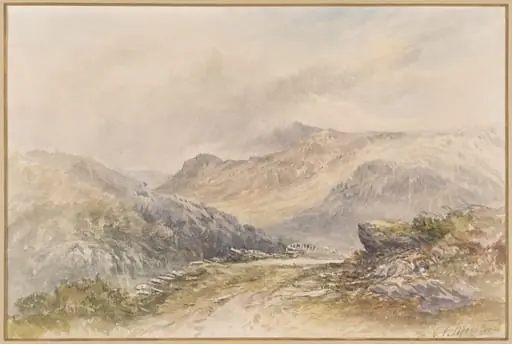
Helvellyn is a watercolor work on paper by the British Romanticist artist Reverend Thomas Raven. It dates from 1850 and is held in the collection of the Victoria and Albert Museum.
About this work
Overview
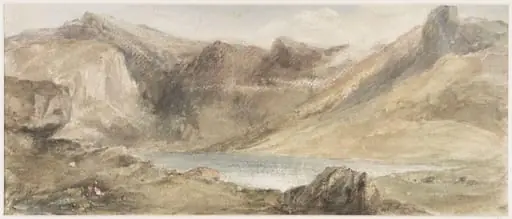
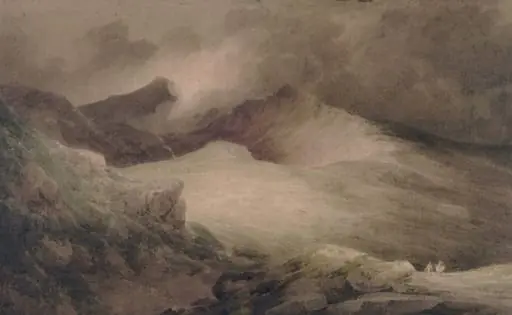
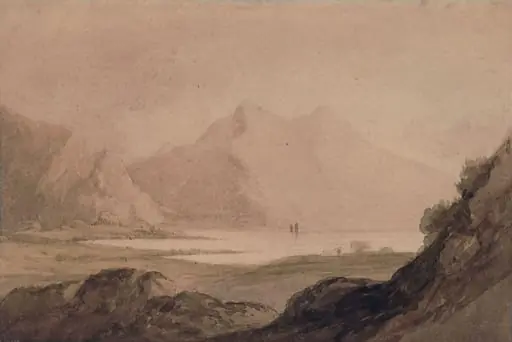
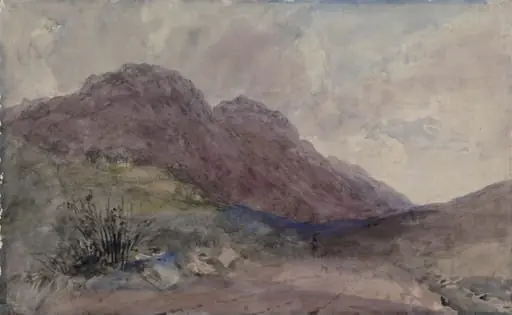
Painted in 1850 by Reverend Thomas Raven, this watercolour captures Helvellyn, a prominent peak in England’s Lake District. The composition balances the rugged upper slopes with a quiet, sunlit valley below. Raven’s choice of medium lends a delicate, translucent quality to the scene, reinforcing its stillness and atmospheric depth without overt drama or detail.
Subject & Meaning
The dark, textured ridges contrast with the softly lit valley, where a narrow stream winds through scattered stones.
The painting presents Helvellyn not as a dramatic landmark but as a quiet presence within a broader landscape. The dark, textured ridges contrast with the softly lit valley, where a narrow stream winds through scattered stones. This juxtaposition suggests a contemplative relationship between nature’s strength and its serenity, reflecting a 19th-century appreciation for landscape as a space of quiet reflection.
Technique & Style
Raven employed watercolour with restrained washes and minimal detail, allowing the paper’s texture to contribute to the sense of light and air. Darker tones define the mountain’s contours, while lighter layers suggest mist and distance. The absence of sharp lines and the blending of hues create a gentle transition between elements, characteristic of amateur topographical watercolours of the period.
History & Provenance
Created by Reverend Thomas Raven, a clergyman and amateur artist, the work likely originated as a personal record of a journey through the Lake District. Its survival suggests it was preserved within family or local circles, though no public exhibition or documented ownership prior to modern archives is known. It remains a modest example of 19th-century English amateur landscape practice.
Context
In the mid-1800s, watercolour painting flourished among educated amateurs drawn to Britain’s scenic regions. The Lake District, popularized by Romantic poets and early tourists, became a frequent subject. Raven’s work aligns with this trend, emphasizing mood over topographical precision, reflecting a cultural shift toward personal, emotional engagement with nature.
Legacy
Though not widely exhibited or influential in artistic circles, Raven’s watercolour endures as a quiet testament to the era’s amateur landscape tradition. It offers insight into how ordinary observers experienced and recorded natural beauty, preserving a subtle, unadorned vision of the Lake District that contrasts with more dramatic contemporary depictions.
Own this work as a print
Artist & collection
Artist
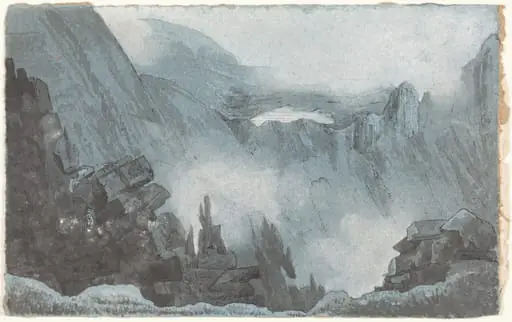
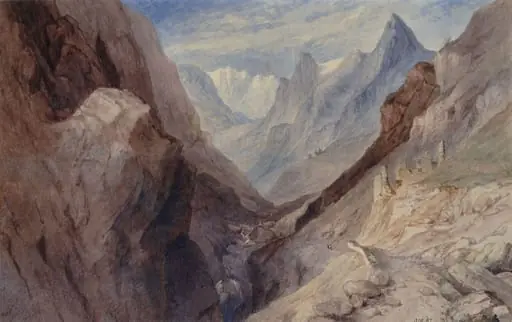
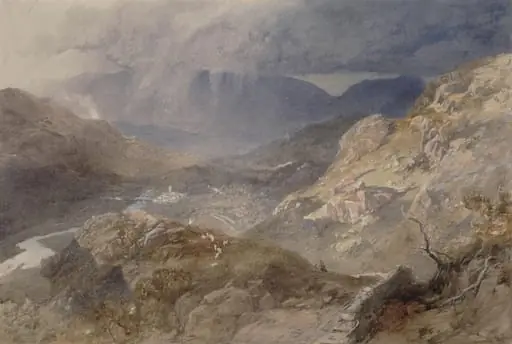
A clergyman in 19th-century Britain, Reverend Thomas Raven filled his watercolours with the rocky coves and steep hills he knew from walks in Wales and the Lake District.