Artwork
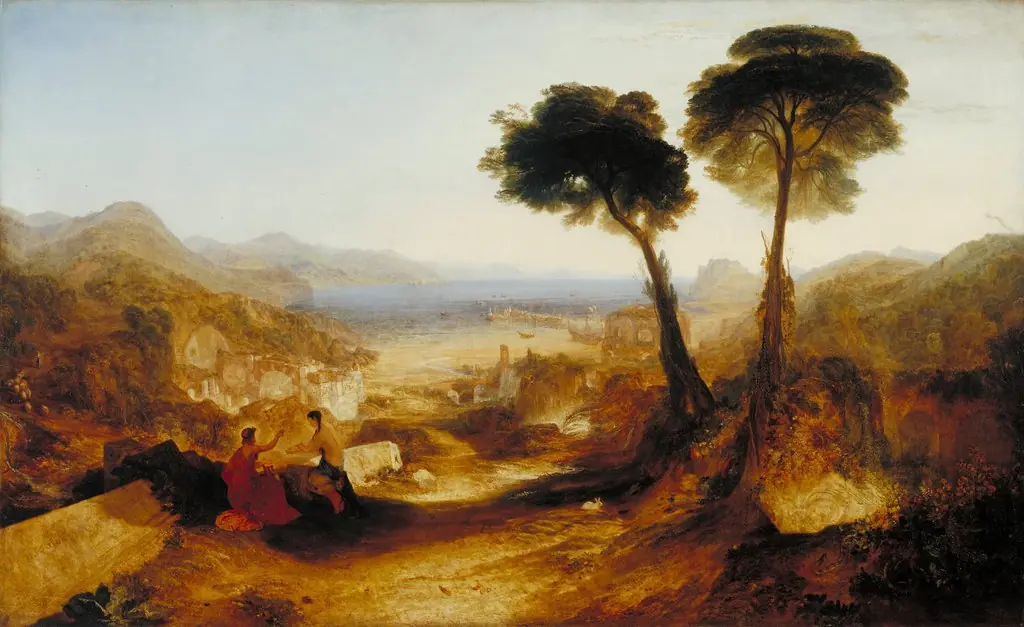
Phryne Going to the Public Baths as Venus: Demosthenes Taunted by Aeschines
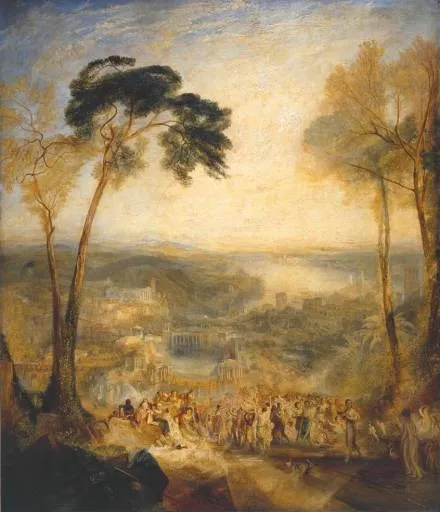
Phryne Going to the Public Baths as Venus: Demosthenes Taunted by Aeschines is an unspecified painting by the British Romanticist artist Joseph Mallord William Turner. It dates from 1838 and is held in the collection of the Tate Britain. Painted in 1838 by J.
About this work
Overview
It was exhibited at the Royal Academy that year and later entered the Turner Bequest, transferring to Tate Britain in 1856.
Painted in 1838 by J. M. W. Turner, this work merges two distinct episodes from classical antiquity into a single dramatic composition. It was exhibited at the Royal Academy that year and later entered the Turner Bequest, transferring to Tate Britain in 1856. The painting’s dual narrative and unconventional structure reflect Turner’s interest in mythic symbolism and historical ambiguity, rather than strict chronology.
Subject & Meaning
The scene juxtaposes Phryne, depicted as Venus, entering public baths with a procession, and the orators Demosthenes and Aeschines locked in a heated exchange. Though historically unrelated, Turner unites them to explore contrasts between public morality and personal freedom, divine ideal and human frailty. Phryne’s calm posture contrasts with the agitated gestures of the surrounding men, suggesting a tension between societal judgment and individual dignity.
Technique & Style
Turner employs loose brushwork and luminous color to dissolve architectural details into atmospheric haze, emphasizing mood over precision. Phryne’s form is rendered with clarity amid the swirling figures around her, drawing the eye through contrast. The background dissolves into soft gradients of ochre and blue, while the foreground figures are defined by sharp gestures and expressive faces, heightening the emotional charge.
History & Provenance
Completed for the 1838 Royal Academy exhibition, the painting was acquired by the nation through Turner’s bequest in 1856. It remained in the collection of the National Gallery before being transferred to Tate Britain, where it is now held. Its inclusion in the bequest underscores Turner’s intent that his works be accessible to the public, even when their subject matter defied conventional historical narrative.
Context
In the 1830s, British audiences were deeply engaged with classical antiquity, particularly through literature and archaeology. Turner’s blending of myth and history responded to contemporary debates about virtue, gender, and public spectacle. The painting’s ambiguity reflects broader cultural unease over the role of women in public life and the limits of rhetorical authority in democratic societies.
Legacy
Though less celebrated than Turner’s landscapes, this work reveals his willingness to challenge academic norms by fusing disparate narratives and prioritizing emotional resonance over historical accuracy. Its complex symbolism influenced later artists exploring myth as psychological metaphor, and it remains a key example of how Romantic-era painters reinterpreted antiquity beyond literal representation.
Artist & collection
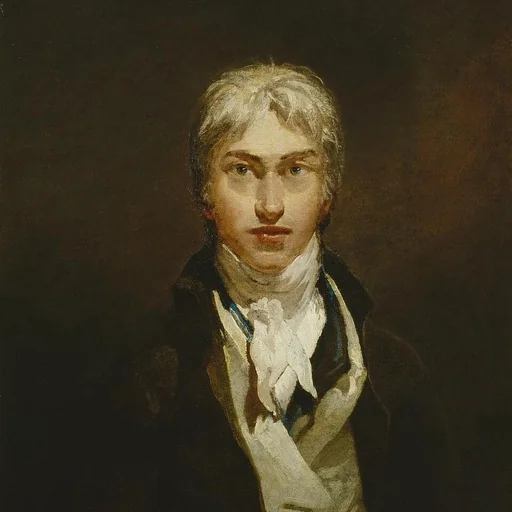
Artist
Joseph Mallord William Turner was born in 1775 at Maiden Lane, Covent Garden, where his father kept a barber and wig-making shop.