Artwork
Raby Castle, the Seat of the Earl of Darlington
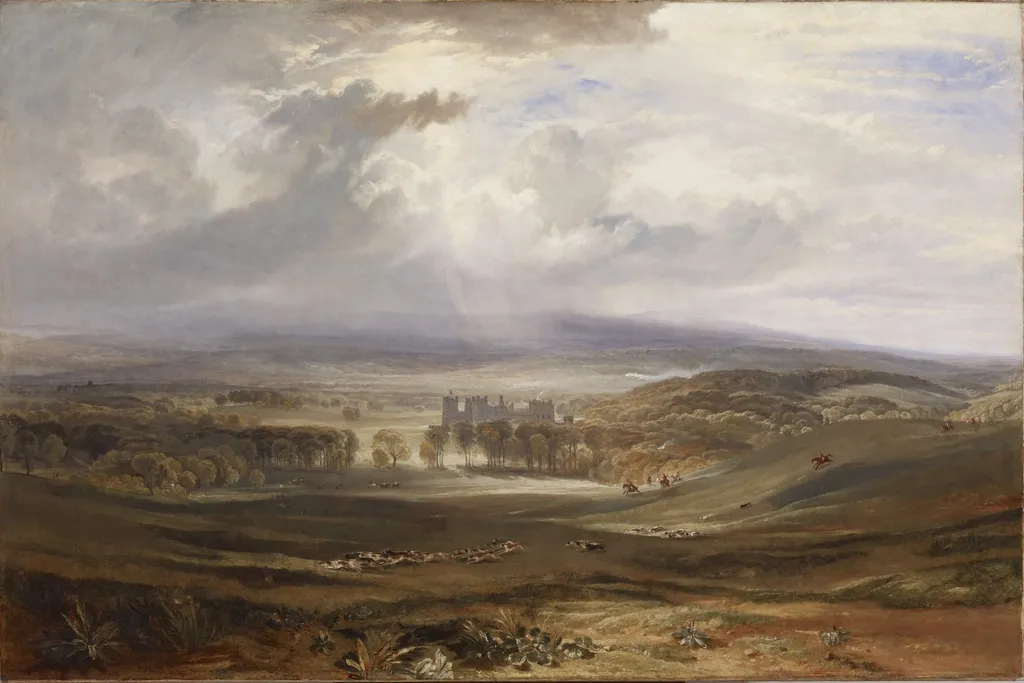
Raby Castle, the Seat of the Earl of Darlington is an oil painting by Joseph Mallord William Turner. It dates from 1817 and is held in the collection of the Walters Art Museum. J.
About this work
He even painted out a mounted huntsman after critics called the scene “detestable,” wanting the landscape to stand on its own.
Raby Castle, the Seat of the Earl of Darlington is an oil painting made in 1817 by the British artist J.M.W. Turner. The work shows a view of the country house in County Durham and was commissioned by the Earl of Darlington himself. It was meant as a topographical study, so Turner kept it more straightforward than his later experiments. He even painted out a mounted huntsman after critics called the scene “detestable,” wanting the landscape to stand on its own.
If you’re curious about more of Turner’s work, check out the Walters Art Museum.
Overview
J.M.W. Turner painted Raby Castle in 1817 as an oil work that records the appearance of the eponymous country house in County Durham. The canvas was a direct commission from the estate’s owner, the Earl of Darlington, and serves as a topographical record rather than an imaginative landscape.
Subject & Meaning
The composition presents the stone façade of Raby Castle set within its surrounding grounds, emphasizing the architectural form against a sky and foliage. Turner intended the piece to highlight the landscape itself, distancing it from the popular sporting subjects—such as hunting scenes—that were often paired with country estates.
Technique & Style
Executed in a relatively restrained manner, the painting reflects Turner’s earlier, more conventional approach. The brushwork is precise, the colour palette subdued, and the perspective clear, all characteristics of a straightforward topographical study rather than the luminous, experimental techniques he later pursued.
History & Provenance
After completing the work, Turner removed a painted figure of a mounted huntsman following criticism that the inclusion made the scene a “detestable fox‑hunting” tableau. The alteration underscores the artist’s desire to satisfy the patron’s expectations while responding to contemporary taste.
Context
In the early nineteenth century, aristocratic patrons often requested depictions of their estates that combined landscape with sport. Turner's decision to omit the hunting figure aligns with a broader shift among some artists to elevate pure landscape painting above genre scenes considered of lower artistic status.
Artist & collection
Artist
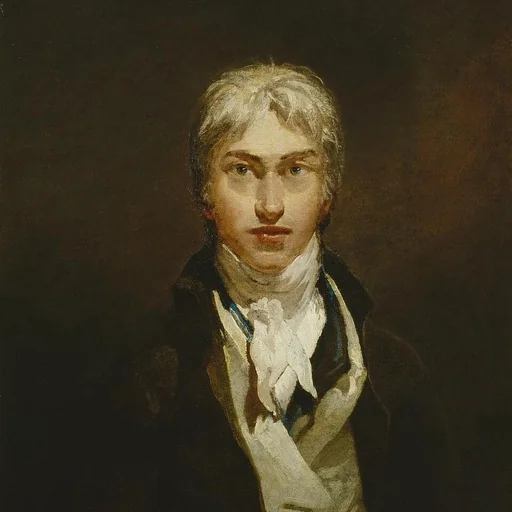
Joseph Mallord William Turner was born in 1775 at Maiden Lane, Covent Garden, where his father kept a barber and wig-making shop.

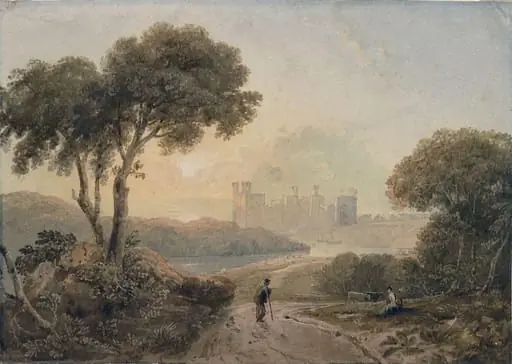 Carnarvon Castle
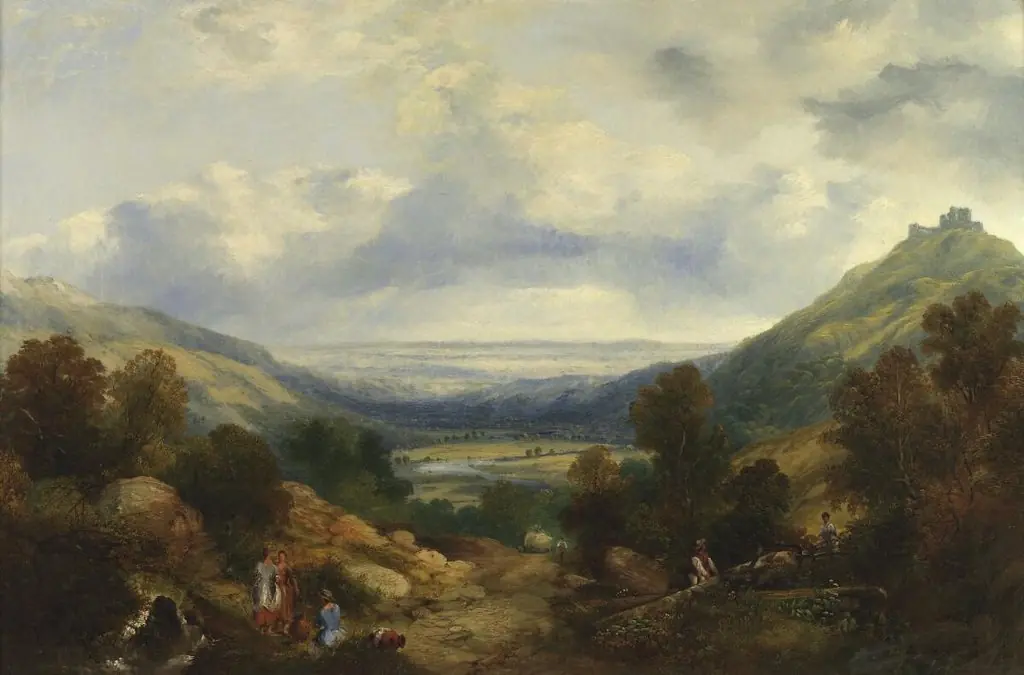 Castell Dinas Bran
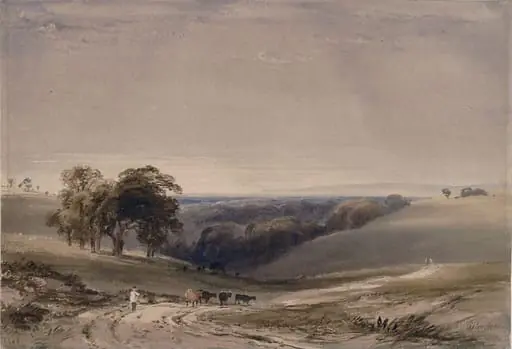 Ecclesbourne Glen
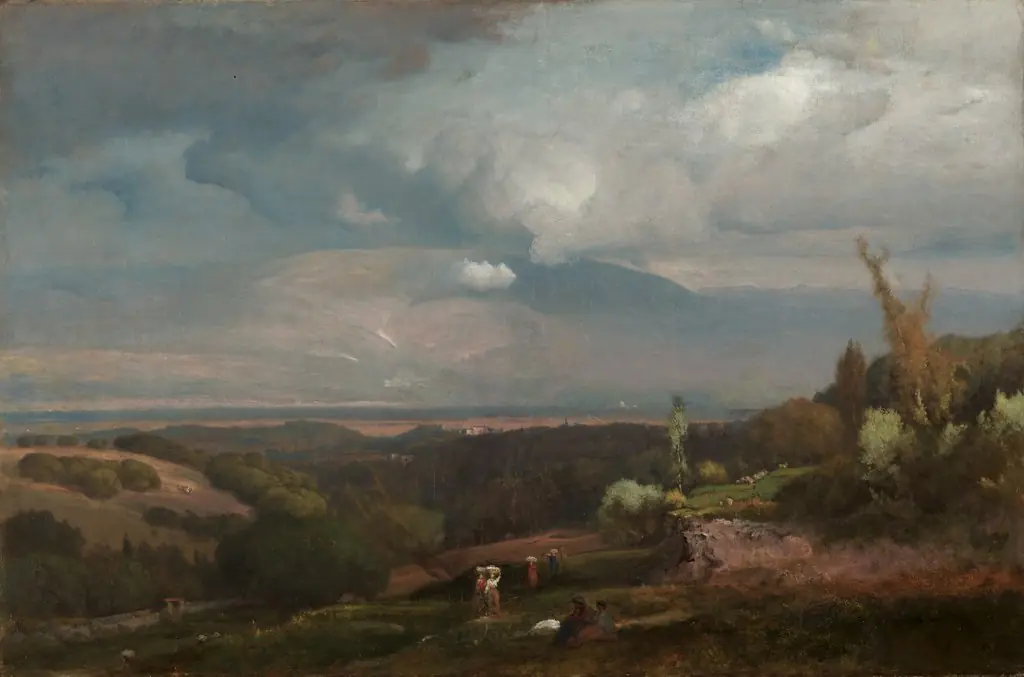 Approaching Storm from the Alban Hills
 Approaching Storm from the Alban Hills
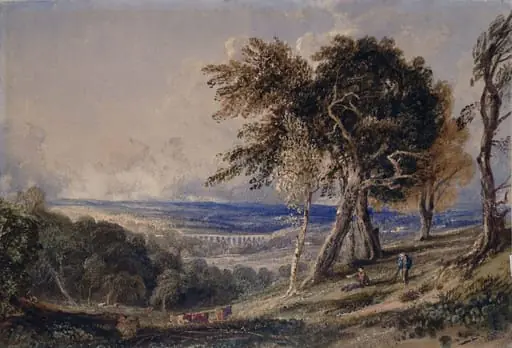 Landscape
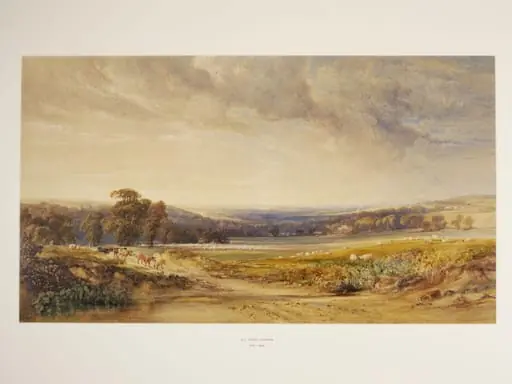 Vale of Irthing, Cumberland
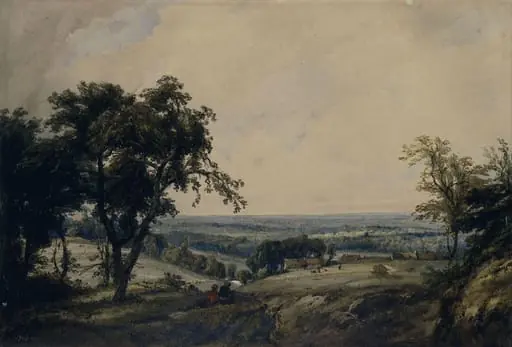 Landscape with figures and cottages in a hollow
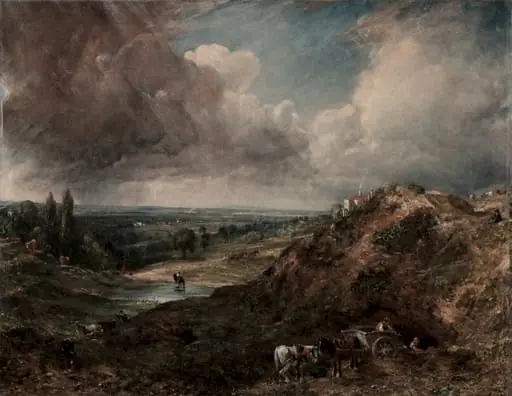 Branch Hill Pond, Hampstead
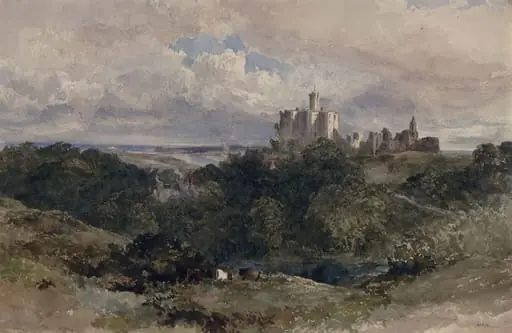 Warkworth Castle
 Ethy, Cornwall
 Dryslyn Castle, in the Vale of Towy, South Wales