Artwork
Ethy, Cornwall
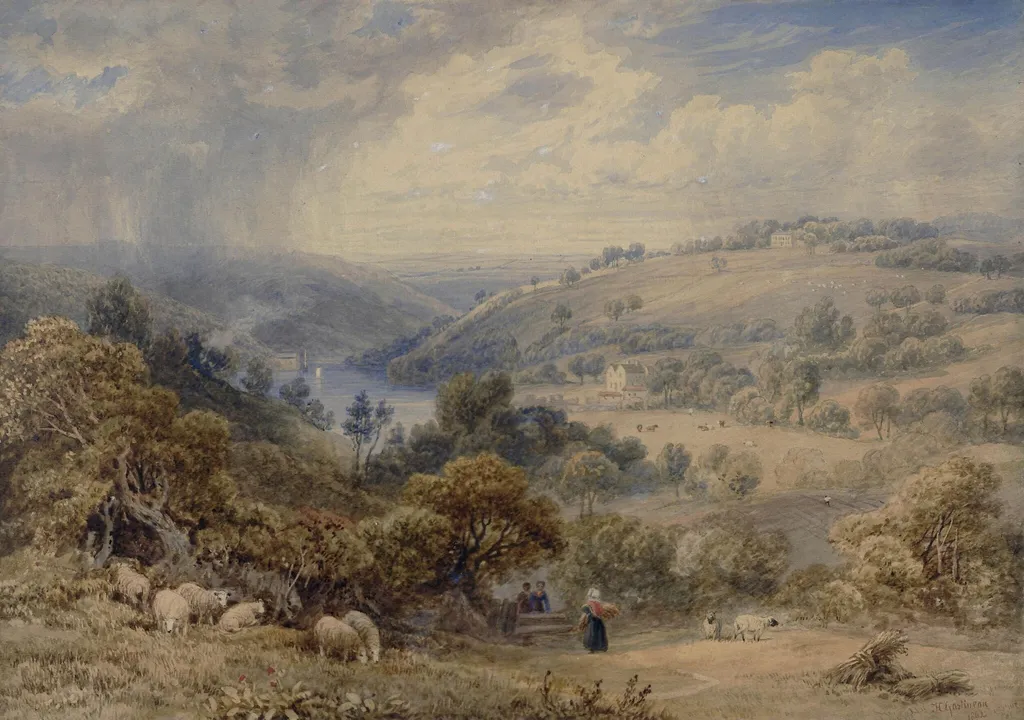
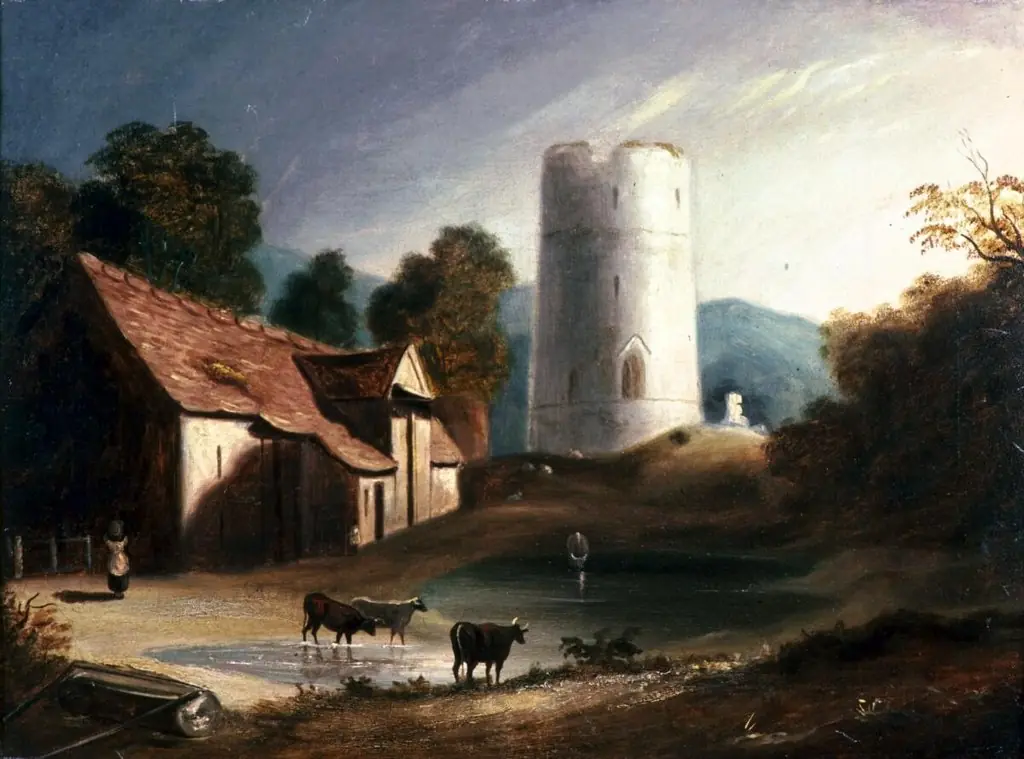
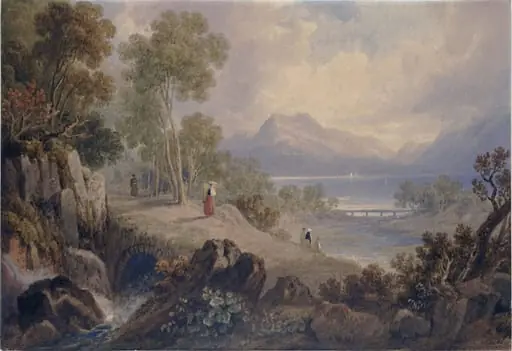
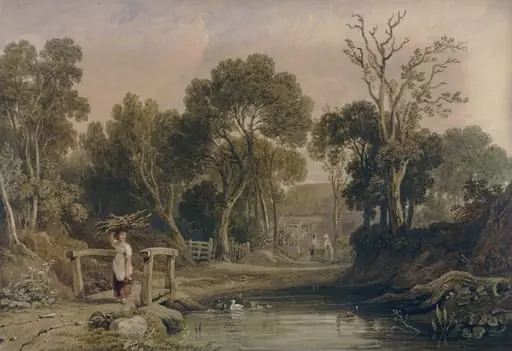
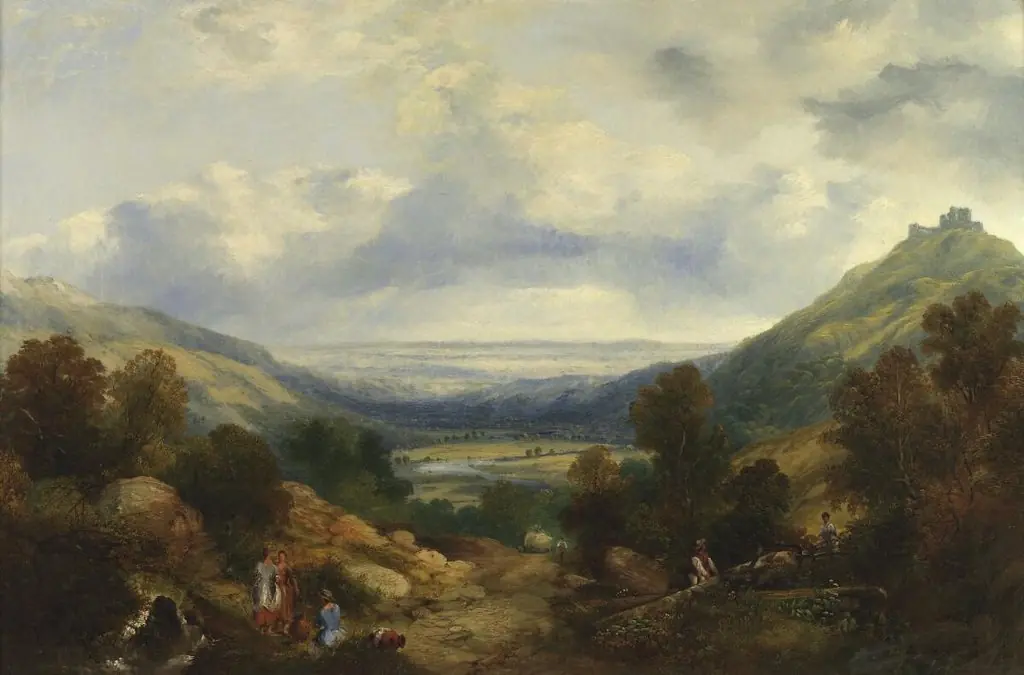
Ethy, Cornwall is a watercolor work on paper by the British Romanticist artist Henry Gastineau. It dates from 1862 and is held in the collection of the Victoria and Albert Museum.
About this work
The painting's style is reminiscent of Impressionism and Realism, with a focus on capturing the natural beauty of the landscape.
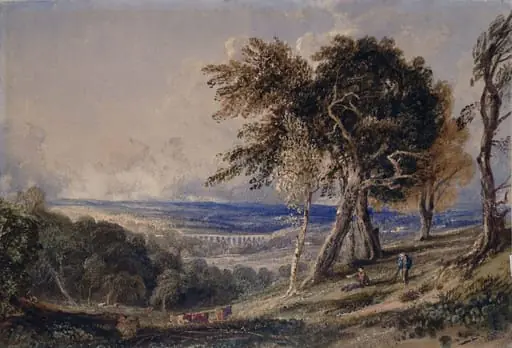
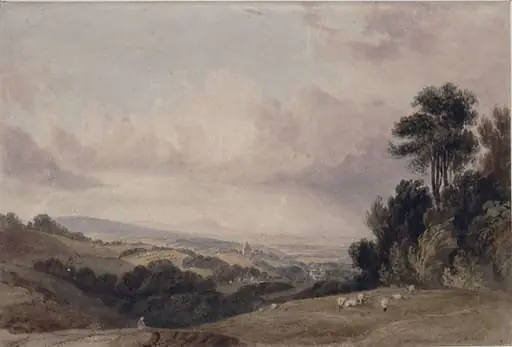
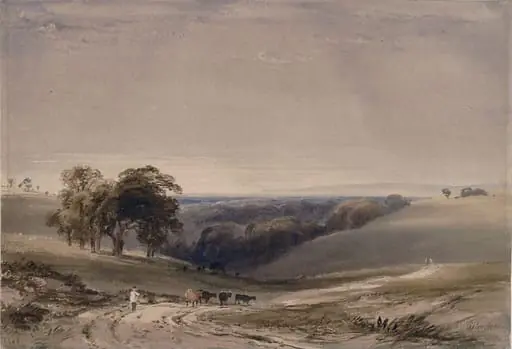
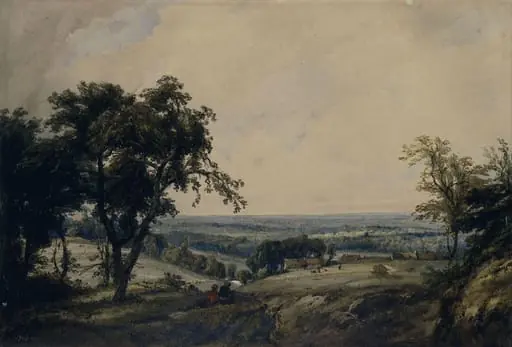
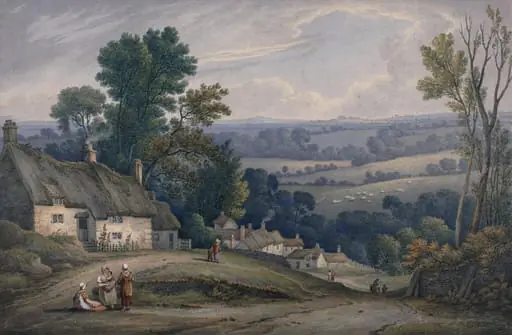
This painting is a landscape of Ethy, Cornwall, created in 1862. It features rolling hills, trees, and a body of water in the distance. The sky is cloudy, and the overall atmosphere is serene.
In the foreground, there are sheep grazing, and a woman is walking towards them. The painting's color palette is muted, with shades of green, brown, and gray dominating the scene. The brushstrokes are soft and gentle, giving the painting a sense of calmness.
The painting's style is reminiscent of Impressionism and Realism, with a focus on capturing the natural beauty of the landscape. If you're interested in learning more about this style, you might want to explore the movement of Impressionism.
Overview
Painted in 1862 by Henry Gastineau, this watercolour captures the rural landscape of Ethy in Cornwall. The work is signed and dated by the artist, affirming its origin and timing. Rendered in delicate washes, it presents a quiet moment in the countryside, emphasizing natural elements over narrative detail. The medium’s transparency enhances the subtle tonal shifts that define the scene’s mood.
Subject & Meaning
The scene depicts a pastoral setting with grazing sheep and a lone woman approaching them, suggesting daily rural life. No dramatic event is portrayed; instead, the focus lies in the stillness of the environment. The figures are small within the landscape, reinforcing a sense of harmony between human presence and the natural world. The composition invites contemplation rather than storytelling.
Technique & Style
Gastineau employed soft, layered watercolour washes to build atmosphere, avoiding sharp outlines. The palette is restrained—muted greens, browns, and greys—mirroring the overcast sky and earthy terrain. Brushwork is gentle and deliberate, creating a hazy, tranquil effect. While not strictly Impressionist, the work shares an interest in light and mood, aligning with mid-19th-century tendencies toward naturalistic observation.
History & Provenance
Created in 1862, the painting reflects Gastineau’s continued engagement with British landscape subjects during his later career. Though little is documented about its early ownership, its signed and dated condition suggests it was intended as a finished work, not a sketch. It has remained within private collections since its creation, with no public exhibition history recorded.
Context
In the 1860s, watercolour was widely used by British artists for topographical and leisurely landscape studies. Gastineau, known for his detailed coastal and rural scenes, contributed to this tradition. Ethy’s depiction aligns with a broader cultural interest in the English countryside as a site of quiet beauty, distinct from industrial or urban themes gaining prominence at the time.
Legacy
This work exemplifies Gastineau’s consistent approach to landscape: understated, observant, and rooted in place. While not widely exhibited or reproduced, it remains a representative example of mid-Victorian watercolour practice. Its quiet composition continues to reflect the aesthetic values of its era—modesty, restraint, and a reverence for everyday natural settings.
Own this work as a print
Artist & collection
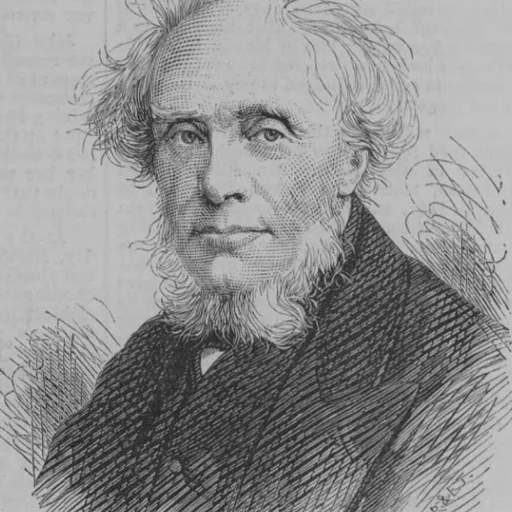
Artist
Henry Gastineau (1791–1876) was an English engraver and prolific painter in water-colours. He was born in London to a family of Huguenot descent. One of his daughters, Maria Gastineau, painted in a similar style.