Artwork
Rockets and Blue Lights (Close at Hand) to Warn Steamboats of Shoal
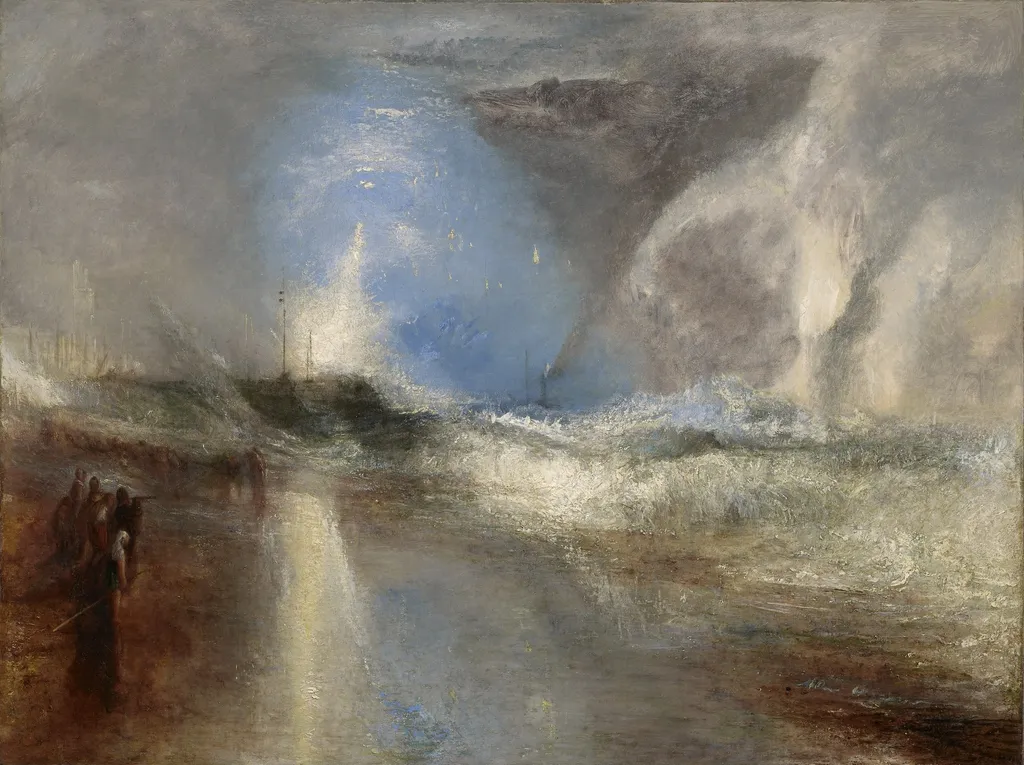
Rockets and Blue Lights (Close at Hand) to Warn Steamboats of Shoal is an oil painting by the British Romanticist artist Joseph Mallord William Turner. It dates from 1840 and is held in the collection of the Clark Art Institute. Painted in 1840, this oil work by J.
About this work
Overview
The painting is part of the Clark Art Institute’s permanent collection, acquired after decades of private ownership.
Painted in 1840, this oil work by J.M.W. Turner captures a moment of maritime emergency off the English coast. It belongs to a series of late works where Turner prioritized emotional resonance over literal representation. The title references flares used to warn vessels of shallow waters, suggesting a scene of navigation peril. The painting is part of the Clark Art Institute’s permanent collection, acquired after decades of private ownership.
Subject & Meaning
The scene portrays a ship in distress amid a storm, with rockets and blue flares piercing the darkness. Onshore, a group of observers watches helplessly, their stillness contrasting with the chaos at sea. Turner does not depict a specific event but evokes the dangers of early steam navigation, where unfamiliar technology met unpredictable natural forces. The work reflects anxiety over industrial progress and human vulnerability in the face of nature.
Technique & Style
Turner applied thick, rapid brushwork to convey motion and light, dissolving forms into swirling pigment. The sky and sea merge through layered washes of ultramarine, ochre, and white, while the flares emit radiant halos that seem to vibrate on the canvas. Traditional perspective is abandoned in favor of atmospheric intensity. The paint’s texture and chromatic energy dominate, anticipating later movements that valued sensation over detail.
History & Provenance
Created during Turner’s final decades, the painting was likely exhibited in his lifetime but remained in private hands until the 20th century. It passed through several British collectors before entering the Clark Art Institute’s collection in the mid-1950s. Its survival in relatively intact condition is notable, given Turner’s experimental methods and the fragility of his late works.
Context
In the 1830s and 1840s, Britain’s coastal waters saw increasing steamship traffic, accompanied by new navigational hazards and accidents. Turner, long fascinated by the sea’s power, responded to these changes with increasingly abstract compositions. This work aligns with his broader shift away from topographical accuracy toward emotional and sensory expression, mirroring contemporary debates about technology and nature.
Legacy
Turner’s dissolution of form and emphasis on light in this painting influenced later artists seeking to capture transient effects. Though not widely recognized in his time as radical, his late works like this one became touchstones for 20th-century modernists. The painting’s emotional immediacy and technical daring helped redefine the boundaries of landscape and marine painting in the modern era.
Own this work as a print
Artist & collection
Artist
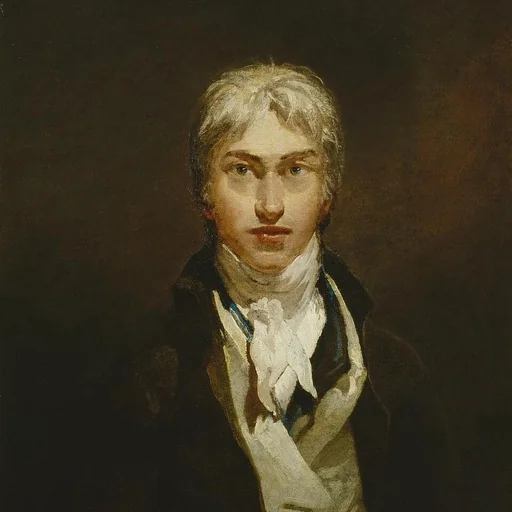
Joseph Mallord William Turner was born in 1775 at Maiden Lane, Covent Garden, where his father kept a barber and wig-making shop.

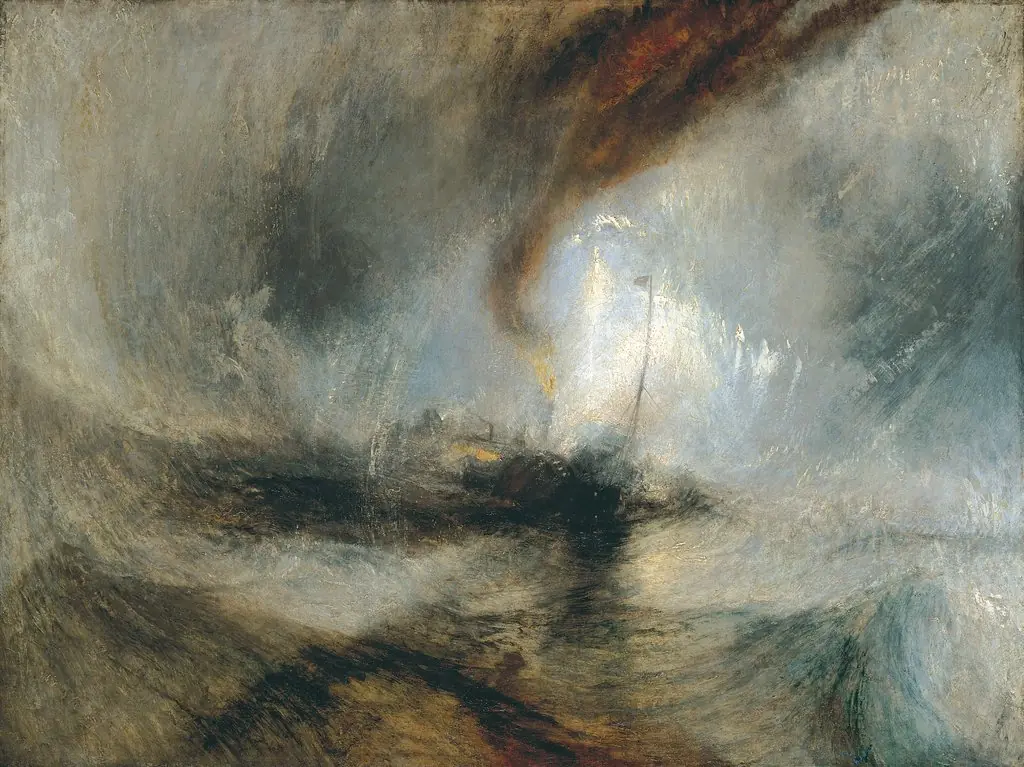 Snow Storm: Steam-Boat off a Harbour's Mouth
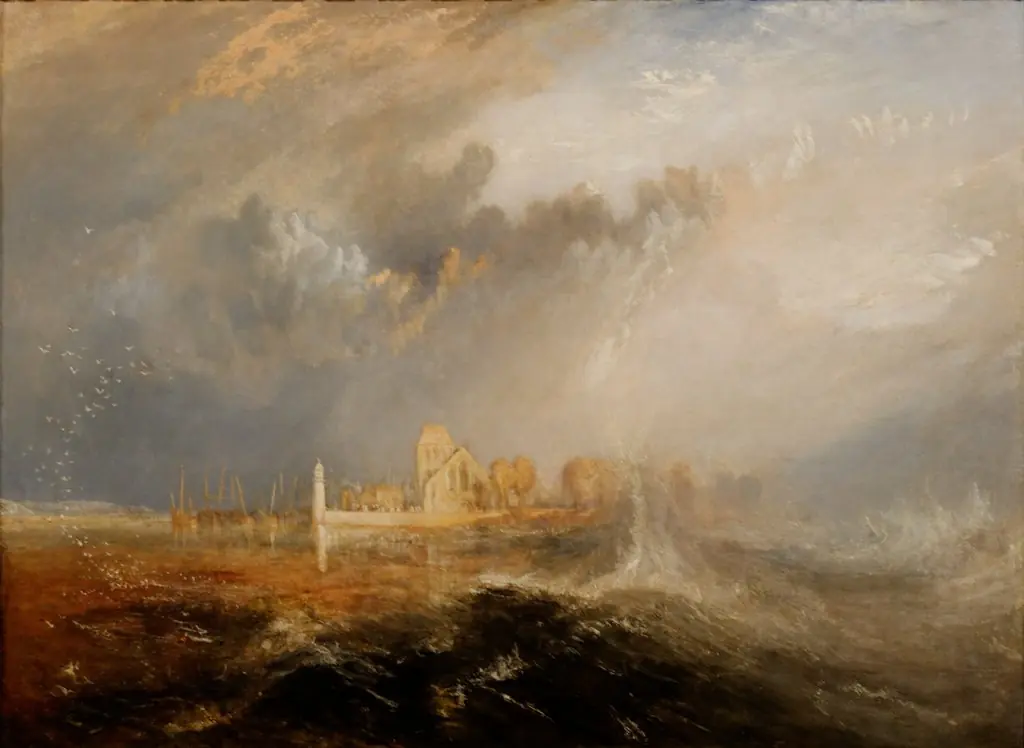 Quillebeuf, Mouth of the Seine
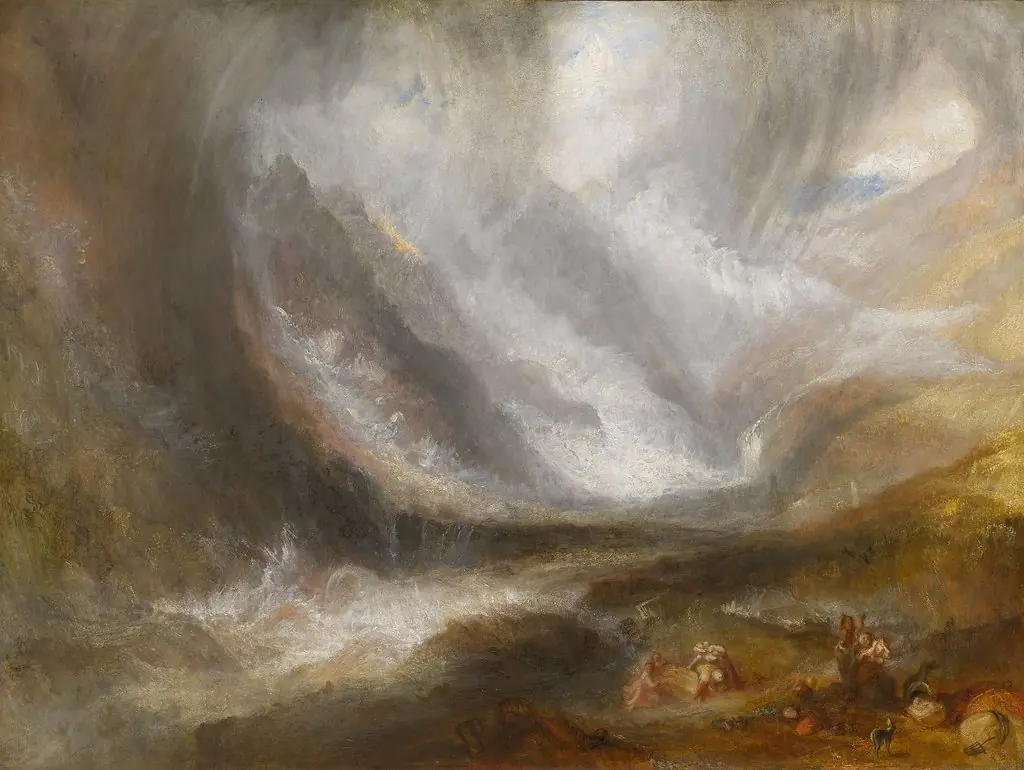 Valley of Aosta: Snowstorm, Avalanche, and Thunderstorm
 Valley of Aosta: Snowstorm, Avalanche, and Thunderstorm
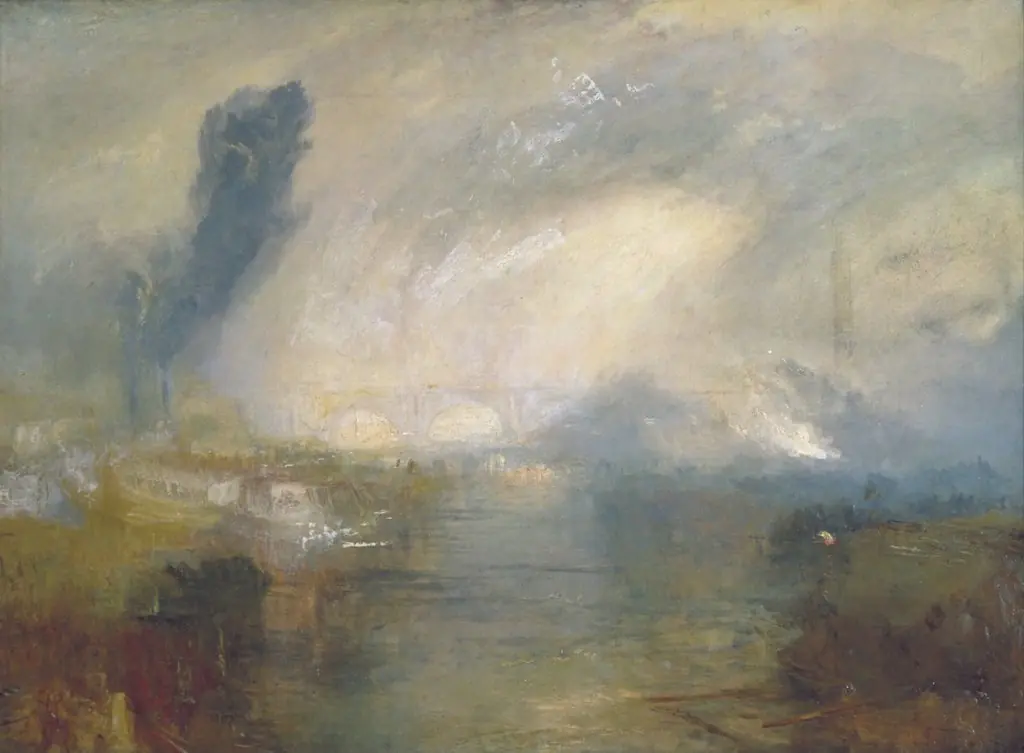 The Thames above Waterloo Bridge
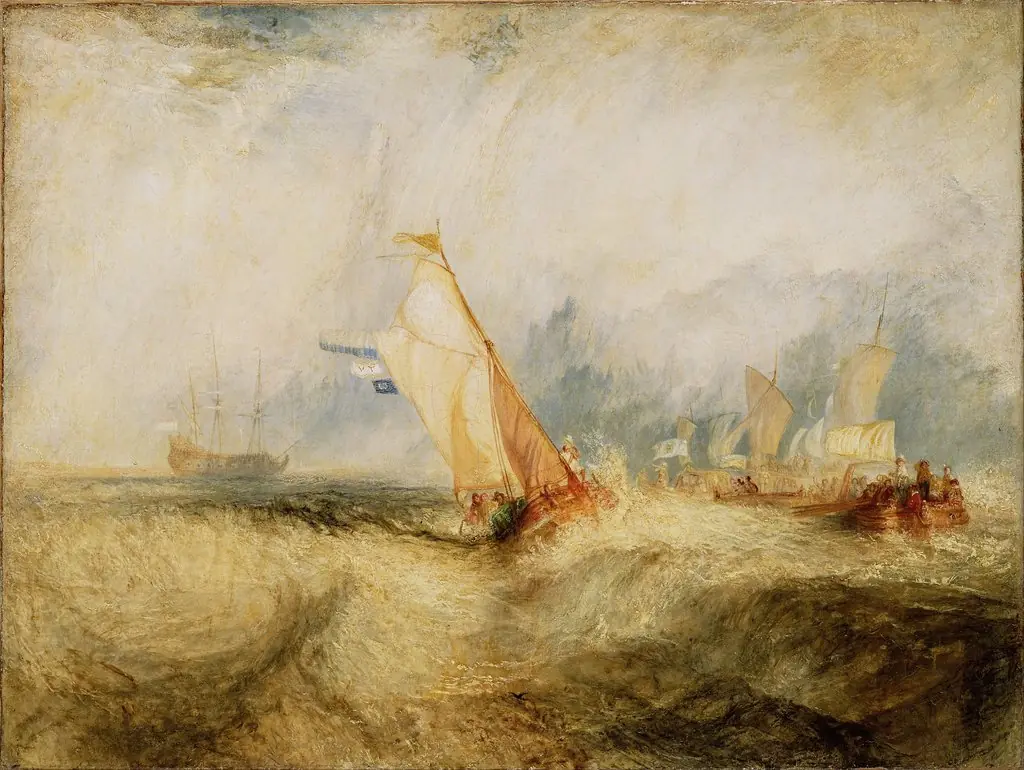 Van Tromp
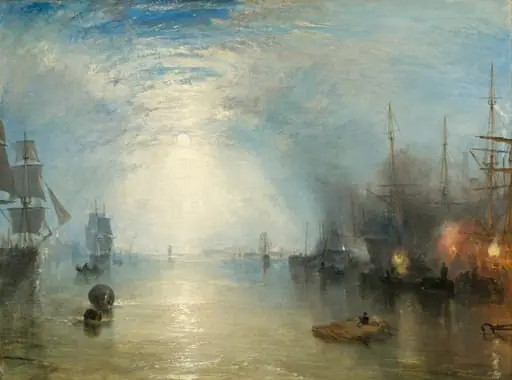 Keelmen Heaving in Coals by Moonlight
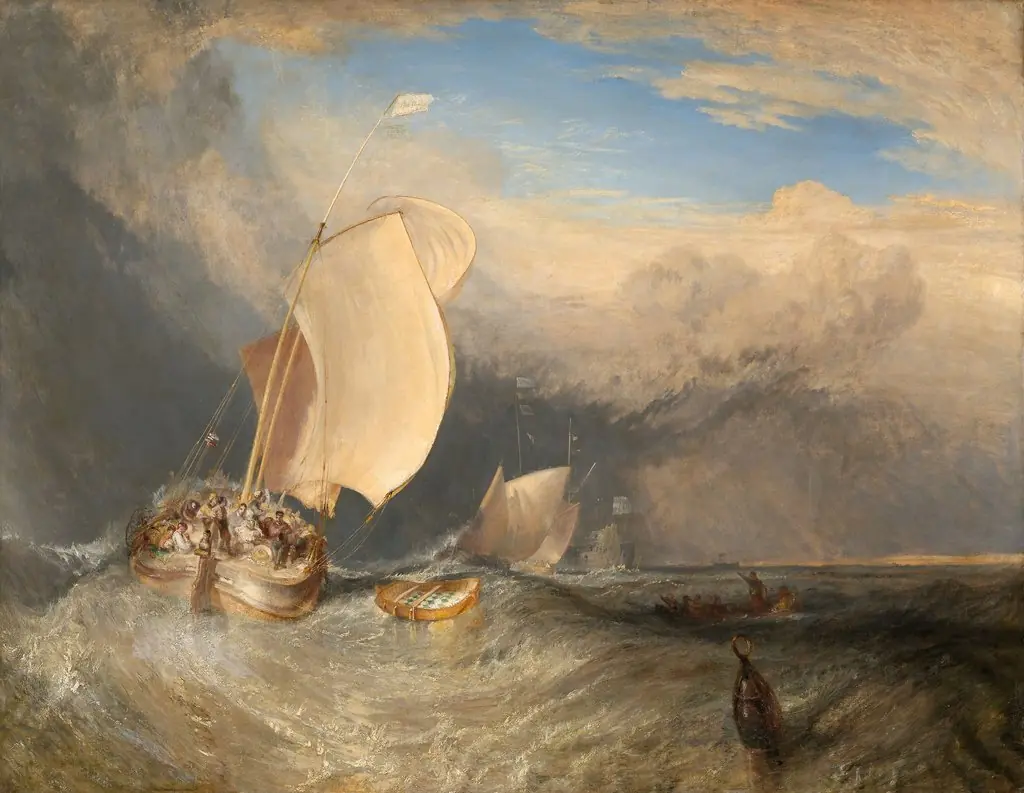 Fishing Boats with Hucksters Bargaining for Fish
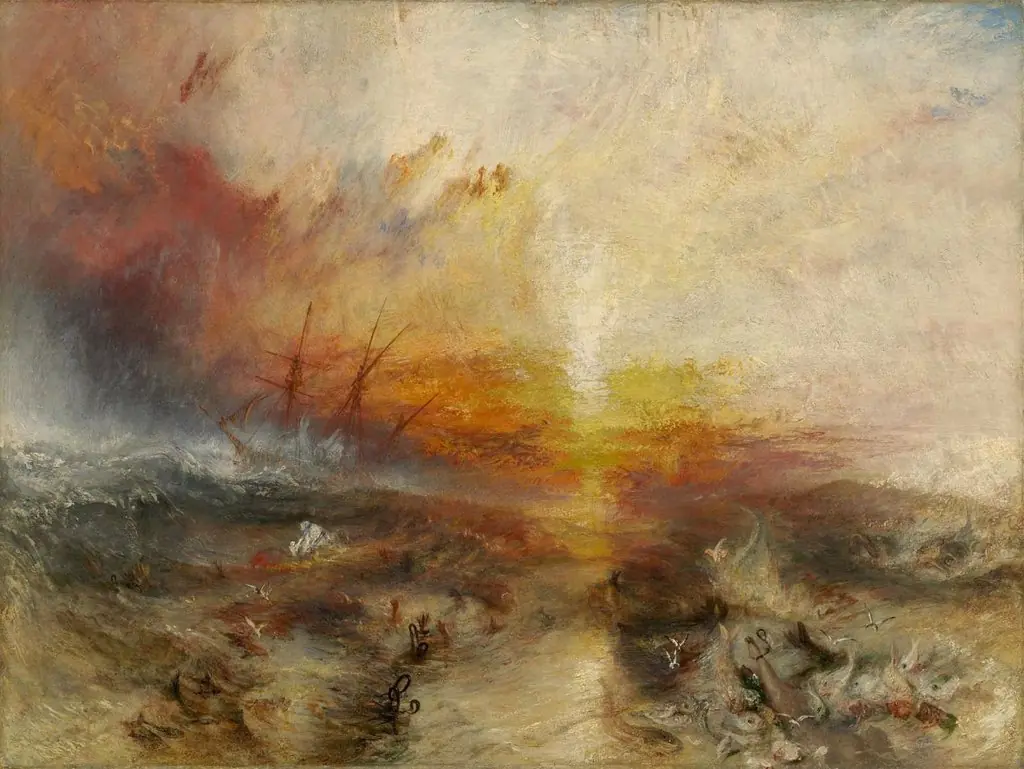 The Slave Ship
 Fishing Boats with Hucksters Bargaining for Fish
 Shade and Darkness
 The White Cloud