Artwork
Shade and Darkness
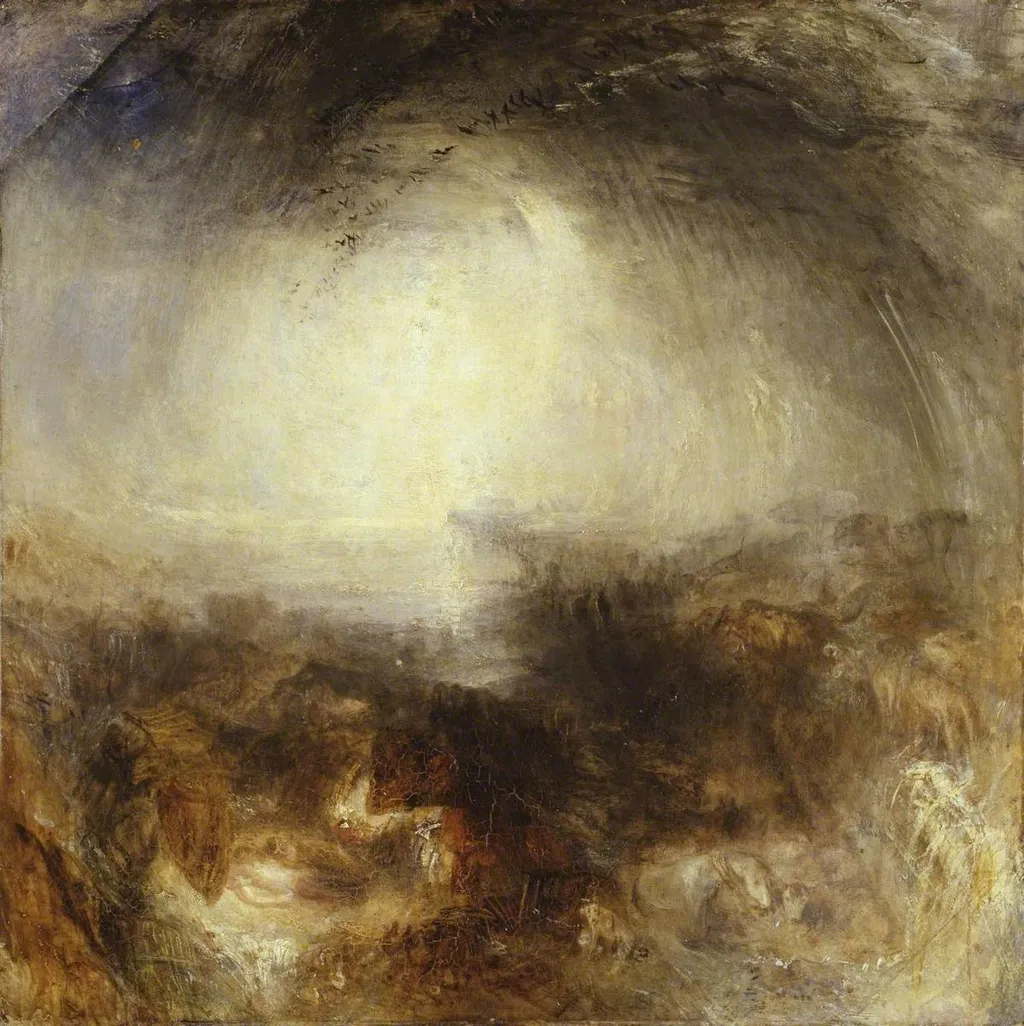
Shade and Darkness is an oil painting by the British Romanticist artist Joseph Mallord William Turner. It dates from 1848 and is held in the collection of the National Gallery.
About this work
Overview
It resides in the collection of Tate Britain, representing a pivotal moment in Turner’s exploration of nature’s sublime forces beyond literal representation.
Painted in 1848, *Shade and Darkness* is an oil work by Joseph Mallord William Turner, reflecting his late-period preoccupation with atmospheric effects and the limits of visual perception. The painting eschews clear forms in favor of luminous abstraction, where light dominates the composition. It resides in the collection of Tate Britain, representing a pivotal moment in Turner’s exploration of nature’s sublime forces beyond literal representation.
Subject & Meaning
The painting offers no identifiable narrative or specific location. Instead, it evokes a primordial scene where light emerges from an unseen source, piercing a dense, shadowed expanse. This contrast suggests themes of revelation and obscurity, possibly alluding to spiritual or existential questions. Turner’s ambiguity invites contemplation rather than interpretation, aligning with Romantic ideals of nature’s ineffable power.
Technique & Style
Turner applied thin, layered washes of oil to create a hazy, almost ethereal glow at the center. Muted earth tones—browns, grays, and indigo—surround the radiant core, which appears almost luminous through pigment transparency. Brushwork is loose and gestural, dissolving form into atmosphere. The technique prioritizes emotional resonance over detail, pushing oil painting toward abstraction decades before its formal emergence.
History & Provenance
Created in the final years of Turner’s life, *Shade and Darkness* was among works he bequeathed to the British nation. It entered the collection of the National Gallery before being transferred to Tate Britain, where it remains part of the core holdings of British Romantic art. Its preservation reflects Turner’s enduring influence on institutional understandings of modern painting’s evolution.
Context
In the late 1840s, Turner increasingly moved away from topographical accuracy, responding to scientific inquiries into light and optics, as well as philosophical currents emphasizing the sublime. *Shade and Darkness* aligns with contemporaneous experiments by other artists and thinkers grappling with perception, emotion, and the limits of representation in an age of industrial and scientific change.
Legacy
The painting’s radical reduction of form and emphasis on light anticipated later movements such as Impressionism and even abstract expressionism. Though not widely exhibited during Turner’s lifetime, its influence grew as 20th-century artists recognized its departure from traditional composition. It stands as a quiet but decisive step toward modern painting’s liberation from descriptive realism.
Artist & collection
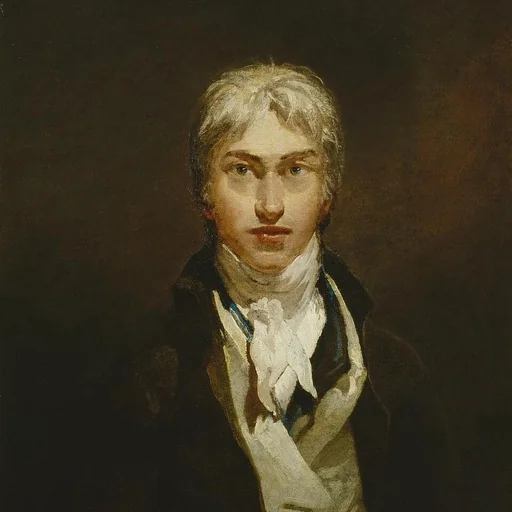
Artist
Joseph Mallord William Turner was born in 1775 at Maiden Lane, Covent Garden, where his father kept a barber and wig-making shop.

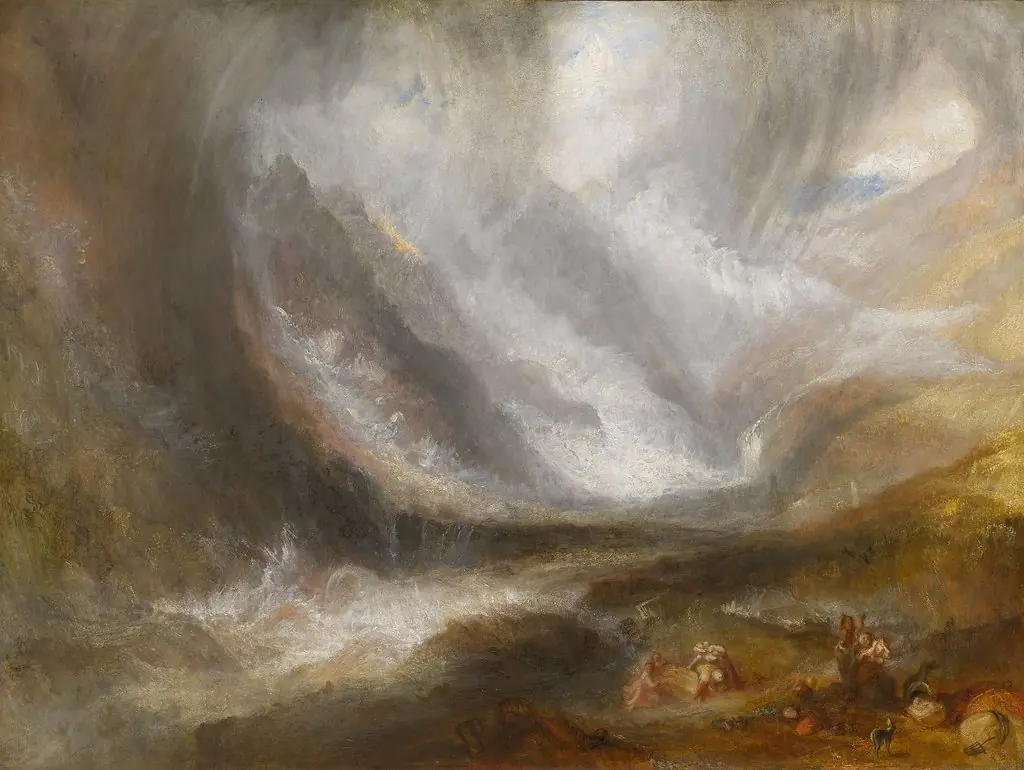 Valley of Aosta: Snowstorm, Avalanche, and Thunderstorm
 Valley of Aosta: Snowstorm, Avalanche, and Thunderstorm
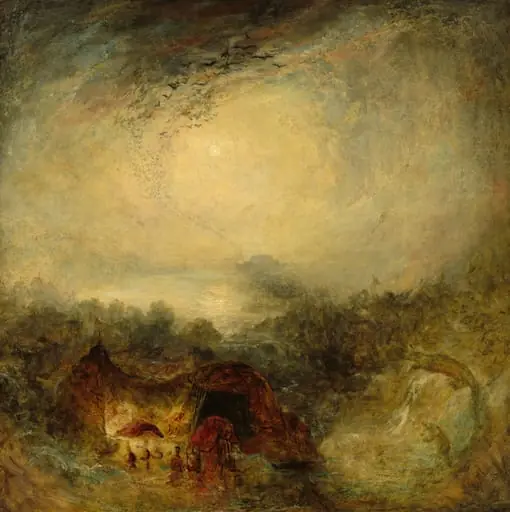 The Evening of the Deluge
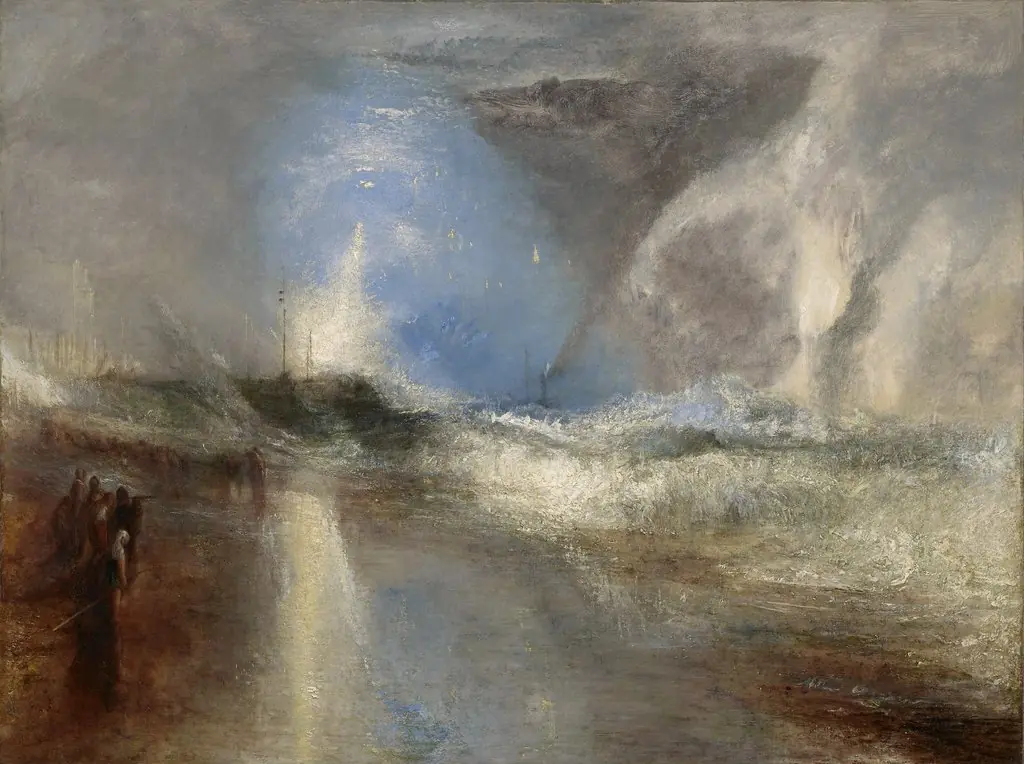 Rockets and Blue Lights (Close at Hand) to Warn Steamboats of Shoal
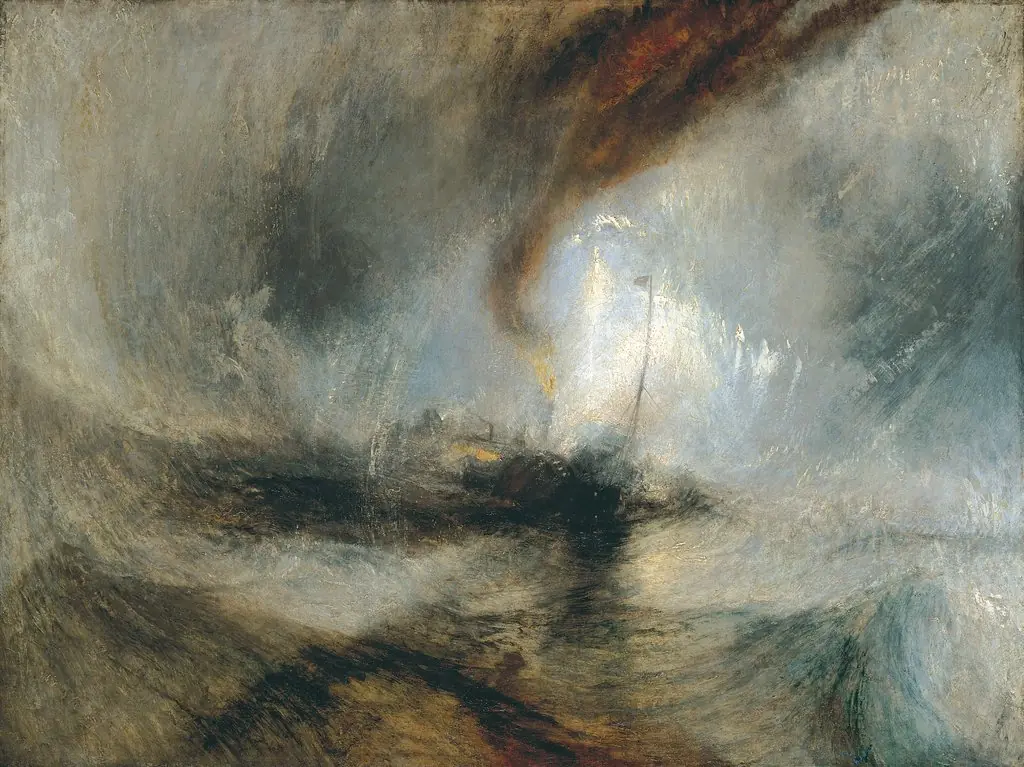 Snow Storm: Steam-Boat off a Harbour's Mouth
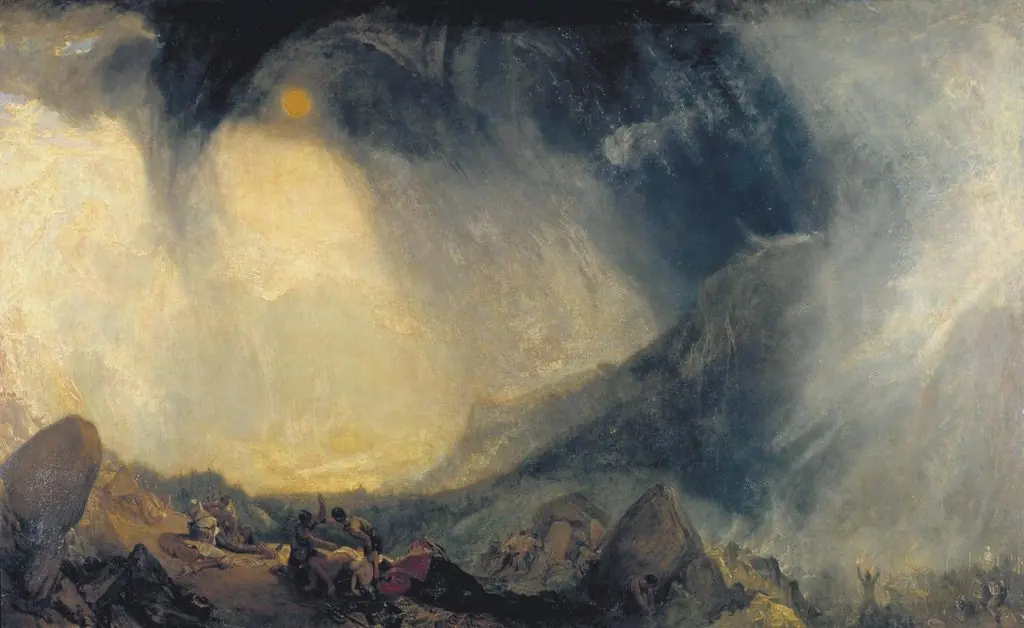 Snow Storm: Hannibal and his Army Crossing the Alps
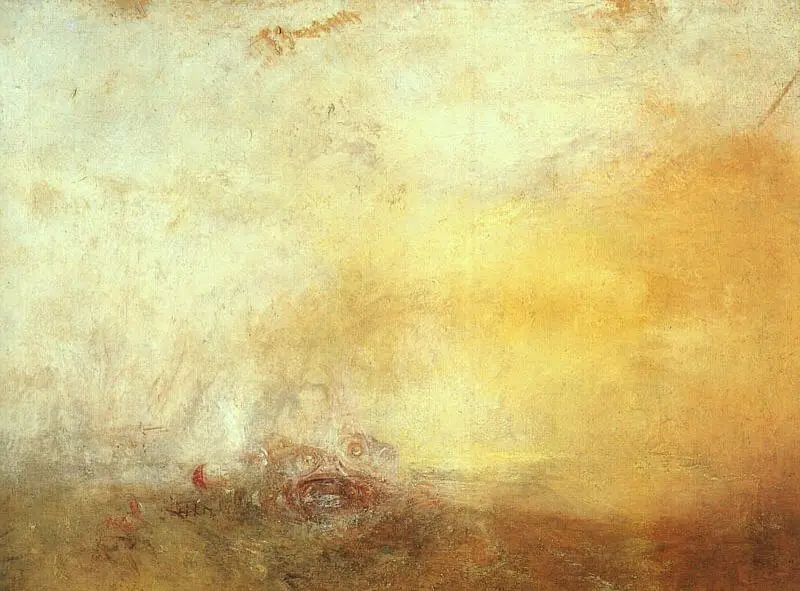 Sunrise with Sea Monsters
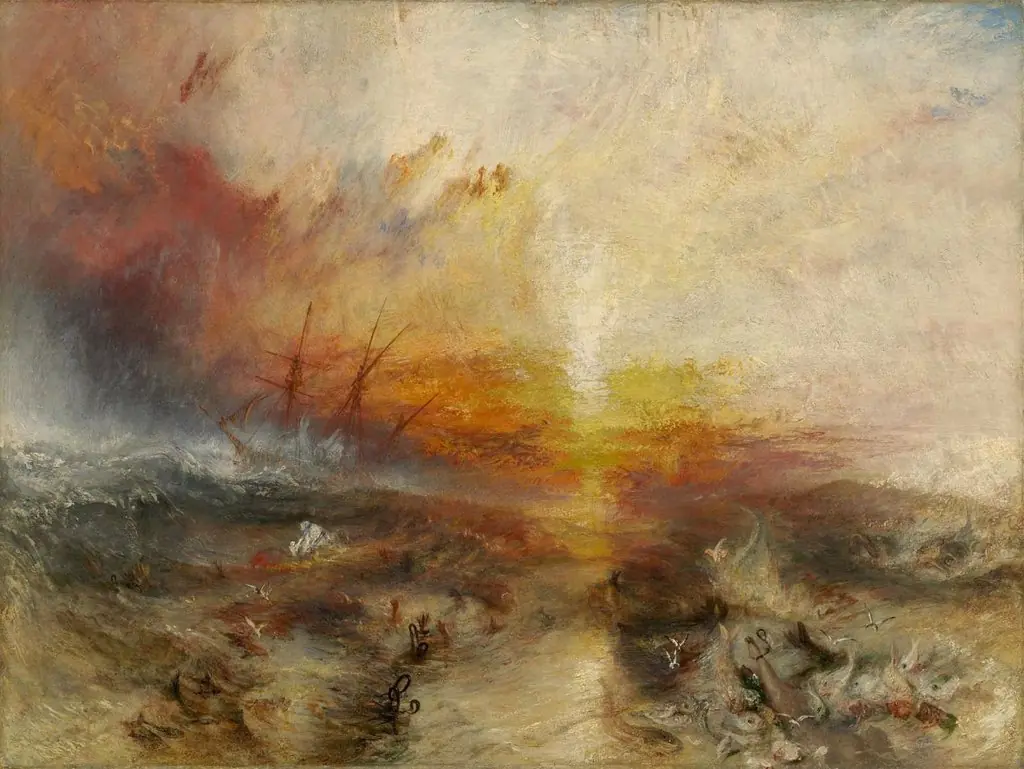 The Slave Ship
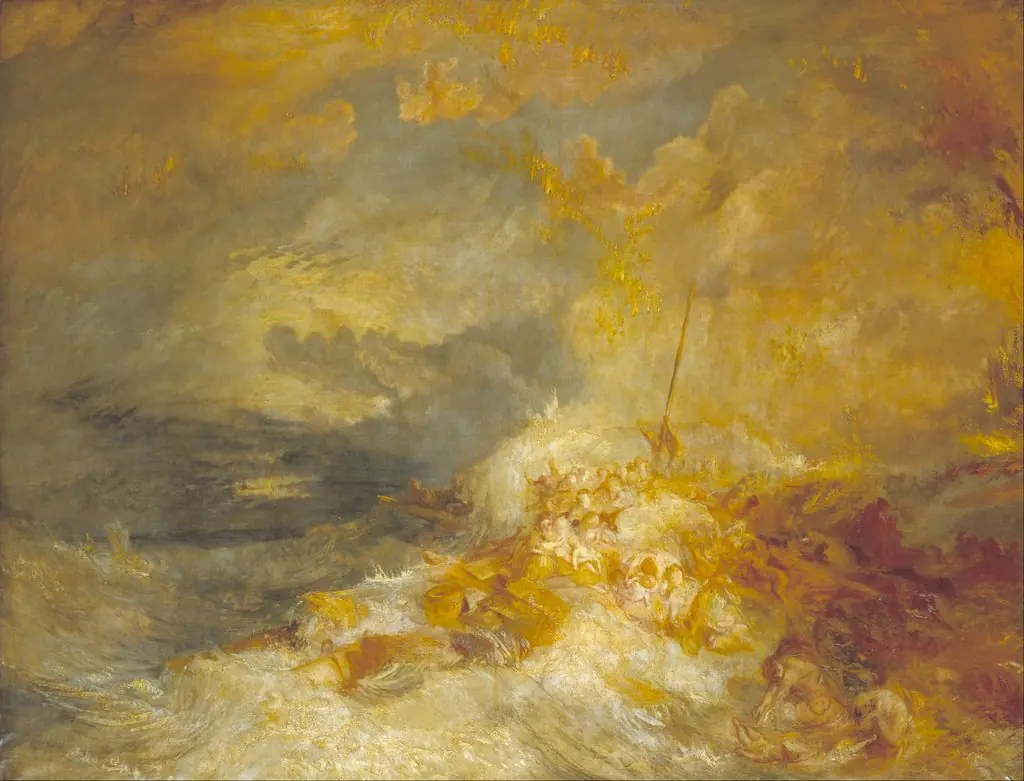 Disaster at Sea
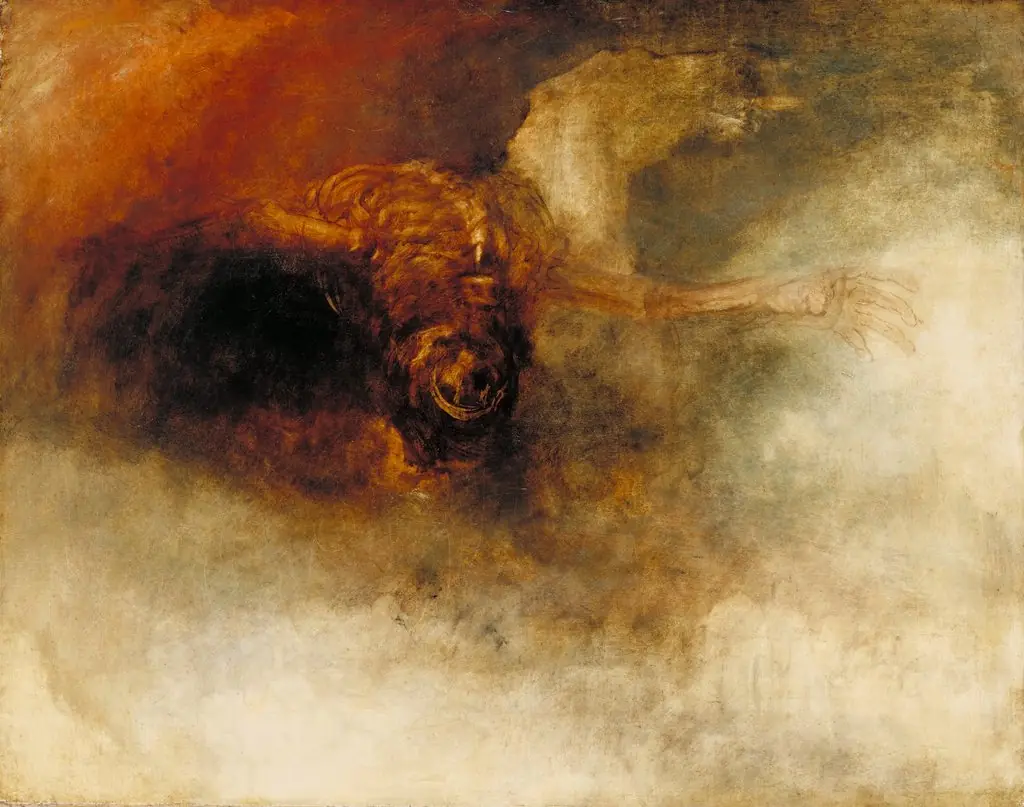 Death on a pale horse
 War. The Exile and the Rock Limpet
 Quillebeuf, Mouth of the Seine