Artwork
Untitled
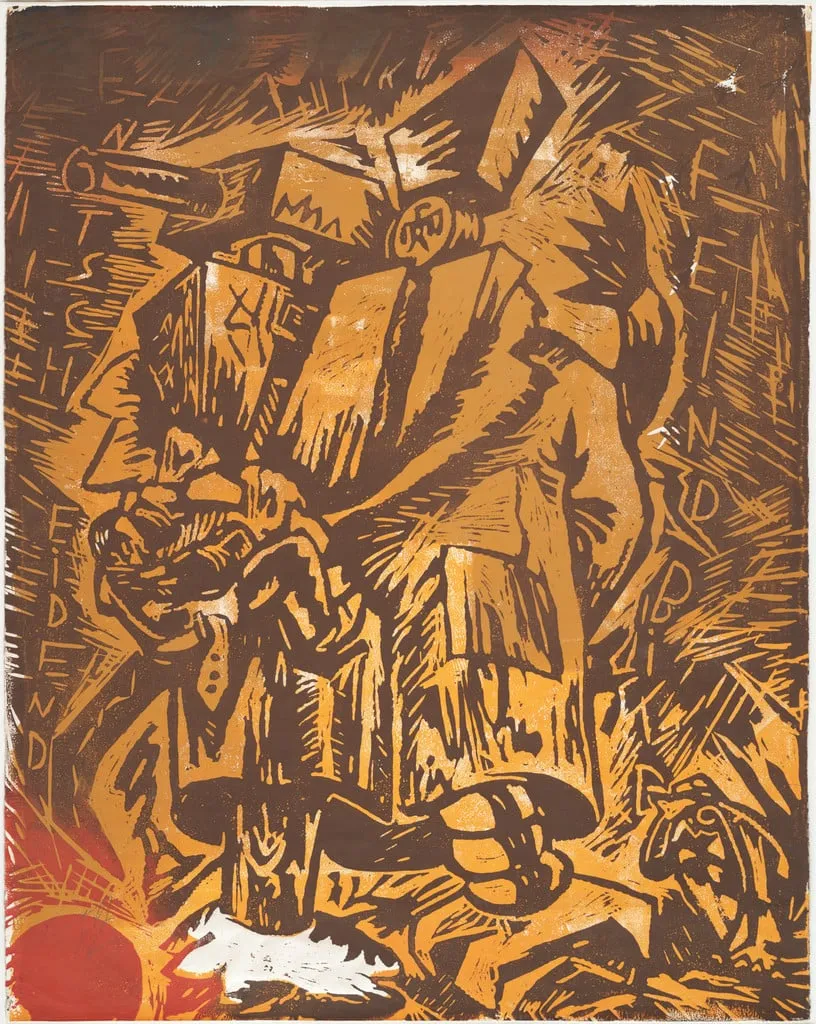
Untitled is a print by Jörg Immendorff. It dates from 1982 and is held in the collection of the Museum of Modern Art.
About this work
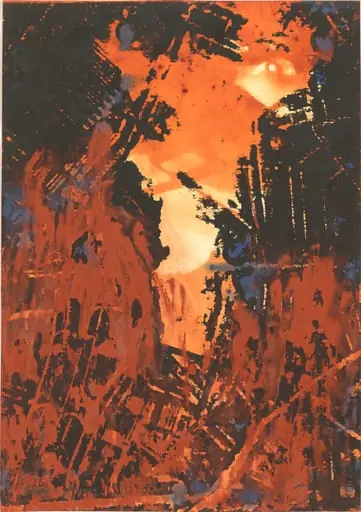
The colors are mostly brown and orange, with a few bright spots like red and white.
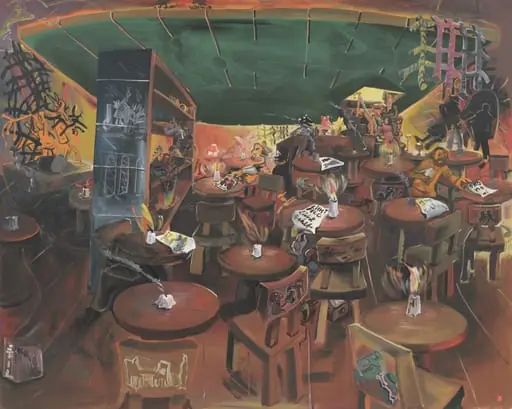
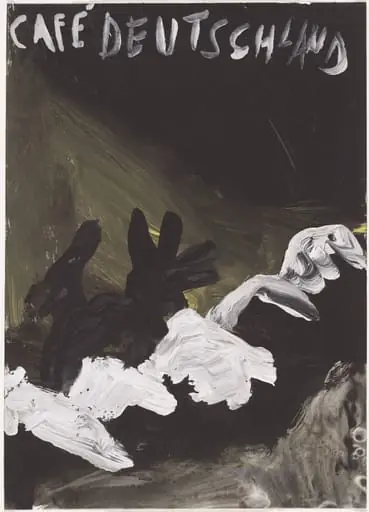
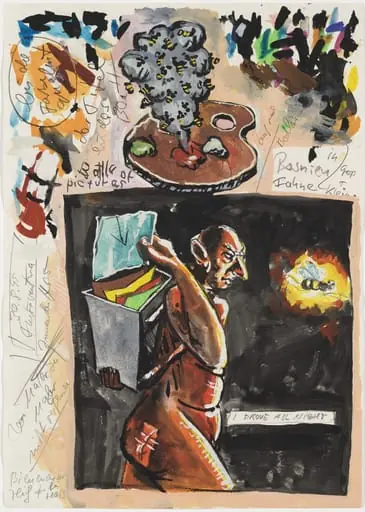
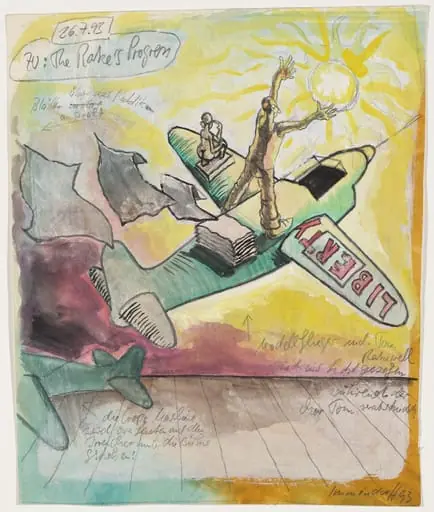
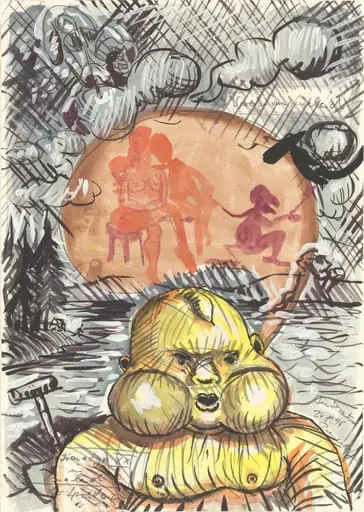
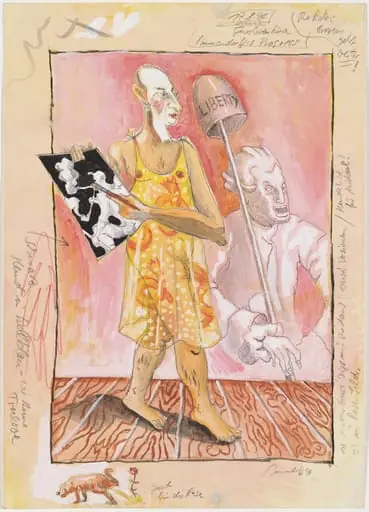
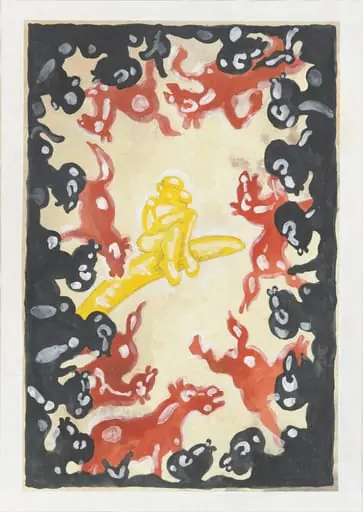
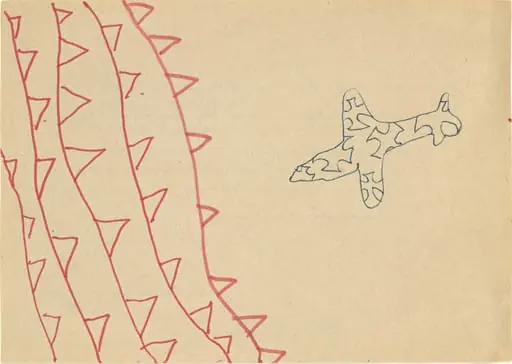
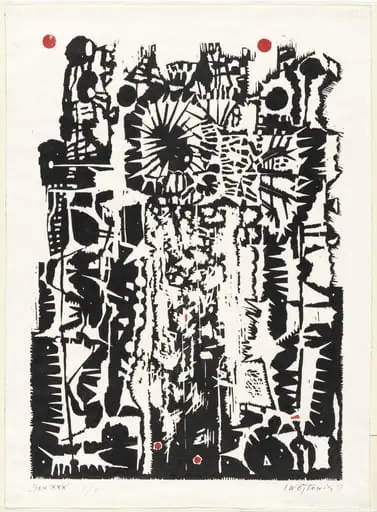
This print is all jagged lines and rough shapes. The colors are mostly brown and orange, with a few bright spots like red and white. It looks like a crowd of people, but they’re all twisted and overlapping. Some parts look like faces, others like hands or clothes. The edges are sharp, almost like carved wood.
The artist made this by cutting into linoleum—it’s not painted, it’s pressed. The lines are uneven, giving it a raw, urgent feel. It’s from 1982, but the style doesn’t match any big art group.
Next, check out The Museum of Modern Art to see more prints like this.
Overview
This untitled linoleum cut is one of several prints in a 1982 portfolio featuring works by multiple artists. Created by Jörg Immendorff, it exemplifies the raw, hand-carved aesthetic common in postwar German printmaking. The image is produced through direct cutting of linoleum, then inked and pressed onto paper, resulting in bold, unrefined forms. Its inclusion in The Museum of Modern Art’s collection situates it within a broader context of experimental print practices from the era.
Subject & Meaning
The composition suggests a dense, chaotic gathering of human figures, their forms fragmented and interwoven. Faces, limbs, and garments emerge ambiguously from the layered contours, evoking collective energy without clear narrative. The absence of identifiable individuals or setting invites interpretation as a metaphor for social tension or psychological unrest, consistent with Immendorff’s interest in the intersection of personal and political experience.
Technique & Style
Executed through linoleum carving, the print relies on the physical act of cutting to generate its visual language. Jagged, uneven lines and abrupt transitions between shapes convey urgency and spontaneity. Colors are limited to earth tones—brown and orange—with selective accents of red and white, enhancing the work’s tactile immediacy. The technique rejects smoothness, embracing the material’s inherent roughness to amplify emotional intensity.
History & Provenance
Produced in 1982, the print was part of a collaborative portfolio released during a period of renewed interest in printmaking among German artists. Immendorff, then active in both painting and performance, contributed this work alongside peers exploring figurative expression. The portfolio entered The Museum of Modern Art’s collection shortly after its release, reflecting institutional recognition of its significance within contemporary German art of the time.
Context
Emerging in West Germany during the early 1980s, this work aligns with a broader shift away from conceptual minimalism toward expressive, emotionally charged imagery. Though often linked to the Neue Wilde movement, the print’s intensity and abstraction resist easy categorization. It reflects a generation of artists using direct, physical methods to confront social and historical anxieties, prioritizing visceral impact over stylistic conformity.
Legacy
The print endures as an example of how printmaking was revitalized in late 20th-century Germany through its capacity for immediacy and material honesty. Immendorff’s approach influenced later artists who valued the hand-carved mark as a conduit for personal and political expression. Its presence in MoMA’s collection ensures continued access for study, reinforcing its role in documenting the evolution of German visual culture beyond dominant movements.
Artist & collection
Artist
Jörg Immendorff (14 June 1945 – 28 May 2007) was a German painter, sculptor, stage designer and art professor. He was a member of the art movement Neue Wilde.