Artwork
Cossacks
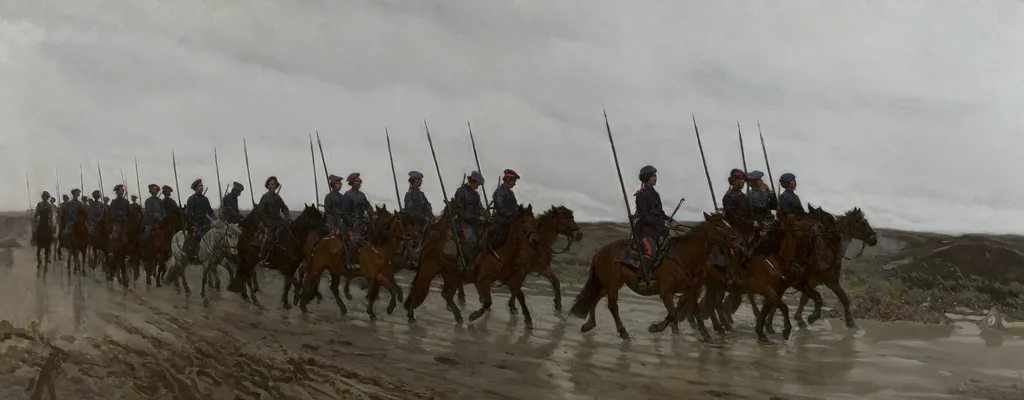
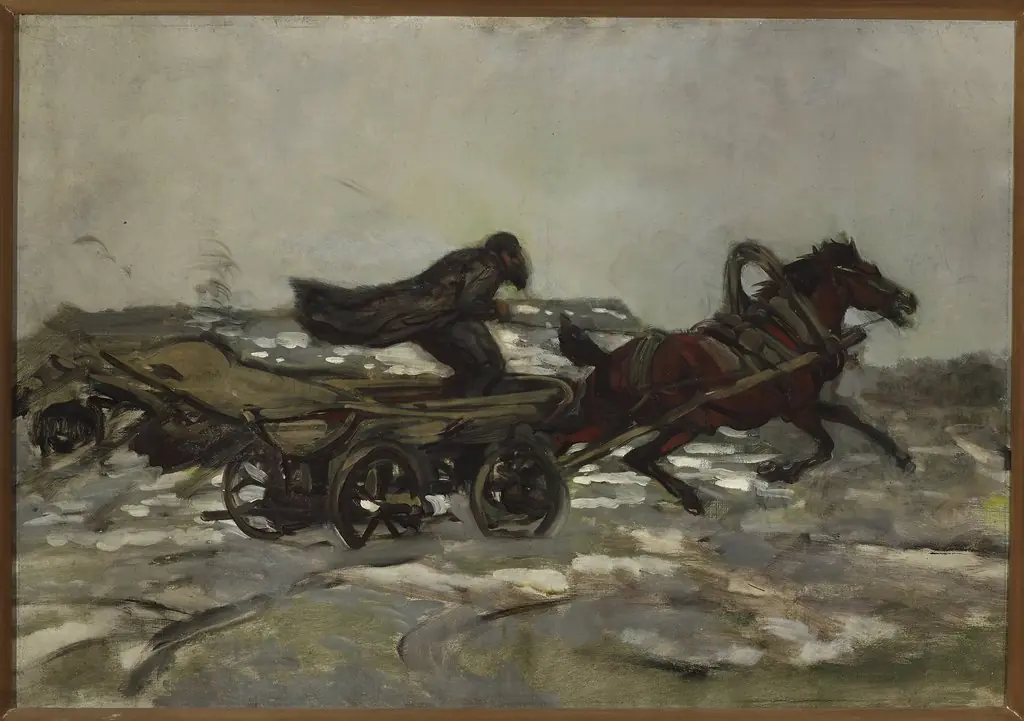
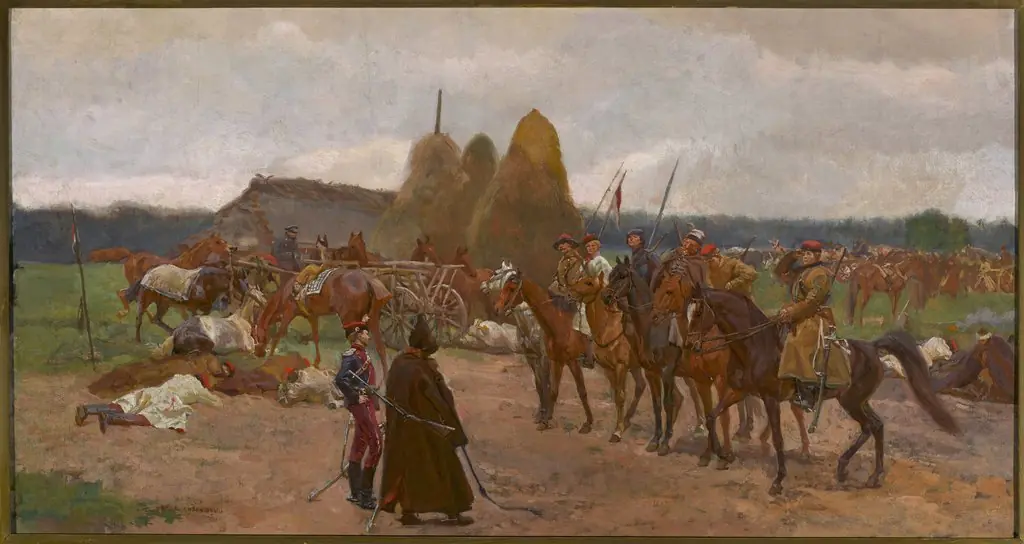
Cossacks is an oil painting by the Post-Impressionist artist Józef Chełmoński. It dates from 1893 and is held in the collection of the National Museum in Warsaw.
About this work
If you're interested in learning more about the artist's use of chiaroscuro, you can look up more information on Józef Chełmoński.
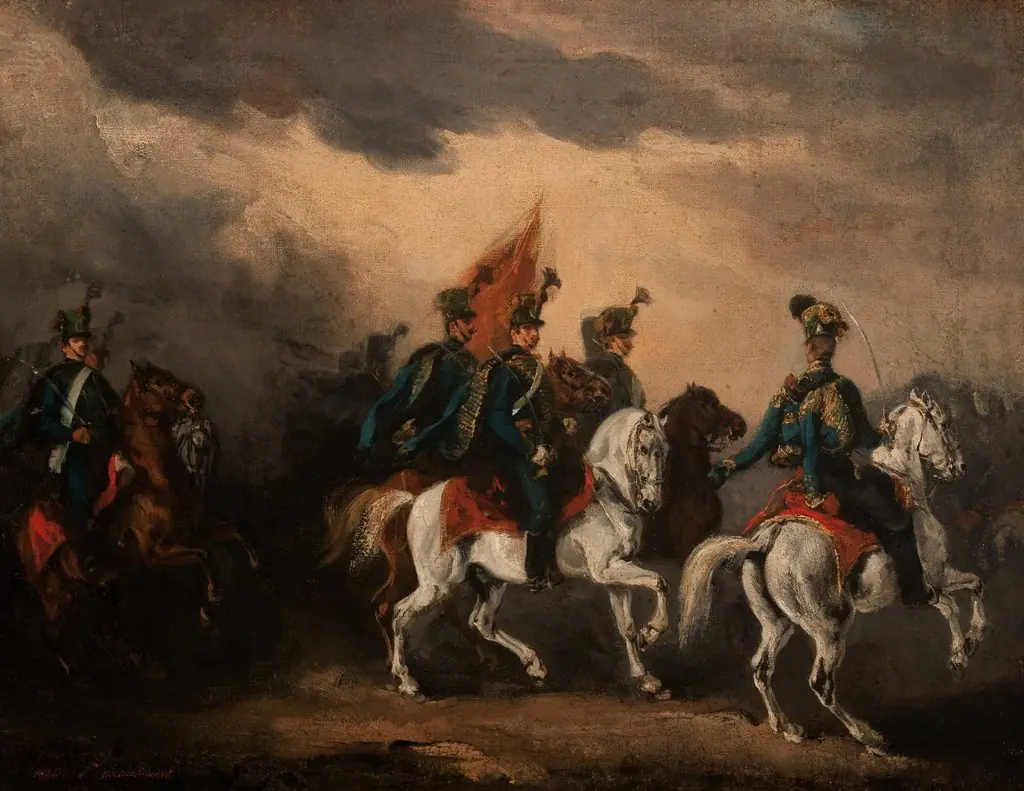
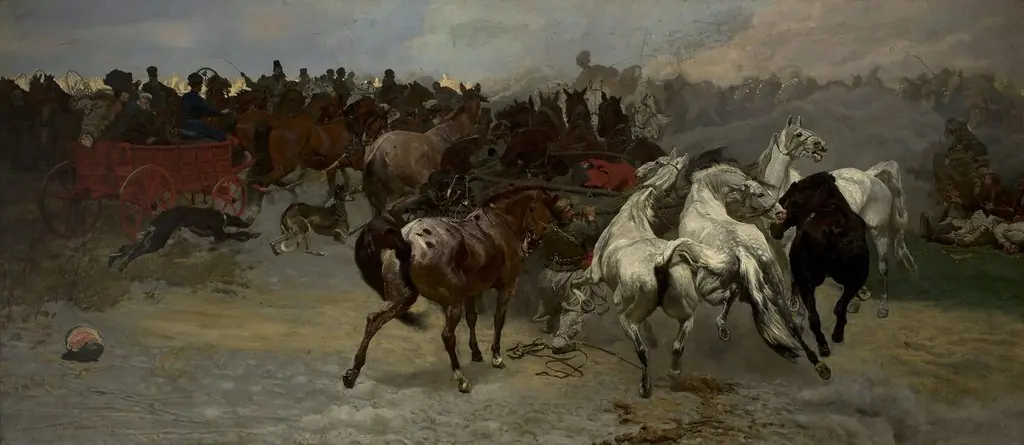
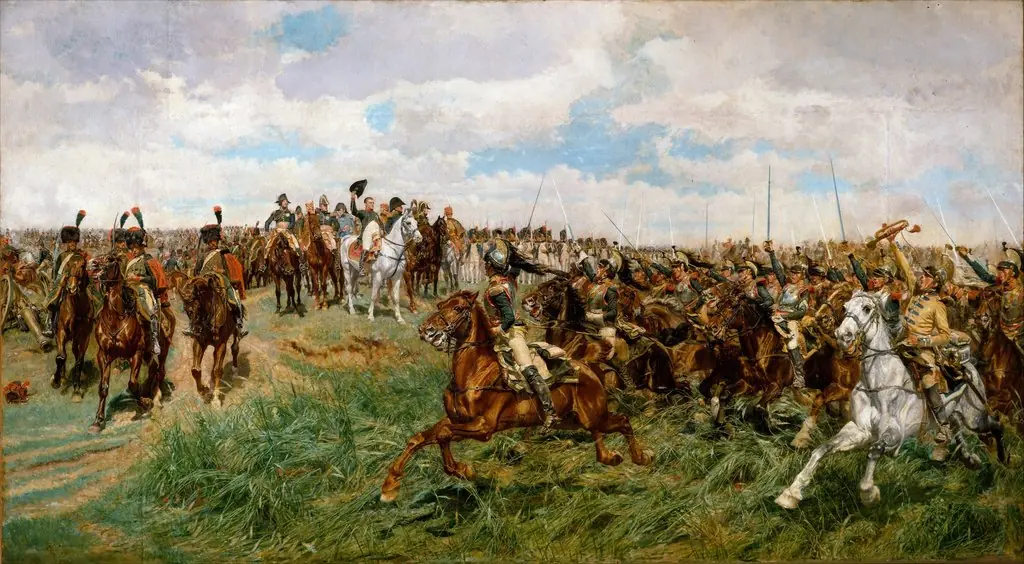
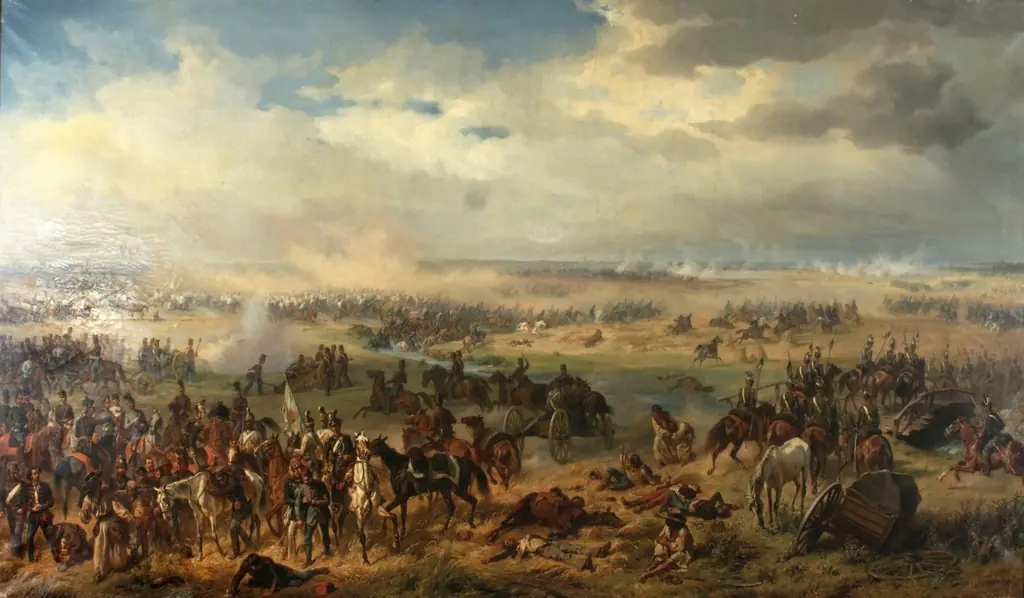
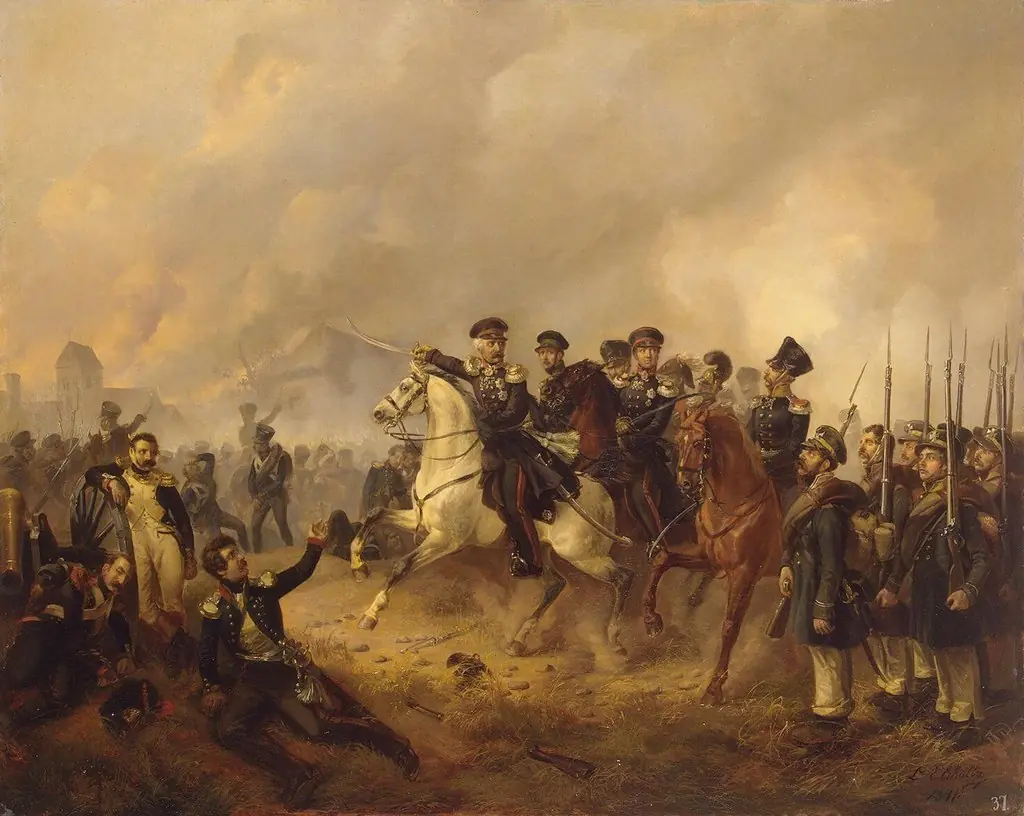
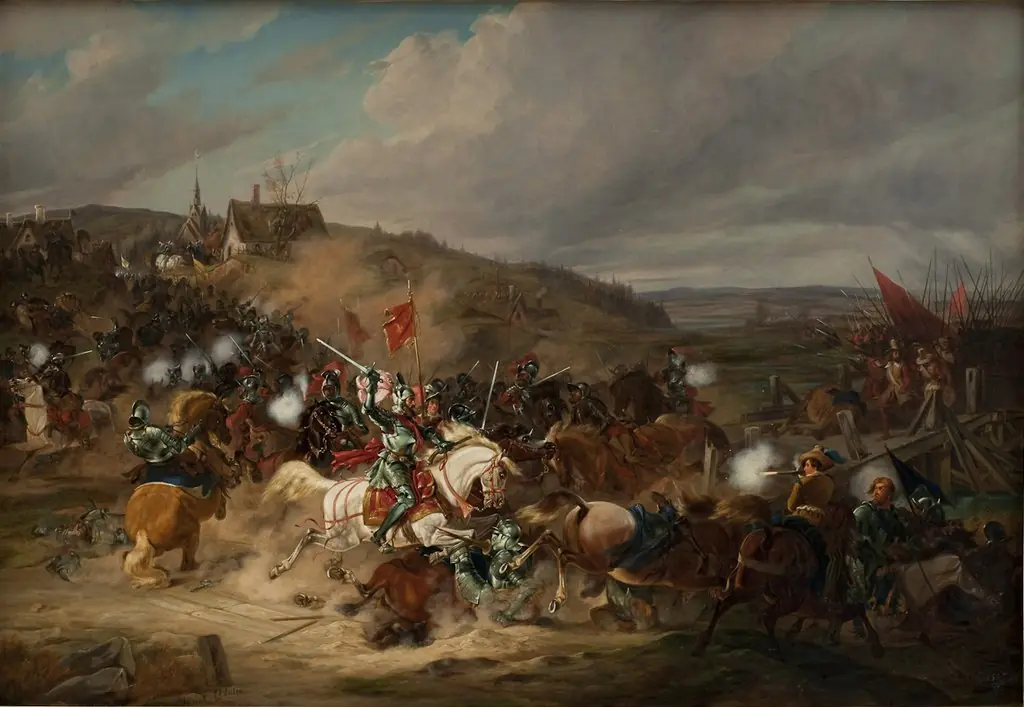
This painting shows a group of men on horseback, dressed in dark blue uniforms with red accents. They are riding in a line, with the horses' hooves kicking up mud and water. The men are all holding long spears, and some have their faces turned towards the viewer.
The background of the painting is a muddy, wet landscape with hills in the distance. The sky above is grey and cloudy. The overall atmosphere of the painting is one of movement and energy, as if the men are riding off into battle.
The painting is titled "Cossacks" and was created by Józef Chełmoński in 1885. It is held at the National Museum in Warsaw. If you're interested in learning more about the artist's use of chiaroscuro, you can look up more information on Józef Chełmoński.
Overview
Painted in 1885 by Józef Chełmoński, *Cossacks* is an oil-on-canvas work depicting a group of mounted cavalrymen moving through a rain-slicked landscape. The painting belongs to the National Museum in Warsaw and reflects Chełmoński’s focus on Polish military and rural life during the country’s partitioned era. Though often associated with realism, its dynamic composition and atmospheric handling align with late 19th-century trends beyond strict academic tradition.
Subject & Meaning
The figures are Cossack soldiers, clad in dark blue coats with red trim, riding in formation with long spears raised. Their faces, partially turned toward the viewer, suggest alertness or imminent action. The muddy terrain and overcast sky convey a sense of urgency and hardship, evoking the transient, often perilous nature of military life under foreign occupation. The scene is not a specific historical moment but a generalized portrayal of readiness and resilience.
Technique & Style
Chełmoński employed thick, textured brushwork to render the churned earth and wet clothing, emphasizing tactile realism. Dark tones dominate, relieved by flashes of red and the pale glint of spear tips. Chiaroscuro defines the riders’ forms against the gloomy backdrop, enhancing the sense of motion. The loose handling of the background contrasts with the sharper detail of the figures, directing focus to their collective movement.
History & Provenance
Created in 1885, the painting entered the National Museum in Warsaw’s collection in the early 20th century. It remained part of Poland’s national artistic heritage despite the country’s political fragmentation. Chełmoński’s reputation as a chronicler of Polish identity helped secure the work’s institutional preservation, even during periods of foreign control over cultural institutions.
Context
During the late 19th century, Poland was divided among three empires, and cultural expression became a form of quiet resistance. Chełmoński’s depictions of soldiers and rural life subtly reinforced national memory. *Cossacks* draws on historical cavalry traditions, linking contemporary viewers to a romanticized past of autonomy, even as the nation lacked sovereignty.
Legacy
The painting endures as a representative example of Polish realist painting with romantic undertones. While not widely exhibited internationally, it remains a touchstone in Polish art education for its synthesis of historical subject and emotional atmosphere. Chełmoński’s approach influenced later generations seeking to articulate national identity through visual narrative.
Artist & collection
Artist
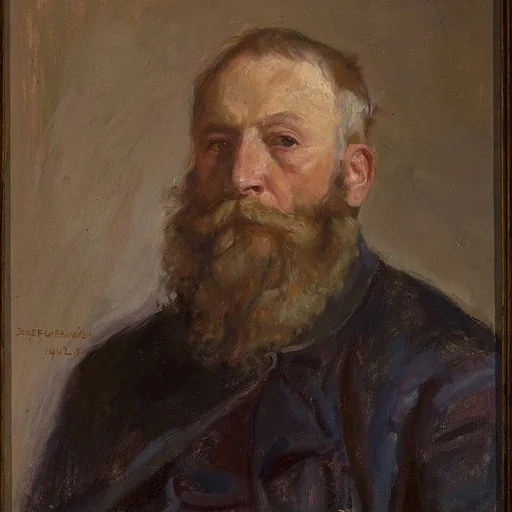
Józef Marian Chełmoński (7 November 1849 – 6 April 1914) was a Polish painter, known for his realistic paintings of landscapes, rural scenes and genre scenes presenting historical and social contexts of the late Romantic period in…