Artwork
Untitled
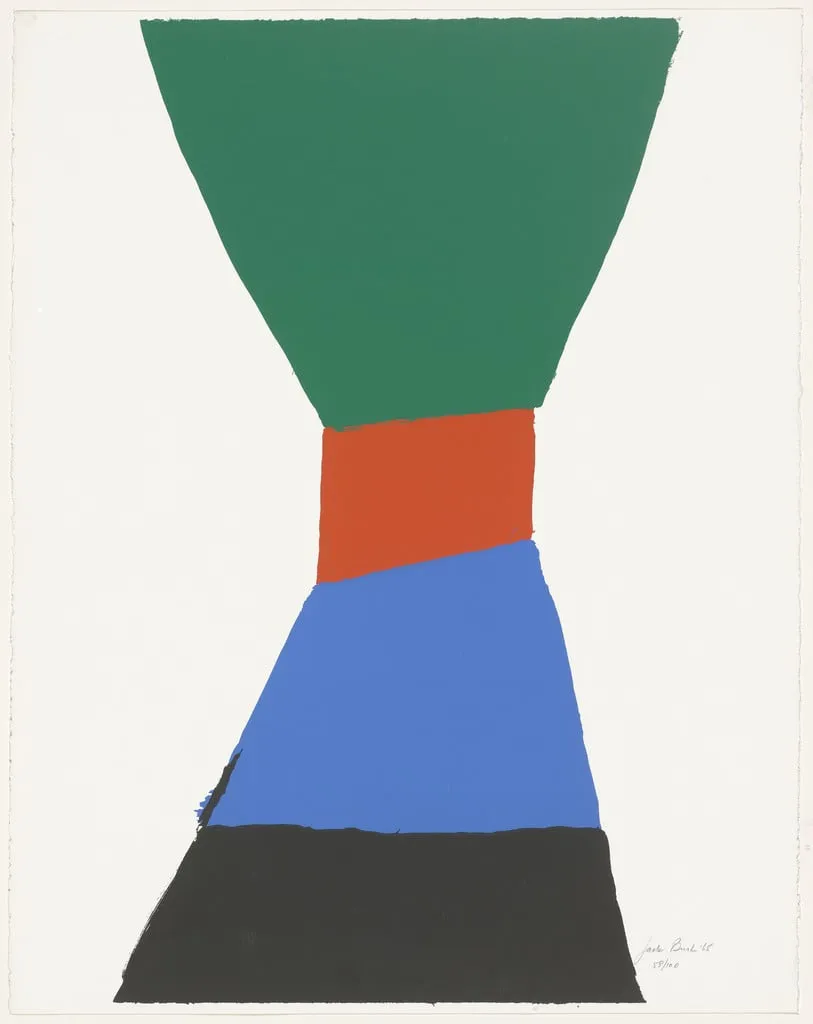
Untitled is an ink print by Jack Bush. It dates from 1962 and is held in the collection of the Museum of Modern Art.
About this work
That means the colors were pushed through a stencil onto paper, like a giant ink stamp.
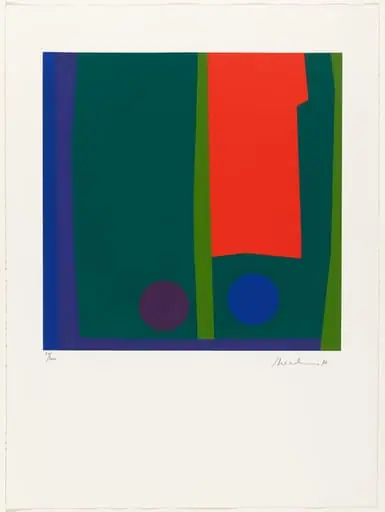
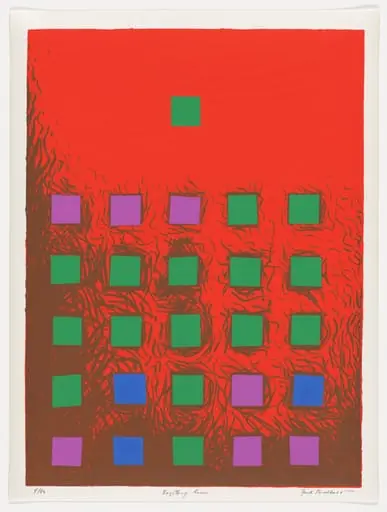
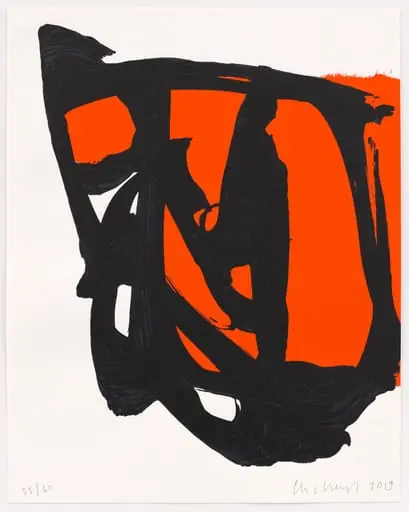
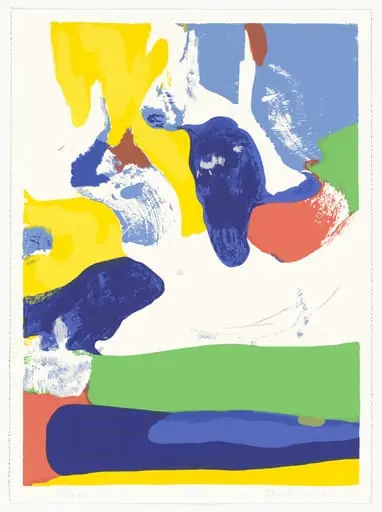
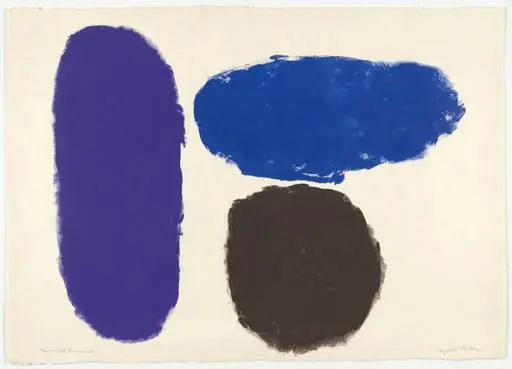
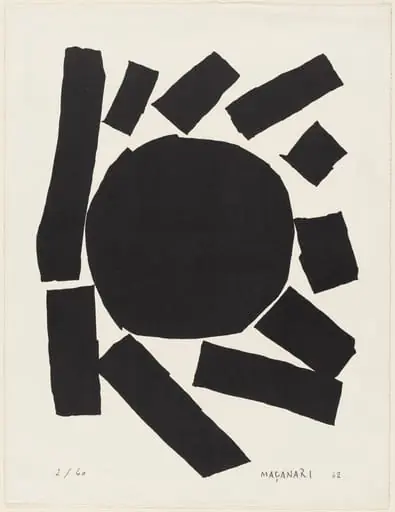
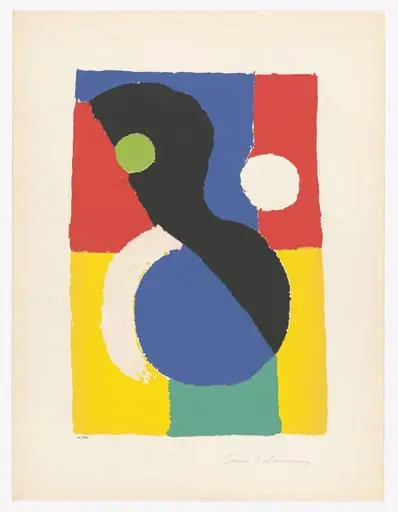
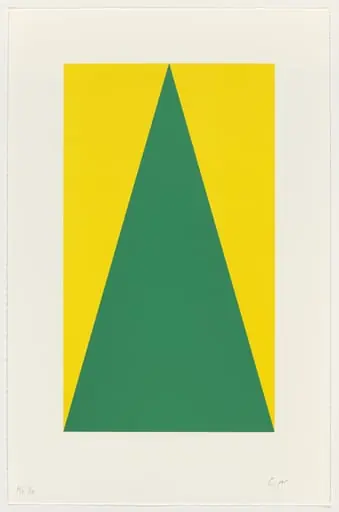
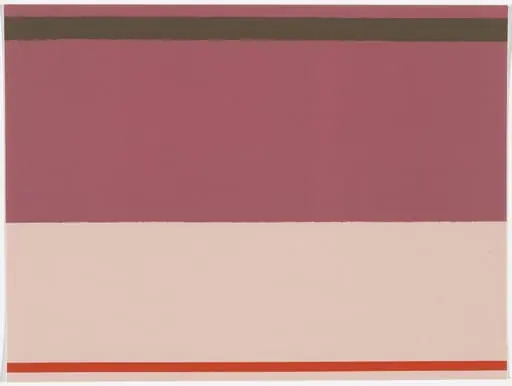
This painting is four big, flat colors stacked in a triangle. The top is green, then a red stripe, followed by blue, and the bottom is black. The edges are uneven, like someone cut the shape with scissors. The colors sit side by side without blending—no shadows or details, just bold blocks.
The artist used a screenprinting method to make this work. That means the colors were pushed through a stencil onto paper, like a giant ink stamp. The lines between colors are sharp, not fuzzy.
Look up Jack Bush next—he made this in 1962.
Overview
Created in 1962, this screenprint is one of five works in a limited portfolio by Canadian artist Jack Bush. Executed using the screenprinting technique, it features sharply defined areas of unblended color arranged in a triangular composition. The method allowed for precise, flat fields of pigment, aligning with Bush’s interest in non-representational form and the physical presence of color on the surface.
Subject & Meaning
The work avoids figurative reference, instead focusing on the emotional potential of color relationships. Stacked bands of green, red, blue, and black form a dynamic vertical structure, their abrupt edges suggesting deliberate, almost architectural placement. Bush sought to evoke feeling through hue and form rather than narrative, aligning with broader post-painterly ideals that prioritized sensory experience over symbolic content.
Technique & Style
Screenprinting enabled Bush to achieve clean, unmodulated color fields with crisp boundaries, a hallmark of his approach. Each hue was applied through a separate stencil, ensuring no blending or brushwork intervened. The irregular, hand-cut contours of the shapes introduce a subtle human hand to an otherwise impersonal process, distinguishing his work from purely mechanical abstraction.
History & Provenance
Produced in 1962, this print belongs to a small series commissioned during a period when Bush was deepening his engagement with American Color Field painting. Though primarily known as a painter, his foray into printmaking reflected broader artistic exchanges between Canadian and U.S. abstract circles. The portfolio was distributed through galleries associated with the Post-painterly movement, gaining attention among critics and collectors.
Context
Bush’s work emerged alongside the rise of Color Field painting in North America, influenced by artists like Helen Frankenthaler and Morris Louis, as well as the color harmonies of Henri Matisse. His approach diverged from the gestural intensity of Abstract Expressionism, favoring calm, expansive fields. Critic Clement Greenberg’s recognition of Bush as a 'supreme colorist' positioned him within a key lineage of mid-century abstraction focused on color’s intrinsic power.
Legacy
This print exemplifies Bush’s contribution to expanding the vocabulary of Canadian abstraction. By embracing screenprinting, he bridged fine art and reproductive techniques, challenging hierarchies between painting and print. His emphasis on color as emotional carrier influenced subsequent generations of Canadian artists exploring non-objective form, cementing his role in the country’s modernist trajectory.
Artist & collection
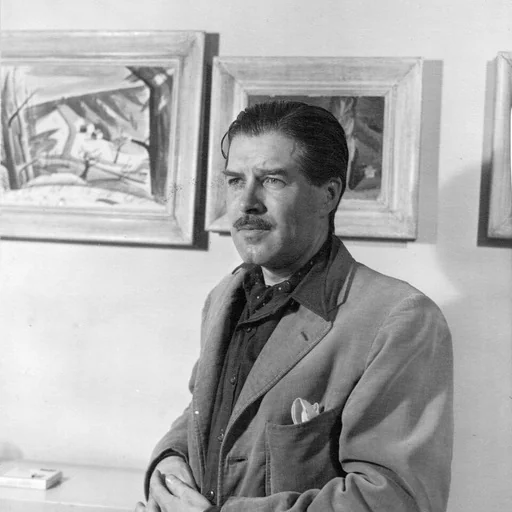
Artist
Jack Hamilton Bush (March 20, 1909 – January 24, 1977) was a Canadian abstract painter.