Artwork
Untitled
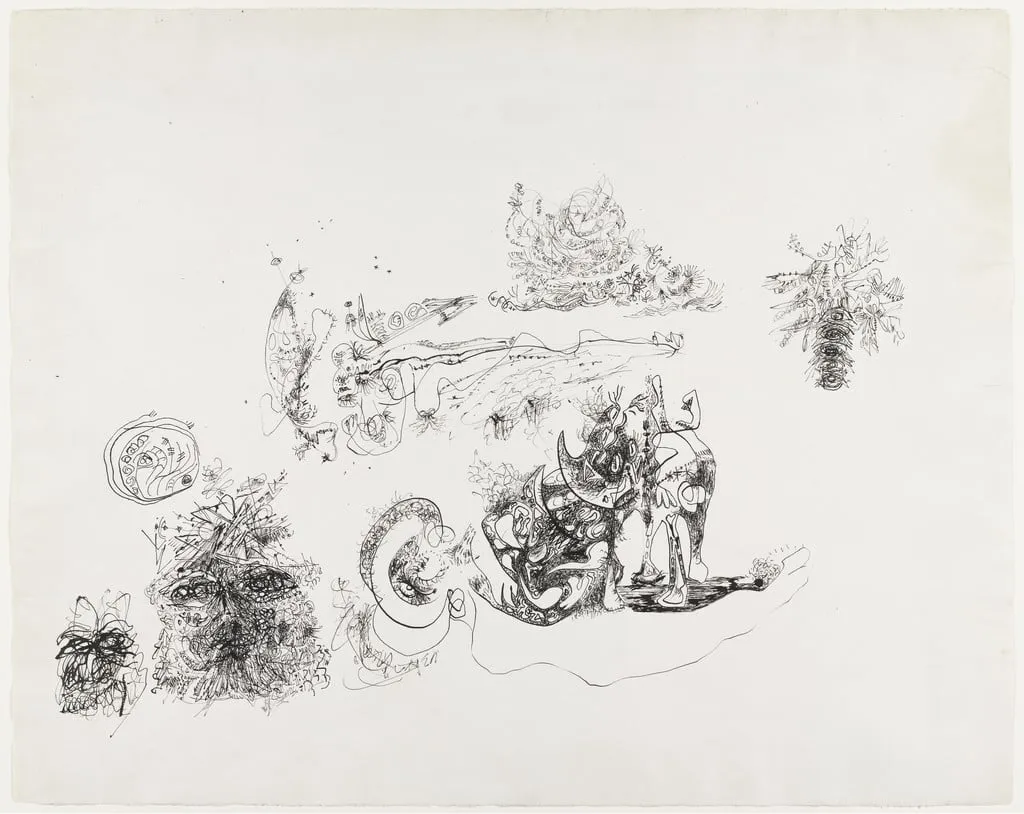
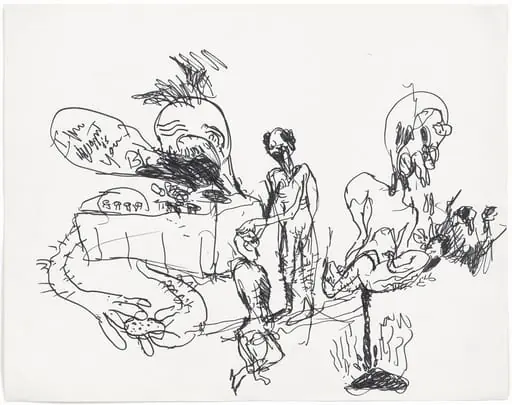
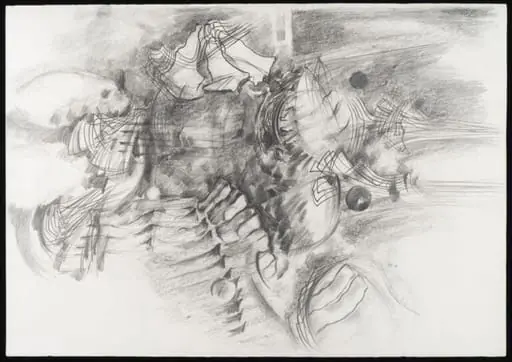
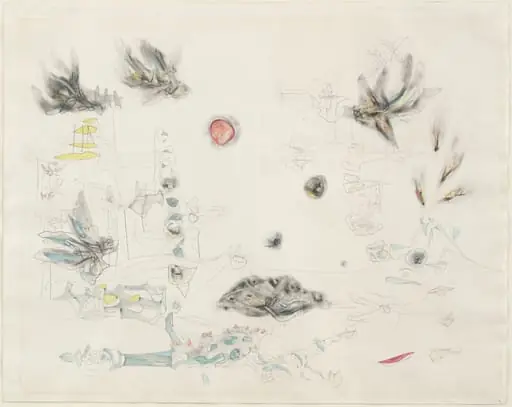
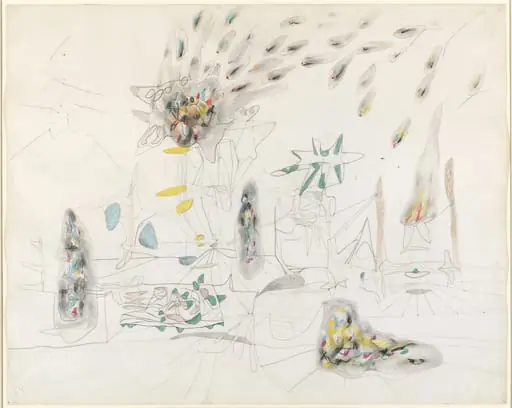
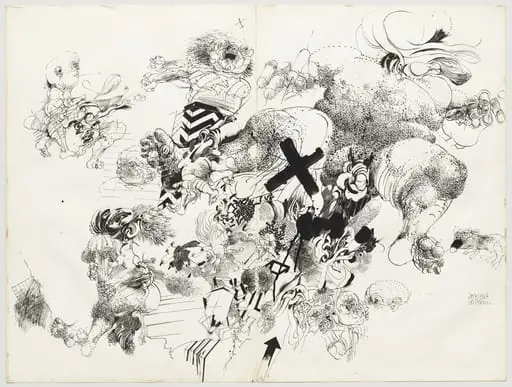
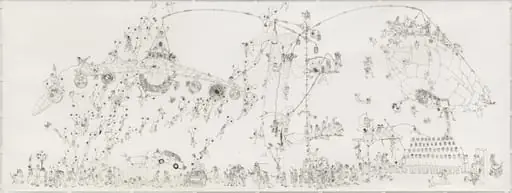
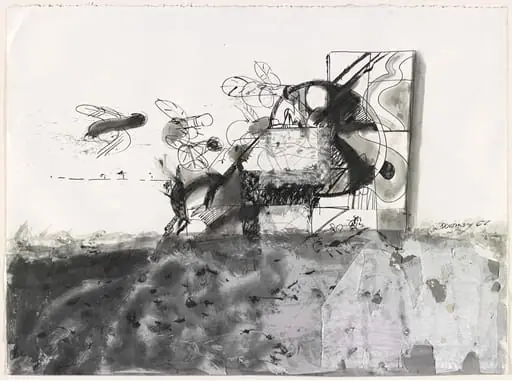
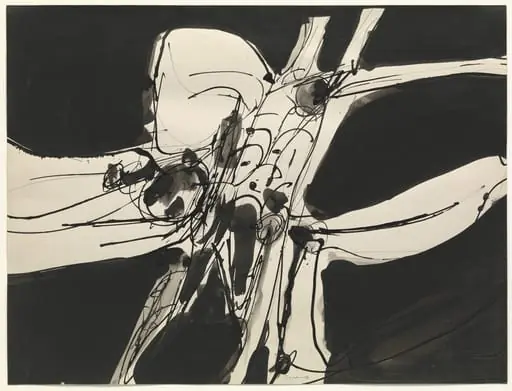
Untitled is an ink drawing by Jackson Pollock. It dates from 1944 and is held in the collection of the Museum of Modern Art.
About this work
Overview
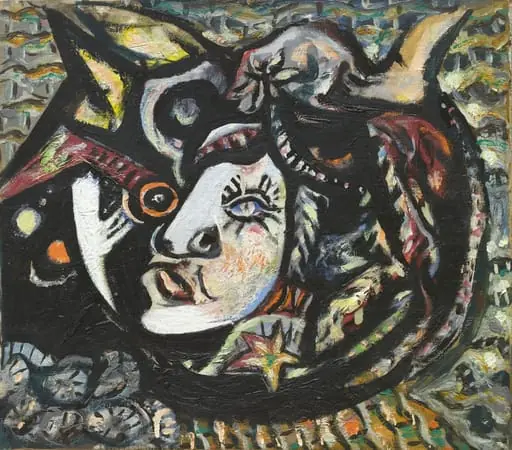
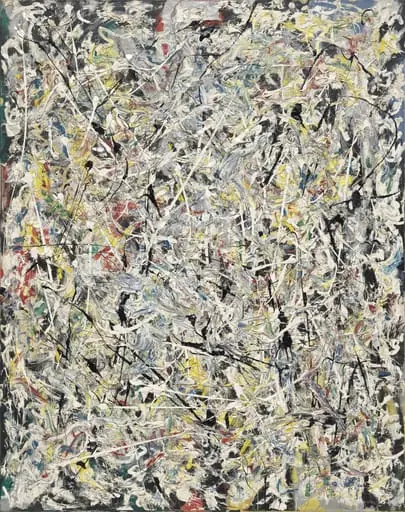
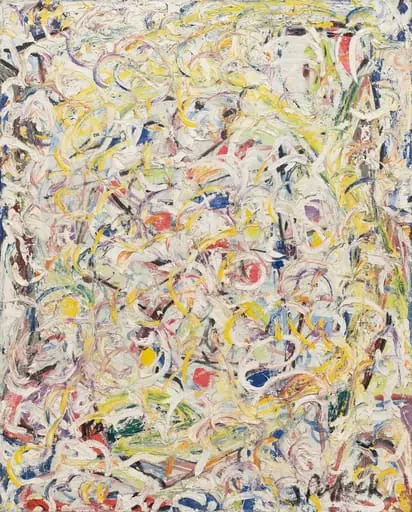
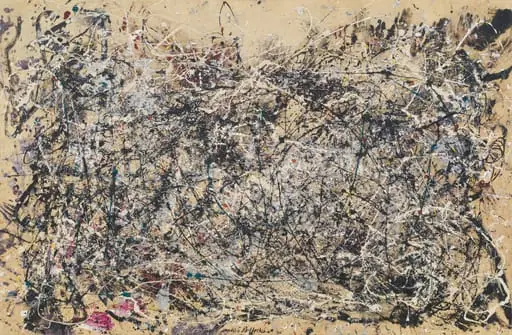
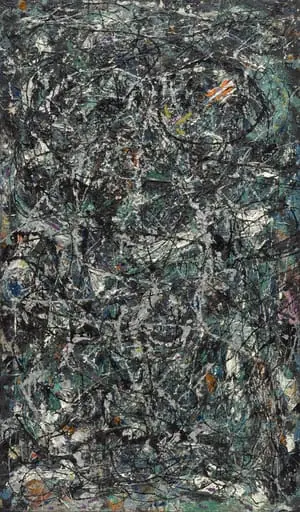
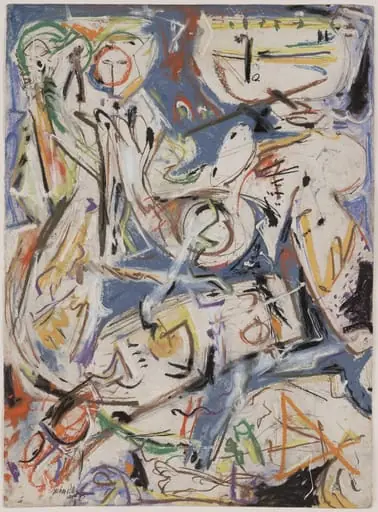
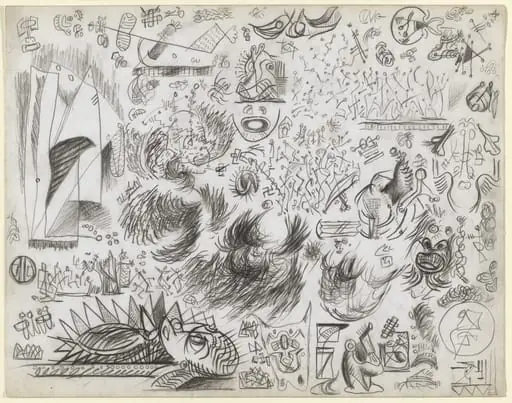
Created around 1944, this ink drawing on paper is an early example of Jackson Pollock’s move toward nonrepresentational mark-making. Unlike his later large-scale canvases, this work is intimate and spontaneous, executed with fluid, uncontrolled gestures. The medium allowed for rapid experimentation, revealing the physicality of his process before he fully transitioned to enamel paints on canvas.
Subject & Meaning
The drawing resists clear narrative or symbolic interpretation. Tangled lines and ambiguous forms suggest organic growth or fleeting impressions—perhaps hints of figures, flora, or creatures—but no coherent subject emerges. Pollock’s focus was not on depiction but on the act of creation itself, allowing subconscious impulses to guide the hand without premeditation.
Technique & Style
Ink was applied with swift, layered strokes, some dense and saturated, others faint and ghosted, indicating repeated passes and shifting pressure. The lines intersect unpredictably, creating a dense network across the paper. This all-over composition, devoid of focal point or hierarchy, reflects Pollock’s emerging method: painting as embodied motion rather than controlled design.
History & Provenance
This work belongs to Pollock’s formative period, made before his 1947 breakthrough with poured paint. It was likely kept in his studio as a study or sketch, not intended for public display. Its survival offers insight into his transition from figurative symbolism to pure abstraction, documenting the evolution of his signature approach.
Context
In the early 1940s, Pollock was influenced by Surrealist automatism and Native American sand painting, both of which emphasized intuitive gesture. This drawing aligns with broader postwar artistic shifts away from traditional composition toward process-driven expression, reflecting a cultural moment that valued raw, unfiltered creativity.
Legacy
Though modest in scale, this drawing anticipates the principles that defined Pollock’s mature work: the rejection of the brush, the embrace of chance, and the elevation of movement as content. It stands as a quiet precursor to his revolutionary drip paintings, illustrating how his radical style emerged through incremental, experimental practice.
Artist & collection

Artist
Paul Jackson Pollock (; January 28, 1912 – August 11, 1956) was an American painter.