Artwork
A Dancing Couple of Peasants
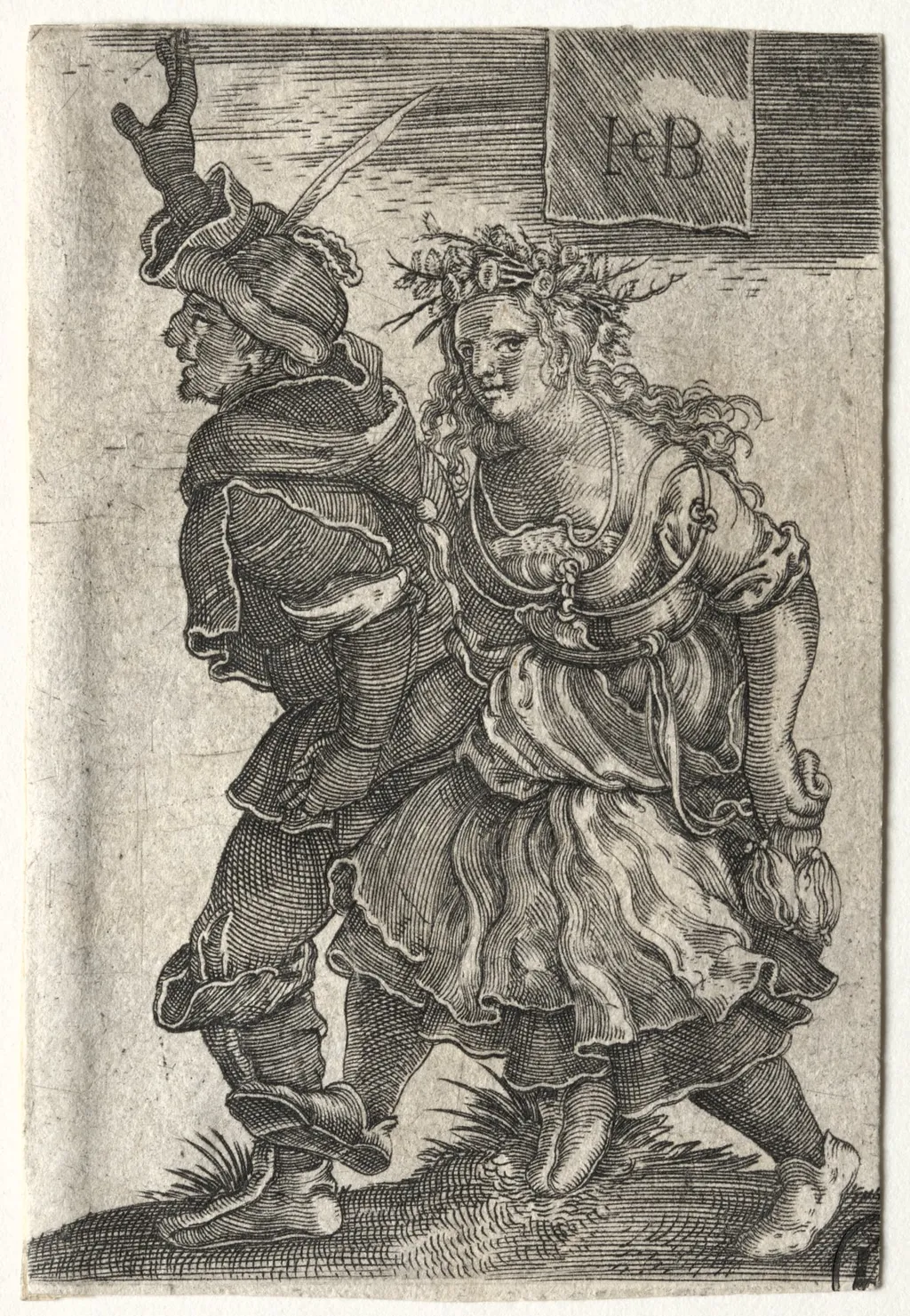
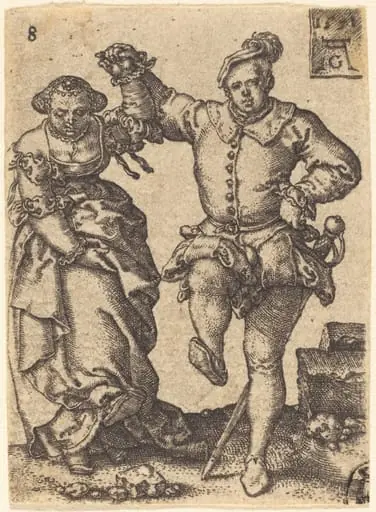
A Dancing Couple of Peasants is a print by Jacob Binck. It dates from 1544 and is held in the collection of the Cleveland Museum of Art.
About this work
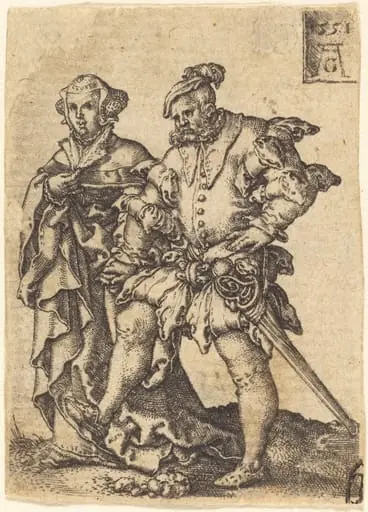
The man, dressed in a hat and a ruffled shirt, is holding a sword in his right hand and appears to be dancing with a woman.
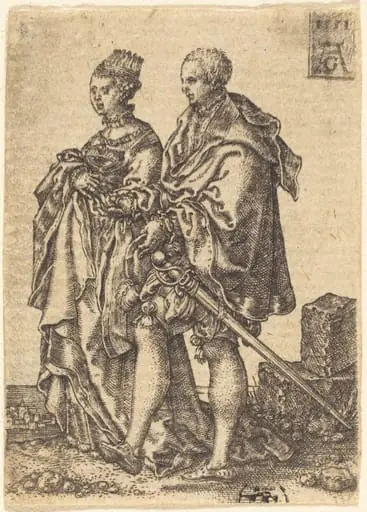
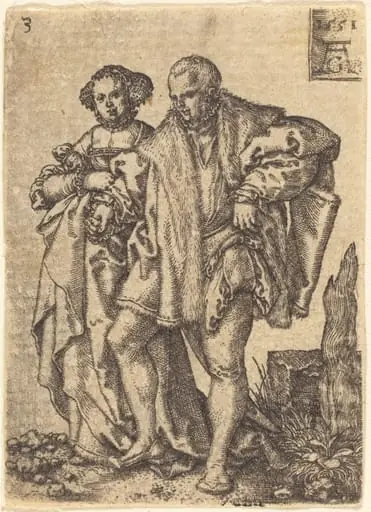
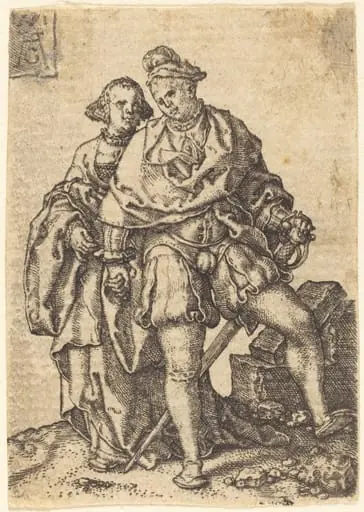
This painting depicts a lively scene of a dancing couple of peasants. The man, dressed in a hat and a ruffled shirt, is holding a sword in his right hand and appears to be dancing with a woman. The woman, adorned with a flower crown, is wearing a long dress and has a bag slung over her shoulder.
The couple is set against a plain background, which allows the viewer to focus on their dynamic movement and interaction. The artist's use of bold lines and expressive brushstrokes adds to the sense of energy and joy in the scene.
For more information on the artist behind this lively depiction, look up Jacob Binck (German, 1500–1569).
Overview
A Dancing Couple of Peasants, a print by Jacob Binck, dates to circa 1544 and is part of The Cleveland Museum of Art's collection.
Subject & Meaning
The print portrays a lively scene of a peasant couple dancing together. The man, wearing a hat and ruffled shirt, holds a sword in his right hand, while the woman, with a flower crown and long dress, has a bag over her shoulder. Their dynamic interaction conveys a sense of energy and joy.
Technique & Style
Binck employed bold lines and expressive brushstrokes to emphasize the couple's movement, set against a plain background that directs focus to the figures.
History & Provenance
Created around 1544 by German artist Jacob Binck (1500–1569), the work's provenance is currently documented as being held by The Cleveland Museum of Art.
Artist & collection

Artist
Jakob Binck was a German engraver, etcher, painter, medalist, copyist and art dealer.