Artwork
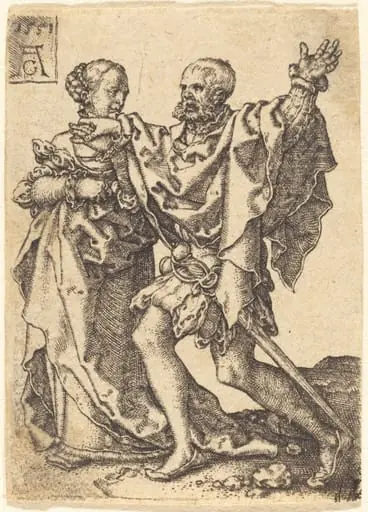
Dancing Couple
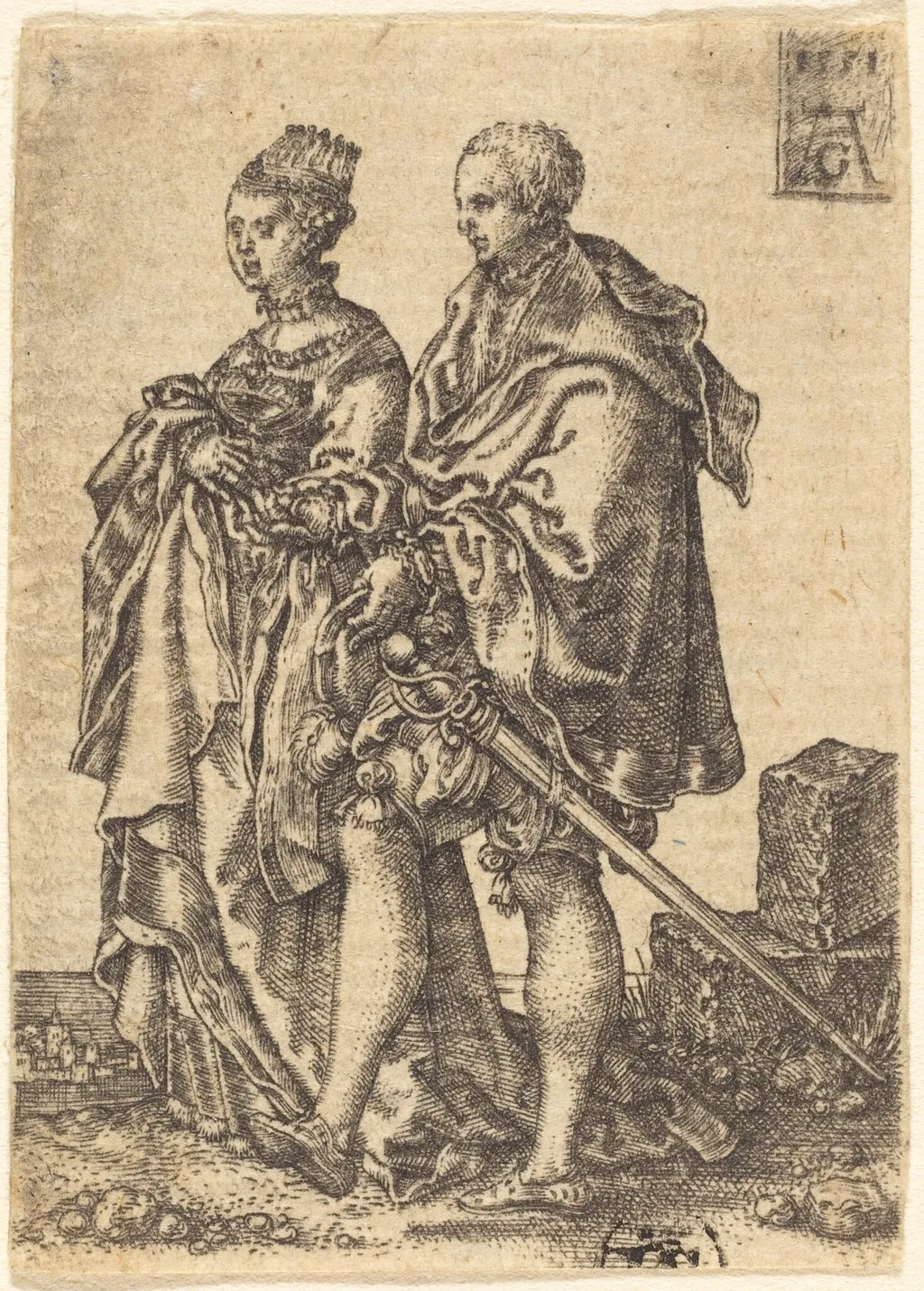
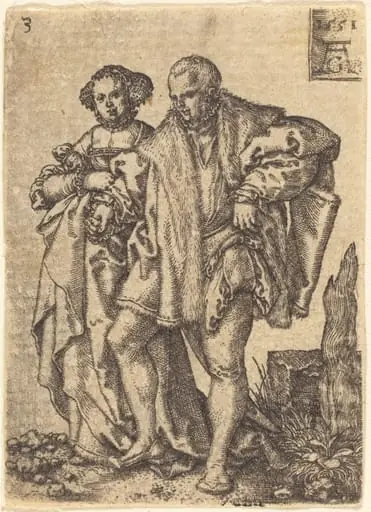
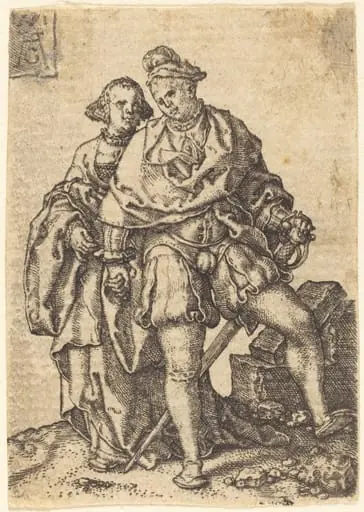
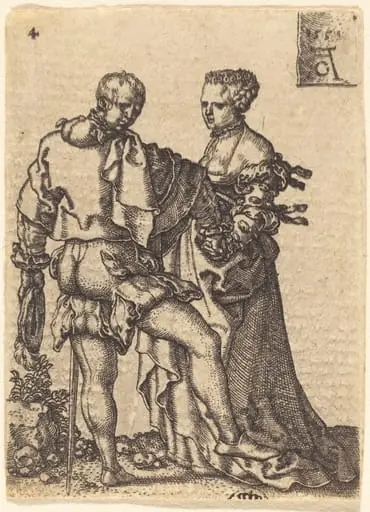
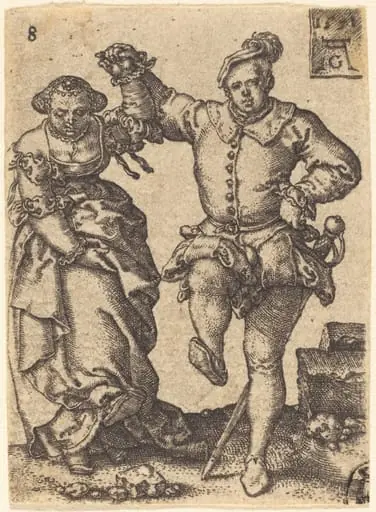
Dancing Couple is an ink print by the Northern Renaissance artist Heinrich Aldegrever. It dates from 1551 and is held in the collection of the National Gallery of Art.
About this work
Overview
Created in 1551 by the German artist Heinrich Aldegrever, this engraving captures a pair of figures in a formal dance.
Created in 1551 by the German artist Heinrich Aldegrever, this engraving captures a pair of figures in a formal dance. As a member of the Little Masters, Aldegrever focused on small-scale, finely detailed prints. The work exemplifies his mastery of line and texture, rendered in monochrome with meticulous precision. Its intimate scale and intricate execution reflect the Northern Renaissance tradition of intimate, hand-held imagery.
Subject & Meaning
The scene portrays a man and woman engaged in a courtly dance, their postures suggesting grace and social ritual. Their elaborate attire—her ruffled collar and trailing gown, his draped cloak and walking stick—indicates aristocratic status. The closeness of their bodies and the gesture of her hand on his arm imply a moment of refined intimacy, likely reflecting contemporary ideals of elegance and decorum in noble social gatherings.
Technique & Style
Aldegrever employed fine, controlled engraving lines to build form and texture, using cross-hatching to model fabric and create depth. The dense network of intersecting strokes renders the folds of clothing with a tactile, almost sculptural quality. His technique avoids broad tonal areas, relying instead on the rhythm and density of lines to suggest light, shadow, and material variation, a hallmark of his precise, miniature approach to printmaking.
History & Provenance
Produced during the height of Aldegrever’s career in Westphalia, the print circulated among collectors and artisans in Northern Europe. As a member of the Little Masters, he contributed to a market for small, affordable engravings that appealed to educated urban audiences. While its early ownership is undocumented, its survival in museum collections attests to its enduring value as an example of mid-16th-century German graphic art.
Context
Aldegrever worked in the shadow of Dürer’s legacy, adapting his precision to smaller, more domestic subjects. This engraving reflects the continued interest in secular themes among Northern Renaissance artists, even as religious imagery remained dominant. The dance motif connects to broader European traditions of courtly entertainment, while the detailed costume reflects contemporary fashion and social hierarchy in mid-century German-speaking regions.
Legacy
Though Aldegrever’s reputation faded after his death, his engravings like this one preserved a record of Renaissance social life through technical excellence. Later collectors and artists studied his line work as a model of controlled draftsmanship. Today, the print remains a reference point for understanding the evolution of printmaking beyond large-scale compositions, highlighting the artistic potential of the miniature format.
Artist & collection

Artist
Heinrich Aldegrever or Aldegraf was a German painter and engraver. He was one of the "Little Masters", the group of German artists making small old master prints in the generation after Albrecht Dürer.