Artwork
The nativity
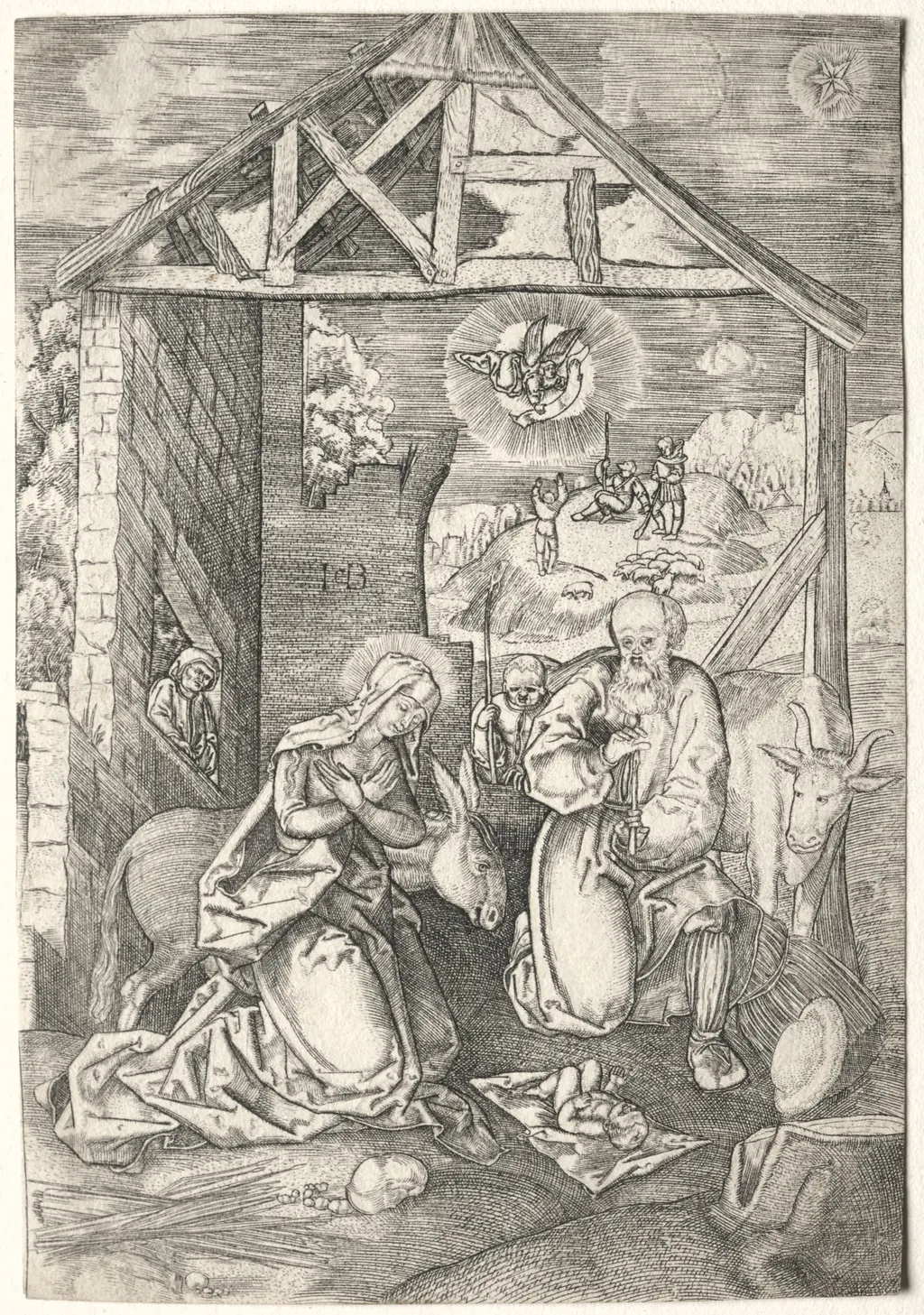
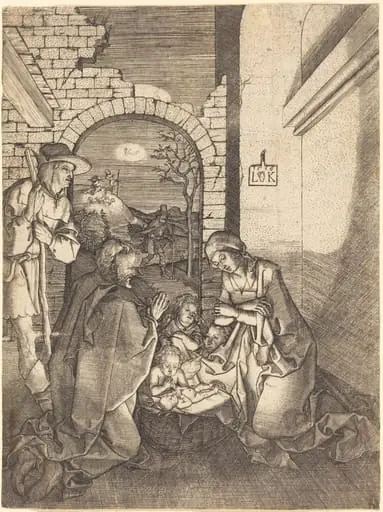
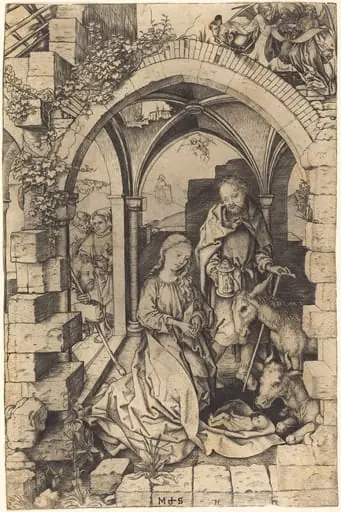
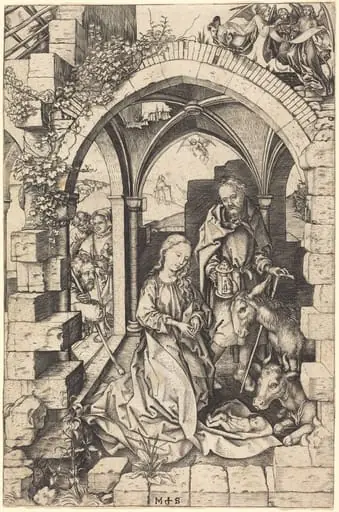
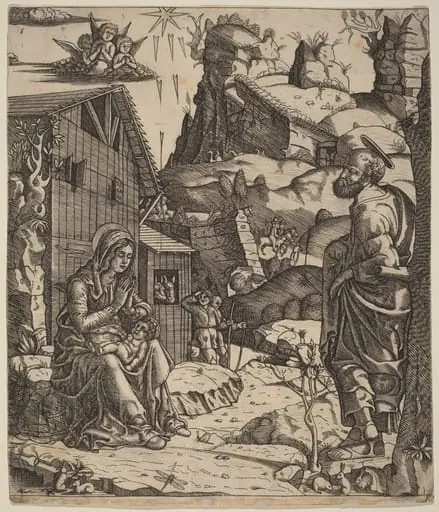
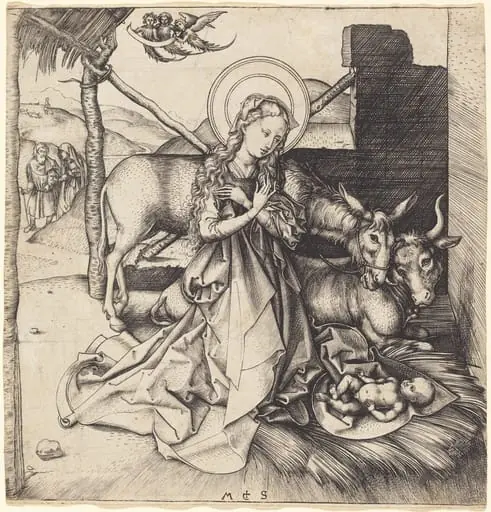
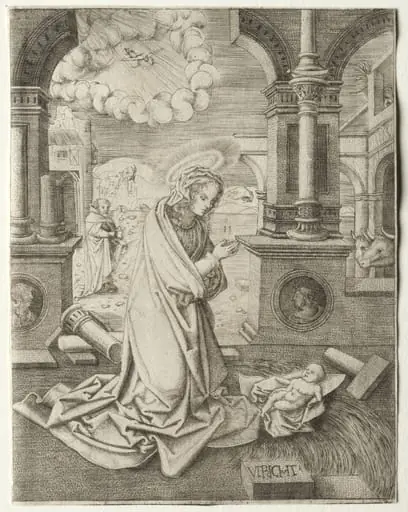
The nativity is a print by Jacob Binck. It dates from 1544 and is held in the collection of the Cleveland Museum of Art.
About this work
Overview
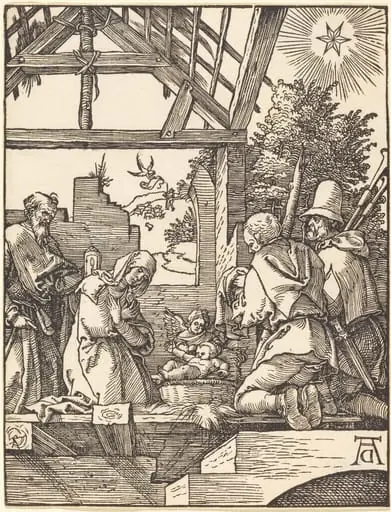
Created around 1544, this woodcut by Jacob Binck depicts the Nativity as a quiet, intimate moment within a rustic wooden stable. The composition centers on the infant Jesus lying in a manger, surrounded by figures in subdued stillness. The print is part of the collection at The Cleveland Museum of Art, where it is recognized for its early use of dramatic lighting to guide the viewer’s focus.
Subject & Meaning
Distant shepherds and angels suggest divine revelation unfolding beyond the immediate space, reinforcing the sacred nature of the event.
The scene portrays the birth of Christ with minimal symbolism, emphasizing humility and solitude. The kneeling woman, likely Mary, gazes at the sleeping child, while Joseph stands nearby with a staff, a sign of his protective role. Animals near the manger reflect traditional Nativity iconography. Distant shepherds and angels suggest divine revelation unfolding beyond the immediate space, reinforcing the sacred nature of the event.
Technique & Style
Binck employed chiaroscuro through bold contrasts of deep shadow and sharp light to isolate key figures and heighten emotional resonance. The light source, implied to emanate from above, illuminates the infant and his caregivers while leaving surrounding areas in relative darkness. This technique, common in Northern Renaissance printmaking, enhances spatial depth and directs attention without elaborate detail.
History & Provenance
The print was produced in the mid-16th century during a period of religious upheaval in Europe. Though few of Binck’s prints survive, this example remained in private collections before entering The Cleveland Museum of Art’s holdings. Its preservation reflects its value as a rare instance of Germanic printmaking focused on devotional themes during the Reformation era.
Context
Produced amid the Protestant Reformation, the image avoids overt Catholic iconography, favoring simplicity over grandeur. This aligns with emerging Protestant ideals that emphasized personal devotion and scriptural truth. The modest setting and restrained figures reflect a shift toward intimate, accessible religious imagery, suitable for private contemplation rather than public display.
Legacy
Binck’s Nativity stands as a quiet example of Northern Renaissance printmaking that prioritized emotional clarity over spectacle. While not widely reproduced, it influenced later devotional prints through its use of light and spatial economy. Its survival offers insight into how religious narratives were adapted for domestic use during a time of profound theological change.
Artist & collection

Artist
Jakob Binck was a German engraver, etcher, painter, medalist, copyist and art dealer.