Artwork
Fish still life
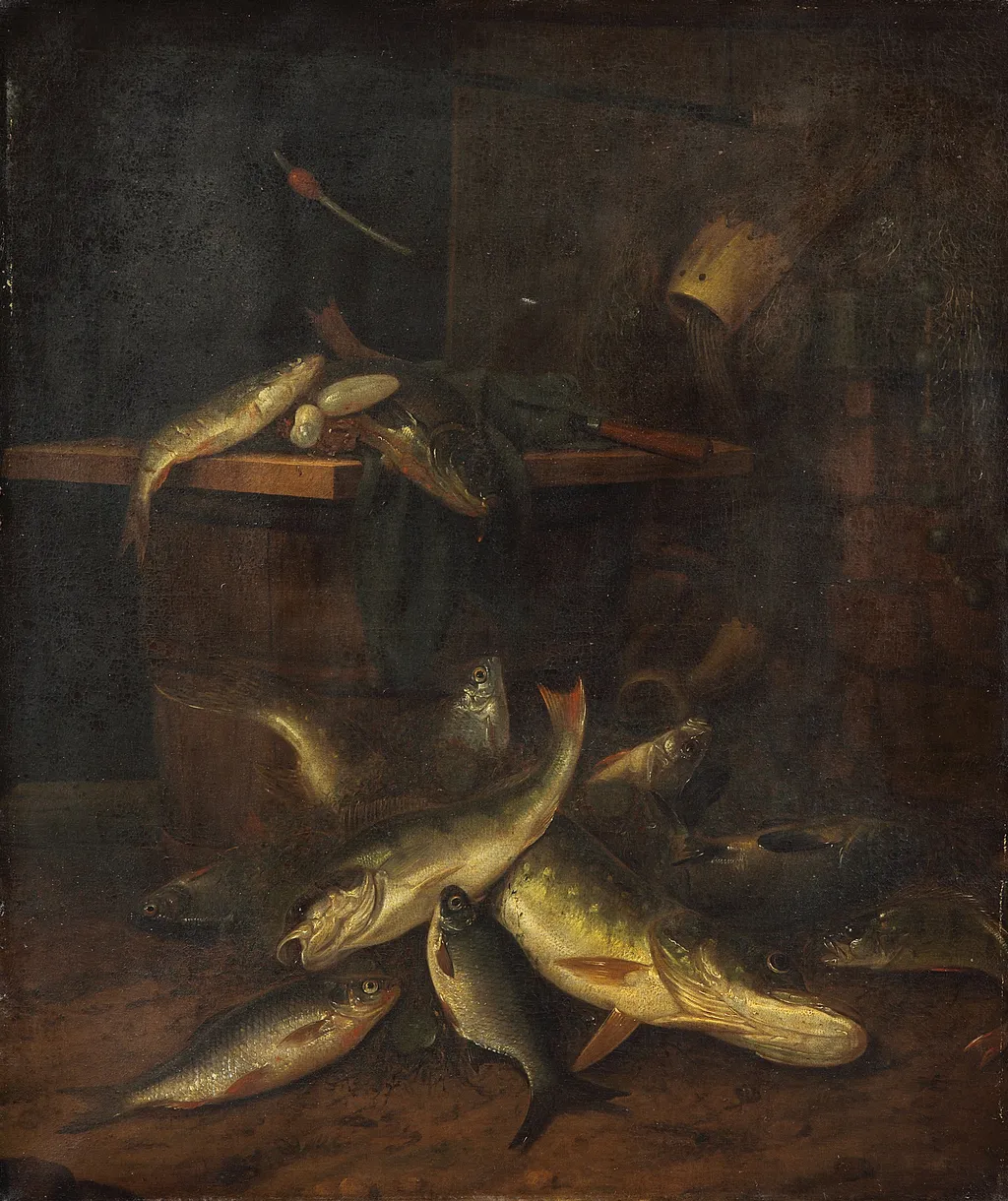
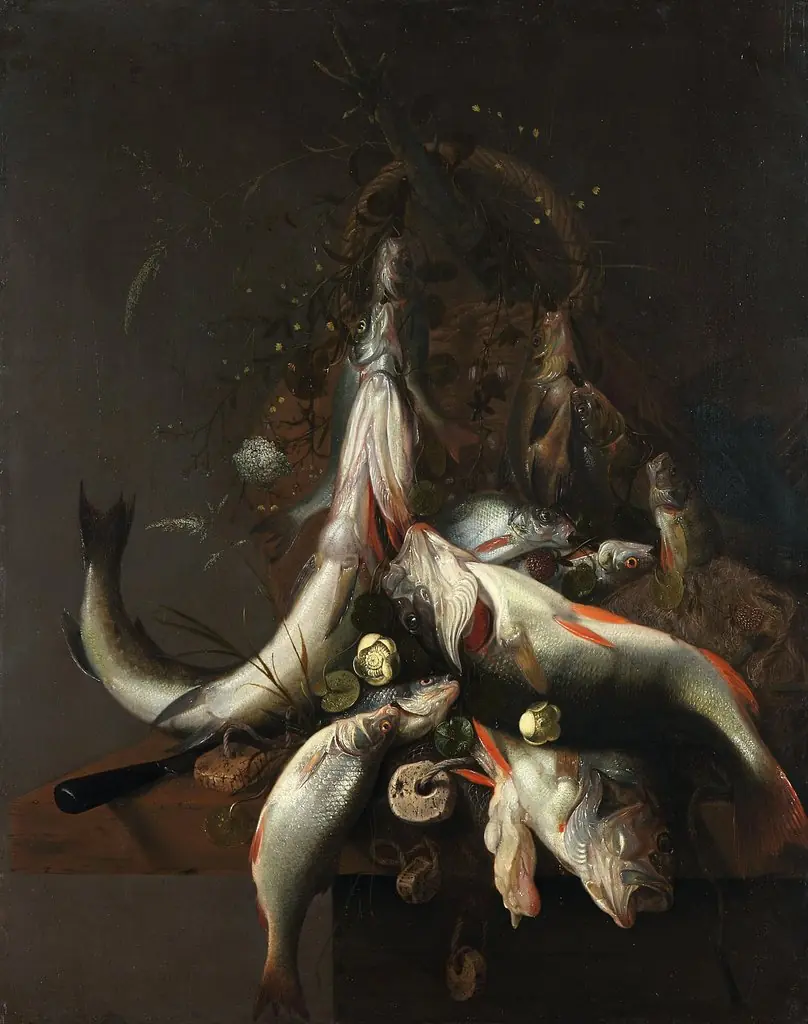
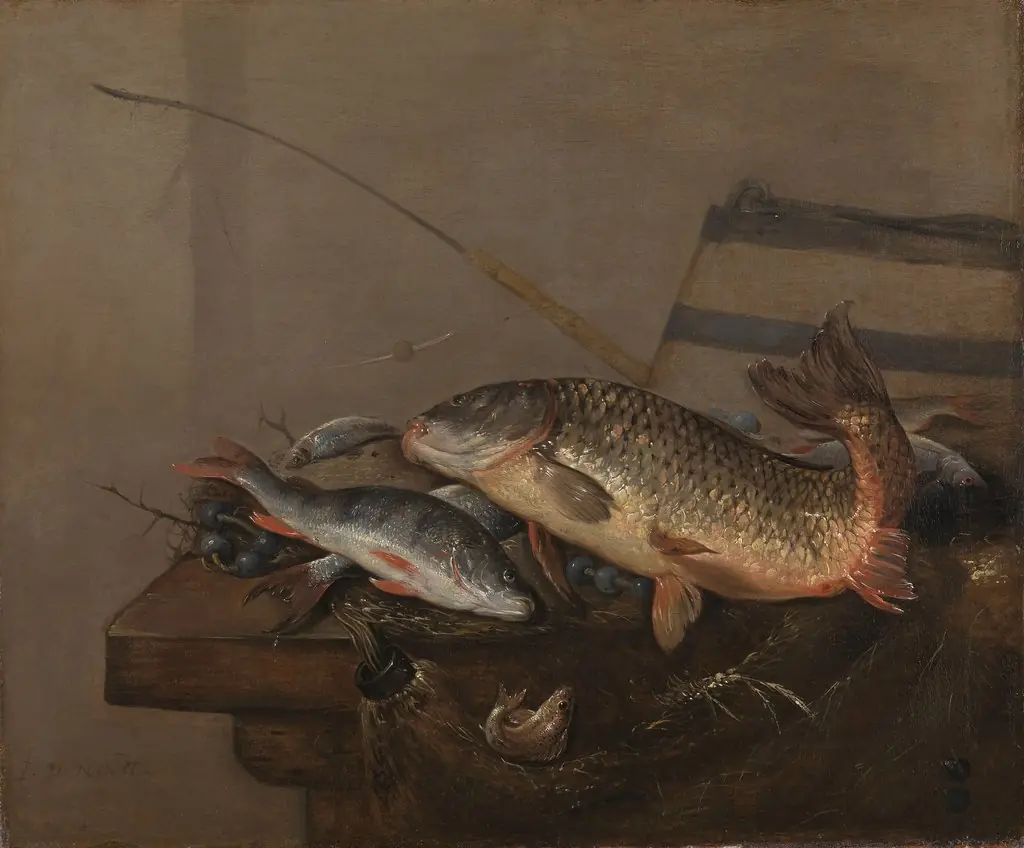
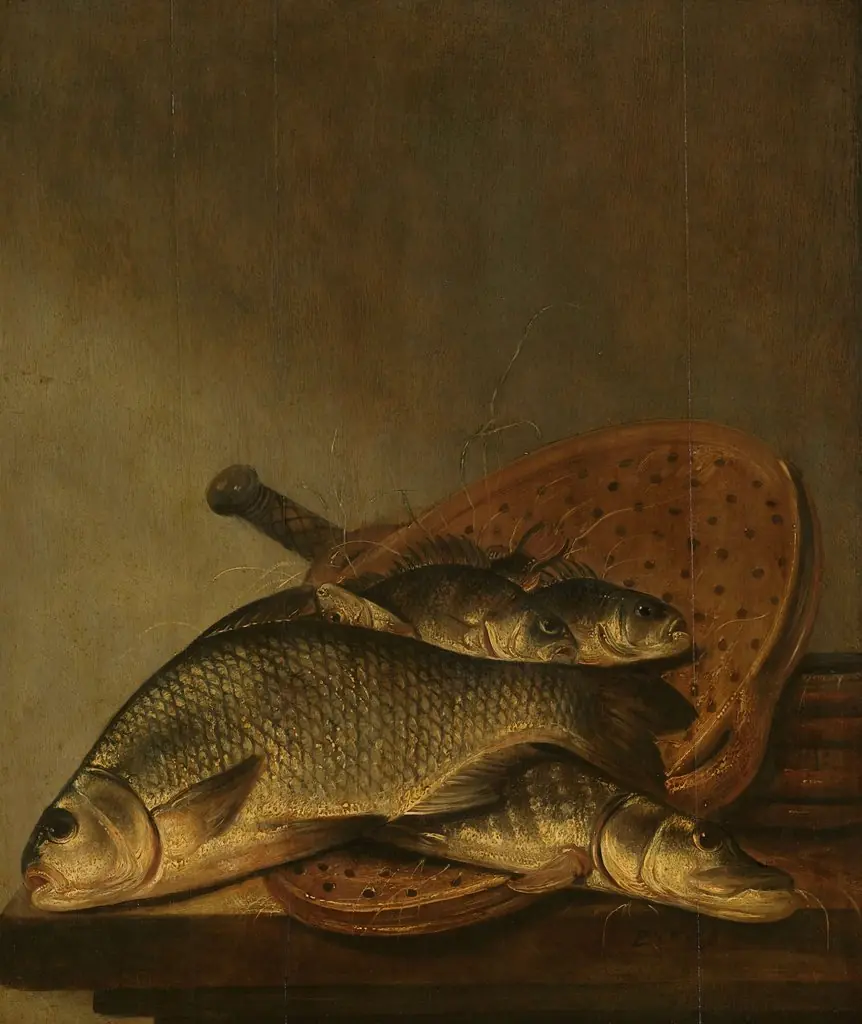
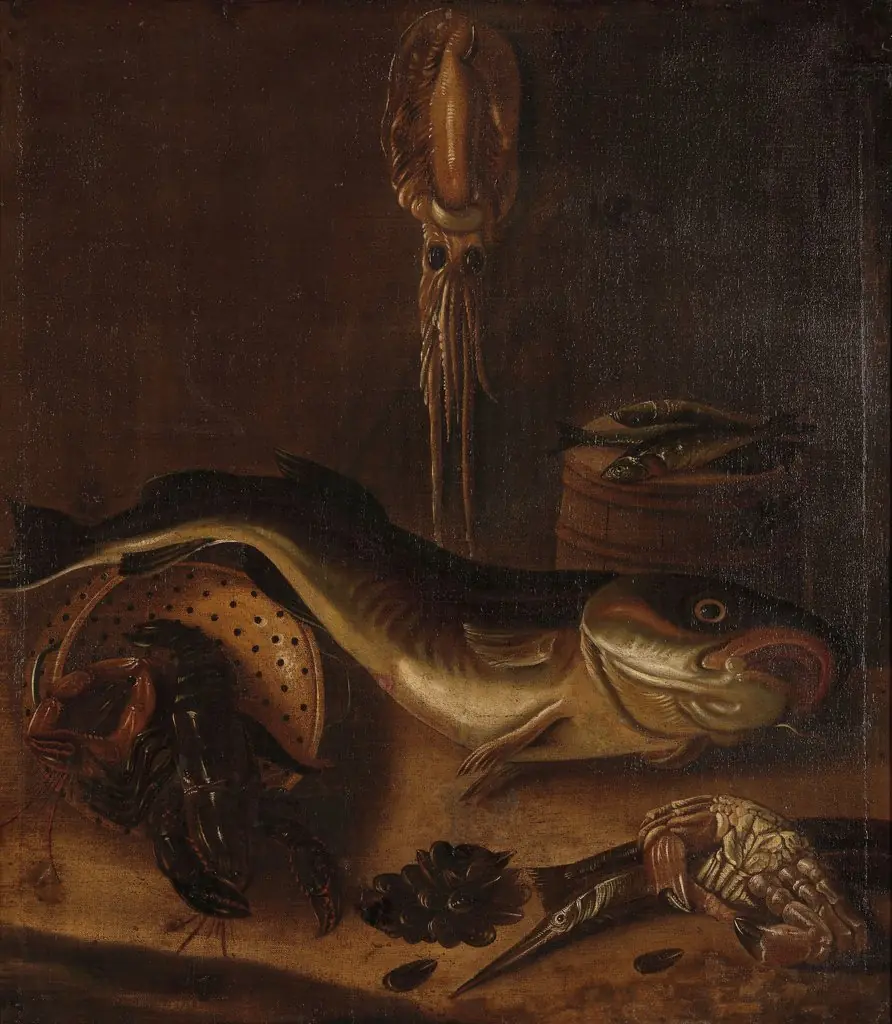
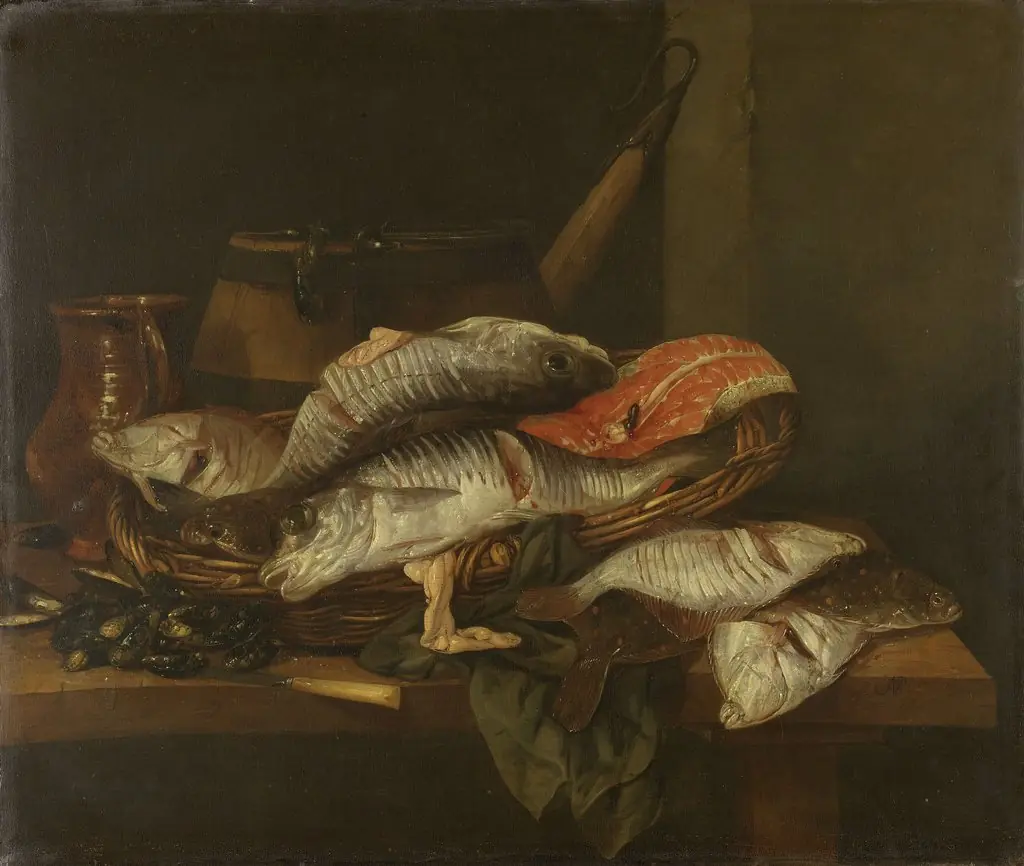
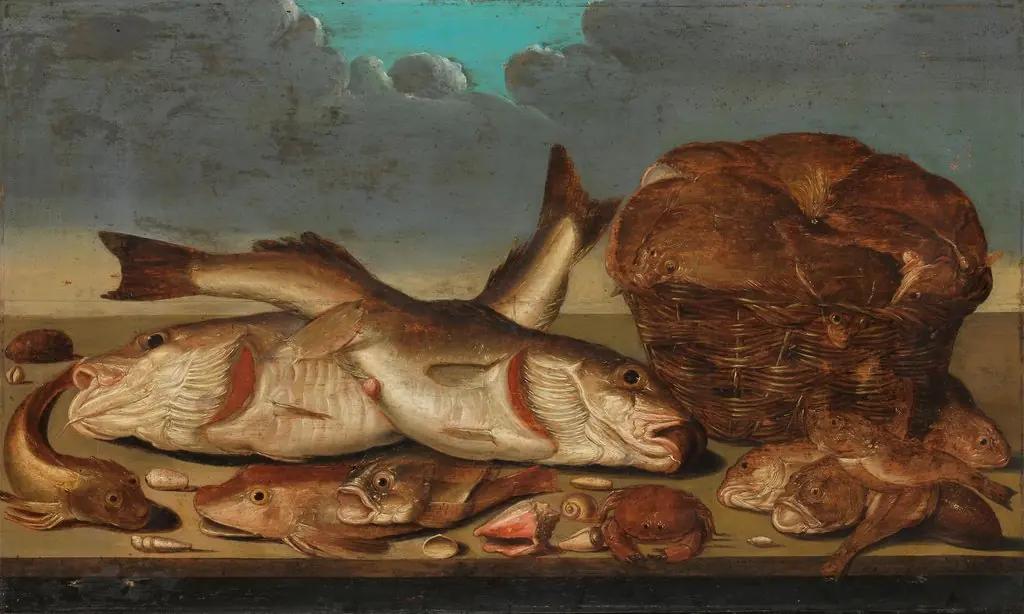
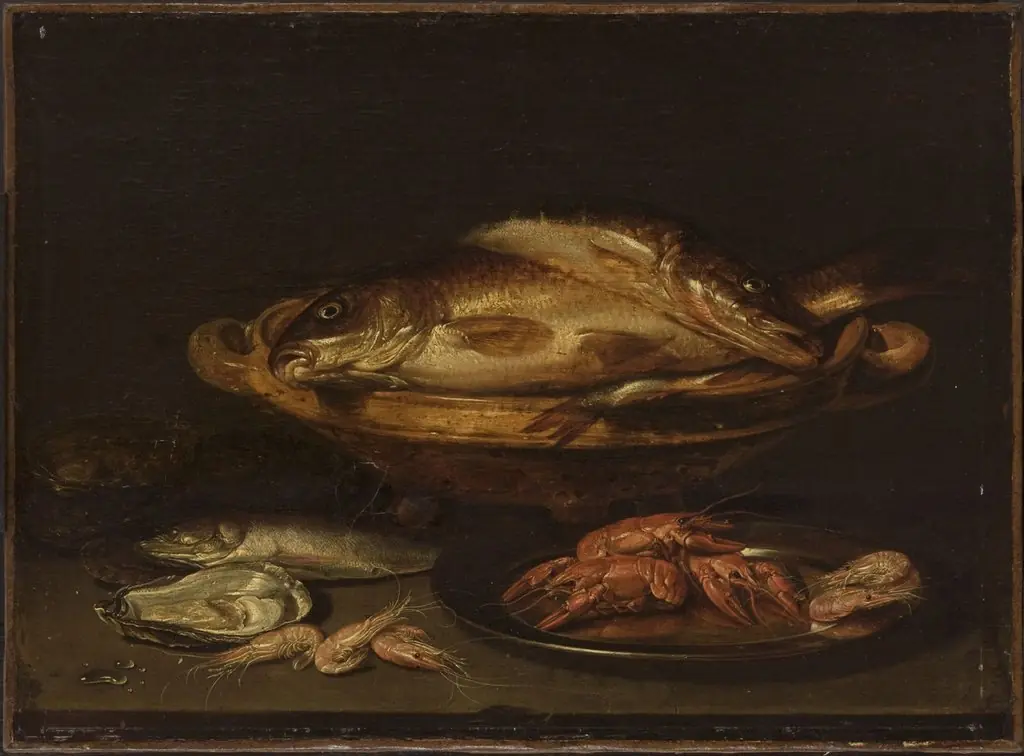
Fish still life is a paint painting by the Dutch Golden Age artist Jacob Gillig. It dates from 1668 and is held in the collection of the Gemäldegalerie Berlin.
About this work
Overview
Fish still life, painted in 1668 by Jacob Gillig, is a representative work of the Dutch Golden Age still life tradition, focusing on marine subjects.
Subject & Meaning
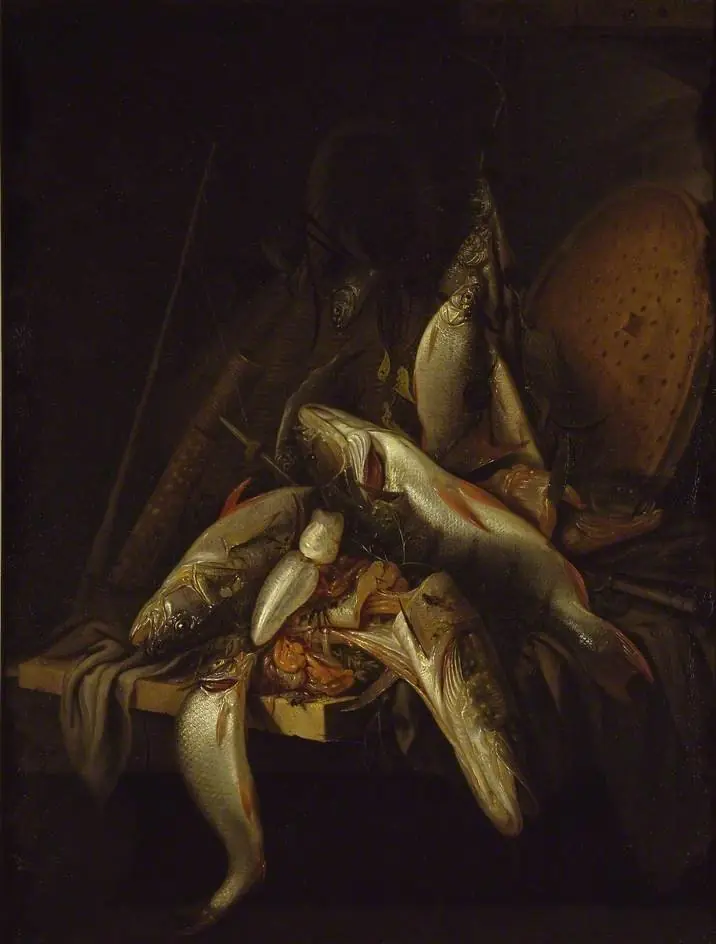
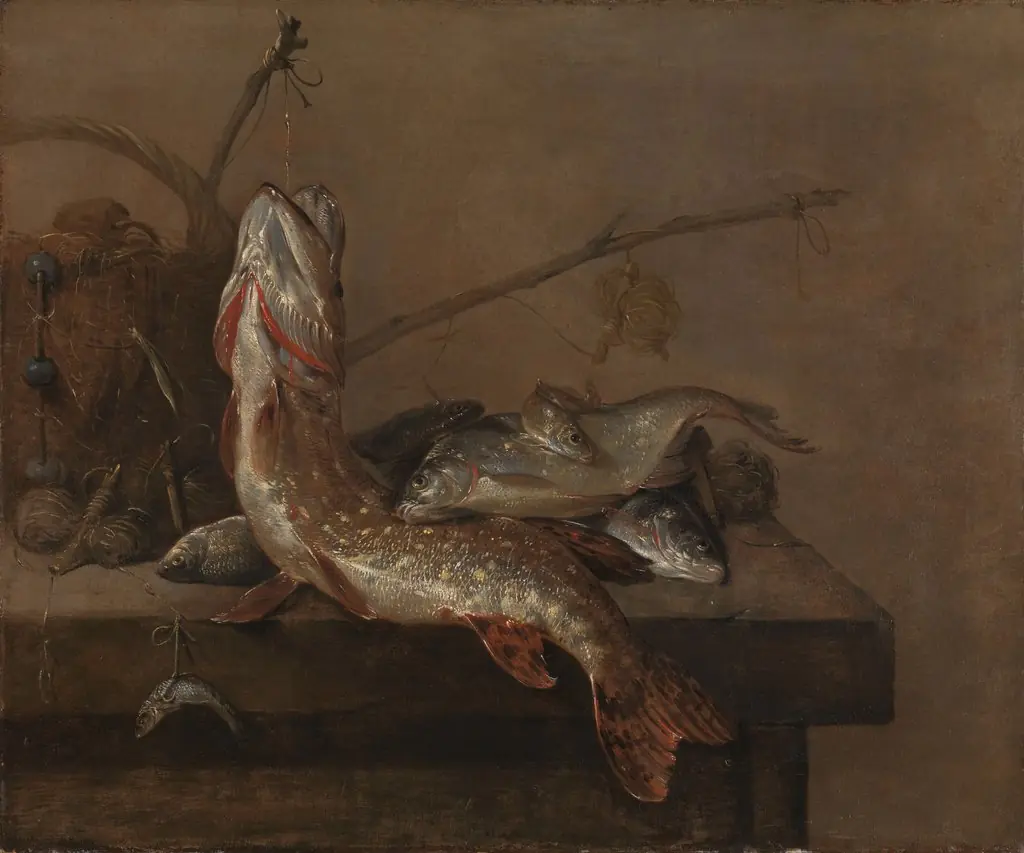
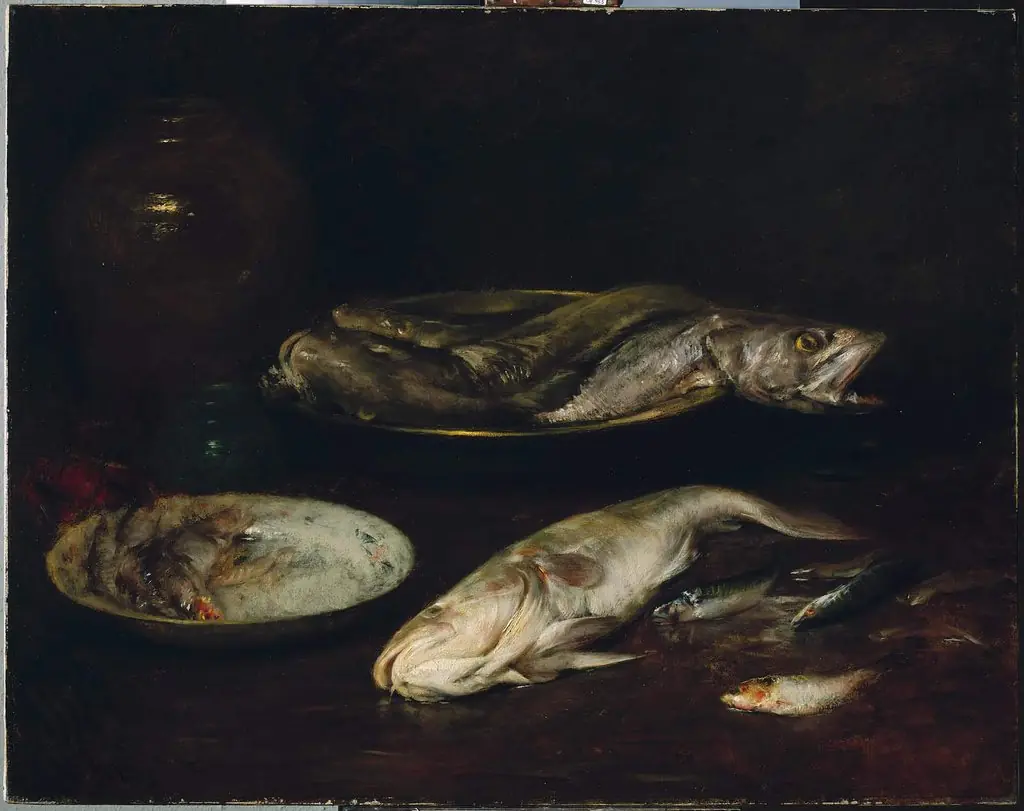
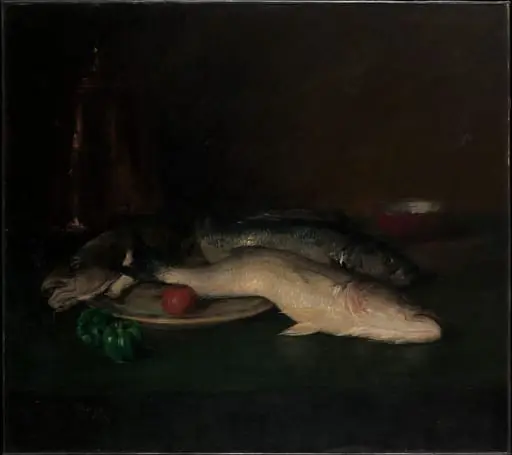
The painting depicts a heap of freshly caught fish on a dark, rough surface, with some stacked on a wooden stick and others entangled. The arrangement and use of chiaroscuro may symbolize the transience of life, a common theme in Dutch still lifes, while also highlighting the artist's observation of everyday market fare.
Technique & Style
Gillig employed strong chiaroscuro to achieve a sense of depth and realism. The contrast between the dark background and the shiny, light-reflecting scales of the fish creates a three-dimensional effect, with varied lighting on the scales enhancing their natural appearance.
History & Provenance
Created in 1668 by Jacob Gillig, a part-time painter who also worked as a merchant and later a prison warden in Utrecht. The painting's subject matter may have been influenced by the city's nearby fish market.
Context
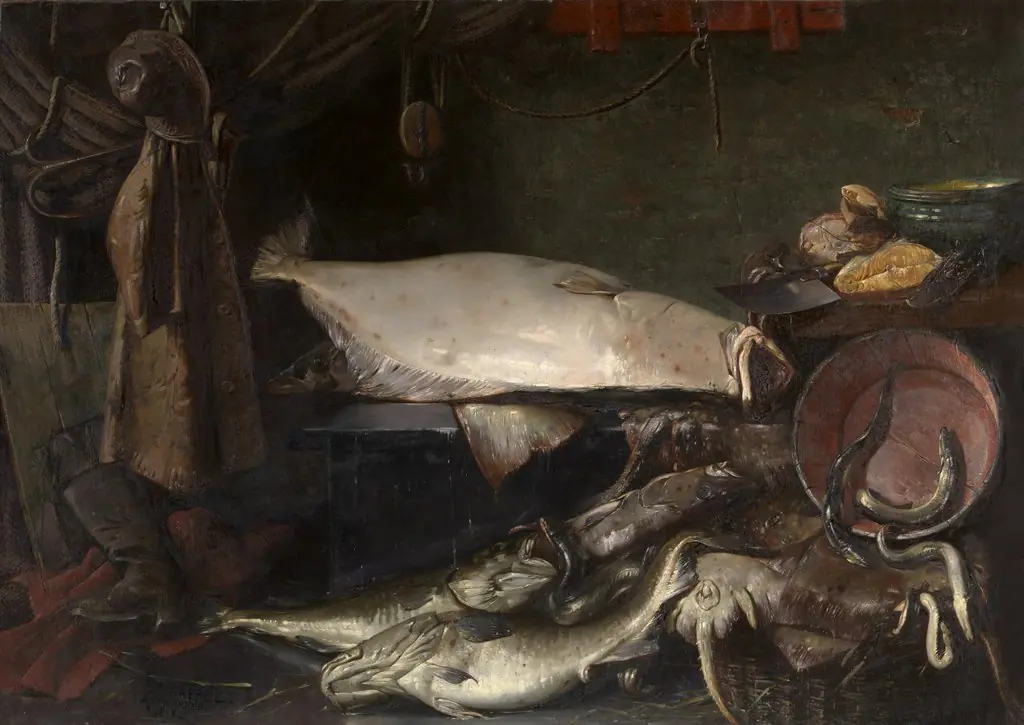
This work aligns with the Dutch Golden Age's still life tradition, characterized by detailed, realistic depictions of everyday subjects. Gillig's focus on fish reflects the cultural and economic significance of the fishing industry in 17th-century Netherlands.
Legacy
While specific impact on later artists is not well-documented, Gillig's *Fish still life* contributes to the broader legacy of Dutch Golden Age still life painting, influencing subsequent generations of artists in their approach to lighting, texture, and everyday subjects.
Artist & collection
Artist
Jacob Gillig (also spelled Jakob or Gellig; ca. 1636 – 24 July 1701) was a Dutch Golden Age painter of still lifes, usually of fish. Although he produced several portraits, it is for painting fish that he is best known.…