Artwork
Eleazar and Rebecca at the Well
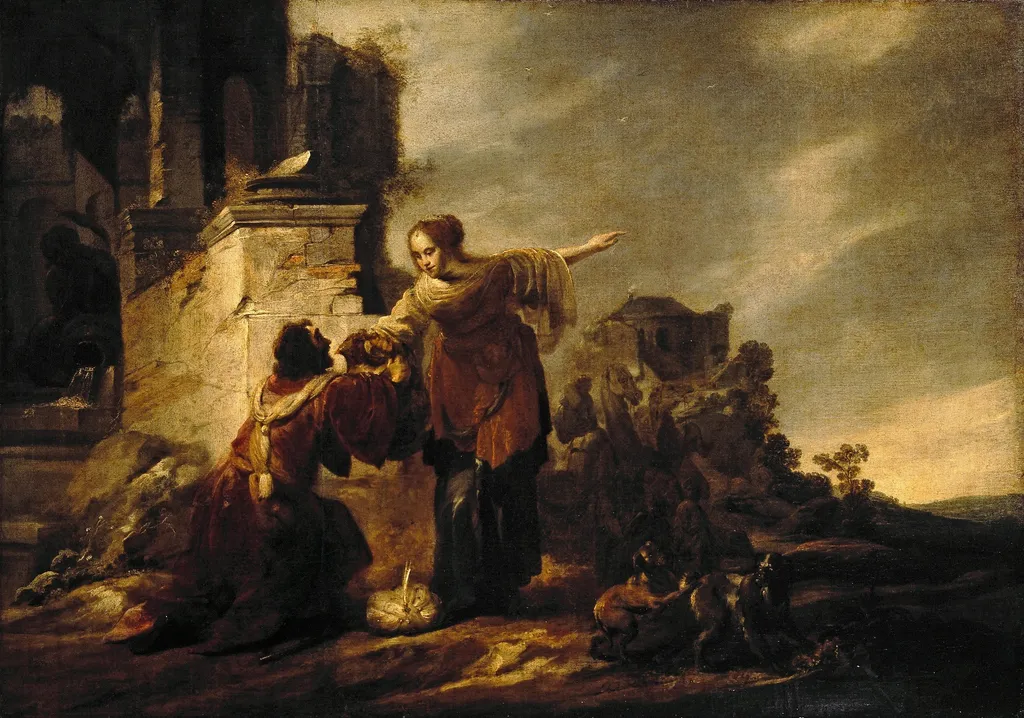
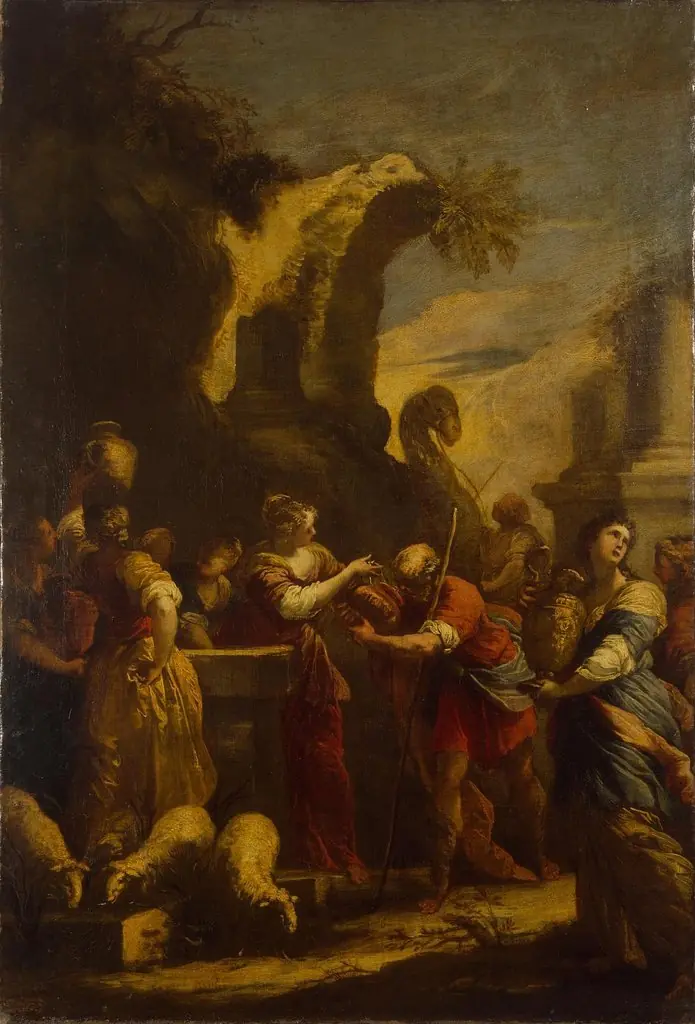
Eleazar and Rebecca at the Well is an oil painting by the Dutch Golden Age artist Jacob Hogers. It is held in the collection of the Hermitage Museum.
About this work
Overview
Its composition reflects Dutch Golden Age conventions in narrative painting, though Hogers is not among the period’s most widely documented artists.
Painted in 1655 by Jacob Hogers, this oil-on-canvas work depicts a biblical scene from Genesis involving Eleazar and Rebecca at a well. The painting is part of the State Hermitage Museum’s collection in Saint Petersburg, where it has been held since at least the 19th century. Its composition reflects Dutch Golden Age conventions in narrative painting, though Hogers is not among the period’s most widely documented artists.
Subject & Meaning
The scene illustrates the moment when Abraham’s servant, Eleazar, meets Rebecca, who offers water to him and his camels—a sign she is chosen as Isaac’s bride. Hogers emphasizes Rebecca’s act of kindness and the quiet gravity of divine providence. The well serves as both literal and symbolic threshold, marking the transition from uncertainty to covenant.
Technique & Style
Hogers employs a restrained palette and careful modeling of light to define figures against a muted landscape. The figures are arranged with deliberate stillness, avoiding theatricality. Brushwork is precise but unobtrusive, prioritizing clarity of narrative over expressive flourish. The composition follows a horizontal axis, guiding the viewer’s eye from the servant to the well and then to Rebecca.
History & Provenance
The painting entered the Hermitage collection in the 19th century, likely acquired during a period of expanded European art acquisitions by the Russian imperial court. Prior to this, its ownership history is undocumented. It has remained in the museum’s permanent holdings since, with no record of significant restoration or public exhibition beyond routine display.
Context
Created during the Dutch Golden Age, the painting aligns with a broader trend of biblical scenes rendered in domestic, everyday settings. While Hogers was not a major figure in Amsterdam’s art market, his work reflects the influence of artists like Rembrandt and Gerrit van Honthorst, who popularized intimate, emotionally grounded religious narratives for private collectors.
Legacy
Jacob Hogers’s painting remains a modest example of 17th-century Dutch biblical illustration. It contributes to the understanding of lesser-known artists who worked within established iconographic traditions. Though not widely studied, it offers insight into how regional painters interpreted sacred texts for a Protestant audience seeking moral clarity through visual storytelling.
Own this work as a print
Artist & collection

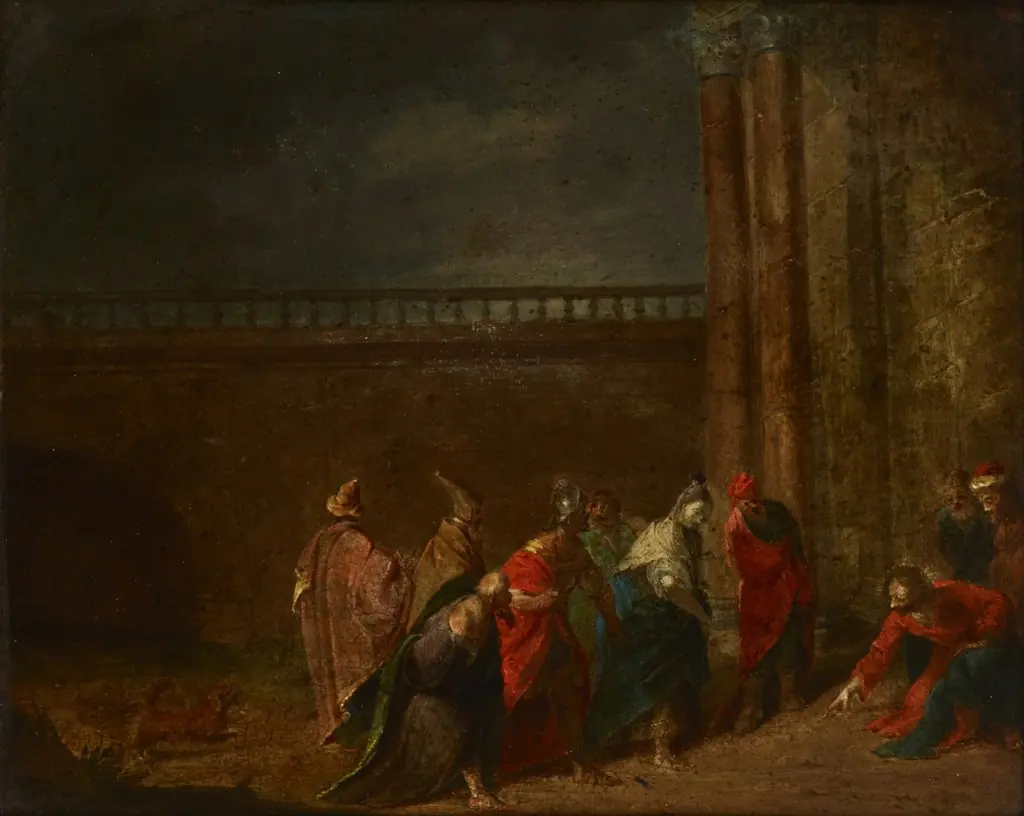 Christ and the Woman Cught in Adultery with Pharisees
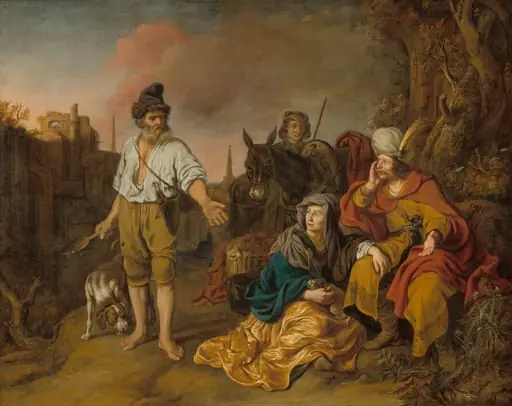 The Levite at Gibeah
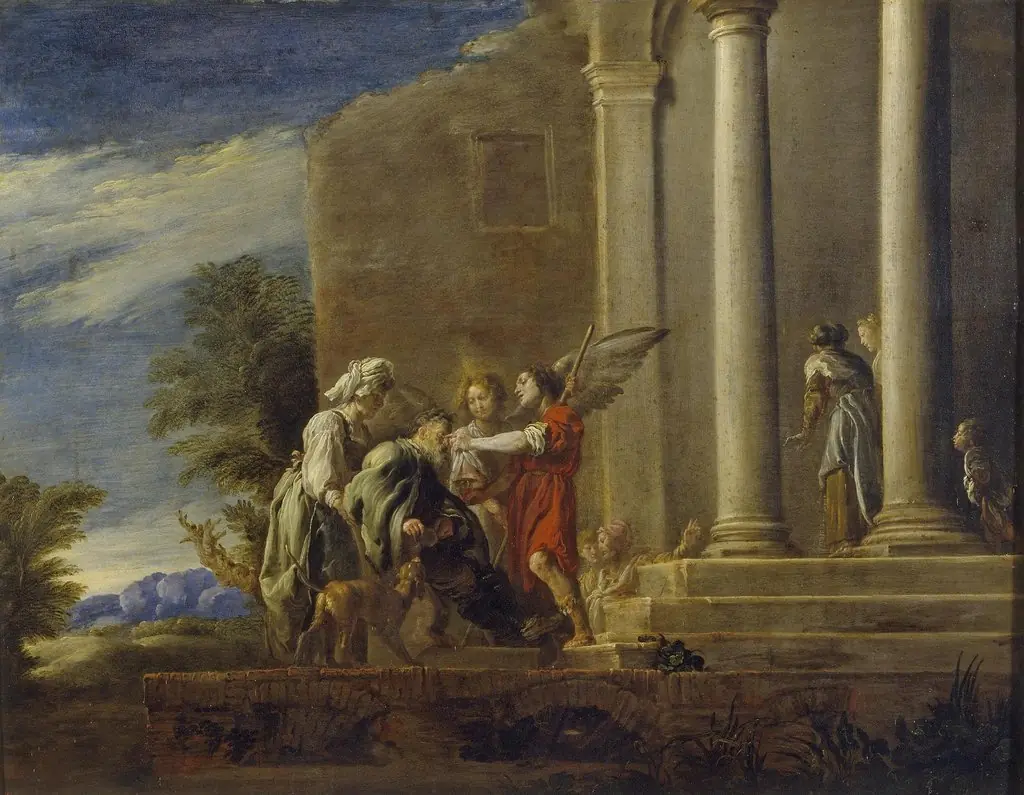 Healing of Tobit
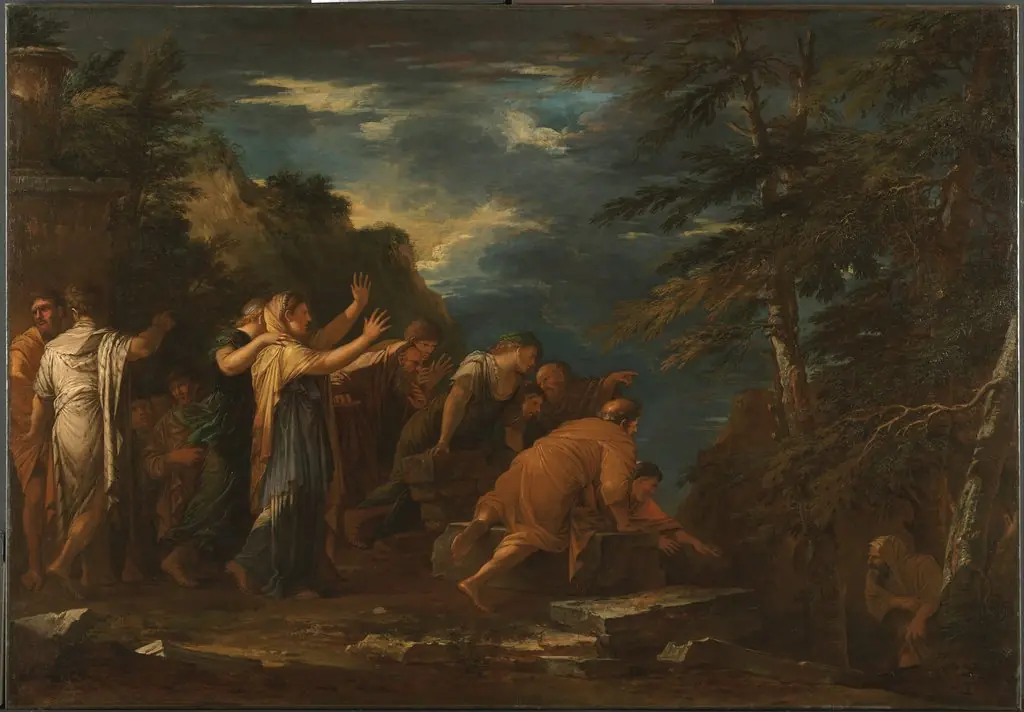 Pythagoras Emerging from the Underworld
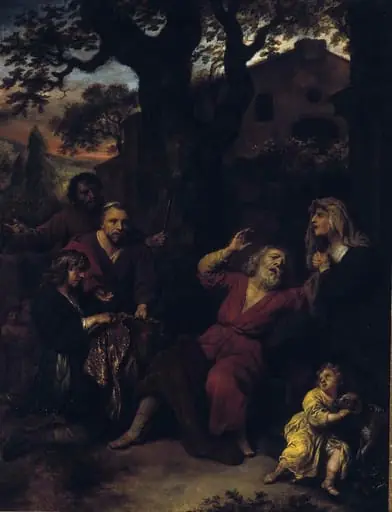 Joosefin verinen viitta
 Visitation
 Christ Carrying the Cross
 Starting for the Chase
 Expulsion of Hagar by Abraham
 Prophet Elisha and the Shunammite woman on Mt. Carmel
 Moisés no Rochedo de Horeb
 Rebecca at the Well