Artwork
William Hayley
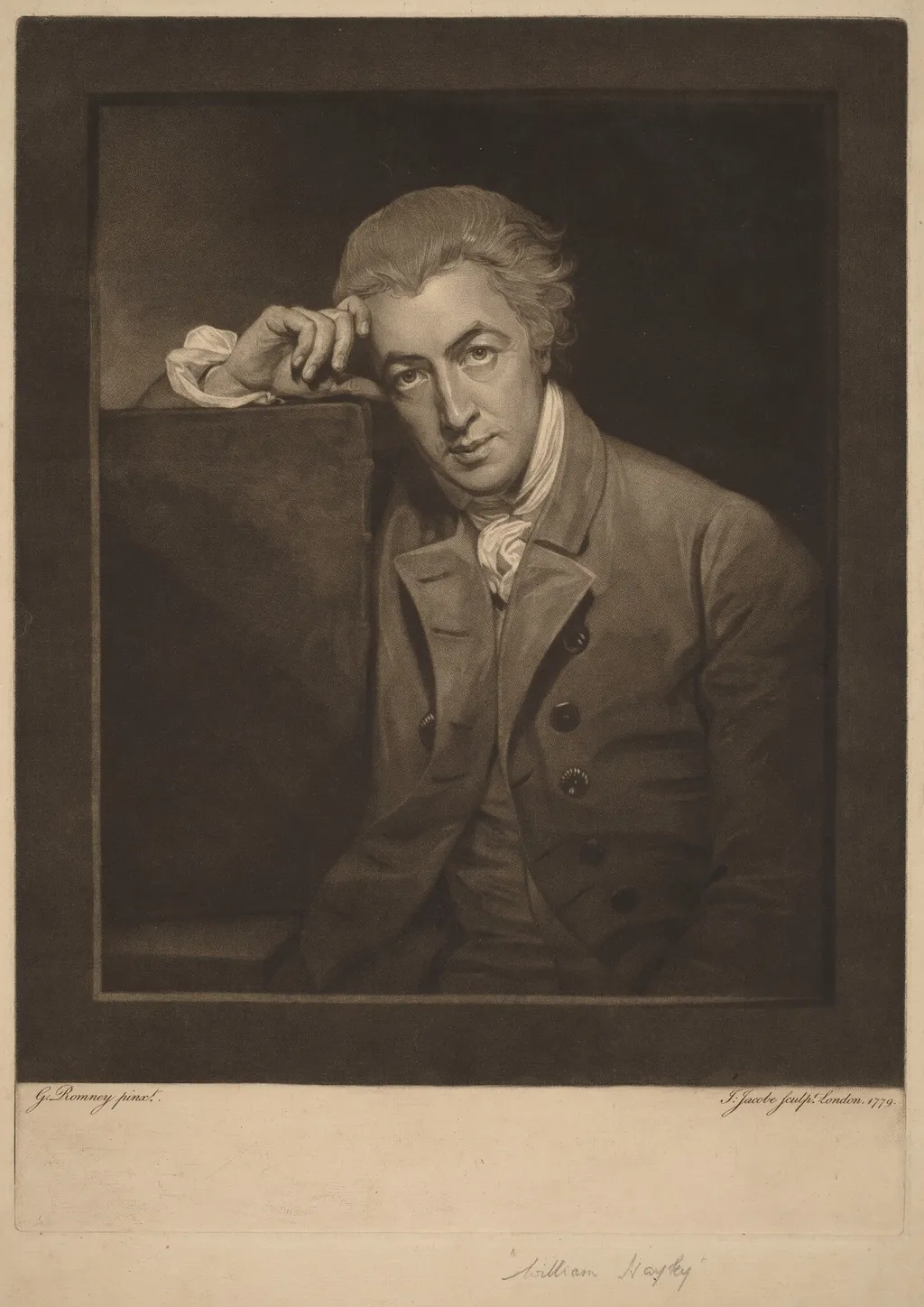
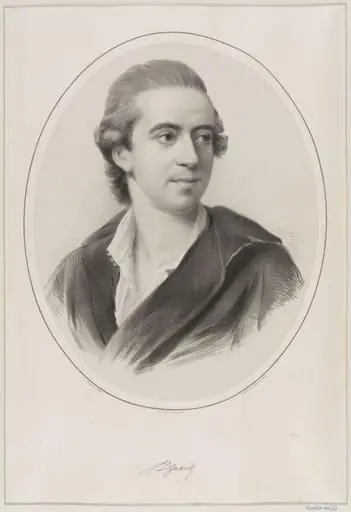
William Hayley is an ink print by the Romanticist artist Johann Jacobé. It dates from 1779 and is held in the collection of the National Gallery of Art.
About this work
Overview
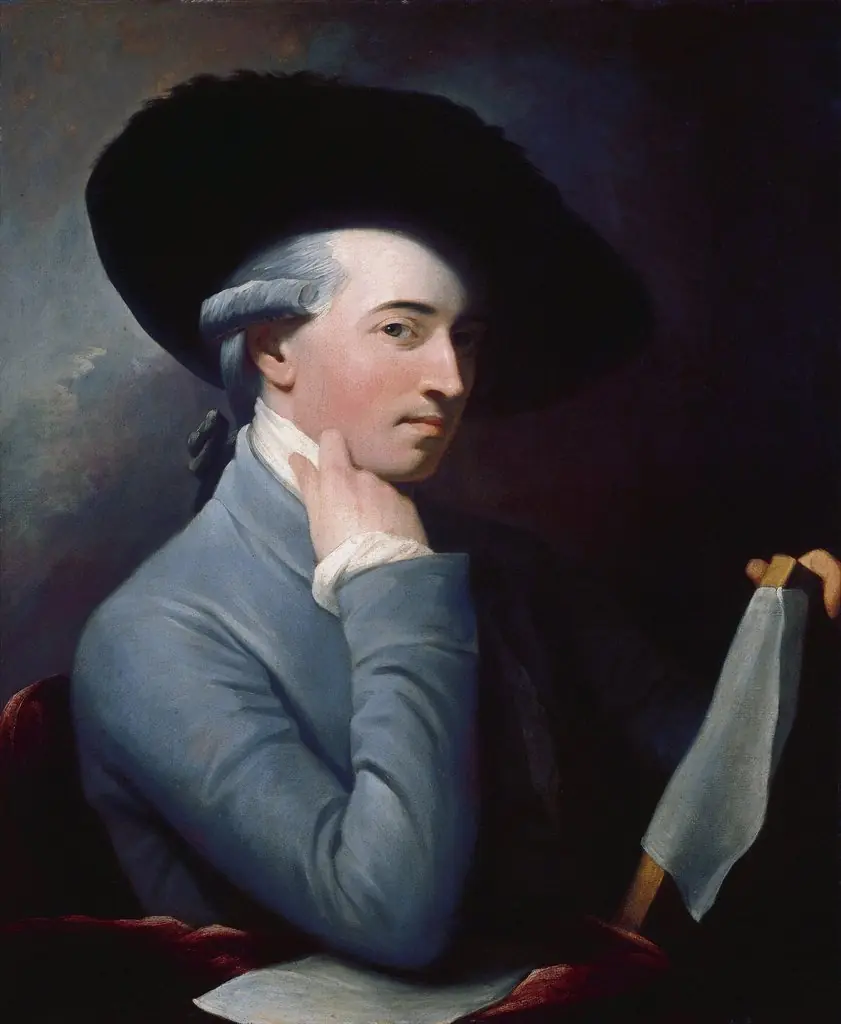
Johann Jacobé’s 1779 mezzotint presents the poet William Hayley in a restrained, monochrome composition. The sitter is shown in a dark coat with a white cravat, his head inclined as his hand supports his chin, gazing away from the viewer. The plain background isolates the figure, directing attention to the subtle modeling of his face and the contemplative pose.
Subject & Meaning
The portrait captures Hayley at a moment of introspection, suggesting a thoughtful or literary temperament. His sideways glance and relaxed hand convey a sense of quiet confidence, while the absence of decorative elements focuses on his personal presence rather than external status, aligning with eighteenth‑century ideals of the reflective gentleman.
Technique & Style
Executed in mezzotint, the image relies on delicate gradations of tone to render the sitter’s flesh and clothing. Jacobé employed the medium’s characteristic soft shading to achieve a three‑dimensional effect, especially around the face, creating a gentle chiaroscuro that enhances depth without the use of color.
History & Provenance
Created in 1779, the print reflects the period’s demand for affordable reproductions of notable literary figures. While the original plate’s ownership history is not extensively documented, copies have circulated among collectors of eighteenth‑century British portraiture, attesting to the work’s continued relevance as a visual record of Hayley’s contemporary reputation.
Artist & collection